









KEY TAKEAWAYS:
- A weakened New Zealand outfit made India work hard for every point on this tour.
- Some young bowlers announced themselves, while Indian batting stalwarts Rohit Sharma and Virat Kohli left with plenty to think about.
- Both squads leave with strengths worth keeping and gaps that must be fixed before 2027.
MORE: Fans concerned as India continue to struggle in SENA nations 1 year before World Cup
New Zealand vs India 2026 ODI report card: Full player grades, top performers and major concerns
India won the series 3-1, but a series of batting collapses against a New Zealand side missing several first-choice players made the margin look more comfortable than it was.
The wins in Auckland and Wellington were both rain-affected games decided under the DLS method, one of them by four runs, while New Zealand’s 244-run victory in the fourth ODI was as emphatic as any scoreline can be.
That is the backdrop for a series in which the hosts were far from full strength. Devon Conway and Rachin Ravindra were not part of the squad, and Daryl Mitchell, Glenn Phillips and Tom Latham, three more first-team regulars, left after the first two ODIs.
The trio missed the fourth ODI while they prepared for the Test series. Kyle Jamieson and Matt Henry were also managed carefully, which meant New Zealand’s line-up changed almost every game.
India rotated too, with Shubman Gill and KL Rahul leaving for Test preparation, but their batting group still included Rohit Sharma, Virat Kohli and Shreyas Iyer, and they struggled badly against the moving ball.
In the decider, India were bowled out for 209 in 42.1 overs, with Axar Patel and Ishan Kishan scoring 46 each, while Mitchell Santner took 3 for 47 and Jacob Duffy 3 for 60. The top order collapsed again, which should worry coach Gautam Gambhir. New Zealand were bowled out for 187 in 48.1 overs, and India won by 22 runs to take the series 3-1.
With the 2027 World Cup in South Africa, Zimbabwe and Namibia, now a year away, the tour was always going to be treated as an audition. And the batting stalwarts have emphatic failures. The grades below judge each player on how they performed in the series.
MORE: India squad for New Zealand Test series 2026
India report card: Kamboj, Brar and Axar lead the way as the top order stumbles
Gurnoor Brar 8.5/10 (A-): Brar was the find of the series, and what stood out was when he took his wickets. His four for 30 in Wellington came in the middle overs, where he removed Tom Latham, Glenn Phillips, Mitchell Santner and Nathan Smith, which broke the back of New Zealand’s innings after Daryl Mitchell had threatened to hold it together.
In Auckland, he added three more, including the dangerous Seifert, and the nine wickets he finished with came from only three matches. The 2 for 69 at Mount Maunganui was expensive, but that was a flat pitch against a set batting line-up, and he still dismissed Michael Bracewell and Tim Seifert. The question for the selectors is whether he can keep that control when the opposition is at full strength. He later joined the Test squad in Wellington and was absent for the decider, a sign of how highly he is already rated.
Anshul Kamboj 8/10 (A-): Kamboj did the work of taking the new ball and keeping the runs down, and he did it better than anyone else. His economy rate of 2.20 in Auckland and 3.12 in Wellington meant New Zealand never found a way to get away from him. Three of his four wickets were through the gates as he bowled Santner, Henry Nicholls and Blair Tickner, which suggests a bowler who is hitting the stumps and getting enough seam movement to beat the bat.
He played only two games before being released, so the sample is small, but it was a very encouraging one. If he can repeat that rhythm against stronger line-ups, he becomes a serious option for South Africa.
Arshdeep Singh 7.5/10 (B+): Arshdeep finished as India’s leading wicket-taker with eight in four matches, and the decider was his best performance of the tour. His 3 for 30 from ten overs, two of them maidens, came on a day when India had only 209 to defend, and his control of the new ball set the tone for the whole defence. The two late sixes in his 14 off four balls added runs that mattered when the total was so modest. He now looks like the leader of the pace group, which is a significant step ahead of a World Cup.
Axar Patel 7/10 (B): Axar is the player India keep reaching for when the game is slipping, and this series showed both his value and the limits of that approach. His 46 off 55 balls in the decider arrived with India reeling at 86 for 4, and he and Kishan steadied the innings for long enough to get the total past 200.
With the ball, he was a quiet strike weapon, taking six wickets across Wellington and Mount Maunganui, and he dismissed both Mitchell and Kelly, one a settled batter and the other a top-order option. However, his 0 and 7 in the first two games showed that he is no substitute for a proper top-order batter. He adds balance to the side, but not a solution to its problems.
MORE: IND vs NZ full head-to-head record and series results in New Zealand
Ishan Kishan 7/10 (B): Kishan arrived for the last two games after Rahul left, and he made the most of the chance. His 27 off 53 balls in the 89 all out was a rare act of resistance, a slow innings in terms of strike rate, but the highest score on a day when India lost three wickets in the first over.
The 46 off 58 balls in the decider was more fluent, with two sixes, and he was the one who kept India’s innings moving after Axar fell. He also kept wickets well in the fourth ODI, with three dismissals. The wicketkeeper’s slot in the World Cup squad is an open contest, and Kishan has just given the selectors a good reason to take his case seriously.
KL Rahul 7/10 (B): Rahul played two games and was not out in both, and the way he finished them is what mattered. His 3 not out sealed the Auckland chase quickly, and his unbeaten 26 off 38 balls in Wellington, with two fours and two sixes, kept India calm while wickets fell around him in a low-scoring DLS contest. It is a limited sample, and he left for Test duty after that, but the contrast with the collapses that followed was telling. A calm finisher who handles pressure is exactly what the middle order lacked later in the series.
Naman Dhir 7/10 (B): Dhir’s two overs for four runs, which included a wicket, were a pleasant surprise and lifted his series further. He now has 60 runs, two wickets and four catches, and the picture is of a player who contributes something in almost every game. A part-time bowler who can pick up a wicket cheaply gives the captain a useful option, and his composure in tight chases earns him a higher grade.
Auqib Nabi 6.5/10 (C+): Nabi’s decider figures of 1 for 37 from ten overs, with the wicket of Bracewell, finished his series on a steady note. He took five wickets in four matches, and the variety of his victims, openers like Young and Seifert as well as middle-order players such as Foxcroft, Clarke and Bracewell, shows that he can adapt to different roles. The 59 he conceded in the fourth ODI is the one major blot. He offers useful depth, but he has not yet shown that he can be a front-line option.
Mohammed Siraj 6/10 (C+): Siraj was recalled for the decider and the pacer put in an average shift. His 2 for 50 from nine overs included 38 dot balls, which gives a better picture of the pressure he created than the economy rate of 4.66 does, and his early removal of Seifert and bowling of Allen exposed the top of the chase. He also scored an unbeaten 14 with a four and a six, which pushed India past 200. The late runs he conceded in his final over stopped him from earning a higher grade.
Yash Thakur 6/10 (C+): Thakur marked his debut with 1 for 38 from 10 overs, an economy of 3.80, and the wicket of Foxcroft broke a stand at a key moment. The two no-balls are the only real negative, since extras of that kind are costly in a close World Cup match, but nerves are understandable in a first game, and the control was encouraging. A debutant who keeps the runs down in a series decider has earned another look.
Virat Kohli 5.5/10 (C): Kohli’s series was a story of two halves. His 74 off 51 balls in Auckland, with 13 fours, was a classic chase, and the 113-run stand with Gill set up the win. Yet after that he scored 7, 0 and 5, and three of his four dismissals came inside the first eight overs, to Duffy in Wellington, to Henry in the fourth ODI, where he was bowled for a duck in the first over, and to Fisher in the decider.

BCCI/Creimas
That pattern, an early dismissal against disciplined seam bowling, is exactly the kind of challenge he will meet in South Africa. He is not out of form in the broad sense, but he has to show he can negotiate the new ball, particularly as he will turn 39 during the World Cup year.
Shubman Gill (captain) 5/10 (C-): Gill led India to a 2-0 lead before leaving for Test duty, and his captaincy deserves credit because he handled two rain-interrupted chases without panic. His bat was less prominent, with 37 off 56 balls in Auckland, a controlled innings at a strike rate of 66 that allowed Kohli to attack at the other end, and then fell for a duck to Duffy in Wellington. His departure also removed a settled opening partner for Rohit, and the problems at the top of the order arguably grew from there.
Shreyas Iyer (captain) 4.5/10 (D+): Iyer inherited the captaincy at a difficult moment, and the results were mixed. His 30 off 46 balls in Wellington was the best of his four innings, a patient effort in a tough chase, but he fell for a golden duck to Henry in the fourth ODI, a decision that was reviewed and upheld, and made 22 in the decider before being caught off Tickner. As captain, he presided over two collapses, and as a batter he did not do enough to steady them. He needs a big innings to settle his place at No. 4.
Ruturaj Gaikwad 4.5/10 (D+): Gaikwad was brought in to open after Gill’s departure, and he was handed a very hard task. He was dismissed for five in the fourth ODI with India already reduced to 9 for 4, and in the decider he played fluently for 18 off 27 balls before edging behind. Neither innings was a failure of technique so much as a symptom of the conditions, but a chance to stake a claim has gone. He remains a reserve option, not a certainty.
Kuldeep Yadav 3.5/10 (D-): Kuldeep’s one match was a bruising experience. Young and Seifert targeted him, and he conceded 73 runs in eight overs without taking a wicket, an economy of 9.12, as New Zealand’s openers set up the 333.
It was a harsh reminder that wrist-spinners are vulnerable on flat pitches when the batters decide to attack, and a single game is not enough to judge him on. He was later released by the BCCI to play domestic cricket. The wrist-spin slot for the World Cup remains one of India’s open questions.
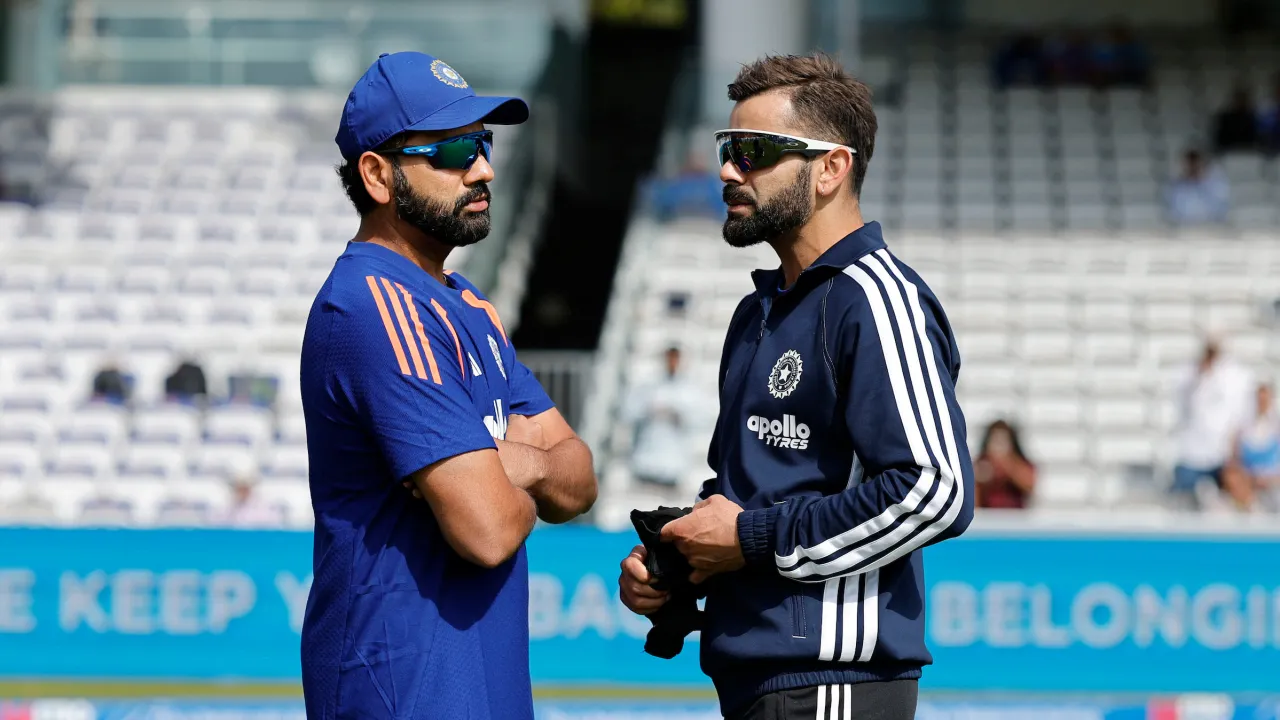
Rohit Sharma 3/10 (D-): Rohit’s series was the biggest concern in the squad. He scored 0, 23, 0 and 7, and in every innings he was dismissed within six overs, twice to Jamieson and once each to Henry and Fisher. He scored 0, 23, 0 and 7, and he was dismissed inside the first nine overs every time, and inside six overs on three occasions, twice to Jamieson and once each to Henry and Fisher. He will be 40 by the time the World Cup begins, and the opening slot is the most pressing selection question India face. One poor series does not end a career, but the pattern of early dismissals will be studied closely by opposition analysts.
MORE: 30 runs in 4 innings: Sharma’s poor NZ series in World Cup-like conditions a concern?
| India player | Grade (out of 10) | Series verdict |
|---|---|---|
| Gurnoor Brar | 8.5 (A-) | Nine wickets in three games |
| Anshul Kamboj | 8 (A-) | Four wickets at an economy of 2.7 |
| Arshdeep Singh | 7.5 (B+) | Eight wickets in four matches, 3/30 in the decider |
| Axar Patel | 7 (B) | 74 runs and six wickets |
| Ishan Kishan | 7 (B) | 27 and 46, with the gloves in two games |
| Naman Dhir | 7 (B) | 60 runs, two wickets, four catches |
| KL Rahul | 7 (B) | 3* and 26* |
| Auqib Nabi | 6.5 (C+) | Five wickets in four games |
| Yash Thakur | 6 (C+) | 1/38 on debut |
| Mohammed Siraj | 6 (C+) | 2/50, 14 runs in the decider |
| Virat Kohli | 5.5 (C) | 74, then 7, 0 and 5 |
| Shubman Gill | 5 (C-) | 37 and 0 before leaving |
| Shreyas Iyer | 4.5 (D+) | 67 runs, a golden duck |
| Ruturaj Gaikwad | 4.5 (D+) | 5 and 18 |
| Kuldeep Yadav | 3.5 (D-) | 0/73 in his only match |
| Rohit Sharma | 3 (D-) | 30 runs in four innings |
MORE: IND vs NZ full head-to-head record and series results in New Zealand
New Zealand report card: Henry, Duffy and Young shine despite a depleted squad
Matt Henry 9.5/10 (A): Henry played one match and produced the spell of the series. His 6 for 27 from 9.4 overs in the fourth ODI began with Rohit’s wicket off the first ball, then Kohli bowled and Iyer LBW for a golden duck in the same over, which reduced India to 0 for 3.
What makes the spell more impressive is the method, since four of his six wickets were bowled, with Kishan, Kuldeep and Brar following Kohli, and that points to a bowler attacking the stumps with full lengths. He did not feature in the decider, as he went away to prepare for the Tests, but his spell will worry India, who now know what he can do when fit and on song.
Will Young 8.5/10 (A-): Young’s series had two very different phases, and the way he adapted is what earns him the grade. In the seam-friendly games at Auckland and Wellington, he scored 9 and 6, perishing early like most of the top order, but at Bay Oval, he produced a hundred off 88 balls, with 14 fours and four sixes, finishing on 125 off 108.
That innings anchored a 333 total, and it came with an 85-run opening stand alongside Seifert and a rapid 50 in 38 balls with Allen. His 22 off 42 balls in the decider was slower, but with Devon Conway absent, he was the batting leader, and he met that responsibility well.
Jacob Duffy 8.5/10 (A-): Duffy was the most consistent of the seamers, taking exactly three wickets in each of his three matches. His victims were not minor ones either, since he dismissed Kohli twice, along with Gill, Iyer, Dhir and Gaikwad. He also leaked runs as he conceded 60 in 8.1 overs in the decider, which is the one blot on his record. Even so, a bowler who removes India’s best batters repeatedly is a major asset for a World Cup.
Matthew Fisher 8/10 (A-): Fisher arrived as a concussion substitute in Wellington, and his series is a good example of a player seizing a chance. He took one wicket there, then 3 for 31 in the fourth ODI, removing Axar, Dhir and Nabi, and 2 for 28 in the decider, when he dismissed both Rohit and Kohli. That mix of middle-order and top-order wickets shows versatility, and the economy of 4.56 across his three games was respectable. He has moved up the pecking order.
Kyle Jamieson 8/10 (A-): Jamieson dismissed Rohit twice, in Auckland and Wellington, which says a good deal about how his bounce and hard length troubled India’s opener. He took three in Wellington, adding Iyer and Kamboj, and his 1 for 12 from six overs in the fourth ODI, with two maidens, was a masterclass in control. A fit Jamieson is among the most dangerous bowlers in this format.
Mitchell Santner (captain) 7.5/10 (B): Santner’s value goes beyond the figures, since he held together a team whose composition changed almost every game. His 31 off 38 balls in Wellington and 24 off 29 in the fourth ODI, with four sixes between them, gave the lower order a lift, and his 3 for 47 in the decider, claiming Dhir, Nabi and Thakur, showed what he can do when there is little help for slow bowlers. In the final chase he made 24 off 31 balls, with two sixes, to take his series tally to 83 runs.

Daryl Mitchell 7/10 (B): Mitchell played two games, and in both of them he looked comfortable. His 28 in Auckland was ended by a run-out, but his 55 off 104 balls in Wellington, at a strike rate of 52, was a slow innings in a game where the whole team made only 134, and it kept New Zealand in the contest. His absence from the last two games was felt, and it shows how much the batting relies on him in tough conditions.
Tim Seifert 6.5/10 (B-): Seifert’s 110 runs in four innings came at a healthy strike rate, and his 58 off 48 balls, with three sixes, in the fourth ODI was the kind of start that sets up a big total. He was also dismissed for a duck in Wellington and 14 in the decider, so the pattern is one of high risk and uneven reward.
Dean Foxcroft 6/10 (C+): Foxcroft is a newcomer from the NZ A set-up, and his 8 and 31 showed both sides of a young batter. His 31 off 42 balls, with five fours, was a composed effort in the chase, and he held the catch at short mid-wicket to dismiss Rohit. He also put down a chance at cover off Axar early on, a mistake that did not cost much but reminds us that he is still learning. He has made a decent first impression.
Michael Bracewell 6/10 (C+): Bracewell played the stabilising role, and his 10 overs for 35 in the decider, with a wicket, were economical on a pitch that had some assistance. His 15 and 19 with the bat were small contributions but useful in a lower middle order that needs balance. He is the kind of player who rarely stands out but holds a team together.
Blair Tickner 6/10 (C+): Tickner’s series began with fireworks, a 34 off 23 balls with four sixes in Auckland, and then he suffered a concussion in Wellington. He returned for the decider and dismissed Iyer, but his 4-0-38-0 in the opener and a general lack of control kept the grade modest. He offers energy and power hitting, and that will count for him.
Finn Allen 5.5/10 (C): Allen was drafted into the middle order for the last two games, and his 41 off 30 balls in the fourth ODI, with five fours and two sixes, changed the tempo of the innings at the right moment. He was bowled by Siraj for 1 in the decider, which is the kind of inconsistency that has followed him. His hitting is valuable, but he needs to show a bit more patience.
Nathan Smith 5/10 (C-): Smith played two games and took Gill’s wicket in Auckland, bowling 4.4 overs for 21, then went for 19 in five overs in Wellington. He bowled with control without being a threat, and he was rotated out after that.
Nick Kelly 5/10 (C-): Kelly was brought in as top-order cover and was stumped for 4 in the fourth ODI before grinding out 24 off 45 balls in the decider. The innings was slow but showed temperament, though his place will depend on whether the first-choice batters return.
Kristian Clarke 5/10 (C-): Clarke bowled two overs for 13 in both of his games and hit a lively 22 off 22 balls in the fourth ODI. When his side needed him in the fifth while chasing a modest 210, he fell for just 16. He was a handy squad player without making a big claim.
Glenn Phillips 4.5/10 (D+): Phillips scored 30 off 51 balls and then a duck, and the much-talked-about contest with Kuldeep never took place, because Kuldeep played only after Phillips had left for Test preparation. His 30 was slow by his standards, and the duck does not help his case.
Henry Nicholls 3.5/10 (D-): Nicholls made 9 and 11 in the top order, and was bowled by Kamboj in Wellington. He did not look settled, and he made way for younger batters. With Conway and Ravindra missing, the opportunity was there, and he did not take it.
Tom Latham 3.5/10 (D-): Latham scored 3 and 7, and both times he fell to Brar, once caught and bowled. He kept wickets well in the first two games, but his slow starts did not help a team that needed momentum. He left for Test preparation, but he must pull up his socks in the 50-over format.
*Conway and Rachin Ravindra did not feature at all and are therefore not graded.
| New Zealand player | Grade (out of 10) | Series verdict |
|---|---|---|
| Matt Henry | 9.5 (A) | 6/27 in his only match |
| Will Young | 8.5 (A-) | 162 runs, including 125 |
| Jacob Duffy | 8.5 (A-) | Nine wickets in three games |
| Matthew Fisher | 8 (A-) | Six wickets in three games |
| Kyle Jamieson | 8 (A-) | Five wickets and 26 runs |
| Mitchell Santner | 7.5 (B) | 3/47 and 83 runs |
| Daryl Mitchell | 7 (B) | 28 and 55 in two games |
| Tim Seifert | 6.5 (B-) | 110 runs at a fast rate |
| Dean Foxcroft | 6 (C+) | 8 and 31 |
| Michael Bracewell | 6 (C+) | 1/35 in 10 overs, 34 runs |
| Blair Tickner | 6 (C+) | 34 off 23 balls, one wicket |
| Finn Allen | 5.5 (C) | 41 off 30, then 1 |
| Nathan Smith | 5 (C-) | One wicket in two games |
| Nick Kelly | 5 (C-) | 4 and 24 |
| Kristian Clarke | 5 (C-) | 0/26 in 4 overs, 22 runs |
| Glenn Phillips | 4.5 (D+) | 30 and 0 |
| Henry Nicholls | 3.5 (D-) | 9 and 11 |
| Tom Latham | 3.5 (D-) | 3 and 7 |
India must fix its top-order problem before South Africa
The seamers, led by Brar and Kamboj, defended low totals and strangled New Zealand in the early games, but the batting was brittle throughout. Scores of 143 for 5 (in a reduced chase), 113 for 7, 89 all out and 209 all out are not the numbers of a side that expects to dominate a World Cup.
The most worrying part is the top order. Rohit and Kohli together scored 116 runs in eight innings, 74 of them in one knock, and the new ball removed them again and again. Iyer’s returns were modest, and Kohli remains the only one to score a 50 in the entire series.
The strength lay in the lower order, where Axar, Kishan and Dhir did the repair work, but a World Cup team cannot rely on that every time.
One poor series should not end a career, but India will play the World Cup on pitches that offer similar help, and opposition coaches will have noted the pattern.
The decision on how to handle senior players now looks pressing. Preparation matters here: one or two more five-match ODI series in seam-friendly conditions would help a great deal.
India’s bowling group is in better shape than it was a few months ago, and that is a real positive. Brar and Kamboj were impressive, Arshdeep led well, and Siraj looked impressive in the decider. If those names keep improving, the attack will have depth to handle injuries.
The 3-1 scoreline flatters the batting, and the selectors should not read it as proof that all is well. India still have time, and the talent in the squad is clear, but the batting will need real change, not just patience, if it is going to compete for the trophy in a year.
To keep up to date with all the latest cricket news and share your opinion on the biggest topics, visit our Facebook, Instagram and X (Twitter) pages.