

Bilibili Gaming is the second Worlds 2026 finalist after defeating T1 3-1

[ad_2]

Stand collapses mid-match: fans fall through the floor
A frightening moment in Norway's Eliteserien! A stand collapsed during a top-flight match, forcing away fans to be evacuated. It happened yesterday in the 40th minute of the match between Tromsø IL and Bodø-Glimt, with the score at 0–0.
Parts of the away stand at Romssa Arena gave way, and four fans fell through a hole in the floor, Norwegian broadcaster 'TV2' reported, citing police. The Bodø-Glimt fans were evacuated, and the match was suspended for 50 minutes. During the stoppage, the away fans moved to another section of the stands. A marked boundary separated them from the home fans.

📸 RUNE STOLTZ BERTINUSSEN - Rune Stoltz Bertinussen / NTB
Advertisement
One person had to be taken to hospital with serious injuries.
After play resumed, Bodø/Glimt won 2–0 thanks to a brace from Ola Brynhildsen (45+1 and 73 minutes).
This article was translated into English by Artificial Intelligence. You can read the original version in 🇩🇪 here.
[ad_2]

At the Table: Michael Xingcai Zhang brews science and community through Tea Talks
In her column “At the Table,” Amy Zhang ’30 shares the stories of the Chinese American people she meets around Stanford.
Every week at the Alway Building, Michael Xingcai Zhang, a research scientist at the School of Medicine, sets out teacups, prepares the loose-leaf teas and waits.
Born and raised in Fujian, China — a southeastern province renowned for its ancient tea-growing traditions and historical influence on the global tea trade — Zhang has another identity: Dr. Tea. According to Zhang, his family and friends often jokingly say that “tea is in his mind, heart and soul.”
“Through a cup of tea, we can warm people’s hearts,” Zhang said. “And we’ll all move forward feeling a little happier.”
For Zhang, the sentiment goes beyond a slogan. Having moved to the U.S. from China years ago, Zhang understands loneliness and the importance of community firsthand. So in 2024, he began hosting weekly Tea Talks — semi-formal gatherings to facilitate intellectual discussion and community for students and researchers interested in medicine and health.
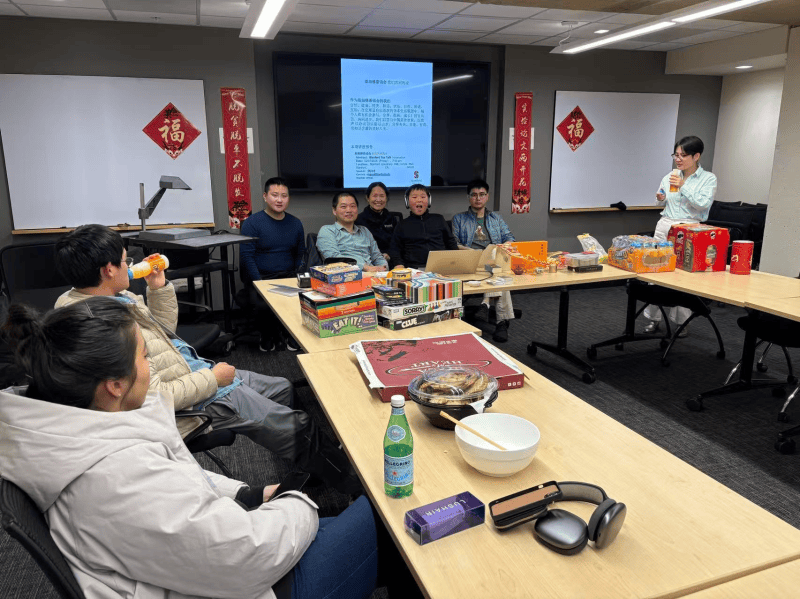
Most evenings, Zhang invites researchers and scholars from the Bay Area to talk about their work. Past Tea Talks have welcomed experts in artificial intelligence, medical research, innovation, music and more.
Juan Zhang, a visiting scholar in the department of pathology, presented her research on cellular mechanisms at a Tea Talk in July. In a message to The Daily, she wrote that the feedback she received from fellow researchers “opened new entry points in [her] research,” including ways to incorporate AI into her work.
“Over a cup of tea, there is no boundary, only a generous willingness to share and think together,” she wrote. “ The cup is small, but the conversation is boundless.”
For students, the gatherings offer an encouraging space where their curiosity is recognized.
“Tea Talks [have] been wonderfully insightful as someone so early in her academic career,” pre-med student Almas Elayyan ’29 wrote to The Daily.
Tea Talks have also helped Elayyan better understand how knowledge connects to the real world: “I have also gotten to engage one-on-one with said professionals, which sparked my curiosity,” she wrote. “It has been extremely encouraging to see my inquiries treated with respect and engaged with in every presentation.”
But according to Zhang, even when there is no scheduled speaker, many still show up to Tea Talks — sometimes just to ask a friend how they’re doing, or to share a few things about their families and everyday life. Zhang summed up the spirit of the Tea Talks in a catchphrase he invented: “Enjoy Tea, Enjoy Life, Enjoy the Moment.”
Outside the Alway Building, Zhang is earnest about spreading the value of tea. In 2015, he launched the World Tea Organization (WTO), an initiative that brings together tea enthusiasts from all over the world to promote tea culture (WTO’s slogan, of course, is Zhang’s catchphrase). Zhang currently serves as WTO president, and has helped push for United Nations recognition of May 21 as International Tea Day. He’s also hosted public International Tea Day gatherings for years in the Bay Area, Boston and more.
After the academic portion of each Tea Talk, Zhang often will introduce his twist on traditional Chinese tea rituals to the event. Attendees often participate in what he calls “My Love Tea Ceremony.” “When you are drinking tea together, you serve the person sitting next to you, in a circle,” Zhang said. “And finally… you’ll get a cup of tea full of love, joy and respect.”
For Zhang, nature is also a source of scientific inspiration. He believes a great deal of innovation is derived from what nature has already created.
For Zhang, tea is a starting point for engineering. His own scientific research focuses on AI, natural materials and their biological mechanisms during drug delivery. Zhang has also conducted research on nano-scale tea materials and their potential applications in cancer treatment and ways to build functional nanomaterials combining tea extracts with other components.
In Zhang’s opinion, science, culture and art are all different expressions of the same harmony. In his free time, he’s also a Chinese classical poetry enthusiast, having written thousands of classical Chinese poems.

His writing often returns to themes of nature, philosophy and cultural memory. They detail the history of tea villages in Fujian province; they chronicle mid-autumn festivals spent away from home. Zhang described writing as an impulse to identify and extract the essence of life, or the Dao — a mission not dissimilar to scientific research.
“Poetry is like tea,” he said. “You cannot force it. You have to let it steep and come naturally.”
Zhang observed that through merging science, art and culture, he has “woven together Eastern intellect and Western thought, Daoist spirit and Zen enlightenment, cultural imprint and scientific pursuit … forging a unified worldview that transcends East and West.”
Sitting on Stanford’s sprawling sandstone court, he drinks tea beneath the same moon his ancestors once gazed at in China, and finds that the two worlds do not feel so far apart.
[ad_2]

Iran’s Abbas Araghchi Says No Peace Talks With US Since ‘Shock’ Of Midterms
Iranian Foreign Minister Abbas Araghchi said on Sunday that mediators striving for a peace deal between the US and Iran had not travelled at all since the "shock" of the US midterm elections.
"We now have to see how long it will take for them to digest these results, in order to determine how we are going to move forward," the top Iranian diplomat told state TV following the elections in which the Republican Party of US President Donald Trump suffered heavy losses.
Various regional powers, including Qatar and Pakistan, have been trying for months without success to bring a definitive halt to the war launched by the United States and Israel in late February.
Outright fighting has largely subsided, but Iran continues in its efforts to blockade the Strait of Hormuz, vital to global energy supplies, while the US Navy maintains its own counterblockade of Iranian ports.
"For the past few days, there has been no more travel (by mediators), and the reason for this is the shock that the election results in the United States have caused to everyone."
He said it would "take some time before the atmosphere is favourable for the resumption of mediator travel" and called for patience.
Earlier, Aragchi posted on X: "American voters have made their choice. Time for the White House to make its own."
He called on Washington to accept previously articulated Iranian demands or "choose war, and see our alert and battle-hardened warriors rain down hell".
In September, Iran proposed a seven-day plan to reopen the strait, with demands including ending the war on all fronts, unfreezing Iranian assets, lifting oil sanctions and ending its counter-blockade of Iranian ports.
It later proposed doing so in just two days, an offer Aragchi repeated in his X post on Sunday.
(This story has not been edited by NDTV staff and is auto-generated from a syndicated feed.)
[ad_2]


Hong Kong Finance Employees’ HK$35.8 Billion Income Constrained by Personal Account Dealing Rules – News and Statistics
Nov 9, 2026
Employees at Hong Kong's more tightly regulated financial institutions generate roughly HK$35.8 billion, or US$4.66 billion, in investible income annually but face difficulty deploying it because of personal account dealing restrictions, according to a report cited by the South China Morning Post.
The report, compiled by digital wealth management platform Endowus and strategy consulting firm Quinlan & Associates, found that such restrictions can apply to bank employees, brokers and asset managers, among others, with the aim of preventing insider trading, managing conflicts of interest and putting client interests ahead of employees' own.
Almost 237,000 finance professionals in Hong Kong are limited by personal account dealing rules, the report estimated.
It also noted that average income in the city's strictly regulated financial services industry reached HK$66,245 per month last year, roughly three times the median income of the employed population.
The findings point to a gap between the income generated by staff in highly regulated finance roles and their ability to invest it, with compliance requirements cited as the constraint on deployment.
1. INTRODUCTION
Making Data-Driven Decisions to Grow Your Business
- REPORT DESCRIPTION
- RESEARCH METHODOLOGY AND THE AI PLATFORM
- DATA-DRIVEN DECISIONS FOR YOUR BUSINESS
- GLOSSARY AND SPECIFIC TERMS
2. EXECUTIVE SUMMARY
A Quick Overview of Market Performance
- KEY FINDINGS
- MARKET TRENDS This Chapter is Available Only for the Professional EditionPRO
3. MARKET OVERVIEW
Understanding the Current State of The Market and its Prospects
- MARKET SIZE: HISTORICAL DATA (2012–2025) AND FORECAST (2026–2035)
- CONSUMPTION BY COUNTRY: HISTORICAL DATA (2012–2025) AND FORECAST (2026–2035)
- MARKET FORECAST TO 2035
4. MOST PROMISING PRODUCTS FOR DIVERSIFICATION
Finding New Products to Diversify Your Business
- TOP PRODUCTS TO DIVERSIFY YOUR BUSINESS
- BEST-SELLING PRODUCTS
- MOST CONSUMED PRODUCTS
- MOST TRADED PRODUCTS
- MOST PROFITABLE PRODUCTS FOR EXPORT
5. MOST PROMISING SUPPLYING COUNTRIES
Choosing the Best Countries to Establish Your Sustainable Supply Chain
- TOP COUNTRIES TO SOURCE YOUR PRODUCT
- TOP PRODUCING COUNTRIES
- TOP EXPORTING COUNTRIES
- LOW-COST EXPORTING COUNTRIES
6. MOST PROMISING OVERSEAS MARKETS
Choosing the Best Countries to Boost Your Export
- TOP OVERSEAS MARKETS FOR EXPORTING YOUR PRODUCT
- TOP CONSUMING MARKETS
- UNSATURATED MARKETS
- TOP IMPORTING MARKETS
- MOST PROFITABLE MARKETS
7. PRODUCTION
The Latest Trends and Insights into The Industry
- PRODUCTION VOLUME AND VALUE: HISTORICAL DATA (2012–2025) AND FORECAST (2026–2035)
- PRODUCTION BY COUNTRY: HISTORICAL DATA (2012–2025) AND FORECAST (2026–2035)
8. IMPORTS
The Largest Import Supplying Countries
- IMPORTS: HISTORICAL DATA (2012–2025) AND FORECAST (2026–2035)
- IMPORTS BY COUNTRY: HISTORICAL DATA (2012–2025) AND FORECAST (2026–2035)
- IMPORT PRICES BY COUNTRY: HISTORICAL DATA (2012–2025) AND FORECAST (2026–2035)
9. EXPORTS
The Largest Destinations for Exports
- EXPORTS: HISTORICAL DATA (2012–2025) AND FORECAST (2026–2035)
- EXPORTS BY COUNTRY: HISTORICAL DATA (2012–2025) AND FORECAST (2026–2035)
- EXPORT PRICES BY COUNTRY: HISTORICAL DATA (2012–2025) AND FORECAST (2026–2035)
10. PROFILES OF MAJOR PRODUCERS
The Largest Producers on The Market and Their Profiles
-
11. COUNTRY PROFILES
The Largest Markets And Their Profiles
This Chapter is Available Only for the Professional Edition PRO11.1
United States
- Market Size
- Production
- Imports
- Exports
11.2
China
- Market Size
- Production
- Imports
- Exports
11.3
जापान
- Market Size
- Production
- Imports
- Exports
11.4
जर्मनी
- Market Size
- Production
- Imports
- Exports
11.5
United Kingdom
- Market Size
- Production
- Imports
- Exports
11.6
France
- Market Size
- Production
- Imports
- Exports
11.7
Brazil
- Market Size
- Production
- Imports
- Exports
11.8
Italy
- Market Size
- Production
- Imports
- Exports
11.9
रूसी महासंघ
- Market Size
- Production
- Imports
- Exports
11.10
India
- Market Size
- Production
- Imports
- Exports
11.11
कनाडा
- Market Size
- Production
- Imports
- Exports
11.12
Australia
- Market Size
- Production
- Imports
- Exports
11.13
Republic of Korea
- Market Size
- Production
- Imports
- Exports
11.14
Spain
- Market Size
- Production
- Imports
- Exports
11.15
Mexico
- Market Size
- Production
- Imports
- Exports
11.16
Indonesia
- Market Size
- Production
- Imports
- Exports
11.17
Netherlands
- Market Size
- Production
- Imports
- Exports
11.18
Turkey
- Market Size
- Production
- Imports
- Exports
11.19
Saudi Arabia
- Market Size
- Production
- Imports
- Exports
11.20
Switzerland
- Market Size
- Production
- Imports
- Exports
11.21
Sweden
- Market Size
- Production
- Imports
- Exports
11.22
Nigeria
- Market Size
- Production
- Imports
- Exports
11.23
Poland
- Market Size
- Production
- Imports
- Exports
11.24
Belgium
- Market Size
- Production
- Imports
- Exports
11.25
Argentina
- Market Size
- Production
- Imports
- Exports
11.26
Norway
- Market Size
- Production
- Imports
- Exports
11.27
Austria
- Market Size
- Production
- Imports
- Exports
11.28
Thailand
- Market Size
- Production
- Imports
- Exports
11.29
संयुक्त अरब अमीरात
- Market Size
- Production
- Imports
- Exports
11.30
Colombia
- Market Size
- Production
- Imports
- Exports
11.31
Denmark
- Market Size
- Production
- Imports
- Exports
11.32
South Africa
- Market Size
- Production
- Imports
- Exports
11.33
मलेशिया
- Market Size
- Production
- Imports
- Exports
11.34
Israel
- Market Size
- Production
- Imports
- Exports
11.35
Singapore
- Market Size
- Production
- Imports
- Exports
11.36
Egypt
- Market Size
- Production
- Imports
- Exports
11.37
Philippines
- Market Size
- Production
- Imports
- Exports
11.38
Finland
- Market Size
- Production
- Imports
- Exports
11.39
Chile
- Market Size
- Production
- Imports
- Exports
11.40
आयरलैंड
- Market Size
- Production
- Imports
- Exports
11.41
Pakistan
- Market Size
- Production
- Imports
- Exports
11.42
Greece
- Market Size
- Production
- Imports
- Exports
11.43
Portugal
- Market Size
- Production
- Imports
- Exports
11.44
Kazakhstan
- Market Size
- Production
- Imports
- Exports
11.45
Algeria
- Market Size
- Production
- Imports
- Exports
11.46
चेक गणराज्य
- Market Size
- Production
- Imports
- Exports
11.47
Qatar
- Market Size
- Production
- Imports
- Exports
11.48
Peru
- Market Size
- Production
- Imports
- Exports
11.49
Romania
- Market Size
- Production
- Imports
- Exports
11.50
Vietnam
- Market Size
- Production
- Imports
- Exports
LIST OF TABLES
- Key Findings In 2025
- Market Volume, In Physical Terms: Historical Data (2012–2025) and Forecast (2026–2035)
- Market Value: Historical Data (2012–2025) and Forecast (2026–2035)
- Per Capita Consumption, by Country, 2022–2025
- Production, In Physical Terms, By Country: Historical Data (2012–2025) and Forecast (2026–2035)
- Imports, In Physical Terms, By Country: Historical Data (2012–2025) and Forecast (2026–2035)
- Imports, In Value Terms, By Country: Historical Data (2012–2025) and Forecast (2026–2035)
- Import Prices, By Country: Historical Data (2012–2025) and Forecast (2026–2035)
- Exports, In Physical Terms, By Country: Historical Data (2012–2025) and Forecast (2026–2035)
- Exports, In Value Terms, By Country: Historical Data (2012–2025) and Forecast (2026–2035)
- Export Prices, By Country: Historical Data (2012–2025) and Forecast (2026–2035)
LIST OF FIGURES
- Market Volume, In Physical Terms: Historical Data (2012–2025) and Forecast (2026–2035)
- Market Value: Historical Data (2012–2025) and Forecast (2026–2035)
- Consumption, by Country, 2025
- Market Volume Forecast to 2035
- Market Value Forecast to 2035
- Market Size and Growth, By Product
- Average Per Capita Consumption, By Product
- Exports and Growth, By Product
- Export Prices and Growth, By Product
- Production Volume and Growth
- Exports and Growth
- Export Prices and Growth
- Market Size and Growth
- Per Capita Consumption
- Imports and Growth
- Import Prices
- Production, In Physical Terms: Historical Data (2012–2025) and Forecast (2026–2035)
- Production, In Value Terms: Historical Data (2012–2025) and Forecast (2026–2035)
- Production, by Country, 2025
- Production, In Physical Terms, by Country: Historical Data (2012–2025) and Forecast (2026–2035)
- Imports, In Physical Terms: Historical Data (2012–2025) and Forecast (2026–2035)
- Imports, In Value Terms: Historical Data (2012–2025) and Forecast (2026–2035)
- Imports, In Physical Terms, By Country, 2025
- Imports, In Physical Terms, By Country: Historical Data (2012–2025) and Forecast (2026–2035)
- Imports, In Value Terms, By Country: Historical Data (2012–2025) and Forecast (2026–2035)
- Import Prices, By Country: Historical Data (2012–2025) and Forecast (2026–2035)
- Exports, In Physical Terms: Historical Data (2012–2025) and Forecast (2026–2035)
- Exports, In Value Terms: Historical Data (2012–2025) and Forecast (2026–2035)
- Exports, In Physical Terms, By Country, 2025
- Exports, In Physical Terms, By Country: Historical Data (2012–2025) and Forecast (2026–2035)
- Exports, In Value Terms, By Country: Historical Data (2012–2025) and Forecast (2026–2035)
- Export Prices, By Country: Historical Data (2012–2025) and Forecast (2026–2035)
[ad_2]
It's Your Business has Goodell, Stratton, Edmonds & Palmer

[ad_2]

Improve Your Mac Mini’s Performance With These Simple Changes
Apple's Mac Mini offers prospective buyers multiple reasons to buy it over a MacBook, packing quite a punch despite its small form factor, ability to operate local AI models, and a lower retail price than its larger siblings. As of this writing, the newest model is also the only Mac fitted with Apple's new M6 chip, and is also sold with the high-performing M5 Pro chip. Enticing as that may be, some Mini owners might still find themselves wanting more out of their system, or may encounter moments where their device is running at slower speeds. Some subtle alterations can help your Mac Mini reach its fullest potential.
If your Mini's performance isn't up to par with its promised power, there are some simple remedies like freeing up its startup disk space, either by transferring files to another device or an external hard drive, or deleting unnecessary data. You may enlist your device's default "Activity Monitor" to review its total memory usage and detect apps using more memory than the Mini has available. It's also best to quit any apps that you aren't actively using.
Apps that aren't natively compatible with your Mac — those that necessitate a different graphics card or processor — should also be closed. The app's documentation should generally spell out its individual system requirements. These straightforward changes, along with those previously mentioned, very well could help optimize your Mini's overall performance.
Your browser might affect your Mac Mini's performance
Making direct changes to your Mac Mini's settings and app behavior can help your computer once again meet its high-powered standards. One lesser-known hindrance that could also warrant users' attention is their browser. For example, a Cult of Mac writer reported that their Google Chrome browser turned out to be a power vampire thanks to unused browser extensions. Other browsers, including the popular, Mozilla-owned web surfer, Firefox, may also leech memory at a high rate.
To get the most out of your system's power, it's best to stick with Apple's native Safari browser as your go-to on any macOS device. Safari, especially when matched against Chrome, consumes less memory. If you're using another Apple device like an iPhone or a MacBook (when you're on the go), using Safari will also conserve battery life. Depending on what you want from or value out of your web browser, Safari could be the better choice for Mini users, at least from a performance standpoint.
[ad_2]
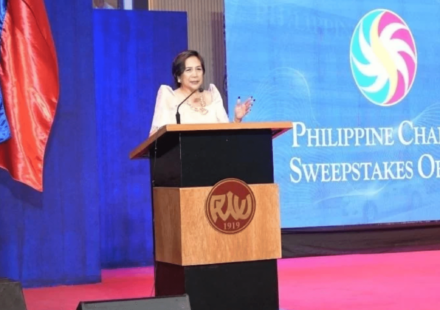
PCSO highlights responsible gaming as foundation for sustainable public benefit at AMIC conference

[ad_2]

Michigan coach Kyle Whittingham fires embattled offensive coordinator Jason Beck
ANN ARBOR, Mich. — Kyle Whittingham has made his first major move as Michigan's coach, firing embattled offensive coordinator Jason Beck.
"The results have not matched our desired outcome, and I felt that a change in leadership was required for our offense," Whittingham said in a statement Sunday night. "We need to put our offensive players and the entire team in the best possible position to be successful."
Advertisement
Whittingham named Jim Harding as interim offensive coordinator for the rest of the season. Harding is the team's offensive line coach and assistant head coach. He worked with Whittingham for 12 seasons at Utah, including two years as co-offensive coordinator.
The Wolverines (5-4, 2-4 Big Ten) started the season ranked No. 16 in the AP Top 25 and have fallen short of expectations with one of the nation's worst offenses, shaky special teams and a defense that has been solid at times.
Michigan might fall short of earning a bowl bid as underdogs at No. 18 Oregon (6-3, 3-2) on Saturday, at home against No. 4 UCLA and against rival and 21st-ranked Ohio State on the road.
The Wolverines barely avoided being shut out for the first time since 2014 against rival Michigan State, scoring with 1:35 left in a 15-6 loss after being favored to win by two touchdowns.
Advertisement
Michigan was been held scoreless in the first half three times in a season for the first time since 1979.
Under Beck, the Wolverines were ranked No. 132 out of 138 FBS teams in total offense, No. 126 in scoring, No. 125 in passing offense and No. 109 in rushing offense.
Beck was Whittingham's offensive coordinator at Utah last season, helping the team rank No. 2 in rushing, No. 4 in total offense and No. 5 in scoring offense. He was New Mexico's offensive coordinator in 2024.
"We appreciate the hard work and effort that Jason has dedicated to the program," Whittingham said. "Jason is a great man and coach, and unfortunately, it did not work out the way that we wanted it to at Michigan. We wish Jason and his family nothing but the best in the future."
Advertisement
After a 20-14 loss to Minnesota last month, when quarterback Bryce Underwood did not play well one week after making many positive plays in a loss to Iowa, tight end Zach Marshall criticized Beck in group text messages that were leaked on social media.
Marshall publicly apologized, but he did not play in the following game against Penn State due to a noninjury situation, according to Whittingham.
Michigan's quarterback situation that Beck managed was closely watched with a former No. 1 recruit getting benched in favor of a backup with a familiar name.
Underwood was taken out of the game against Penn State after the team was held scoreless in a first half for the first of three straight home games. Tommy Carr, whose grandfathers are College Hall of Famers and brother is Notre Dame's quarterback, successfully filled in for Underwood in a comeback win against the Nittany Lions.
Advertisement
Carr struggled against the Spartans, but Whittingham said the offensive coaches wanted to stick with him and the head coach said he agreed with their call.
No matter who has taken snaps this season, Michigan has failed to consistently make plays on offense and it cost Beck his job.
[ad_2]