
Why Life Science Startups Are Moving to Austria

Set Trending Topics as a preferred source on Google.
Anyone who wants to grow skin in a lab or analyze dental X-rays with AI is now ending up in Graz and Vienna. Two young companies from France and Slovakia recently founded subsidiaries in Austria, and their reasons underline the status Austria now enjoys as a life sciences location: research partners who respond quickly, a funding system that works, and a political environment that does not scare off investors.
Both are docking onto a mature ecosystem. The federal government has anchored life sciences in its Industrial Strategy 2035 as one of the most important technologies of the future, and according to the Austrian Startup Monitor 2025, 14.4 percent of all domestic startups are already active in the field, as the Austrian Business Agency (ABA) summarizes.
AI Dental: From Bratislava to Vienna
AI Dental (AI:D) develops AI for dentistry and has two products on the market. EDU AI:D is a learning platform on which dental students train their diagnostic skills using thousands of 2D X-ray images; according to CEO Olga Shebanova, the platform is already running at 16 universities worldwide. The second is ClinicalAID, software that analyzes patient images and shows doctors the probability of findings. The product has just received CE marking as a medical device and serves dentists as a second opinion.
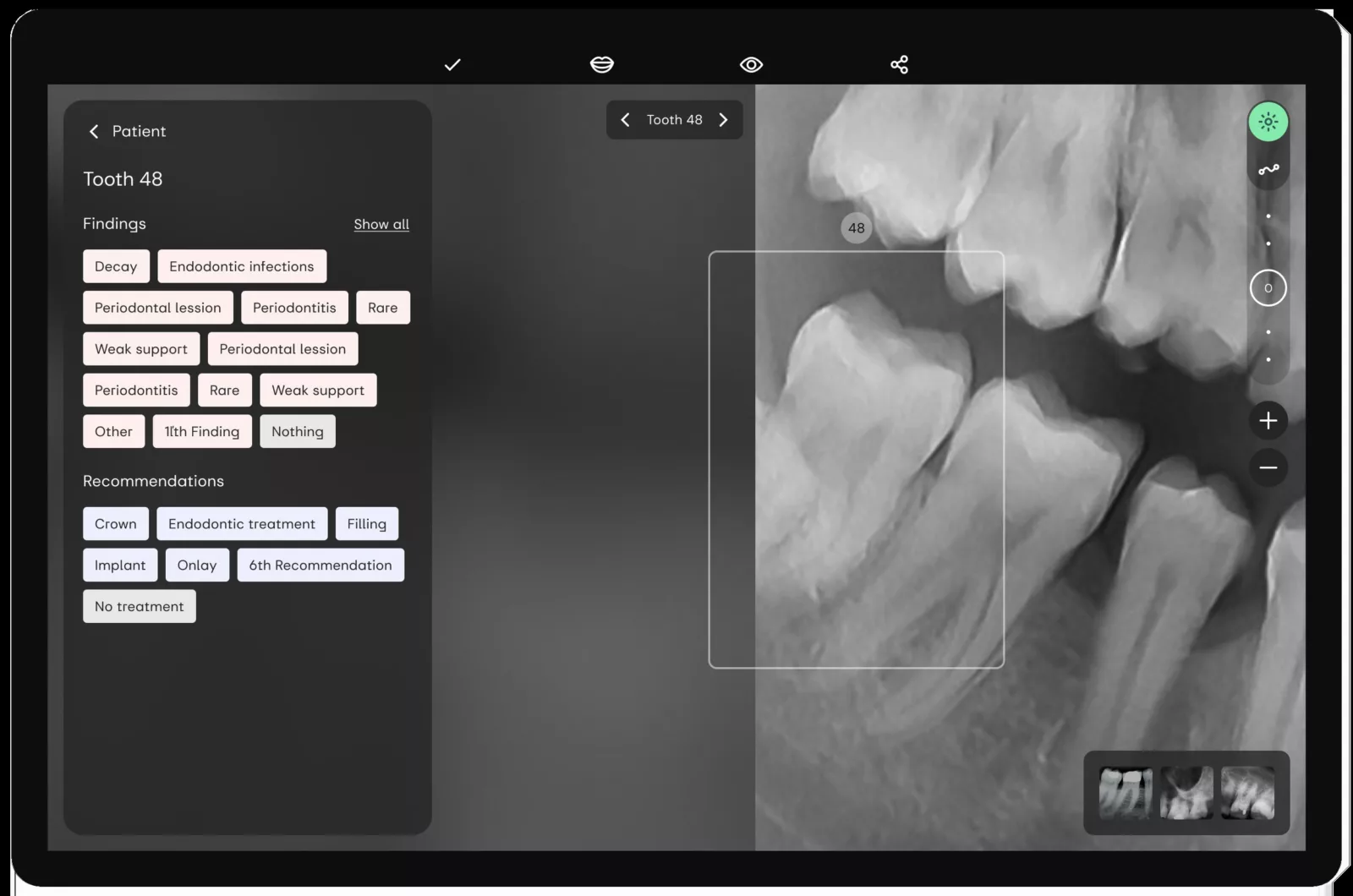
Shebanova gives three reasons for the move to Vienna. First, half the team already lives in Vienna and used to commute to Bratislava, and AI Dental has already recruited specialists in Austria. Second, the political situation in Slovakia, which she says has affected financing:
“International investors who put capital into an already risky startup at least want the certainty that the government and the laws won’t change constantly. Austria is stable, has consistent laws and gives stronger support to R&D companies and startups.”
Third, research: AI Dental has been working with the Medical University of Vienna for almost three years, with pilot projects and joint development. Through the ABA, Shebanova learned that funding from FFG and aws is available for such collaborations. The startup has since applied to the FFG for support for a research project on rare diseases in dentistry, together with MedUni Vienna. The application has not yet been decided, but for Shebanova the process itself was a signal:
“What matters most to me is the feeling that the system cares about innovation and small companies. Even if I fail with the first application, I’ll find other ways and contacts because the ecosystem works. That was a big green flag for me.”
Access to public funding is crucial in medical technology in particular, the CEO says, because venture capital investors often don’t want to finance research phases, and without research there is no product.
Docked at the AI Factory in Vienna
Since autumn, AI Dental has had its office at the AI Factory Austria AI:AT in Vienna’s St. Marx district, following a selection process under the EU initiative. Shebanova had mainly expected a free desk:
“I was very positively surprised because it really works in practice. The team is proactive and actively looks for ways to support startups. That’s not a given with initiatives like this.”
AI Dental is keeping its Bratislava location, where half the team continues to work. Growth and scaling, however, are to run through Vienna. In terms of content, the company wants to go beyond dentistry: many systemic diseases can be detected during a visit to the dentist, which is why the AI is to establish links to oncology, cardiology and neurology in future. Shebanova also sees Vienna as a better base for a later expansion into Germany or France, though not before 2028.
Ingenskin: Skin Substitute From France for Graz
Ingenskin from France is working on an autologous, pigmented skin substitute for chronic wounds, burns and complex wounds. From a small skin biopsy taken from the patient, the three cell types of the skin (keratinocytes, fibroblasts and melanocytes) are grown in the lab and combined with a collagen matrix into new skin with a dermis and epidermis. This is meant to close the wound permanently and also restore pigmentation. “We produce the patient’s own skin in the lab,” summarizes CEO and co-founder Patrick Alexandre Manu.
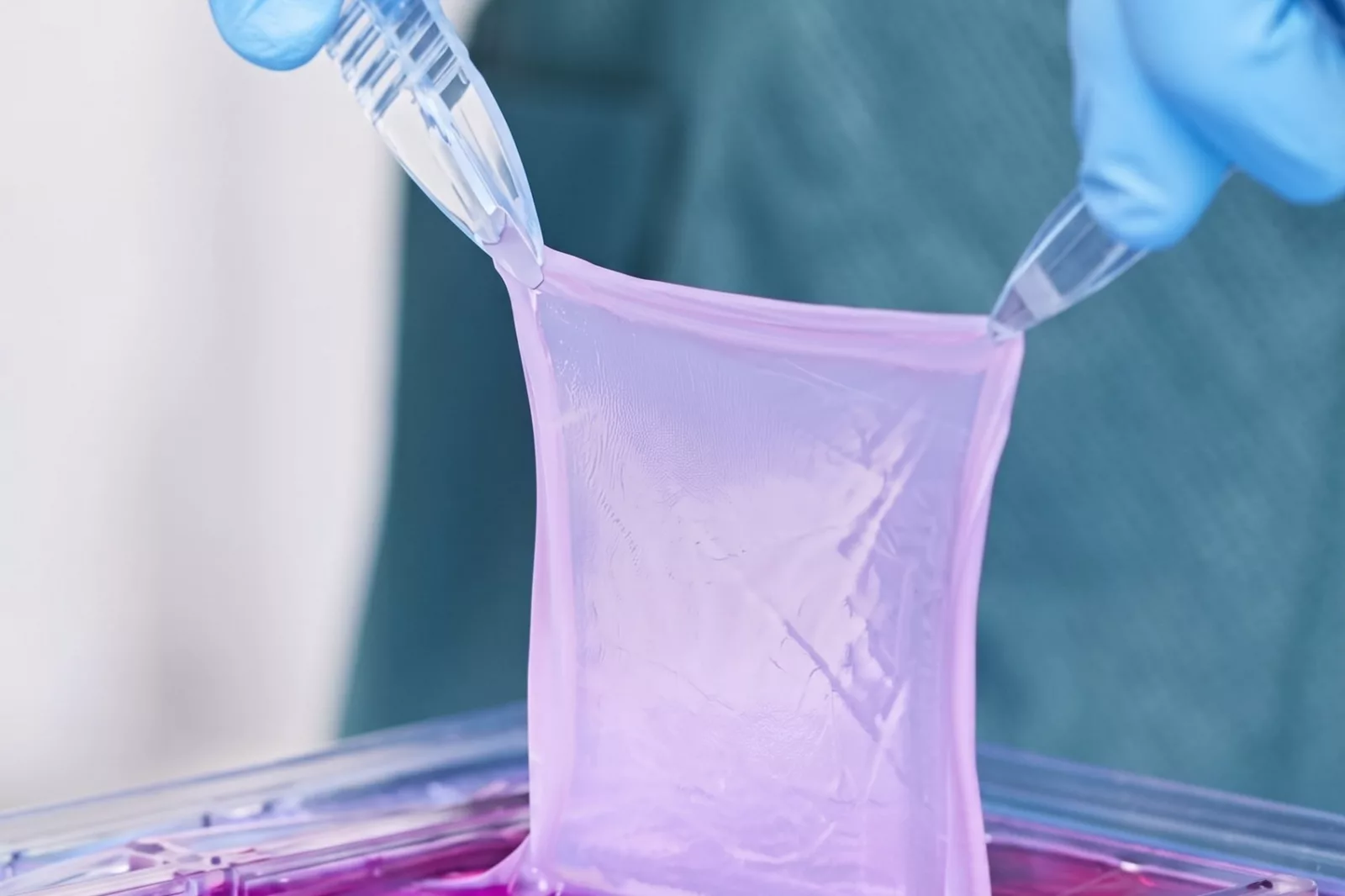
The company is in the preclinical phase; no patient has yet been treated with the product. The first clinical trial in Austria is the declared goal, and the collaboration with the Medical University of Graz is currently being structured. To that end, Ingenskin recently founded a subsidiary in Graz.
Manu came to Austria through his search for leading experts in burn medicine. He came across Lars-Peter Kamolz, professor at MedUni Graz, and got in touch. A visit to Graz revealed what had been hard to find in France:
“In Graz we can do two things at once: the clinical development and the scientific lab with GMP certification. You don’t see that often. Normally you have to go to an external contract manufacturer for that, who thinks more about revenue than about development.”
Before deciding on Europe, Ingenskin had also held talks in Saudi Arabia, the United Arab Emirates and Qatar, where a lot of money is flowing into biotech. In the end, the decisive factors were the wish to gain a foothold in Europe first and the speed with which doors opened in Austria:
“The ABA was great and connected us directly with the right people, who in turn connected us further in no time at all. Even though we come from another country, we were welcomed very warmly and quickly became part of the Austrian ecosystem. That’s quite unusual.”
No Time Is Wasted in Austria
Almost all of Ingenskin’s external partners are already based in Austria: a Viennese law firm, advisors in Graz and Vienna, and regulatory and non-clinical experts from Vienna. An office at the Graz Center for Knowledge and Technology Transfer in Medicine (ZWT) is currently being finalized, and in the long term a dedicated lab in Graz is conceivable. Manu himself still commutes but wants to relocate to Graz. He describes the local working style like this:
“In Austria, people want to get things done. If something makes sense and comes through the right people, it gets done without wasting time. That’s exactly the energy we have at Ingenskin too.”
It is a long road to market with several clinical phases; Manu expects the mid-2030s. In the long run, Graz could become the headquarters from which Ingenskin operates across Europe and beyond.
Research, Capital and Anchor Tenants
A dense ecosystem is growing around the two newcomers. According to Life Science Austria, Austria’s life sciences sector counts:
- Companies: 1,174 in biotech, pharma and medical technology, including Boehringer Ingelheim, Novartis and Ottobock
- Employees: 73,437, of whom 24,294 work in research and development
- Revenue: 40 billion euros, equivalent to 8.3 percent of GDP
- Research: 56 research institutions and a research intensity of 20.5 percent
The funding landscape is particularly relevant for startups. The FFG’s Austrian Life Sciences Programme awards up to three million euros per project from a budget of 45 million euros, and the Clinical Trials Austria platform is meant to simplify clinical trials and speed up patient recruitment.
A flagship is taking shape in Vienna’s Neu Marx district: the Life Science Center Vienna, costing around 170 million euros, is to bring biomedicine and AI together on 14,000 square meters by 2029. Its first major tenant will be the AITHYRA institute of the Austrian Academy of Sciences, financed by the Boehringer Ingelheim Foundation with 150 million euros, the largest private research grant Austria has ever seen.
Further examples in which the ABA provided advice show that international companies are making use of the location:
- Ketryx: The Austrian-American scaleup develops AI-powered compliance software for medical technology, has raised a total of 55 million US dollars and runs its central development hub in Vienna with around 40 employees. The ABA helped with banking, transfer pricing and trade licenses.
- Epitome Therapeutics: The spinoff of the European Molecular Biology Laboratory (EMBL) in Rome chose the Vienna BioCenter and started with four million euros. The ABA supported the founding and brought a top researcher from the US to Vienna via the EU Blue Card.
- INNEXIS: The operator of pharma and life science parks is developing a site in Orth an der Donau and plans to take over Novartis’ Life Science Campus in Kundl at the turn of the year, with around 264,000 square meters and more than 100 buildings.
Free Advice for International Companies
International companies and founders considering setting up or expanding a subsidiary in Austria can get free advice from INVEST in AUSTRIA at the ABA. Employers looking for skilled workers from abroad will find support at WORK in AUSTRIA. The Austrian Business Update keeps you up to date.
[ad_2]

Science Week: 9 Ireland-based marine experts you should know
Free and low-cost educational events are scheduled across the country this week.
The annual Science Week is back, and this year’s focus is water, life’s essential building block.
Marine enthusiasts, climate savants and all those interested in learning more about protecting our oceans can attend events scheduled across the country this week, including organised walks to explore Ireland’s waterways, panels and other creative activities.
Researchers across Ireland continue to contribute to our understanding of the water bodies that surround us, from creating Ireland’s first climate exposure map to testing out ways to revitalise coral reefs.
We love talking about science and the environment at SiliconRepublic.com, and in honour of the theme of this year’s Science Week, here are some of Ireland’s top experts in the marine environment and sustainability.
Anne Marie O’Hagan
Dr O’Hagan is a senior research fellow in the MaREI Centre for energy, climate and marine at University College Cork (UCC), and an expert across legal and policy related issues surrounding our oceans.
She is currently a principal investor on a Marine Institute-funded project on ocean law and marine governance. She has also worked on numerous cross-border multidisciplinary projects focused on aquaculture and maritime spatial planning.
O’Hagan is also the honorary secretary of the all-Ireland Marine Renewables Industry Association.
Caroline Cusack
Dr Cusack leads the Irish Marine Institute’s work in oceanography and ocean climate research, and helps develop downstream services, such as algal bloom alerts and extreme marine events warning systems.
She is also involved in European research projects focused on improving ocean observing and forecasting tools.
Cusack has led several of Marine Institute’s annual ocean climate research surveys on the RV Celtic Explorer.
Fiona Regan
Dr Regan is a professor of chemistry at Dublin City University (DCU) and the director of the DCU Water Institute. Among her areas of interest, Regan focuses on developing advanced tools for environmental monitoring.
She is currently working on a water contamination detection tool as part of a National Challenge Fund-supported project called ‘Restart’.
Current methods to detect water contamination take between 18 to 72 hours. Restart hopes to develop an in-situ sensor for monitoring water quality that will provide an early warning in case of bacterial pollution.
Regan has a PhD in analytical chemistry. She has previously held a lecturing position at Limerick Institute of Technology, before taking up a position in DCU in 2002.
Glenn Nolan
Nolan leads the Marine Institute as its director of marine environment and food, having worked at the Institute for more than two decades.
In his time at the Institute, Nolan has helped secure funding for significant marine research and development projects instrumental in enhancing Ireland’s ocean observation and forecasting capabilities.
Nolan leads teams that work to monitor and improve fish health, marine chemistry, shellfish safety and marine spatial planning.
A graduate in oceanography from the University of Galway, Nolan has also previously held teaching positions at ATU and the University of Malta.
Louise Allcock
Dr Allcock is a renowned marine scientist, currently based in the University of Galway as a professor in zoology.
She has chaired numerous expert-level meetings around marine habitat protection, was the former president of the Cephalopod International Advisory Council and has led numerous research cruises as chief scientist.
Allcock has a PhD from Liverpool University, and worked at museums in Scotland as a curator for molluscs before taking up an academic post first at Queen’s University Belfast (QUB), and subsequently at the University of Galway.
She leads the Jean Monnet Centre of Excellence for Ocean Futures, Science and Diplomacy at the University of Galway alongside Dr Stefan Fritz.
Martin White
Dr White, an observation-based oceanographer, has worked in the University of Galway since 1993, arriving as a postdoctoral researcher before becoming a lecturer in the then newly established Earth and ocean sciences course. He also works with the university’s Ryan Institute.
White’s research focuses on hydrography and the dynamics of deep and shelf seas, as well as land-ocean interactions and water quality in coastal seas.
He was part of an Irish Government Marine Protected Areas Advisory Group led by another one of the list’s features, which supports the Government’s decision-making on the expansion of protected marine regions.
Niall Maloney
Dr Maloney is a principal investigator at the Atlantic Technological University (ATU) Galway’s Marine and Freshwater Research Centre.
He has a background in physics, with a PhD in the field from Trinity College Dublin (TCD). Maloney is currently a lecturer in physics and instrumentation at ATU.
Maloney leads the NanoSA research team, a collaborative initiative between ATU Galway, DCU, and sustainable seafood producer Mowi, that focuses on rapid detection of bacterial and viral pathogens impacting the salmon aquaculture industry.
Niall McDonough
Dr McDonough is the director of policy, information and research services at the Marine Institute. He originally trained as a marine biologist with a bachelor’s in zoology from TCD and a PhD from QUB.
As the head of policy at the institute, McDonough’s work plays a key role in supporting and promoting marine research and innovation at national and international level.
He coordinates the implementation of Ocean Knowledge 2030, Ireland’s national strategy for marine research and innovation, and chairs the national Marine Research Funders’ Forum. He also manages the Marine Institute’s roughly €12m-a-year external research funding programme.
Tasman Crowe
University College Dublin’s (UCD) vice-president for sustainability, Dr Crowe, previously chaired the Marine Protected Areas Advisory Group. In 2021, he was named chair of the National Biodiversity Forum, an independent expert group that monitors Ireland’s approach to biodiversity protection.
Crowe joined the UCD staff in 2001 and has since held served as the director of the UCD Earth Institute and co-director of the UCD bachelor’s programme in sustainability.
He has published more than 110 research papers and book chapters and has received more than €4.25m in research funding from national and international funding agencies.
[ad_2]

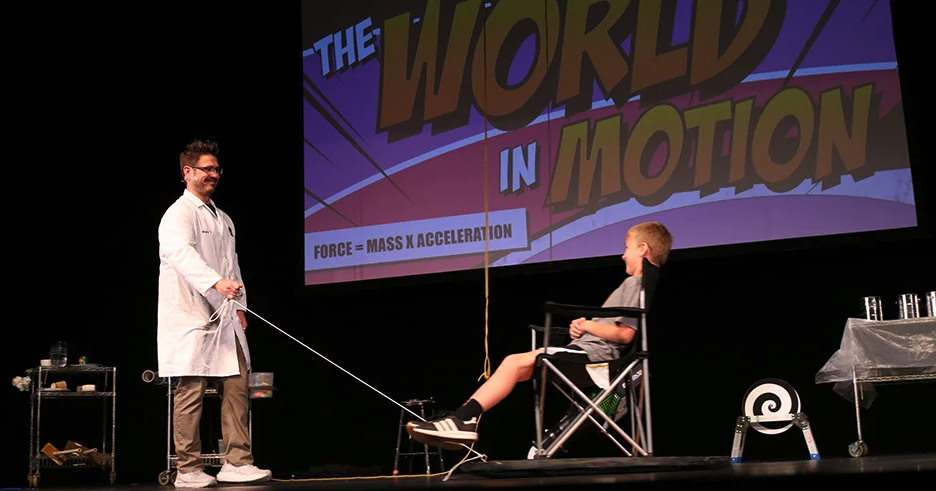
Science Takes Center Stage At The Niswonger With Mr. C's The World In Motion
[ad_2]

The End of Everything Captures Booker Prize

[ad_2]

BioUK acquires certain key assets of SEHTA to strengthen support for life science SMEs across the UK
BioUK Ltd., the not-for-profit membership organization focused on catalyzing success in UK life sciences, today announced that it has acquired certain key assets of SEHTA (Science and Engineering Health Technologies Alliance) through an asset purchase agreement.
Established thirty years ago, BioUK provides practical help and support to the life science ecosystem, with a core focus on R&D SMEs. The organization aims to create connections, save its members time and money, and help secure investment through a portfolio of tailored events and services. The acquisition of selected assets from SEHTA aligns with BioUK's mission and creates the opportunity to expand the organization’s membership base as well as broadening BioUK's support offerings in the areas of market access and non-dilutive investment support.
Formed in 2005, SEHTA represents a global network of more than 1,200 members working to drive innovation in healthcare. The organization has built a reputation for supporting MedTech and HealthTech companies in their journey from concept to commercialization through expert business support services. SEHTA's close relationships with the NHS and expertise in health economics enable companies to better navigate the pathway into the service through strategic economic and market access advice, alongside grant writing support.
Neil Roberts (SEHTA's Managing Director) and Clare Ansett (Operations Manager) will become part of BioUK's transition team to support those SEHTA members who would benefit from transferring over to BioUK membership and in supporting the relationships with the previous SEHTA expert associate network. The SEHTA brand will be wholly absorbed and will operate under the BioUK brand.
"The integration of some of SEHTA's key assets is an important strategic move for BioUK, and we're delighted to welcome its members to the BioUK community. Bringing those assets under the BioUK brand is an opportunity to expand beyond our biotech and therapeutics roots, widening our SME ecosystem and, through incorporating SEHTA's expertise, allowing us to better fulfil our mission to catalyze success across the entire life science sector. We will be hosting a series of new membership onboarding events during November, providing an opportunity for the SEHTA community to meet us as a team and explore how we can support their growth journey."
Stuart Rose, CEO, BioUK
Neil Roberts, MD of SEHTA said: "For twenty years, SEHTA has helped MedTech and HealthTech SMEs successfully navigate the path from concept to commercialization, and I\'m proud of the community we\'ve built. This asset transfer to BioUK is a real step forward for our members. They gain access to a broader nationwide network, industry leading events, more investor connections, and significant savings through BioUK's purchasing consortium, while the market access and grant-funding expertise they value carries on. Our MedTech and HealthTech knowledge will now be included to make BioUK the prominent membership organization within the life science sector. We look forward to supporting our members through the transition and helping them make the most of the wider benefits BioUK offers."
https://biouk.com/ itemtype=\" href="https://biouk.com/ itemtype=\" http:="" schema.skype.com="" hyperlink\"="">
[ad_2]
Seminole Science Observes Hispanic Heritage Month with Annual Festival
Seminole Science Charter School wrapped up Hispanic Heritage Month in style. The campus recently invited families to taste classic dishes from different countries, including Venezuela and Puerto Rico. Food was cooked by parents and businesses Parva Colombian Bakery, Tortilleria La Mexicana and Cocina Maya Mexican Grill & Mezcaleria. Attendees also enjoyed dance performances in several styles – such as plena and merengue – and a re-creation of the Disney movie “Coco.” The event continued the school’s tradition of honoring the rich diversity of its students and staff.
[ad_2]

NYC Ferry vessels to become floating classrooms, bring marine science to thousands of students
NYC Ferry's horn will soon become a new school bell, turning ferries into floating classrooms.
A new partnership between the Billion Oyster Project and NYC Ferry is using New York Harbor as a hands-on learning environment for students across the city. Starting this school year, the harbor will give thousands of students an opportunity to explore marine science up close and personal.
The 90-minute educational trips will take place during off-peak ferry travel hours on school days throughout the academic year. The goal is to bring approximately 10,000 students aboard each year to learn about marine ecology, oyster restoration and climate resilience.
"There's a lot of people that are relying on NYC Ferry every single day, but during those off-peak hours, we have a little bit more capacity and this is a great opportunity to use it," said James Wong, executive director of NYC Ferry.
For some students, that exposure could help shape their future.
"Thousands of students will have the opportunity to see New York in a whole new way," said Pete Malinowski, president and CEO of the Billion Oyster Project.
Sara Soto, a senior at Urban Assembly New York Harbor School, said she hopes to become a marine biologist.
"It's definitely like an experience that opens like your eye, and like your imagination, and how you perceive the city," Soto said.
For fellow senior Jocsan Rojas, an early introduction to the Billion Oyster Project sparked an interest. The Sunset Park, Brooklyn, native is now studying vessel operations.
"It's important to let people know about the opportunities they have. I know a lot of people from Sunset and my background don't know and like they're shocked when they hear you take a boat to school every day," Rojas said.
Michael Hojnacki, principal of New York Harbor School, said introducing students to careers on the water can open doors to careers they may not have previously considered.
"Maritime careers are a big industry. It's booming right now, from being ship captains, deck hands to building ships, building submarines, welding underwater," Hojnacki said.
Brooklyn City Council Member Lincoln Restler said the Harbor School's model proved the interest is there.
"This is really going to capture the imagination of young people all across the city," he said.
Educators interested in bringing their students aboard can contact the Billion Oyster Project, which is leading the educational programming.
Have a story idea or tip in Brooklyn? Email Hannah by CLICKING HERE.
[ad_2]

Contribution to Science

[ad_2]

The 2026 Booker Prize was awarded to an 81-year-old science fiction writer who set two records at once
British writer Michael John Harrison has won the 2026 Booker Prize for his novel The End of Everything ("The End of Everything"). At 81, he became the oldest winner in the award’s history and the first laureate to come from the science fiction genre, UNN writes.
Details
The novel tells the story of the near future, in which humanity has survived a mysterious catastrophe that led to the collapse of the social order. The author deliberately does not explain all the circumstances of the catastrophe, so that readers experience the same bewilderment as the characters in the work.
The previous age record belonged to Canadian writer Margaret Atwood, who received the Booker Prize in 2019 at the age of 79.
What is known about the writer
Michael John Harrison, also known as M. John Harrison, began his literary career in the 1960s with publications in the science fiction magazine New Worlds, where he later worked as a literary editor.
Over the course of his career, the writer has published 13 novels. Among his best-known works are the Viriconium series ("Viriconium"), as well as the novels Light ("Light") and Nova Swing ("Nova Swing").
Although Harrison dislikes genre classifications of his work, he is regarded as one of the most influential science fiction authors.
He is a truly original thinker, a writer who has shaped his genre and takes ideas seriously
[ad_2]

Scientists think they've found ancient remnants of dinosaur blood

[ad_2]