









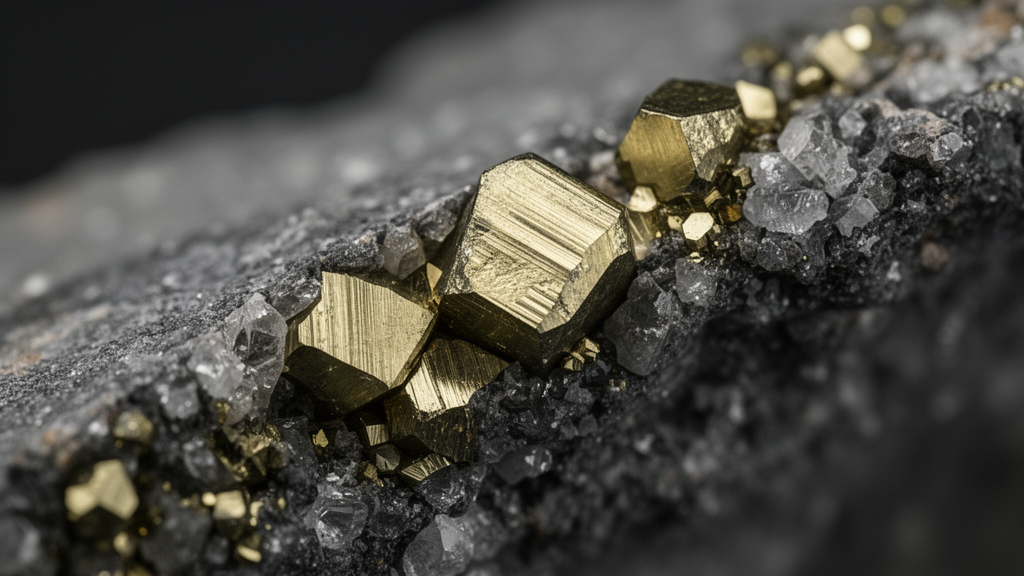
A mineralogical investigation of hydrothermal pyrite from the Donghuofang gold deposit in Inner Mongolia indicates that ore-forming fluids originated from magmatic-hydrothermal processes associated with the regional Hercynian alkaline magmatic system. According to the research published in Discover Applied Sciences, the gold mineralization took place under intermediate-temperature conditions following multiple episodes of hydrothermal overprinting within the Wulashan–Jining metallogenic belt.
The Wulashan–Jining belt represents an important polymetallic province in the western segment of the northern margin of the North China Craton, hosting iron, gold, molybdenum, copper, lead, zinc, graphite, and muscovite resources. While the Donghuofang deposit serves as a representative example of gold mineralization in this geological setting, its specific genetic classification and ore-forming mechanisms have remained a subject of ongoing debate among geoscientists.
To evaluate the genetic type and precipitation history of the deposit, the researchers performed systematic in situ trace element and sulfur isotope analyses on hydrothermal pyrite grains across four sequential mineralization stages. These micro-analytical techniques allowed the team to track compositional variations and geochemical evolution across distinct episodes of hydrothermal activity preserved within the mineral samples.
The geochemical data show that pyrite from Stage I contains the highest concentrations of arsenic among all documented stages, reflecting the highest crystallization temperatures in the sequence. In contrast, pyrite associated with the main gold mineralization phase, designated as Stage II, features notably higher cobalt concentrations alongside elevated sulfur-to-iron atomic ratios compared with subsequent stages.
Comparisons between the main mineralization event and later stages demonstrate that Stage II pyrite maintained relatively higher crystallization temperatures than the late-stage pyrites from Stages III and IV. By evaluating the combined trace element distributions and sulfur-to-iron systematics across the four intervals, the authors established a progressive cooling trend from Stage I through Stage IV, with primary gold precipitation taking place during the intermediate-temperature Stage II.
Isotopic characterization of the hydrothermal pyrite yielded sulfur isotope values ranging from plus 4.30 per mil to plus 5.63 per mil. When integrated with pyrite trace element patterns and regional geological relationships, these isotopic signatures support an interpretation that the ore fluids were derived from a magmatic-hydrothermal origin related to the Hercynian alkaline magmatic system, with crustal material incorporated as fluids ascended through the crust.
Based on the geochemical evidence and structural controls, the authors classify Donghuofang as an orogenic gold deposit. The resulting mineralization manifests primarily as gold–quartz–carbonate vein systems that were localized and controlled by regional ductile shear zones within the craton margin.
Subject of Research: Mineralogical and geochemical analysis of pyrite from the Donghuofang gold deposit
Article Title: Mineralogical study and geological significance of pyrite from the Donghuofang gold deposit in Inner Mongolia
Article References: Zhao, Y., Wang, X., Zhang, Z., & Sun, K. (2026). Mineralogical study and geological significance of pyrite from the Donghuofang gold deposit in Inner Mongolia. Discover Applied Sciences. https://doi.org/10.1007/s42452-026-09671-1
Image Credits: AI Generated
DOI: 10.1007/s42452-026-09671-1
Keywords: Donghuofang gold deposit, Inner Mongolia, pyrite mineralogy, trace element geochemistry, sulfur isotopes, orogenic gold, North China Craton, Wulashan-Jining metallogenic belt, hydrothermal overprinting, magmatic-hydrothermal fluids, Hercynian alkaline magmatism, gold-quartz-carbonate veins, ductile shear zones, ore genesis, mineral crystallization temperature, economic geology