







Pakistan is preparing to send its first astronaut into space aboard a Chinese crewed mission, marking a major milestone in the country’s space program and its growing cooperation with Beijing.
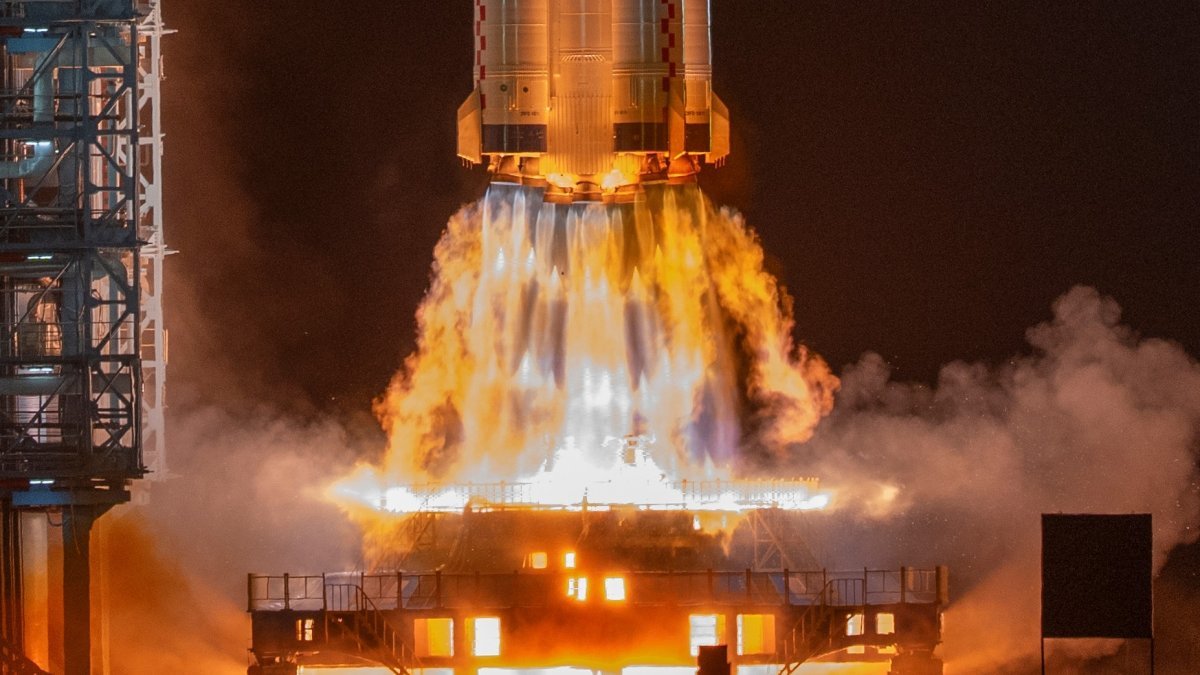
The Pakistani astronaut will join China’s Shenzhou-24 mission as a payload specialist, becoming the first foreign astronaut to participate in a crewed flight to China’s space station, the China Manned Space Agency announced Saturday.
The astronaut will spend a short period in orbit conducting mission-related activities before returning to Earth aboard the Shenzhou-23 spacecraft, according to the agency.
The mission follows a cooperation agreement signed by China and Pakistan in Islamabad in February 2025 to select and train Pakistani astronauts for missions to China’s space station.
Following three rounds of selection and assessment, Muhammad Zeeshan Ali and Khurram Daud were chosen as reserve astronauts and subsequently entered China’s astronaut training program.
After completing the required training and evaluations, one of the two candidates will be selected for the flight, while the other will remain on standby as a backup.
The mission will mark the first time China’s human spaceflight program has carried out a joint crewed flight involving Chinese and foreign astronauts, opening a new chapter in the two countries’ space partnership.
For Pakistan, the opportunity extends beyond the symbolic achievement of sending an astronaut into orbit. Participation will provide practical exposure to human spaceflight, scientific experiments, payload operations and the technical demands of working aboard an orbital space station.
Zhang Chaozhe, director of the Pakistan Study Center at Sichuan University, said the mission could help Pakistan develop expertise in an area that requires substantial technological resources and specialized training.
“Human spaceflight is one of the most technologically demanding areas of scientific cooperation. For Pakistan, sending an astronaut to China’s space station means gaining access to training, research and operational experience that would be difficult to develop independently,” Zhang said.
The agreement builds on more than three decades of space cooperation between Beijing and Islamabad, which initially focused on satellite development and launches before expanding into more advanced areas.
In 1990, Pakistan’s first experimental satellite, Badr-1, was launched aboard a Chinese rocket from the Xichang Satellite Launch Center.
The partnership has continued to produce joint achievements. In April 2026, Pakistan’s PRSC-EO3 remote-sensing satellite was successfully placed into orbit aboard a Chinese Long March-6 rocket, further strengthening cooperation in satellite technology and space-based observation.
Zhang said the decision to include a Pakistani astronaut in a Chinese crewed mission reflected the growing depth of bilateral cooperation and trust.
“China-Pakistan space cooperation has gradually expanded from satellite launches and related projects to a much more advanced field. The participation of a Pakistani astronaut in a Chinese crewed mission reflects the growing depth of bilateral trust and technological cooperation,” he said, as quoted by CEN.
He added that human spaceflight requires particularly close coordination because of the technical complexity involved in astronaut safety, spacecraft systems and mission operations.
The development also highlights China’s efforts to expand international participation in its space station program, particularly among countries that lack the infrastructure and resources to independently conduct human spaceflight missions.
Through cooperation with the United Nations Office for Outer Space Affairs (UNOOSA), China has created opportunities for international institutions to conduct scientific experiments aboard its space station.
The first round of the initiative selected nine projects involving 23 institutions from 17 U.N. member states, according to UNOOSA.
The program provides countries with less-developed space industries an opportunity to participate in orbital research without having to establish their own launch systems and space station infrastructure.
Zhang said international partnerships could help make space exploration more accessible to countries that have traditionally lacked the resources to participate.
“Space exploration should not remain an opportunity available only to a small number of countries with established space programmes. International cooperation can enable developing countries to participate in scientific research, accumulate experience and gradually strengthen their own capabilities,” he said.
