
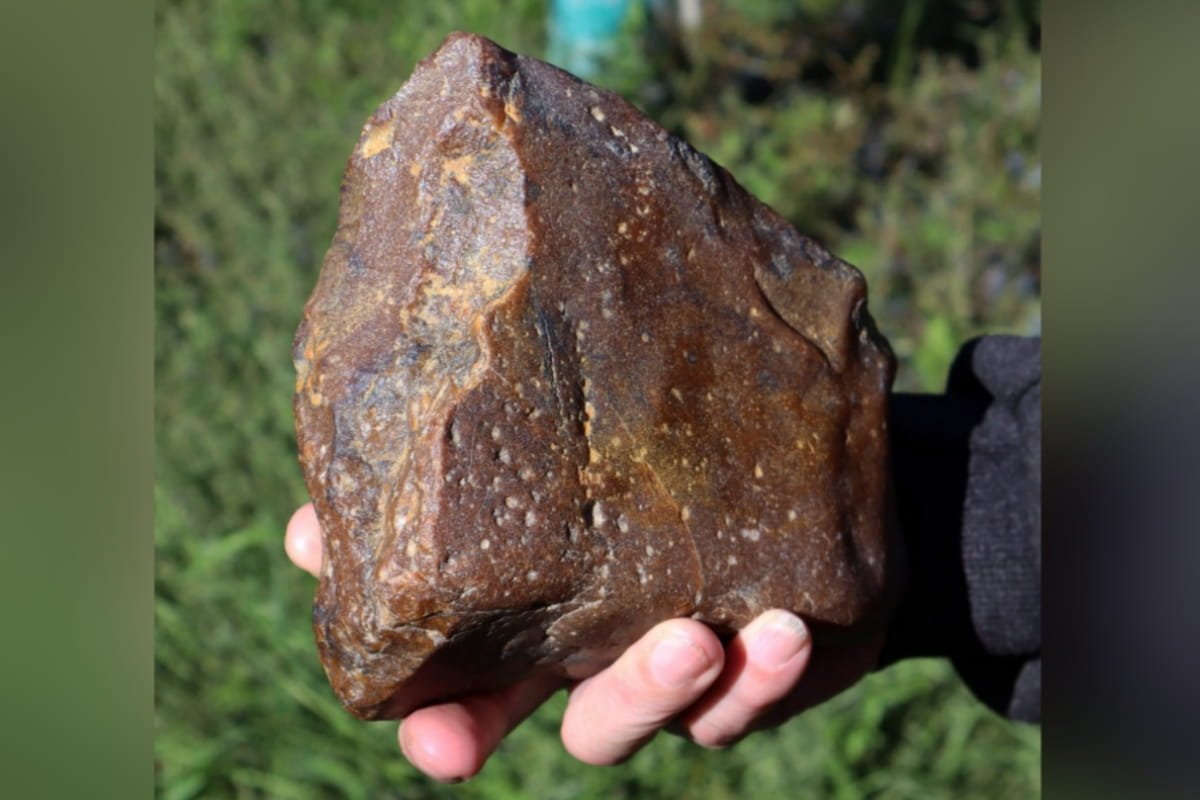
Archaeologists in Russia have found the oldest Acheulean stone tools known from Eastern Europe, not counting the Caucasus. They came from Khryashchi, a Lower Paleolithic site in the lower Severskiy Donets valley in southern European Russia. No other site in the region has yielded similar finds. The team from the Institute for the History of Material Culture, Russian Academy of Sciences, made the discovery in a project funded by Russian Science Foundation grant No. 26-18-01024. The project studies the earliest settlement of the steppes in the south of the Russian Plain.

The finds include large chopping and cutting tools. By shape and function, researchers sort them into handaxes, picks, and cleavers. Making them took complex technology and a high level of thinking. The tools are massive, with strong edges and points. People likely used them to shape wooden spears and clubs, to make digging sticks for gathering food, and to butcher large animals. Bones of hoofed animals, found in the same layer for the first time, support this idea. Only a few bones turned up, from medium-sized animals such as horses and deer. Soil conditions might have kept organic remains from surviving well. The heavy build of the tools suggests the hunters also butchered big thick-skinned animals, elephants for example.
Fieldwork this year gave the first clues to the age of the site and the setting of its early hunters. Leading researcher Vyacheslav Shchelinsky dates the camp to the end of the Oka glaciation or the start of the Likhvin interglacial, about 450,000 to 400,000 years ago. The climate was fairly cold, yet people camped on the beach of an ancient Severskiy Donets or Don. The spot offered protection from predators, food from the water, room for temporary huts, and plenty of stone. Floods covered traces of the camp from time to time, but people returned again and again. River crossings or animal watering places might have been nearby. Shchelinsky describes their lifestyle as very mobile.
The tools also hint at where these people came from. Their technology, types, and mix match early Acheulean industries of Eurasia. Eastern Europe has no known sites of this kind, but the Caucasus has many, especially on the Taman Peninsula in the western Ciscaucasia. A southern origin is highly likely. The people of Khryashchi or their ancestors came from the Caucasus, most likely during the early Middle Pleistocene, when the Manych Strait was not active. At times the strait blocked the movement of ancient people.
The Paleolithic Department and the Experimental Traceology Laboratory of the institute lead the research. Research at Khryashchi will continue next year. The team expects new data on the first settlement of the Russian Plain and the material culture of its earliest people.
More information: Russian Academy of Sciences









Leave a Reply