
The new plan commits several parts of the government to working with the Federal Aviation Administration on anti-drone measures, but is relatively light on detail.
The Trump administration announced on Monday an expanded federal effort to defend American airspace against unmanned aircraft threats. As part of that effort, five cabinet-level agencies signed a new memorandum of understanding to cooperate in anti-drone efforts: the Department of Transportation (DOT), Department of Defense (DOD), Department of Homeland Security (DHS), Department of Energy (DOE), and Department of Justice (DOJ).
The agreement establishes a coordinated process for evaluating and deploying counter-unmanned aircraft systems (C-UAS), aiming to strengthen homeland security while protecting civilian aviation.
The US Government Is Trying to Figure Out What to Do About Drones
Small unmanned aircraft, which have become increasingly accessible, inexpensive, and capable, have long been a nuisance for the Federal Aviation Administration (FAA). More recently, however, they are also becoming a homeland security concern. Drones can be used for surveillance, smuggling, reconnaissance, or potentially even violent attacks. As the war in Ukraine has demonstrated, it is trivial to strap a grenade to a drone, fly it towards a person or target one wishes to harm, and detonate it. These tactics were prominently used during Ukraine’s “Operation Spiderweb” in June 2025, when small low-cost Ukrainian drones destroyed Russian aircraft costing hundreds of millions of dollars; the US military now faces similar vulnerabilities on its own military bases.
The Trump administration has identified several areas of concern:
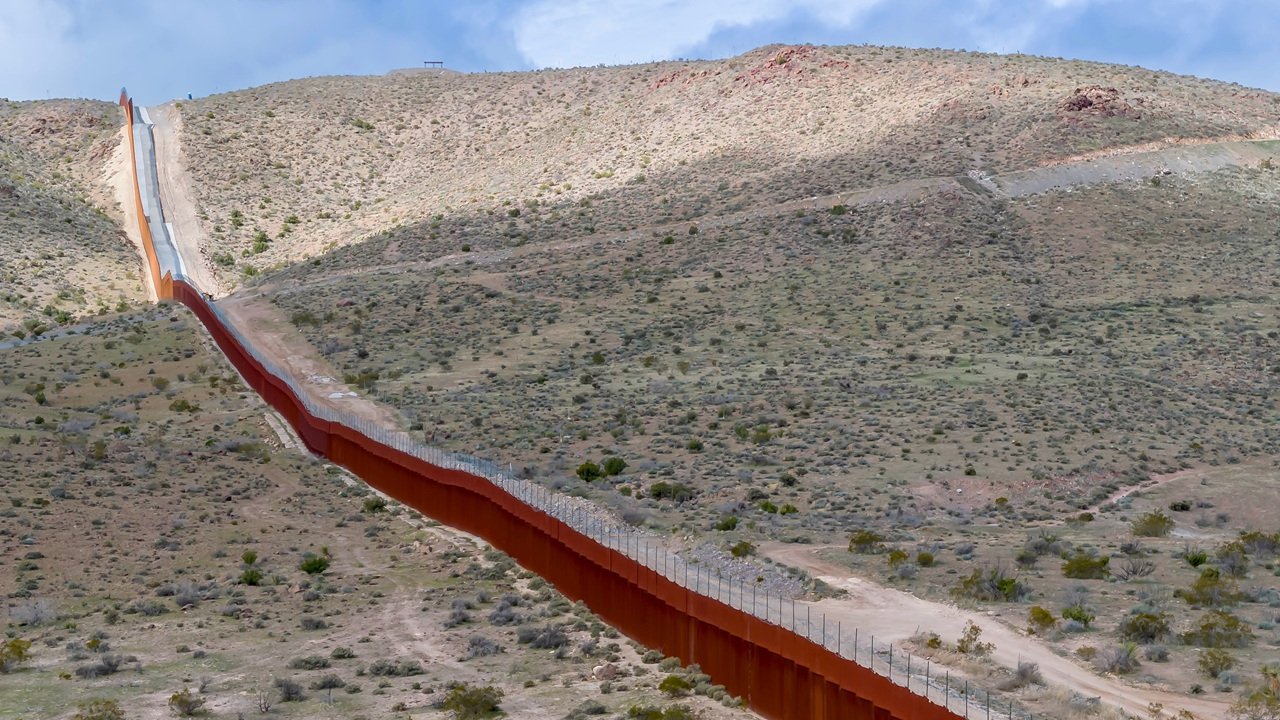
- The southern border, where drone activity is associated with criminal organizations and cartels;
- Military installations, where unauthorized aircraft can potentially threaten sensitive facilities;
- Energy infrastructure, which is vulnerable to unmanned threats; and
- Public events, where drones can be used for wholesale terrorist attacks against large gatherings. The FBI recently arrested five individuals allegedly plotting to use explosive-equipped drones near a White House event, which further illustrates the growing domestic security implications of drone technology.
The new memorandum establishes a formal process for federal agencies to coordinate counter-drone research, testing, evaluation, and deployment. Agencies will work with the Federal Aviation Administration (FAA) and Federal Communications Commission (FCC). Cooperation will cover technologies capable of detecting unauthorized drones, tracking their movements, disabling or stopping them, and potentially taking control of threatening aircraft. Agencies will share technical requirements, testing data, and operational assessments. The FAA will review proposed systems for aviation safety risks. The DOT will help determine how counter-drone capabilities fit into the broader transportation system. The goal here ultimately is to streamline deployment without creating conflicts between federal agencies or compromising civilian flight operations.
Anti-Drone Lasers Could Be One Solution to America’s Border Woes
The agreement also builds on earlier federal cooperation involving counter-drone operations along the US-Mexico border. The FAA and DoD previously coordinated a “temporary flight restriction,” or TFR, along the southern border. They also completed a safety assessment involving a high-energy laser counter-drone system.
Directed-energy weapons offer a potential means of disabling drones without relying on conventional interceptor missiles. On the flip side, the deployment of directed-energy weapons near civilian aviation raises safety concerns. Laser systems require careful coordination to prevent unintended exposure of aircraft or other hazards. The administration says these technologies can be deployed safely when appropriate airspace restrictions and operational safeguards are established.
Vital to the new agreement is the objective that counter-drone operations do not create additional aviation hazards. Counter-drone technology could involve lasers, electronic interference, or other systems with the potential to cause problems for nearby aircraft and their navigation equipment. The FAA will be tasked with conducting safety risk assessments of proposed deployments. Reviewers will pay close attention to the potential for interference with civilian aircraft and airspace coordination. In essence, the arrangement will seek to balance national security requirements with the safety of the civilian aviation sector in a reflection of the growing importance of counter-drone capabilities in domestic security.
About the Author: Harrison Kass
Harrison Kass is a writer and attorney focused on national security, technology, and political culture. His work has appeared in Tablet, City Journal, The Hill, The Spectator, and The Cipher Brief. He holds a JD from the University of Oregon and a master’s in Global & Joint Program Studies from NYU. More at harrisonkass.com.









Leave a Reply