









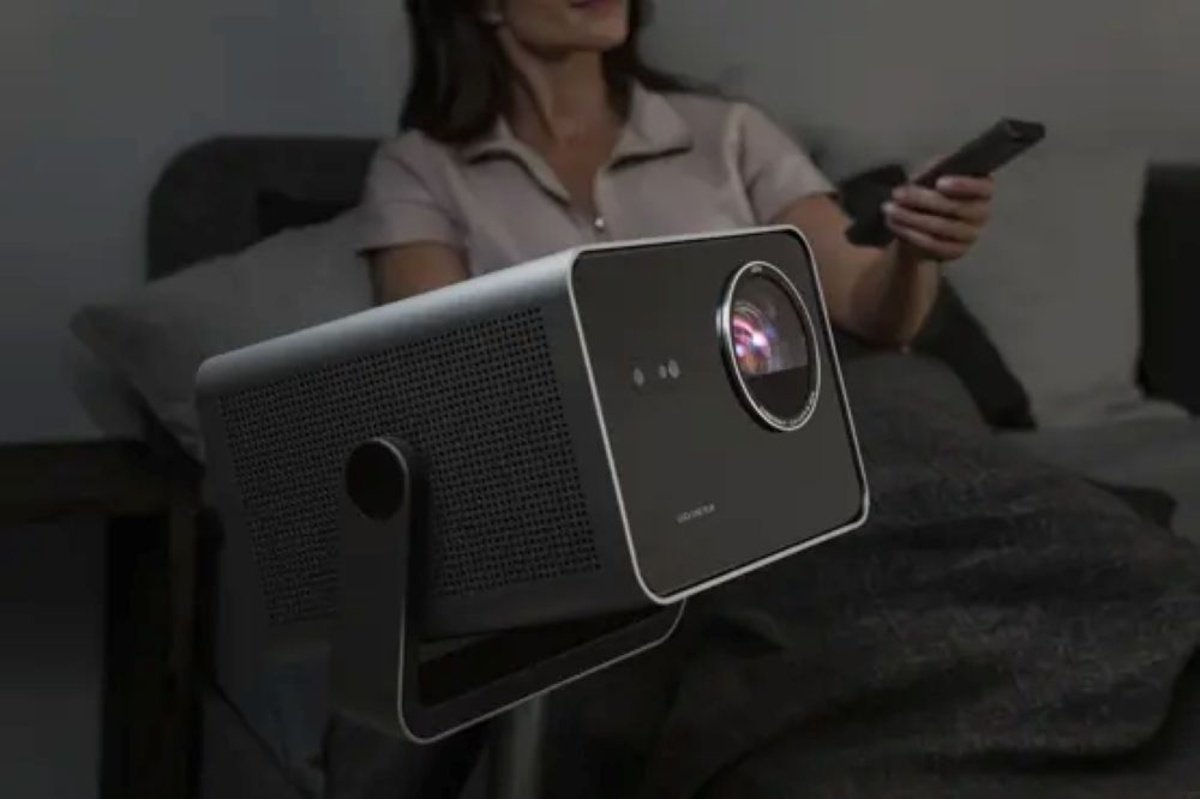
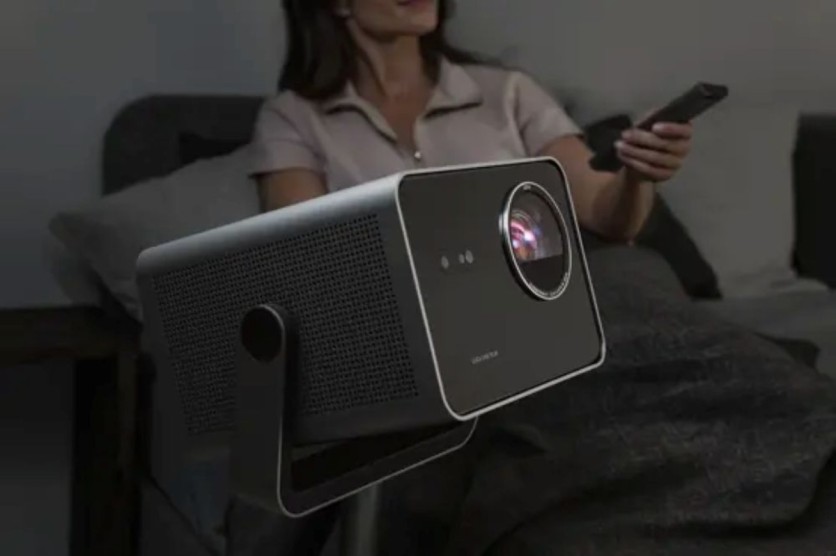
Leica has quietly become one of the more unusual names in home cinema. The brand built its 157-year reputation on camera optics, not living-room projectors — yet its Cine Play line, launched in partnership with Chinese electronics giant Hisense, has earned genuine attention from AV enthusiasts willing to pay a premium for German industrial design and proprietary Summicron lens glass. This week, Leica’s latest model arrived in Western Europe.
The Leica Cine Play 1 Plus went on sale in the Netherlands and Ireland on November 10, 2026, through distributor Transcontinenta Group, priced at €2,995 (approximately $3,355) including VAT — a €505 step down from the original Cine Play 1 model’s €3,500 European launch price. Availability is expected at select AV retailers through mid-November 2026.
The headline specification is a 4,200 ANSI lumen RGB triple-laser engine paired with 4K resolution output via a single-chip DLP (Digital Light Processing) imaging system and coverage of 110% of the BT.2020 wide color gamut. The projector pairs with VIDAA 9.6, the smart TV platform developed by Hisense, with Dolby Vision, HDR10+, Apple Home, and Control4 compatibility. For buyers in both countries, it ships with a Leica Summicron-class zoom lens covering a 0.9–1.5:1 throw ratio, capable of projecting images between 65 and 300 inches (165 and 762 cm).
What 4,200 Lumens Actually Means for Your Room
The brightness figure matters more than most projector specifications, because it directly determines whether a projector can be used in a room with ambient light — or only in a fully darkened theater. ANSI lumens is the standard measurement used in the professional AV industry and is equivalent to the ISO lumen standard; both measure the same thing by the same method, so a projector rated at 4,200 ANSI lumens and one rated at 4,200 ISO lumens are equally bright.
At 4,200 ANSI lumens, the Cine Play 1 Plus is bright by home cinema standards and usable in partially lit rooms. What it cannot do is match the XGIMI Horizon 20 Max projector, released in October 2025, which is rated at 5,700 ISO lumens — 36% brighter than the Leica’s figure. For buyers intending to use a projector with curtains open during the day, the gap is material. For evening viewing in a room with controlled lighting, 4,200 ANSI lumens is sufficient.
One additional measurement context: the Leica Cine Play 1 Plus was introduced first in China in November 2025 at a brightness rating of 3,500 CVIA lumens. CVIA (China Video Industry Association) lumens use a slightly different calibration standard than ANSI or ISO lumens, but the figures are not directly comparable. The 4,200 ANSI lumen figure applies to the European specification and is the relevant number for buyers in the Netherlands and Ireland.
The RGB Laser Engine Explained
Conventional projectors use a single white light source — typically a lamp or a blue laser with a phosphor wheel — to produce color. An RGB laser engine uses three separate laser sources, one each for red, green, and blue, that are mixed to produce the final image. The practical result is a wider range of colors the projector can reproduce, and a longer-lasting light source: Leica rates the Cine Play 1 Plus’s laser engine at 25,000 hours of service life under normal use conditions.
The 110% BT.2020 color gamut figure is the number most often cited in Leica’s materials for this product. BT.2020 (also called Rec.2020) is the color standard defined for Ultra HD Blu-ray and HDR streaming content, covering a significantly wider range of colors than the sRGB standard that most displays targeted historically. A projector rated at 110% of BT.2020 covers more of that standard than the standard itself defines, meaning it can reproduce colors at the extreme edges of what current HDR content encodes. In practice, most streaming content and Blu-ray discs use a subset of BT.2020, so the number describes ceiling performance rather than typical real-world viewing conditions.
The 4K output on the Cine Play 1 Plus is produced through pixel-shifting: the underlying DLP chip uses a single 0.47-inch DMD (Digital Micromirror Device) that is not a native 4K chip, but its XPR (eXpanded Pixel Resolution) four-phase pixel-shifting technology produces a final 3,840×2,160 output. This is the standard engineering approach at this price point in the projector industry and does not represent a performance compromise for typical home cinema viewing material.
The Leica Optics Factor
The Summicron designation marks the lens as belonging to Leica’s f/2 optical design family — the same naming convention used on Leica’s camera lenses. What this means in a projector context is a zoom lens designed and manufactured to Leica’s internal optical tolerances, with what the company describes as a Summicron-class specification covering focus uniformity, chromatic aberration control, and edge-to-edge sharpness.
The lens covers a 0.9–1.5:1 throw ratio, meaning the projector needs between 0.9 and 1.5 times the desired image width in throw distance to reach that image size. At the 0.9:1 short end, a 100-inch (254 cm) image requires a throw distance of approximately 2.3 meters. At the 1.5:1 long end, the same 100-inch image requires approximately 3.8 meters. This range is flexible enough to work in most standard living rooms and dedicated home theater rooms without requiring ceiling mounting.
An optional floor stand, sold separately at €395 (approximately $442), positions the projector for placement in front of a seating area rather than ceiling-mounted. The stand is compatible with the Cine Play 1 Plus’s throw ratio geometry at standard room depths.
VIDAA 9.6: The Smart Platform Question You Should Ask Before You Buy
Every projector in the Leica Cine Play line runs VIDAA, a smart TV operating system developed and maintained by VIDAA International, a subsidiary of Hisense Group. VIDAA 9.6 is the version shipping on the Cine Play 1 Plus. It supports the major streaming services — Netflix, Prime Video, Disney+, Apple TV+, YouTube — and includes voice assistant integration, a built-in app store, and the same interface architecture used on Hisense’s own smart TV line. For everyday use, VIDAA 9.6 functions as a full-featured smart TV platform.
The question that matters for European buyers is not how VIDAA performs. It is who controls VIDAA.
Hisense Group (海信集团) is headquartered in Qingdao, China. The company’s controlling shareholder is Qingdao SASAC — the State-owned Assets Supervision and Administration Commission of Qingdao municipal government — which maintains effective state control status under Chinese corporate law. While Hisense undertook a mixed-ownership reform in 2020–2021 that brought in additional shareholders, Qingdao SASAC remains the ultimate institutional backer.
What this means in practice is that Hisense, as a Chinese organization, is legally bound by China’s National Intelligence Law (2017). Article 7 of that law states: “Any organization or citizen shall support, assist, and cooperate with state intelligence work in accordance with the law.” This obligation applies unconditionally and cannot be waived by corporate policy or denied through public statements.
VIDAA collects the categories of data typical of a modern smart TV platform: viewing history, content search queries, device usage analytics, and voice command data where microphone features are enabled. These data categories reside on Hisense-operated infrastructure. The National Intelligence Law’s Article 7 obligation means that Chinese state intelligence agencies can request access to data held by Chinese organizations — including Hisense — and those organizations are legally required to comply.
In December 2025, the Texas Attorney General filed an enforcement action against Hisense and four other TV manufacturers under the Texas Deceptive Trade Practices Act (DTPA), alleging that VIDAA-based devices collected Automatic Content Recognition data without adequately disclosing to users that Chinese law requires Hisense to make that data available to the Chinese government on demand. A temporary restraining order specifically against Hisense was granted by a Texas court on December 17, 2025. Neither action has reached final judgment as of November 2026.
A related California federal class action makes similar allegations regarding data collection and disclosure practices. Neither case has reached judgment as of November 2026.
Hisense has denied that it shares user data with the Chinese government. That denial is not a legal shield: it reflects corporate intent, not corporate capability, and corporate intent cannot override a statutory obligation.
For buyers who want the optics without the data-privacy considerations, the hardware does include HDMI 2.1 with eARC, allowing the projector to function as a “dumb” display driven entirely by an external media player. The HDMI-only approach sacrifices the VIDAA convenience layer entirely and requires a separate streaming device — but it does remove the platform’s data collection from the equation.
Competitive Reality Check
The XGIMI Horizon 20 Max, released in October 2025, is the most direct specification competitor to the Cine Play 1 Plus in the European market. It is rated at 5,700 ISO lumens — 36% brighter than the Leica. It runs Google TV rather than VIDAA, which means its smart platform data obligations run to Alphabet rather than to a Chinese state-linked company. It launched at $2,999 in the United States and is available in Europe at €2,999 — €4 more than the Cine Play 1 Plus.
Both the Leica and the XGIMI use RGB triple-laser engines and both claim coverage of 110% of the BT.2020 color gamut. Neither manufacturer’s claim for the BT.2020 figure is independently certified by a third-party measurement authority at the time of publication. Where these two projectors differ on color is in their optical delivery, not their laser specifications.
What the Leica offers that the XGIMI does not: the Summicron-class zoom lens — a proprietary Leica optical design — and the aluminum unibody construction that underpins the brand’s industrial design identity. The XGIMI uses a plastic chassis. For buyers to whom the Leica name, build quality, and optical pedigree represent tangible value, the €4 price premium over the XGIMI is essentially a rounding error. For buyers who prioritize brightness above optics heritage and have no data-privacy objection to Google TV, the XGIMI’s 5,700-lumen output is the stronger specification.
The original Leica Cine Play 1 debuted at $3,795 in the US and €3,500 in Europe. The Cine Play 1 Plus’s €2,995 European price represents a €505 reduction from that launch price, suggesting Leica and Hisense are adjusting positioning as the premium DLP projector market becomes more competitive.
Availability, Pricing, and What’s in the Box
The Cine Play 1 Plus is available in both countries via Transcontinenta Group at €2,995 including VAT. Transcontinenta Group, based in Nieuw-Vennep, Netherlands, is Leica’s exclusive Benelux and Ireland distributor for the Cine Play line and has distributed Leica home cinema products in the region since the product category launched.
What is included:
- Leica Cine Play 1 Plus projector (aluminum unibody)
- Summicron-class zoom lens (0.9–1.5:1 throw ratio, pre-installed)
- Remote control
- Power cable
- Quick-start documentation
What is sold separately:
- Optional floor stand: €395 (approximately $442)
Key specifications at a glance:
| Specification | Leica Cine Play 1 Plus |
|---|---|
| Brightness | 4,200 ANSI lumens |
| Resolution | 4K (3,840×2,160 via XPR pixel-shifting) |
| Light source | RGB triple-laser |
| Laser lifespan | 25,000 hours |
| Color gamut | 110% BT.2020 |
| Lens | Summicron-class zoom, 0.9–1.5:1 throw ratio |
| Smart platform | VIDAA 9.6 (Hisense) |
| HDR support | Dolby Vision, HDR10+, HLG |
| Audio | 2×10W with DTS Virtual:X |
| Connectivity | HDMI 2.1 (eARC), USB-A, Wi-Fi 6, Bluetooth 5.2 |
| Processing | MediaTek MT9655 |
| Body | Aluminum unibody |
| Dimensions | Not published at time of writing |
| Availability | Netherlands, Ireland (mid-November 2026) |
| Price | €2,995 including VAT |
The Bottom Line
The Leica Cine Play 1 Plus is a well-specified home cinema projector that delivers on the most important aspects of its headline claims: its RGB laser engine is real, its Summicron lens is a genuine optical differentiator from plastic-chassis competitors, and its €2,995 European price represents a meaningful reduction from the original model. For buyers who value build quality, optical precision, and the Leica name, it is a credible purchase at this price point.
It is not, however, the brightest projector in its class. The XGIMI Horizon 20 Max costs approximately the same in Europe and delivers 36% more light output. Buyers who prioritize brightness for mixed-lighting environments will find the XGIMI the more capable specification. Buyers who prioritize optics, build, and industrial design will find the Leica the more considered object.
The VIDAA data-privacy question is not unique to this projector — it applies to any smart device running a platform operated by a Chinese state-linked company. But it applies here, and buyers deserve to make that choice with full information rather than discovering after purchase that the elegant projector on their shelf is running software that its maker is legally obligated to make available to Chinese state intelligence on demand. The HDMI-only bypass exists and works. Use it, or factor the platform into your purchase decision.
Currency conversions in this article are approximate, based on exchange rates as of November 2026.
Leica Cine Play 1 Plus available mid-November 2026 in the Netherlands and Ireland via Transcontinenta Group. Price: €2,995 (approximately $3,355 USD). Optional floor stand: €395 (approximately $442 USD).