






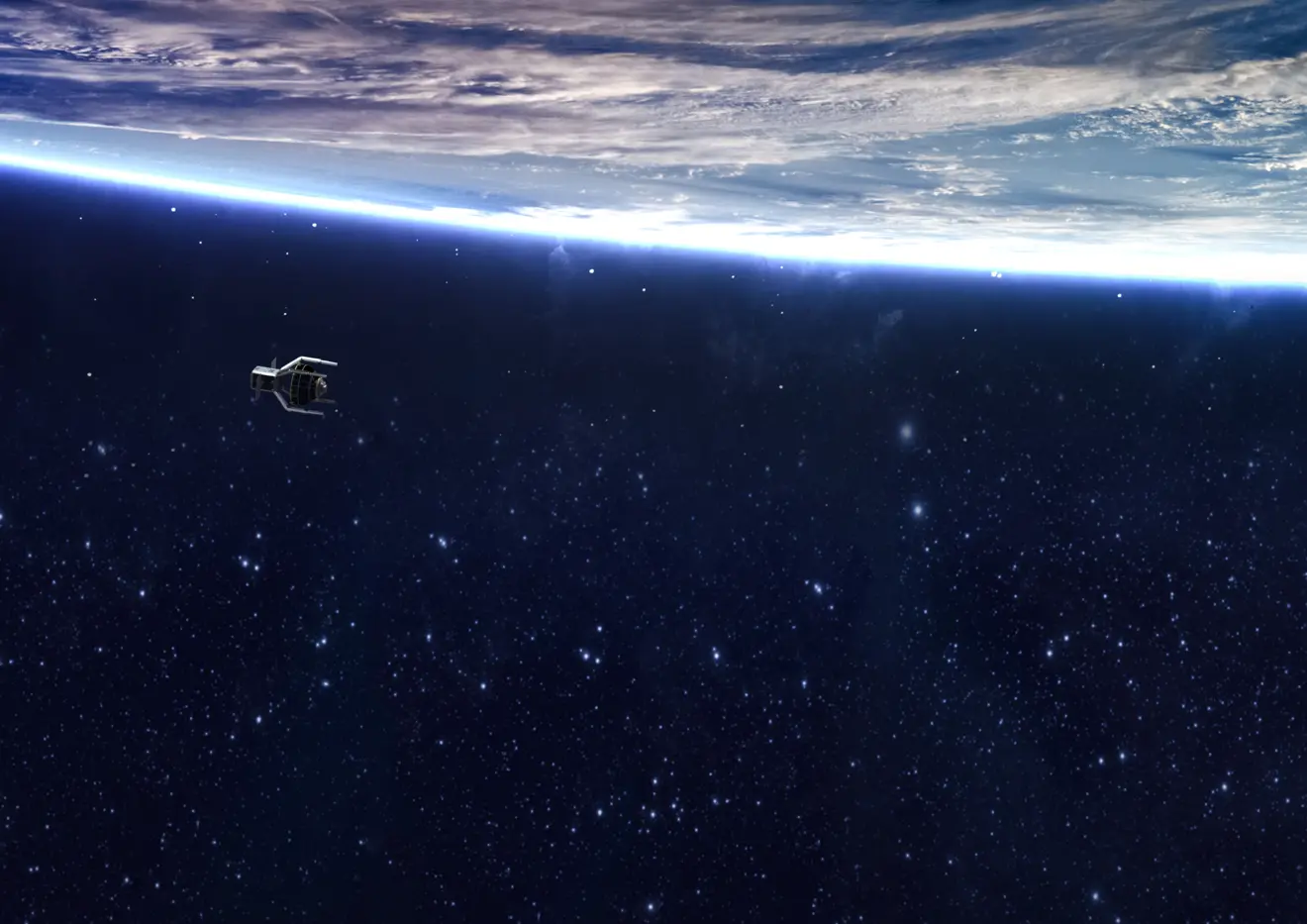
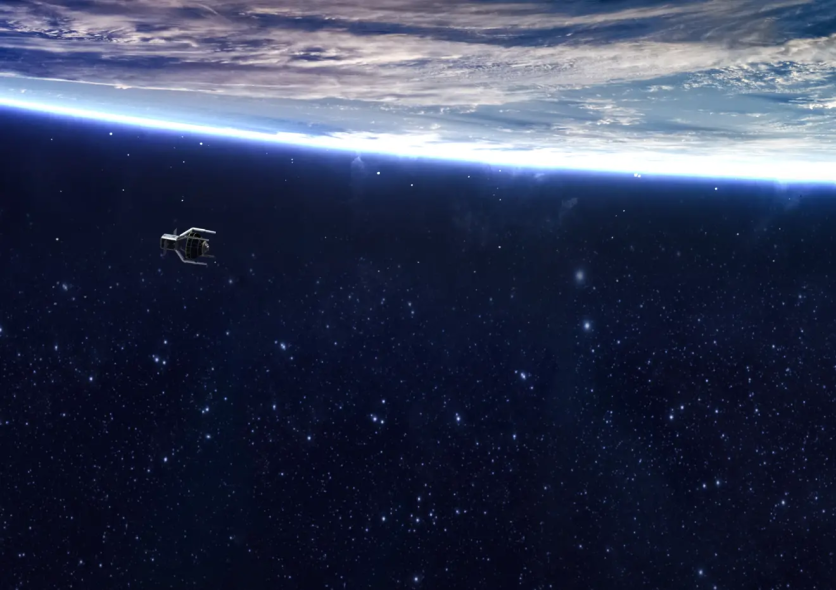
OHB System AG signed a contract worth €102 million (approximately $112 million USD) with the European Space Agency on Tuesday, Nov. 17, at Space Tech Expo in Bremen to build ClearSpace-1, a spacecraft meant to catch a satellite that cannot help its captor. The target is PROBA-1, an ESA satellite launched in 2001, and launch is now set for 2030, five years after ESA originally announced 2025. For anyone who relies on satellites for navigation, weather or communications, the mission is a first test of whether a robot can remove a real, unprepared object from orbit rather than one built to be caught.
OHB Leads a Consortium Whose Partner List Differs Between Sources
OHB’s release names ClearSpace, Deimos Engenharia and OHB Sweden as partners, with a letter of intent signed. A July 2026 ESA conference deck instead lists INDRA Deimos for guidance alongside ClearSpace and OHB Sweden. A 2025 conference paper describes ClearSpace supplying the capture payload and OHB Sweden supplying a platform based on its Innosat design.
The new contract is not comparable with the earlier one. ESA announced an €86 million agreement (approximately $95 million USD) on Dec. 1, 2020, with Swiss start-up ClearSpace leading the team and a different target. OHB has not said how the new total divides among partners.
How Does Spacecraft Capture Satellite That Cannot Cooperate?
ESA calls PROBA-1 an “unprepared and uncooperative object”, meaning the satellite was not built to be caught and cannot communicate with its captor. It weighs about 95 kg (209 lbs) and measures roughly 0.6 by 0.6 by 0.8 m (2.0 by 2.0 by 2.6 ft). A July 2026 ESA deck describes it as still operational after 20 years in orbit, while a 2025 paper warned it may be uncontrolled by 2028.
The servicer must therefore do the work a cooperative target would normally do. The 2025 paper says the guidance, navigation and control system is designed to capture a non-communicating PROBA-1 tumbling at up to 3 degrees per second, with at least three capture attempts, using vision-based navigation. Aviation Week reports the spacecraft would autonomously rendezvous with PROBA-1 and capture it.
ESA’s 2024 Clean Space Days slides show how constrained that approach is. The servicer closes on a passively safe orbit, flies around the target at shrinking ranges, and holds a protected keep-out zone with collision-avoidance maneuvers ready before the final approach. Camera navigation is sensitive to lighting, so the demonstration needs the Sun within 45 degrees of the camera’s line of sight. The slides also describe contact force applied with a 50 percent margin so the capture does not damage the target.
Hardware descriptions vary by source. ESA’s mission page describes four robotic arms, and the July 2026 deck says the arms enclose, grasp and secure the client. The mission’s end differs too: Aviation Week reports ESA plans to perform a controlled reentry of both spacecraft, the 2025 paper described an uncontrolled de-orbit within five years, and the July 2026 deck lists re-entry in 2034.
Launch Target Has Slipped From 2025 to 2030, and ESA Sources Disagree
ESA announced a 2025 launch in December 2020. By 2023 Arianespace said a Vega-C launch could come as soon as second-half 2026. A 2025 ESA conference paper then pointed to an end of 2028 launch using a micro-launcher, ESA’s mission page lists 2029 for launch, and a July 2026 deck schedules launch for Q2 2030. No launch vehicle has been named. The 2024 design assumed direct injection about 10 km (6.2 miles) below PROBA-1’s orbit, with a possible rideshare on Vega-C or Ariane 6, which made the launcher a major design driver.
VESPA Collision Forced Switch to PROBA-1 as Capture Target
ClearSpace-1 was originally meant to catch VESPA, the Vega Secondary Payload Adapter left in orbit after a 2013 Vega flight. In August 2023, the US Space Force’s 18th Space Defense Squadron told ESA a probable collision had likely occurred near the adapter. ClearSpace’s Luc Piguet later said the spin it induced made capture more difficult.
On April 23, 2024, ESA’s Space Safety Programme Board gave the green light to the next phase with OHB leading the consortium. ClearSpace announced PROBA-1 as the new target the next day and kept responsibility for close-proximity and capture operations. OHB says pre-development finished in March 2025 and led to what it calls a comprehensive redesign.
Why Does Small Demonstrator Matter for Space Debris Removal?
ClearSpace-1 demonstrates the capture of one small satellite; it is not a cleanup. ESA’s 2025 Space Environment Report says active debris removal is required. ESA’s statistics page puts 1 to 10 cm fragments (0.4 to 3.9 in) at about 1.5 million objects, based on a February 2026 model population. NASA’s Office of Technology, Policy and Strategy modeled removing the top 50 large debris objects and found a first-year benefit of about $3.5 million, mostly from fewer debris-on-debris collisions, while calling its results order-of-magnitude estimates.
ESA is also working on prevention: its 2025 report says the agency is advancing zero-debris satellite designs. ClearSpace-1 tests the harder case, because satellites already in orbit were not built with capture fittings. ESA’s Rolf Densing, Director of Operations, said ClearSpace-1 paves the way “to remove large non-functional objects from Earth orbit.”
Dual-Use Risk and Liability Gaps Follow Every Capture Spacecraft
A spacecraft that can grab a dead satellite can, in principle, grab a working one. China’s State Council confirmed Shijian-21 debris management tests, and in January 2022 trackers saw it tow dead Compass G2 satellite out of the geostationary belt. US Space Command’s then-commander, Gen. James Dickinson, told senators in 2021 that Shijian-17 is a satellite with a robotic arm and that such technology “could be used in a future system for grappling other satellites.” TechTimes reported on Oct. 29 that the UK Ministry of Defence awarded Astroscale £15 million (approximately $20 million USD) for a counter-satellite spacecraft under Project LEDA.
Liability rules also lag. Under the 1972 Space Liability Convention, a launching state is absolutely liable for damage its space objects cause on Earth’s surface or to aircraft, and liable in space only if at fault. The UK says it will waive liability and insurance requirements for in-orbit servicing missions launched before 2030, for licenses issued from Dec. 1, 2026. The UK is also funding its own mission: ClearSpace won a £61 million contract (approximately $81 million USD) in October to remove two defunct UK-registered satellites, with operations targeted for 2029.
Launcher, Contract Split and Re-Entry Control Remain Unannounced
OHB’s release does not name a launch vehicle or break down the contract among partners. Each answer shapes cost and risk, and each has already changed once as the design was rebuilt around a new target.
For readers, the practical result is a longer wait for proof. If OHB and its partners reach orbit in 2030 and capture a tumbling 95 kg (209 lbs) satellite without a single docking fitting, ESA will have shown that cleanup of legacy debris is technically possible. If the date slips again, the 25-year-old target will remain in orbit, and so will the larger objects that ESA says are the real problem.
Exchange rate as of Nov. 17, 2026; conversions are approximate.
Frequently Asked Questions
Why is it so hard to capture a tumbling satellite?
The servicer has to measure the spin from a distance with cameras, match it, and close the final gap without touching the target at the wrong moment. The 2025 paper relies on vision-based navigation and repeated attempts for that reason, and any contact can change the spin.
Has any spacecraft removed an unprepared satellite from orbit?
Astroscale’s ELSA-d demonstrated magnetic capture of its own client satellite in 2021, and China’s Shijian-21 moved a dead satellite in 2022. ESA describes ClearSpace-1 as its first European mission to capture a non-cooperative object.
Will ClearSpace-1 solve the space debris problem?
No. It removes one 95 kg (209 lbs) satellite. ESA’s parallel effort, designing new satellites for zero debris, targets the easier path for future removals, while ClearSpace-1 tests the harder legacy case.
When will ClearSpace-1 launch?
Aviation Week reports 2030, and ESA’s mission page lists 2029. Earlier sources pointed to 2028 and, originally, 2025.