
Bilibili Gaming is the second Worlds 2026 finalist after defeating T1 3-1

[ad_2]

PCSO highlights responsible gaming as foundation for sustainable public benefit at AMIC conference

[ad_2]

Newegg deal drops Stormcraft RTX 5060 Ti, i5-14400F gaming PC to just under $1,050
This Stormcraft Viper prebuilt PC is currently $250 off at Newegg and down to $1,149.99, and comes with a free Intel bundle valued at $84.98. What you’ve got here is a well -balanced, but punchy PC for playing AAA titles in FHD at medium to high settings, with a processor that lends itself well to lighter multitasking and running background applications. For the price, at least by today’s standards, it’s quite competitive, especially for those who want punchier raw performance than a typical RTX 5060 build, but want to keep costs well below $1,500. It scales back in some areas to stay more affordable, like opting for 16GB of DDR4 and an LGA 1700 socket CPU, but for gaming and for those who don’t require a super-clear upgrade runway, this build makes a lot of sense. Here’s a closer look at its standout features and what they bring to the table.
Prices and savings can change. Check the retailer for the current price.
What we like about this Stormcraft Viper gaming pPC
A smart CPU pick for the RTX 5060 Ti
The Intel Core i5-14400F packs 10 cores and 16 threads, with 6 performance cores and 4 efficient cores. That’s a balanced offering for the price, which still provides some breathing room for handling background applications and multitasking, without going overboard for the RTX 5060 Ti’s capabilities. It has 20MB L3 cache, which is also solid for gaming in FHD with more CPU-intensive titles, too.
Punchy graphics card for the price
The RTX 5060 Ti packs around 20% more CUDA cores than the RTX 5060, which helps improve overall performance with both gaming and CPU-accelerated tasks in creative apps. You’ve got all the bells and whistles of Blackwell architecture, too, including 4th-gen ray tracing cores, 5th-gen tensor cores, and 8GB of faster GDDR7 VRAM. It also supports DLSS and MFG, which helps it punch above its weight and can improve performance when playing in 1440p, although due to its 8GB of VRAM, this card is best used for FHD gaming.
16GB of DDR4 helps keep costs down
With RAM prices as they are right now, opting for 16GB of DDR4 instead of 32GB of DDR5 is one way you can dramatically reduce initial overall costs, but without having a huge impact on gaming performance. It’s a smart way to go, as it lets you test the waters with 16GB first, and then upgrade later on if you need to.
Appropriate cooling and PSU for the build
You’ve got a 650W 80 Plus Gold PSU and a tower-style CPU cooler with four aRGB case fans here, which is a good pick for the CPU and GPU in this build, without going overboard. Sure, something beefier would provide even more thermal headroom and make upgrading a little easier in the future, but it would also drive up the price.
Stylish design
It may be more ‘budget-friendly,’ but it’s a great-looking PC with tempered glass panels, a smaller form factor, and aRGB lighting throughout.
Should you get this deal?
For the price, it’s a solid build for gaming, where you’re weighting your spend more on a more powerful GPU, rather than towards a higher-core-count processor or 32GB of RAM. I’d say it’s a good starting point for the price, which can be tweaked in the future should you need to, and will work well for those primarily using it for FHD gaming, who also want to utilize Nvidia’s robust AI capabilities across the board, too.
More gaming PC deals
Custom URL
Custom URL
Custom URL
Custom URL
Custom URL
Custom URL

Ryzen 7 8700F, RX 9060XT, 16GB/1TB Onyx Black AMD Ryzen 7 8700F (5.0Ghz Turbo), GeForce RX9060 XT16GB, 16GB DDR5, 1TB SSD, Gold Rated PSU
Custom URL

AMD Ryzen™ 7 7800X3D, ToughRam 32GB DDR5 6000MT/s RGB Memory, AMD Radeon™ RX 9070 XT, 1TB NVMe M.2, WiFi, Windows 11) V38S-B650-97X-LCS
Prices and savings can change. Check the retailer for the current price.
[ad_2]

Jackbox Games isn’t interested in AI development: ‘All that is done by people, and we have no intention of changing that’
On a recent visit to Jackbox Games HQ here in Chicago, I got to speak with developers and studio leadership about their process, history, and place in the industry. Given, you know, everything, I'm pretty much contractually obligated to ask about AI in conversations like this. Here's what CEO Mike Bilder had to say on the topic:

Mike Bilder
"The people are what make this product. The comedy, the writing, and the art, all that is done by people, and we have no intention of changing that. I don't think we're experts on what's going on with AI in the industry and any of that. There's obviously uses for tooling and for research, and [for] all that kind of stuff [AI is] incredibly powerful.
"But from a generative asset standpoint, we don't have any intention of replacing people, or people-made editorial and art with it."

From everything we had discussed up to this point, as well as Jackbox's whole deal, I didn't think generative AI would really be in the cards for the studio. But I still appreciated Bilder's straightforward, clear answer on the subject, particularly when the standard playbook these days is fence sitting reminiscent of The Simpsons' "Abortions for some, miniature American flags for others."
Jackbox's games are relatively lightweight from a tech perspective, while the art and writing is their main draw—if anything was noticeably AI-generated, it would put the value of the whole package into question.
The company recently released the Jackbox Party Pack 12 on October 14, and the studio's production values have really progressed since the last entry I had played—Trivia Murder Party 3 makes extensive use of realtime 3D graphics, for example. Jackbox Party Pack 12 is available on pretty much everything, but this is Personal Computer Gamer, so I'll say you can grab it on Steam.
[ad_2]

Years in the Making – The Legend of Zelda: Ocarina of Time Impressions (Nintendo Switch 2)
It’s amazing to see how The Legend of Zelda series has evolved over the past 40 years. The series has always broken new ground with each Nintendo console generation, starting with a huge world to explore on the NES and SNES. But how do you evolve that into the third dimension?
Ocarina of Time answers that exciting and terrifying question with an ingenious targeting system, a well-thought-out control scheme, and by adapting A Link to the Past’s level design into engaging 3D spaces to explore. Future Zelda games took this formula and further refined it with new elements and mechanics.
And while many enjoyed braving the wilds and kingdoms, many fans longed for a return to what made traditional Zelda so enjoyable. Here comes a ground-up remake, not unlike Star Fox (2026), honoring the original N64 classic with updated visuals and other quality-of-life additions.
After playing the Ocarina of Time Remake, I have a lot to say about what could be the gold standard for modern-day remakes.
Painting in Motion – Visuals
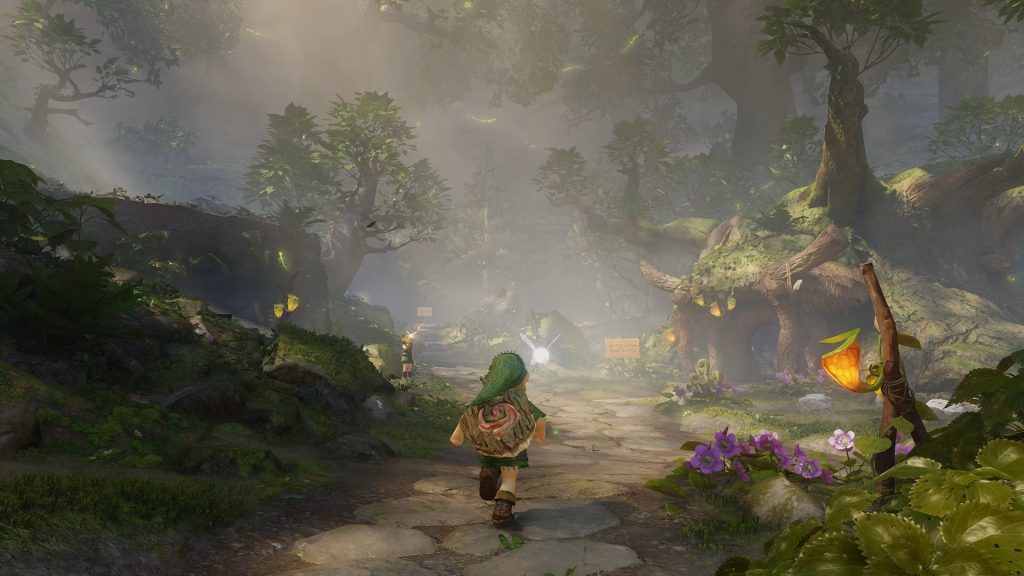
The Legend of Zelda: Ocarina of Time (2026) is one of the best-looking Nintendo games. Even early in my adventure, I can confidently say this is a tour de force for what the Nintendo Switch 2 can do, more so than Donkey Kong Bananza and Star Fox (2026), and those were impressive-looking productions.
Attention to Detail
Everything feels immaculately crafted, and little details I usually ignore in games get my full attention here. One example was Link’s slingshot. When he’s not actively aiming, he holds the seed with one hand and the slingshot with the other. But the string holds it together and sways as he moves around.
This is just one of the many small animation and visual details you will come across throughout the adventure, and I can’t wait to see them all.
Link’s Expressions and Body Language
One of my favorite aspects of the Zelda series, since The Wind Waker, is Link’s eyes being a window to his soul. He doesn’t speak, but his expressions and animations do. Narrative beats that I didn’t feel much emotion for in the original N64 title hit so much harder in this remake.
When the Great Deku Tree dies, for example, you can see how shell-shocked and heartbroken Link is, just from his shaky eyes. This extends to his goodbye with Saira; his hesitant body language and unwillingness to even look her in the eyes say everything about how he feels about his decision to leave the forest for his great quest.
A Realized Hyrule
I’m still very early in my adventure, but exploring locations like the Kokiri Forest, Hyrule Castle Town, and Kakariko Village left me speechless.
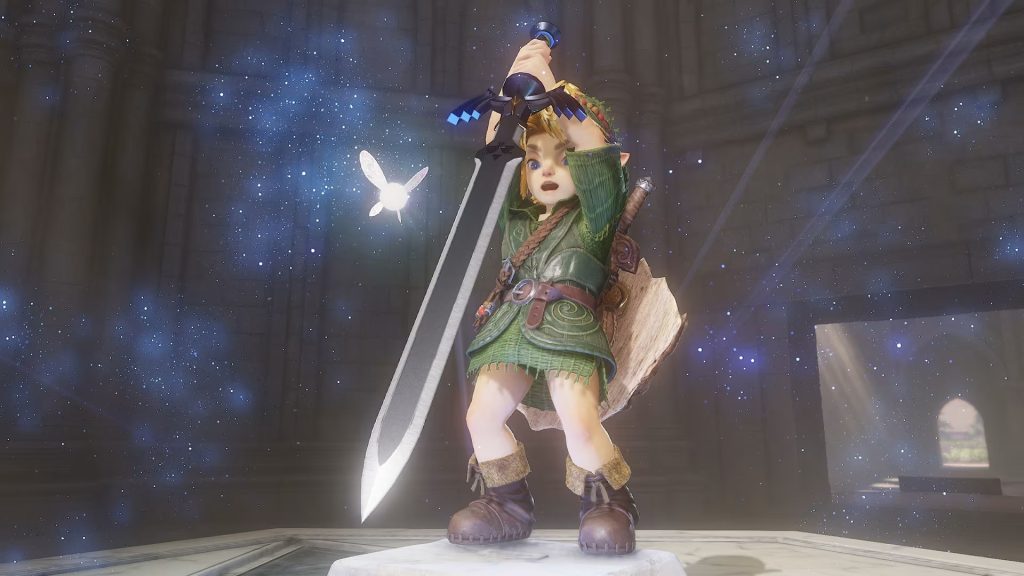
Sure, the level layouts are similar to the original N64 adventure, but everything feels so much more alive. From the stunning fog and particle effects that convey Kokiri Forest’s magical vibes to the densely populated Castle Town full of buildings you can freely walk into and explore, it’s always a delight to see how Nintendo updated timeless areas.
Song of the Storms – Music
More so than the visuals, however, is the power of Zelda’s iconic music. And no other soundtrack in the series is as iconic as Ocarina of Time’s. Taking the original N64 melodies, they are completely redone, not unlike Star Fox (2026).
I got emotional when I entered Hyrule Field, with the bombastic orchestra making the world feel even larger. Other tracks, like the Kokiri Forest and Goron City, are standouts too. I can’t wait to hear how some of my favorite tracks, like Song of Storms, are redone.
What’s Old Is New Again – Classic 3D Zelda Formula Finally Returns
Alongside the stunning presentation, something that I missed from the Zelda series since Breath of the Wild finally returns: the traditional 3D Zelda formula.
Every major area has a town or village to explore with NPC’s to interact with, and each key landmark has a dungeon to explore. When entering a dungeon, the goal is to defeat the boss and get a key story item to progress. It sounds simple, but along the way, you solve puzzles with your equipment and gain tools in the dungeon itself to continue your quest.
This tried-and-true approach still holds up beautifully generations later, with my trip through the Great Deku Tree reminding me of my fondest memories of exploring the Frozen Mansion from Twilight Princess or the daunting monolith that was Stone Tower Temple from Majora’s Mask.
There’s still so much for me to explore with Ocarina of Time, well, timeless dungeons. With how well-done the initial area was, I can’t wait to see how Nintendo and the Zelda team revisited the foundational work that eventually led to the Wild-era games.
Learning from Wild Legends – Controls & Quality of Life
Speaking of the Wild-era games, some welcomed control changes are brought into the traditional 3D Zelda formula. One new ability is a jump, instead of auto-jumping when going near a ledge. This simple change might take a moment to get used to if you played past traditional 3D Zeldas, but the ability to freely jump whenever you want makes exploration that much more enjoyable.
Paired with Link now being able to run by holding down A (with no stamina meter), movement overall feels snappy and more responsive.
Alongside updates to overall movement controls, there is now only one item button (ZR), and you can quickly swap between your items by holding R. Key items, like boots and your Ocarina, are mapped to the D-Pad/Directional buttons, which makes the overall UI feel less cluttered compared to the original N64 title, ensuring you enjoy the stunning presentation more.
A Tale as Old as Time – Closing Thoughts on The Legend of Zelda: Ocarina of Time
I’m still very early in my adventure, but I’m happy to say Nintendo understood the mission statement. The Legend of Zelda: Ocarina of Time is a foundational video game for not just the company, but for a generation of gamers. Many people played this as their very first video game.
I can’t wait to play more of this timeless classic, and stay tuned for our full review here at Lords of Gaming in the coming weeks. It’s wonderful to see the style of 3D Zelda I grew up with, back in its full glory.
[ad_2]

Pro Gamers Typically Don’t Use OLED Monitors, But You Most Definitely Can
Despite being beloved by AV enthusiasts, OLED hasn't really cracked the esports scene. Big tournaments continue to favor LCD monitors, though perhaps not for the reasons you suspect. Don't worry, we'll get into that shortly. Though pro players have specific reasons for using smaller LCD/IPS screens, for normal gamers, OLED displays remain the pinnacle of TV tech.
Many of the best gaming monitors are OLED, and there's no denying the underlying strengths of this TV type. Phenomenal black levels! Incredible contrast! Excellent viewing angles! Though some folks still sweat over OLED burn-in, it's generally not as big an issue as it used to be. Let's get into why pro gamers don't regularly play on OLED monitors at tournaments, before bigging up the strengths of OLED and comparing how the technology stacks up against LCD.
Are OLED monitors worse for competitive gaming?
Generally speaking, no. OLED monitors aren't worse, than say, IPS monitors, for esports/competitive gaming. As a technology, OLED displays are exceptionally good at handling motion, thanks to their almost instantaneous pixel response. On a good OLED monitor, you're going to see very little ghosting, which makes them great for playing fast-paced first-person shooters.
The real reason pro gamers don't tend to use OLED monitors at tournaments is actually pretty simple and doesn't throw any shade on the technology. For the most part, monitors at competitive events are chosen by sponsors, not individual participants. This is largely a money-making decision, but it's also one that ensures consistency if all those budding esports champs are playing on the same model of monitor.
Because tournament organizers usually supply the hardware for events, they tend to go with monitors that have been in vogue for a good while. At time of writing, 24-inch, 1080p displays remain the preferred size for pro gaming events. This screen size is seen as ideal, with a compact view ensuring players can scan their in-game surroundings quickly and with ease. Put simply, there are far more LCD monitors available at 24-inches than OLED models. In 2026, most OLED monitors start at 27 inches and up, and the generally larger footprint of these displays is probably the main factor why they're not more commonly seen at tournaments.
That's not to say OLED monitors are non-existent in the competitive gaming space. In early 2025, Sony specifically developed its 480Hz M10S OLED display for the Apex Legends Global Series Year 4. That's a mighty high refresh rate for OLED, though many IPS models can go well above 600Hz (another reason LCDs are often favored at competitive events).
Why OLED monitors are great for normal gaming
Forget pro gamers for a minute. It doesn't matter if the cream of the esports crop are headshotting each other on LCDs. For normal gaming, OLED is absolutely where it's at. Perfect black levels that lead to sensational contrast. That aforementioned lightning quick pixel response. Exceptional handling of HDR content. Often super slim bezels that help immerse you completely in a world. Far wider viewing angles than LCD TVs. Top tier color reproduction. I've been using OLED TVs since 2015 and OLED monitors since around 2019. I would never in a million years consider buying another LCD display.
Are OLED TVs still worth the premium in 2026? No question, as are OLED monitors. Granted, these displays are normally more expensive than their LCD counterparts. Yet OLEDs have definitely become more affordable over the past few years, especially when the likes of Amazon Prime Day or Black Friday roll around. You can often find 27-inch OLED gaming monitors on Amazon for comfortably less than $500. If you have the budget, and are in the market for a new gaming display, I can't recommend OLED highly enough.
Should I buy an LCD or OLED gaming monitor?
This choice boils down to a number of factors. In the majority of instances, OLED wipes the floor with LCD. It's simply a vastly superior TV technology. That said, there are definitely still reasons why you might want to opt for an LCD/LED monitor over an OLED model.
The advantages LCDs monitors have over OLEDs? One: they're usually considerably cheaper than OLED displays. Two: many LCD monitors are brighter than their OLED counterparts, making them more suited for gaming or working in bright rooms. Three: LCD panels are far less prone to being struck by image retention, whereas OLED burn-in is definitely still a thing. Should you still worry about OLED burn-in in 2026? Kind of. This defect is way less of an issue than it was on previous generations of OLED displays though, and most modern panels have pixel shifting tech to help combat this pesky phenomenon.
That's where LCD's advantage over OLED pretty much dries up. In every other area, OLED trounces LCD. Contrast, motion clarity and image uniformity are all far more impressive on OLED panels. Vertical banding in near-black scenes can still be a little bit of a problem for OLED — think thin vertical lines that you can faintly see during panning shots. Still, that issue is nowhere near as distracting as Dirty Screen Effect. Many LCD displays are terrible for exhibiting this defect, which stems from the fact that LCD backlights can't evenly light their panels, leading to on-screen blotches that become very apparent when watching sports, in particular.
The main reason you want to buy an OLED gaming monitor over an LCD model really boils down to one major factor: OLEDs can do perfect black levels, and LCDs just can't. That's because OLED is a self-emissive technology. In other words, OLED displays generate their own light and color. As they don't need a backlight, they can also turn off every single on-screen pixel when they're not in use, leading to the tech's famously infinite black levels.
[ad_2]

‘Fortnite’ Reveals Pirate Shop Token Drop Rates, And They Are Bad
Epic appears to have been tracking the noise about Fortnite's Pirate Shop Token, and players who have spent dozens of hours opening thousands of chests to get the rare item are complaining that they just can't find it. Now, Fortnite has revealed the true odds of getting the Pirate Shop Token, and as expected, they are not in your favor.
Here are the odds for items in chests in a normal match:
1:1,562,500 - Weekly Gold Outfit
1:137,500 - Pirate Shop Access
1:7,813 - Weekly Vehicle & Decal
1:568 - Weekly Pickaxe or Backbling
1:272 - Weekly Loading Screen
Advertisement
Advertisement
This changes during a "Treasure Hours" period, which increases the Pirate Shop Token drop rate by 1.5x-2x. Still, as you can see, 1 in 137,500 most of the time is certainly not an encouraging statistic. Players complaining about opening 5,000 chests without one had better buckle up. Honestly, that's even a little more generous than I thought it would be, given that this is an item that gets you practically a month's worth of free shop items, easily the most valuable in-game prize Fortnite has ever given out. They weren't just going to hand those out left and right because you tried your very best.
There have been accusations that this is a "predatory" system and that it deserves to be reported to the FTC for failing to disclose drop rates. Epic is not doing this because of that, as there is no real money involved here, so it's not necessary. But it clearly wanted to end this speculation about the odds. As for being "predatory," as someone who has farmed loot across countless games, RNG is RNG. A lottery ticket is a lottery ticket. This was never something players should have "expected" to get with a little elbow grease and a couple hundred or thousand chests. No one here has hunted shiny Pokémon, and it shows.
Some players have started doing the math and have come up with figures showing that if you play with a squad and each open 35 chests per match, it puts your odds at a 0.1% chance of getting a Token. Only 681 matches to get your odds of getting one by then to about 50% or so! Welp, that's still terrible!
I've said before that I think Epic messed this all up, but then again, they are seeing absolutely astonishing playercounts right now during this hunt, so it's clearly working on some level. I did doubt that Epic would ever reveal these odds, because once the avid grinders realize they have a 1 in 137,500 chance and not more like 1 in 1,000, they may throw up their hands and quit immediately. But these figures were just revealed last night, so it's too early to see what the result may be.
Follow me on Twitter, YouTube, and Instagram.
Pick up my sci-fi novels the Herokiller series and The Earthborn Trilogy.
This article was originally published on Forbes.com
[ad_2]
Best Year in Video Game History? Kain Picks 2012 [2026]
Erik Kain’s latest “Saturday Save Files” column argues that 2012 was the best year in modern video game history, and he says he is “deadly serious” about it. Published November 7, 2026, the piece frames 2012 as a special year for games on Steam, before what Kain calls “the flood” of releases. It also covers consoles, so the argument spans both sides of the platform divide.
The visible excerpt of the column names one game, Dragon’s Dogma, and quotes a line from it. Everything beyond that excerpt stays unconfirmed here, so this analysis does the other half of the job. It tests the claim against public records: award results, sales rankings, review scores, hardware launches, and the first months of Steam Greenlight. The goal is to see whether the best year in video game history claim holds up when you line the data up.
Short answer: it holds up better than most nostalgia pitches. The year produced Mass Effect 3 on March 6, 2012, which scored 93 on Metacritic on both Xbox 360 and PlayStation 3, according to Wikipedia’s 2012 roundup. That kind of RPG still drives conversation, as our look at BioWare’s four RPG worlds shows. The rest of this piece walks through the evidence, then looks at what the argument means for platforms and publishers today.
Don't miss new tech stories on Google
Add Tech Insider once in the Google app and our stories appear in your news suggestions.
What Erik Kain Actually Argued About 2012
Start with what the record confirms. The column is titled “Saturday Save Files: The Best Year In Modern Video Game History Was 2012.” Erik Kain wrote it, and the date shown is November 7, 2026. “Saturday Save Files” is the name of his recurring weekend column, which gives the piece a casual, opinionated register rather than a data-report one.
Kain stresses two platform groups, Steam and consoles. He calls 2012 a special year for games on Steam, and he places it before the flood. That phrasing matters. It suggests his argument is partly about volume and discovery, not only about quality. A year can be great because the best games were easy to find and the shelf was not yet crowded.
What the column does not confirm, at least in the excerpt available to this newsroom, is any list of games beyond Dragon’s Dogma, any sales figures, or any release dates. We treat those as unconfirmed and source them elsewhere. Where this article cites a number, it names the outlet that published it. Where it offers an opinion, it labels it as analysis.
The Dragon’s Dogma Line and Steam Before the Flood
A Quote From Gran Soren
The excerpt carries a line from Dragon’s Dogma: “The armorer, Caxton, in Gran Soren.” It is a plain in-game direction to a shop, and its inclusion tells us Kain is writing as a player who remembers specific games, not as a statistician.
We cannot confirm how the column uses the line beyond that, and we will not guess. Our read, flagged as analysis, is that opening a best-year argument with a single quoted game line points to personal experience as the main evidence.
Steam Before the Flood
The “flood” is the more interesting half of the thesis. SteamSpy’s year page for 2012 lists 371 games associated with that year, per the research behind this article. That is a small enough number for a dedicated player to track by hand. Later years pushed far past it, and the sheer volume now shapes how buyers find games, how developers market them, and how much a storefront cut matters. Our piece on why Steam’s 30% cut proves so hard to beat covers the economics that grew out of that scale.
Kain does not need a precise later count to make his point, and neither do we. The structural argument is that 2012 sat at a sweet spot. Steam was big enough to matter, selective enough to curate, and not yet a firehose.
2012 by the Numbers: What Actually Sold
Sales are the bluntest test, and 2012 passes it with a mixed field. Wikipedia’s 2012 in video games page ranks the year’s top ten highest-grossing titles by worldwide revenue across physical sales, digital purchases, subscriptions, microtransactions, and free-to-play spending. The list mixes console blockbusters, PC subscriptions, and free-to-play giants, which tells you the market was already diversifying.
| Rank | Game | Revenue | Publisher | Model |
|---|---|---|---|---|
| 1 (tie) | Call of Duty: Black Ops II | $1,000,000,000 | Activision | Buy-to-play |
| 1 (tie) | Crossfire | $1,000,000,000 | Smilegate / Tencent | Free-to-play |
| 3 | World of Warcraft | $986,000,000 | Blizzard Entertainment | Subscription |
| 4 | FIFA 13 | $444,000,000 | EA Sports | Buy-to-play |
| 5 | Borderlands 2 | $300,000,000 | 2K Games | Buy-to-play |
| 6 | World of Tanks | $280,000,000 | Wargaming.net | Free-to-play |
| 7 | Pokémon Black 2 / White 2 | $267,000,000 | Nintendo / The Pokémon Company | Buy-to-play |
| 8 | New Super Mario Bros. 2 | $238,000,000 | Nintendo | Buy-to-play |
| 9 | Minecraft | $237,000,000 | Mojang | Buy-to-play |
| 10 | League of Legends | $200,000,000 | Riot Games / Tencent | Free-to-play |
Source: Wikipedia, “2012 in video games,” citing publisher releases and press reports. Revenue figures are as listed there.
Two details stand out. First, a 2K action RPG, Borderlands 2, sits fifth ahead of several Nintendo staples, and the page’s references point to a report that it had shipped 5 million copies by October 31, 2012. Second, Minecraft earned $237 million in a year when it was still a young indie phenomenon. Mojang founder Markus Persson will show up again in the expert section below, since he reviewed the year in real time.
Critical Peaks: Scores and Release Dates That Defined the Year
Revenue shows reach. Review scores show craft. Wikipedia tracks 2012 games and expansions that scored at least 90 out of 100 on Metacritic or 90% on GameRankings, and the list runs long. The table below pulls ten entries that cover the spread of platforms and genres. It leans toward titles that match the eras Kain talks about, Steam and consoles.
| Game | Release date | Platform | Metacritic |
|---|---|---|---|
| Mass Effect 3 | March 6, 2012 | Xbox 360 | 93/100 |
| Journey | March 13, 2012 | PS3 | 92/100 |
| Persona 4 Golden | June 14, 2012 | PS Vita | 93/100 |
| Borderlands 2 | September 18, 2012 | PS3 | 91/100 |
| XCOM: Enemy Unknown | October 8, 2012 | Xbox 360 | 90/100 |
| Dishonored | October 9, 2012 | PC | 91/100 |
| Mark of the Ninja | October 16, 2012 | PC | 91/100 |
| The Walking Dead (Telltale) | November 21, 2012 | PS3 | 94/100 |
| Far Cry 3 | December 4, 2012 | Xbox 360 | 91/100 |
| Guild Wars 2 | August 28, 2012 | PC | 90/100 |
Source: Wikipedia, “2012 in video games,” citing Metacritic. Scores are per platform version as listed.
Look at the calendar rather than the scores. Strong releases land in March, April, June, August, September, October, November, and December. Few years spread acclaimed work so evenly across the calendar. October alone stacks XCOM: Enemy Unknown, Dishonored, and Mark of the Ninja in the space of nine days, and the following month brought the Telltale The Walking Dead release on November 21.
On PC, SteamDB’s historical rankings put The Walking Dead among Steam’s highest-rated 2012 releases at 95.75%, and Steam250’s 2012 chart lists it first with a 9.61 score across roughly 81,212 reviews. Dishonored sits in SteamSpy’s 2012 group with an estimated 2 to 5 million owners, an estimate rather than a published sales figure. These community numbers line up with the critic scores, which strengthens the case that quality, not just hype, defined the year.
Four Game of the Year Winners Across Five Awards
Awards give the cleanest picture of how a year divides critics. Wikipedia’s 2012 page lists the Game of the Year winners from five major bodies tied to the period. Four different games took the top prize, which is unusual evidence of a deep field rather than a runaway favorite.
| Awards body | Ceremony date | Game of the Year |
|---|---|---|
| 30th Golden Joystick Awards | October 26, 2012 | The Elder Scrolls V: Skyrim |
| Spike VGA | December 7, 2012 | The Walking Dead |
| 16th Annual D.I.C.E. Awards | February 7, 2013 | Journey |
| 9th British Academy Games Awards | March 5, 2013 | Dishonored |
| 13th Game Developers Choice Awards | Listed on the same page | Journey |
Source: Wikipedia, “2012 in video games.” The Skyrim result at the Golden Joystick event likely reflects differing eligibility windows between award bodies, which is an inference on our part, not something the page states.
GamesRadar reached a similar conclusion through a different method. Its best games of 2012 countdown closes with Dishonored as the winner, after earlier entries including Darksiders II, Gravity Rush, Hotline Miami, Kid Icarus: Uprising, and Hitman: Absolution. That list alone spans console, handheld, and PC play, which echoes Kain’s Steam-and-consoles framing.
Journey also swept the craft categories on the Wikipedia table, taking design, audio, and artistic honors across several bodies. When one title dominates the craft trophies and another takes the broadest prize at a different ceremony, you have a year with multiple legitimate claims to the crown.
Steam Greenlight Opens the Door in 2012
The Steam side of Kain’s argument has a concrete anchor. Steam Greenlight launched on August 30, 2012, letting the community help pick which games Valve distributed. Valve approved its first ten Greenlight games on September 11, 2012, according to a PCGamesN retrospective on the program’s first year. That retrospective also reports that McPixel became the first Greenlight game to reach Steam.
The pace picked up quickly. Engadget reported on October 15, 2012 that Greenlight approved 21 more games in its second batch, including AirBuccaneers, Forge, Giana Sisters: Twisted Dreams, Octodad: Dadliest Catch, and The Stanley Parable: HD Remix. Only McPixel had actually launched on Steam by then, which shows how far approvals ran ahead of releases. By November 30, 2012, a Steam announcement counted 50 titles that had advanced through Greenlight, including 13 games and six software products in that announcement’s breakdown.
Here is the analytical hinge. Greenlight turned Steam from a curated shop into a community-gated one, and that was the first step on the road to the flood. In 2012 the gate still had a latch. Fifty approvals in three months is a number a player can follow. It is also the last time that kind of tracking felt possible, which may be exactly the nostalgia Kain is describing.
The Indie Wave, Kickstarter and the 2012 Creative Surge
Contemporary commentary tied 2012’s indie energy to two forces. Complex’s list of the year’s best indie games described Kickstarter as changing what could get funded and Greenlight as opening platform selection to players. That pairing helps explain why small teams suddenly had both money and distribution.
Giana Sisters: Twisted Dreams shows the pipeline in miniature. Its developer set a $150,000 Kickstarter goal, then appeared among Greenlight’s initial August 30 featured games, and Steam approved it for distribution on October 15. One project moved from crowdfunding to platform approval inside a single autumn. That speed was new, and it set a template many studios copied.
The wider culture noticed too. Wikipedia lists Indie Game: The Movie among the year’s game-related film and television releases, dated June 12, 2012, alongside Minecraft: The Story of Mojang on December 22. A documentary about indie developers and another about a single studio’s rise both arriving in one year says something about where creative energy sat. Established studios have kept chasing that energy since, and the independence stories keep coming, as Double Fine’s move to independence after seven Xbox years illustrates.
Hardware Reset: Vita, 3DS XL, Super Slim and Wii U
Kain mentions consoles, and 2012 was a transitional year for them. Wikipedia’s hardware list shows the PlayStation Vita arriving in North America and Europe in February after its earlier Japan launch, the Nintendo 3DS XL launching from July 28, and the PlayStation 3 Super Slim following on September 25. The Wii U arrived on November 18, and the page calls it the first home console of the eighth generation.
The Wii Mini followed on December 7 in Canada only, and the Neo Geo X closed the list on December 18. That is a lot of hardware for twelve months. For players, the effect was a wide spread of ways to experience the year’s games, from a new handheld to a revised home console to a brand-new generation opener.
The software on those machines also stayed strong. Persona 4 Golden scored 93 on Vita, Fire Emblem Awakening scored 92 on 3DS, and Journey scored 92 on PS3, according to the Wikipedia table. Hardware transitions often thin out a release calendar. In 2012, the old generation kept shipping excellent games while the new one warmed up.
Expert Voices: What People Said About 2012 at the Time
Kain’s claim looks backward, so it helps to hear from people who judged 2012 as it unfolded. The five statements below come from contemporary retrospectives and appear exactly as published. Where the author is not named in the source, we attribute the line to the outlet instead.
Markus Persson, founder of Mojang, wrote in Game Developer Magazine’s 2012 in review feature: “You know it’s been a good year when you end up with a large stack of must-play games you haven’t had time to play, and 2012 has been very good so far.” Persson was reviewing the year from the inside, and his backlog test remains a decent proxy for a strong release calendar.
Mark DeLoura, a game technology executive and Game Developer Magazine advisory-board member, summed up the industry mood in the same feature: “2012 was tumultuous and full of opportunity.” The word tumultuous fits the hardware churn and the Greenlight experiment described above.
A Steam Community retrospective listing the author’s favorite games of the year opened with this assessment: “2012 was a great, often surprising year for games.” The retrospective does not name its author in the material we reviewed, so we credit it to the Steam Community post.
Brainy Gamer’s 2012 retrospective made two points about design. It said that “In 2012, many of the best play-worthy games were built by designers who found their voices by re-thinking the essential structure and function of games.” It also argued that “This year, the very definition of “game” was thrown into question more often and by more designers than ever before.” Together they frame 2012 as a year of formal experiments, not just polish.
Beyond that, a ResetEra thread titled The Last Decade in Games: 2012 shows that forum communities have been revisiting the year for a long time. Kain’s column joins a long conversation and did not start it.
Competing Claims: How 2012 Stacks Up as the Best Year
Every “best year” argument needs a rival. Reader-voted lists such as TheTopTens’ top years in gaming history exist, and we do not cite their ordering here. Instead, compare four lenses that any year must pass: sales, critical acclaim, platform access, and creative range.
On sales, 2012 produced two $1 billion titles and a nine-figure supporting cast, per Wikipedia. On acclaim, it produced four different Game of the Year winners across five awards bodies. On platform access, it saw Steam Greenlight launch alongside a Vita, a 3DS XL, a PS3 revision, and the Wii U. On creative range, contemporary writers argued that the definition of a game itself was being stretched.
Where might 2012 lose? Later years had larger absolute audiences and far more releases, and Kain’s own flood framing admits the shelf got crowded afterward. A fan of a more recent year can argue that more choice equals a better year. The 2012 case rests on a different principle, that scarcity sharpens the signal. Neither view is provable, and that is exactly why the debate sells columns.
For studios, the debate has a practical edge. Acquisition-driven consolidation has reshaped many of the teams behind 2012’s best games, and our analysis of how one in three acquired studios closed shows why the lineup of makers behind a golden year can look very different a decade later.
Historical Context: The Road From 2011 to the Flood
Read 2012 as a hinge, not a peak in isolation. The Golden Joystick winner, Skyrim, belongs to the preceding era of big single-player RPGs. The BAFTA and VGA winners, Dishonored and The Walking Dead, point toward the immersive-sim revival and the episodic narrative boom. Journey points toward the small, artful download that consoles began to champion.
The industry’s business model also shifted that year. The top-ten revenue table shows free-to-play titles Crossfire, World of Tanks, and League of Legends already earning at huge scale, while a subscription game, World of Warcraft, still ranked third. Wikipedia’s event list adds that Sega reduced its western business in February after Binary Domain, focusing on digital PC and mobile instead. The seeds of today’s live-service and digital-first market were visible even in the golden year.
Media changed too. Polygon launched on October 24, 2012, according to the same list. A year that gave games both a new wave of creators and a new wave of coverage plausibly feels bigger in memory than the raw numbers alone suggest.
Market Impact: What Nostalgia Means for Publishers and Platforms
Columns like Kain’s do more than entertain. They feed a market that increasingly monetizes the past. This week’s Switch 2 release of the Ocarina of Time remake, which we covered in our breakdown of six changes, shows how much commercial weight a well-loved era can carry. Publishers read nostalgia as a demand signal.
If 2012 is widely remembered as a peak, expect that signal to attach to its catalog. We cannot confirm any specific remaster or re-release plans tied to 2012 titles, and this article does not claim any. The structural point is simple. Games from that year are widely available on Steam and older consoles, and every renewed wave of attention can lift catalog sales and discussion.
For platform holders, the lesson is about discovery. Kain’s flood idea implies that curation was part of what made 2012 feel special. Storefronts now compete on recommendation, bundling, and editorial voice, and the strongest versions of those tools try to recreate a smaller shelf inside a very large store.
How to Play the Best of 2012 Today
A column like this sends readers straight to their libraries. Many 2012 PC games sit on Steam, and many console titles remain playable on the hardware they launched on. We cannot give specific compatibility or price details for individual games from the available sources, so check each store page before you buy.
If portability is your priority, handheld PCs make older Steam libraries travel well, and our guide on whether to wait for Steam Deck 2 or buy the OLED weighs that decision. For wider coverage of the platforms involved, browse our gaming section, which tracks consoles, handhelds, and PC releases.
A simple play-through plan helps. Pick one title from each lens above: a sales giant, a critical favorite, an award winner, and one Greenlight-era indie. That mix gives you a fair sample of what Kain is talking about without requiring dozens of hours up front.
Five Predictions for the 2012 Debate
These are analysis, not reporting, and none of them rests on confirmed plans from any company.
- More “best year” columns will follow. Kain’s piece gives other writers a template, and rival years will get their own advocates. Expect at least a few counter-arguments in the coming weeks.
- The 2012 anniversary will carry weight in 2027. Round-number anniversaries drive retrospectives. The 15-year mark for the year’s major releases will likely bring renewed coverage.
- Catalog attention will grow. Strong retrospectives tend to lift interest in older games on storefronts, even without a formal re-release.
- The flood debate will sharpen. As storefronts keep growing, writers will keep asking whether curation beat choice in the Greenlight era.
- Award-body disagreement will stay a talking point. The four-winner split in 2012 gives future critics a reference point for what a deep year looks like.
The Bottom Line on the Best Year in Video Game History
Kain says he is deadly serious, and the public record backs him more than it embarrasses him. Two $1 billion titles, four Game of the Year winners, at least ten acclaimed releases spread across ten months, a hardware reset, and the birth of Steam Greenlight all landed in the same twelve months. Whether that adds up to the best year in modern video game history is a matter of taste, but it clearly adds up to a serious contender.
The part of his argument that carries the most weight is the flood. A great year is not only about the games. It is also about how easy it was to find them, track them, and talk about them together. By that measure, 2012 looks like the last year the whole conversation fit in one room.
Frequently Asked Questions About 2012 as a Gaming Peak
What did Erik Kain argue in his Saturday Save Files column? He argued that 2012 was the best year in modern video game history and said he is deadly serious about it. He called it a special year for games on Steam, before what he calls the flood, and he emphasized both Steam and consoles. The column ran November 7, 2026.
What is Saturday Save Files? It is the name of Kain’s recurring weekend column. The visible excerpt shows an opinionated, personal style rather than a data-led report, with a quote from Dragon’s Dogma as one of its touchpoints.
Which game won Game of the Year for 2012? It depends on the awards body. According to Wikipedia, the Golden Joystick Awards chose Skyrim, the VGA chose The Walking Dead, the D.I.C.E. Awards chose Journey, BAFTA chose Dishonored, and the Game Developers Choice Awards chose Journey.
What was the highest-grossing game of 2012? Wikipedia’s ranking lists Call of Duty: Black Ops II and Crossfire tied at $1 billion each, followed by World of Warcraft at $986 million. Those are worldwide revenue figures across all platforms and business models.
What was Steam Greenlight and when did it start? Steam Greenlight was a community-driven system that helped select which games Valve distributed on Steam. It launched on August 30, 2012. Valve approved its first ten games on September 11, 2012, and 50 titles had advanced by November 30, 2012, according to a Steam announcement.
Which consoles launched in 2012? Wikipedia lists the Wii U as the first eighth-generation home console, launching November 18. The PlayStation Vita reached North America and Europe in February, and the Nintendo 3DS XL, PlayStation 3 Super Slim, Wii Mini, and Neo Geo X also appeared during the year.
Is 2012 really the best year for video games? There is no single objective answer. The data supports it as a top contender on sales, critical acclaim, platform change, and creative range. Later years offer more games and larger audiences, so the verdict depends on whether you value scarcity and curation or volume and choice.
Where can I play 2012’s best games now? Many PC releases from that year are on Steam, and many console titles remain playable on the hardware they launched on. We cannot confirm current prices or compatibility for specific titles, so check each store page before buying.

[ad_2]

Maryland Casinos Generate $159.7 Million in Gaming Revenue During October

[ad_2]

Castlevania: Belmont’s Curse Review: A Worthy Whip Return
My Castlevania: Belmont’s Curse review starts with the verdict. This is a worthy, confident return for Konami’s vampire-hunting family. It also plays more like Dead Cells than Castlevania, and I suspect that will split the faithful.

The timing raises the stakes. The series turns 40 this year, and this is its first console entry since Lords of Shadow 2 in 2014. Twelve years is a long time to leave a whip in storage. Konami handed it to Evil Empire, the studio behind the Dead Cells: Return to Castlevania DLC, with Motion Twin advising.
The game launched October 15, 2026 on PS5, Xbox Series X|S, PC and Nintendo Switch. It costs $29.99 and carries an ESRB Teen rating, per Konami’s official site. I reviewed the PS5 version. Konami issued post-launch updates on October 21 and October 22, 2026.
A Whip That Pulls Its Own Weight
Combat is where Evil Empire shows its craft. Parrying works independently of your attacks. Defense and offense become separate decisions, and that gives every fight a duelist’s tension.
The whip is the real star, though. It doubles as a grapple for traversal, so the Belmont signature weapon now helps you read the map. I love that. For 40 years the whip has been a way to hurt things. Here it is also a way to get places.

The arsenal goes wide. Seven weapon types with four weapons each give you 28 tools, and the game wants you swapping between them. GameSpot gave it a 10/10 and wrote that it “feels destined to be regarded alongside Symphony of the Night.” I think that overshoots. GameSpot also praised the inventive bosses, and I agree the encounters give the parry room to shine.
Still, that speed is pure Dead Cells. The combat snaps and rewards aggression. That suits Evil Empire’s pedigree. It just leaves less room for the heavy, deliberate rhythm I associate with a Belmont.
Dracula’s Curse, Inherited
The story makes a smarter case for legacy than the combat does. Rose Belmont is the daughter of Trevor Belmont and Sypha Belnades. The game sets her in Paris in 1499, 23 years after Castlevania III: Dracula’s Curse.
Moving the castle into the heart of Paris gives the series a fresh skyline. The descent into the city’s catacombs gives it fresh dread. Konami also brought in manga artist Katsuya Terada for the art, which signals how seriously it took the anniversary.
Where the lineage thins is in the feel. Some critics, as GameDaily’s roundup notes, found it plays like a generic Metroidvania. Others flagged uneven pacing and harsh difficulty. Push Square’s 7/10 called it “a perfectly good game that isn’t really doing anything wrong.”
That faint praise stings because it lands. I wanted the gothic drift of Rondo of Blood. What I got is closer to a well-tuned action machine wearing a Belmont coat.
The launch has wobbled too. GameDaily reports Mixed Steam user reviews, driven by PC black-screen problems and debate over whether this feels like Castlevania. A Metacritic critic blurb flagged technical issues on Switch. I played on PS5, so I can’t speak to those versions firsthand.
OVERALL: 4 / 5
Castlevania: Belmont’s Curse is a worthy return, and a confident one. The parry and the grappling whip give it a fighting identity of its own. Rose’s place in the Belmont line gives it a heart.
It leans more Dead Cells than Castlevania in feel, and purists raised on the NES original may bristle. At $29.99, PS5 players should bother. Switch and PC players should check Konami’s latest updates before buying.
[ad_2]