








David Maynier, minister of forestry, fisheries and the environment, on Tuesday said South Africa’s transition from coal as the main source of energy would be a gradual process.
Speaking to Business Day on the sidelines of the COP31 conference in the Turkish city of Antalya, Maynier said it was clear from negotiations that a transition away from fossil fuels would take place over time with the need to have a just energy transition plan that considers labour and other interests.
The country has abundant coal reserves, making thermal power a key cog in its energy mix.
“Everybody accepts the transition to a low-carbon economy is going to take time and will need significant additional levels of support on one hand, but also everybody accepts that there needs to be a just energy transition in South Africa,” said Maynier.
“We need to ensure that people who might be affected by the transition, for example, workers, are upskilled; communities that might be affected by the transition are provided with opportunities. That is the big focus of our approach in South Africa on the just energy transition.”
The climate change debate in South Africa has been focused on the country’s widespread use of coal and the government’s insistence that the fossil fuel will remain part of the country’s energy mix for decades.
The coal mining sector employs 90,977 people, according to Minerals Council South Africa.
Over the next few days, Maynier will represent South Africa’s position when representatives from nearly 200 countries are locked in negotiations to set out the final outcomes of COP31.
In a speech to delegates on Tuesday, he said South Africa needed investment and climate finance of more than R250bn to fully implement adaptation actions in 2026-35.
“Ultimately, developed countries do have an obligation in terms of Article 9.1 of the Paris Agreement to support developing countries’ transition to low-carbon economies, and while there has been some support, there has not been enough support,” he said.
The Paris Agreement, signed at COP21 in Paris in December, binds signatory nations to holding the global average temperature increase to well below 2°C above pre-industrial levels and to pursue efforts to limit the increase to 1.5°C.
A draft decision of the COP31 calls for accelerated action to phase out fossil fuels.
The draft decision on accelerated action is a crucial point of interest for South Africa because the country’s main source of power generation for energy security depends on coal.
Developing countries told delegates that without more investment in climate finance, calls to do more to fight against climate remain uncertain.
A report by the UN Environment Programme (UNEP), released before COP31, emphasises the urgent need to reduce emissions.
The UNEP Emissions Gap Report 2026: The Point of Return, published shortly before COP31, emphasises that with global temperature rise set to exceed 1.5°C above pre-industrial levels, urgent and stringent cuts to greenhouse emissions are needed to minimise the magnitude and duration of overshoot and return to 1.5°C by the end of the century.
Read: EDITORIAL | Why climate finance is the real test at COP31
This week politicians face crunch time in negotiations after the first week of negotiations resulted in countries not finding common ground on the details of climate financing. Developing countries want rich nations to back climate change implementation with billions of dollars — not just pledges.
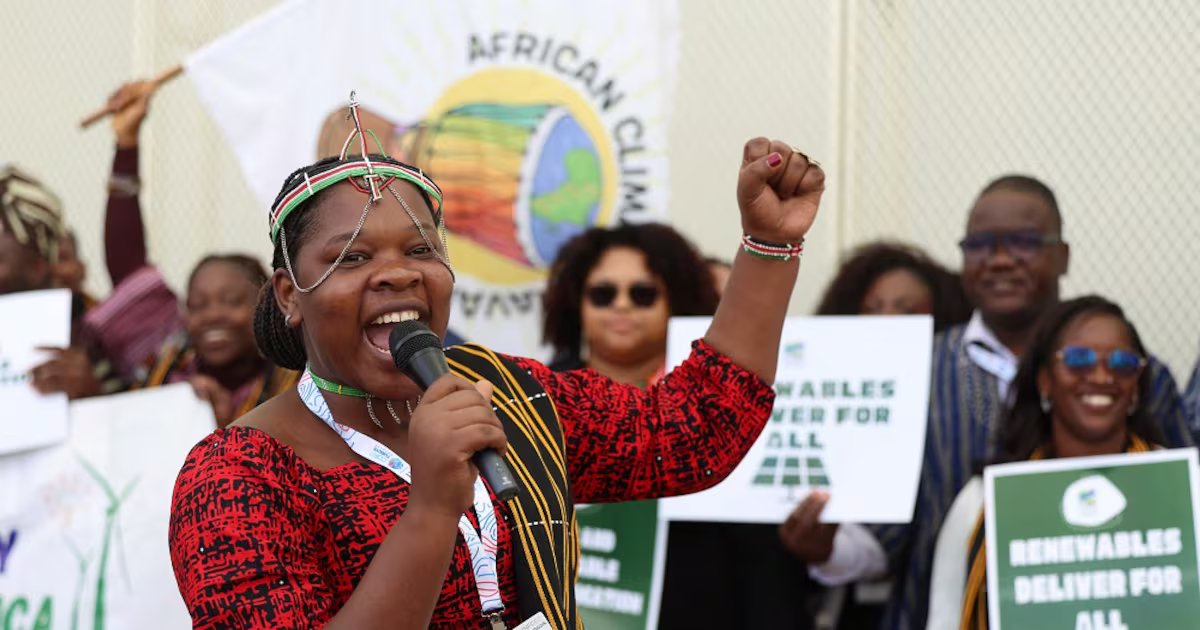
African nations at COP31 told delegates on Tuesday that a transition away from fossils towards low emissions depended on funds invested in a just energy transition, noting that many developed countries account for some of the world’s highest emissions.
African group of negotiators chairperson Zanetor Agyeman-Rawlings said African nations would not take on any new commitments without the means to fulfil them.
“Africa has not come to Antalya to renegotiate promises; we have come to collect on them,” she said, adding that the continent needs $277bn a year to implement plans in the fight against climate change.
Agyeman-Rawlings said climate finance to African nations should not be in the form of debts from developed countries.
“Africa supports a just and equitable transition away from fossil fuels on Africa’s terms. A just transition must be country-based on funding power, skills and jobs with workers and communities at the table.
“We will accept no retreat on the agreement to triple adaptation finance; we will take on no new commitments without the means to fulfil them. Climate finance is not charity; it is an obligation under 9.1 of the Paris Agreement.”
Ralph Regenvanu, Vanuatu’s energy minister, said negotiators were still “far apart” on financing for combating climate change and urged countries to make every effort to close the gap.
• Business Day’s costs of covering COP31 in Turkey have been covered by BrandSA.
Business Day