Already facing the tough task of rebuilding confidence in Nvidia after the dramatic fall of its visionary co-founder, the global technology company’s board now faces a new potential challenge: The visionary CEO wants his job back.
In a post on X on Tuesday morning, Jensen Huang said he was ready to retake the job he was bounced out of last week amid revelations of at least two reported affairs. One involves a woman who U.S. intelligence officials suspect is a Chinese spy; the other is a subordinate. “I would be honored to … return as CEO,” he wrote.
And while reports say the board is not consideringreinstating Mr. Huang, the scandal has continued to rock the artificial intelligence world, as Nvidia’s computer chips largely power the superfast computers that run AI models. The departments of Justice and Commerce on Monday provided details of a joint investigation into Megaspeed, a Singapore-based AI company with ties to the alleged spy.
The saga illustrates the perils of the celebrity CEO. They enjoy such legendary status that almost everybody knows them – think Elon Musk at Tesla and SpaceX, Mark Zuckerberg at Meta, and Sam Altman at OpenAI, the creator of ChatGPT. Such high-profile CEOs are used to getting their own way.
Their extraordinary track records make them seem invaluable, but also make it difficult for boards to challenge them. Their leadership succession plans are sometimes weak, if they exist at all. The success of their companies is so great that investors, policymakers, and others credit them with that success and try to stay out of the way.
The concentration of authority under Mr. Huang was remarkable. More than 60 executives reported directly to him, and the company had no publicly disclosed succession plan. His departure has exposed the difficulty of replacing a leader around whom so much of the business was organized.
Alex Brandon/AP
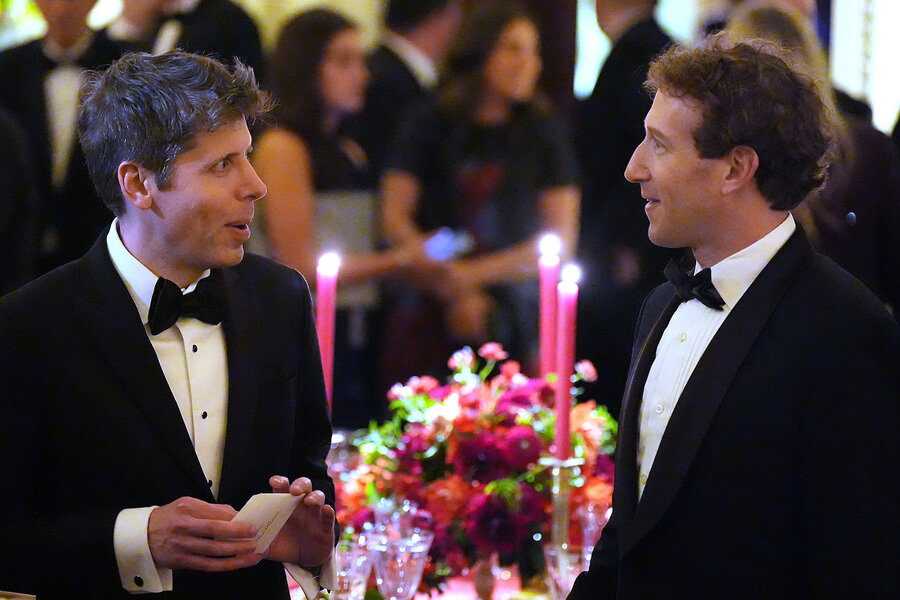
OpenAI CEO Sam Altman (left) talks with Meta CEO Mark Zuckerberg at a state dinner for Chinese leader Xi Jinping in the East Room of the White House in Washington, Sept. 24, 2026.
And yet, at Nvidia, what began as a scandal involving one executive has now become a test of the institution: whether Nvidia’s board can hold its leader accountable without sacrificing the innovation that made the company successful. The challenge is to sell shareholders, employees, and regulators on a new story.