










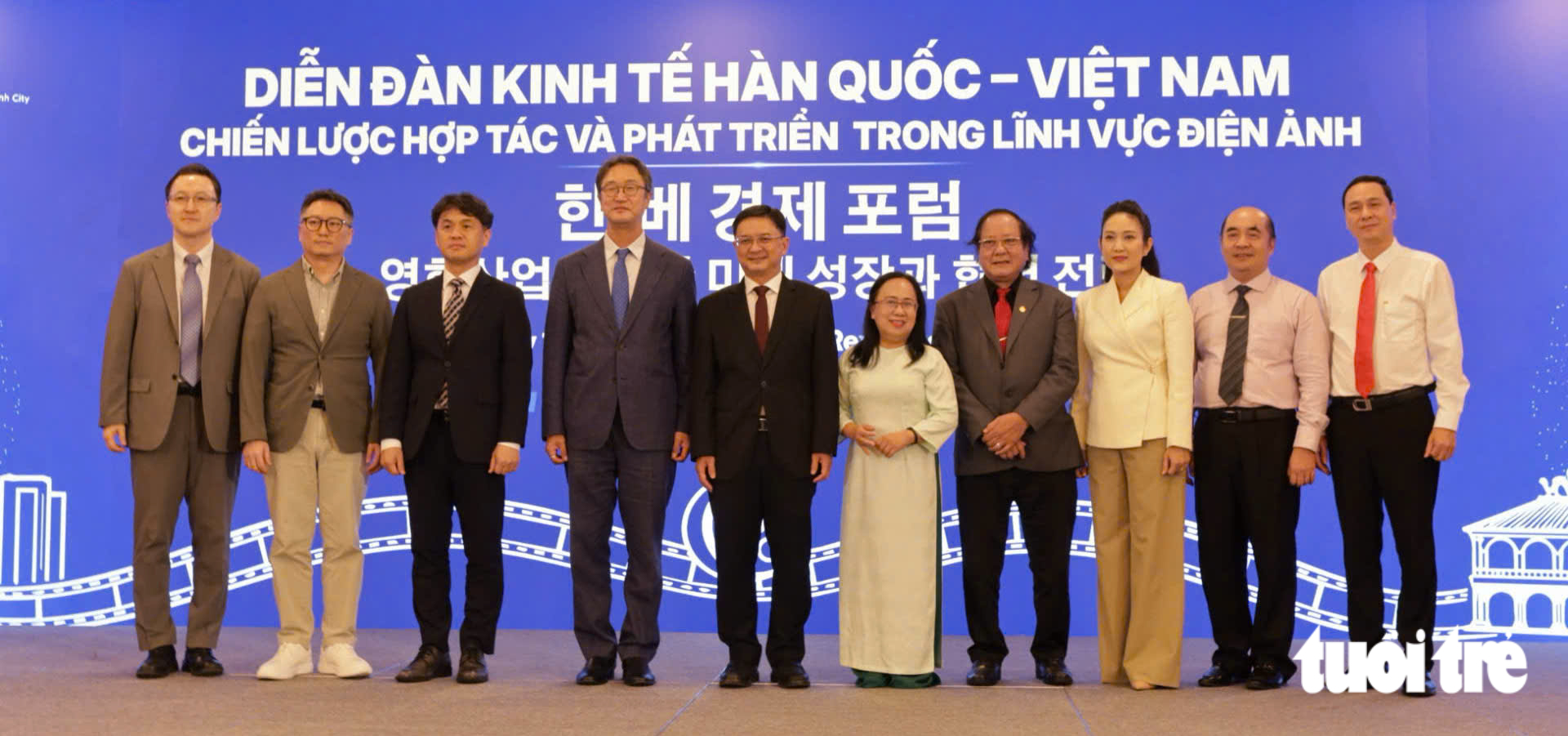
Vietnamese and South Korean delegates attend a forum on film industry cooperation in Ho Chi Minh City, November 19, 2026. Photo: Mai Nguyet
The discussions took place at the ‘Korea-Vietnam Economic Cooperation Forum: Cooperation Strategy and Development Through the Film Industry,’ held in Ho Chi Minh City on Thursday.
Speaking at the event, Nguyen Manh Cuong, vice-chairman of the Ho Chi Minh City administration, said the city views cultural industries as an important economic sector, with cinema playing a key role in attracting investment, creating jobs, boosting tourism, and promoting local identity.
Following its merger with former Binh Duong and Ba Ria-Vung Tau Provinces in 2025, Ho Chi Minh City now has a wider range of filming locations, cultural landscapes, and tourism assets suitable for movie production.
The city was also named a new member of the UNESCO Creative Cities Network for film.
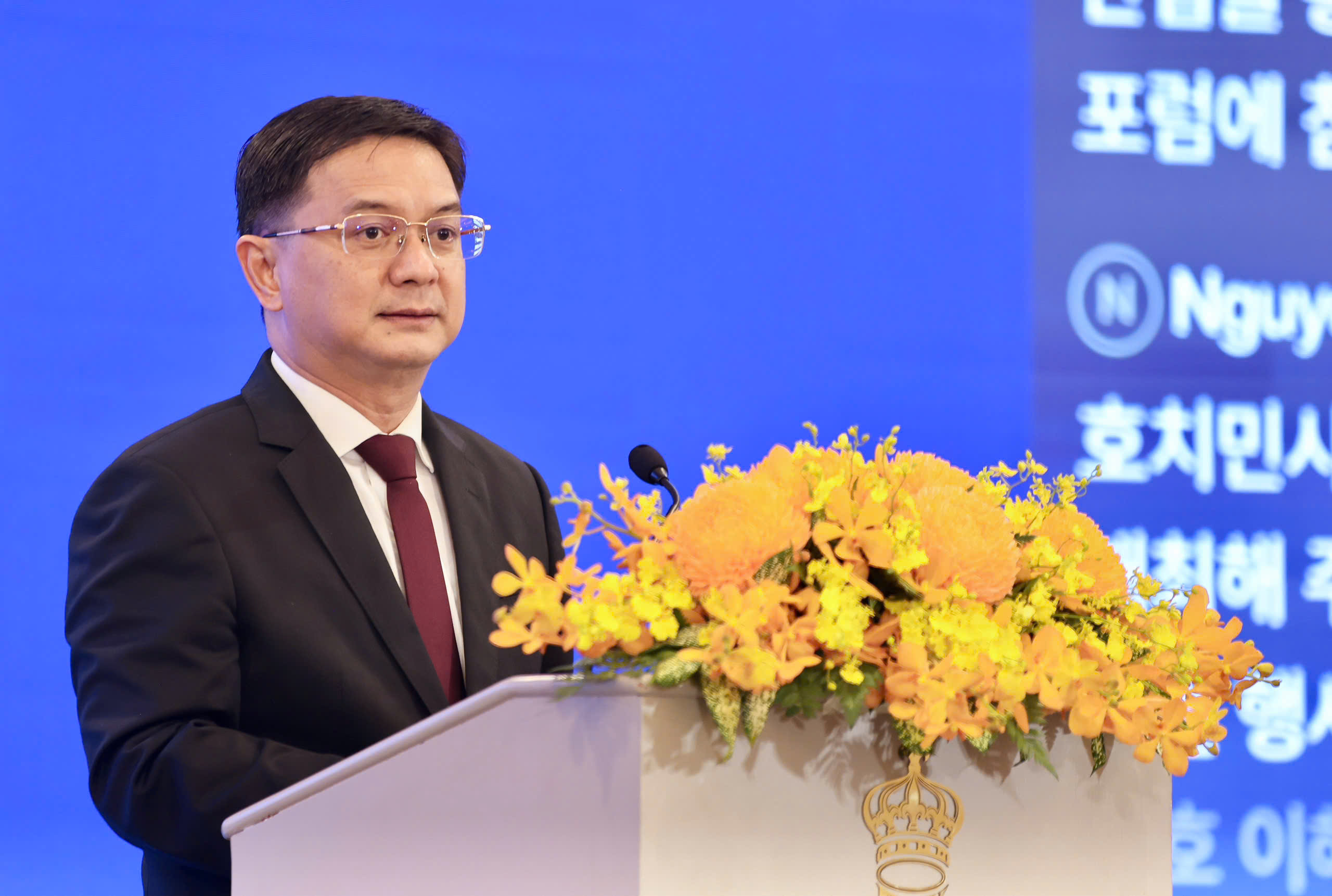
Nguyen Manh Cuong, vice-chairman of the Ho Chi Minh City People’s Committee, shares the city’s plans for developing its film industry at a forum on film industry cooperation in Ho Chi Minh City, November 19, 2026. Photo: Sai Gon Giai Phong
Nguyen Thi Thanh Thuy, deputy head of the municipal Department of Culture and Sports, said Ho Chi Minh City aims to have cultural industries account for seven percent of its gross domestic product by 2030, with film identified as one of 10 key cultural industries.
The city is considering developing a film center, a film park, a film commission, project incubation spaces, and an investment fund for cultural industries.
Alongside infrastructure development, the city is studying policies to commission film productions, support young filmmakers, introduce cinema programs in more than 1,500 schools, and establish film clubs.
It is also exploring partnerships with educational institutions to develop specialized training programs.
On workforce development, Pham Huy Quang, rector of Ho Chi Minh City University of Theatre and Cinema, said the number of lecturers in film theory, criticism, screenwriting, and production remained limited, particularly those holding doctoral degrees.
The university proposed a pilot program to expand specialized training, with a focus on developing professional film producers.
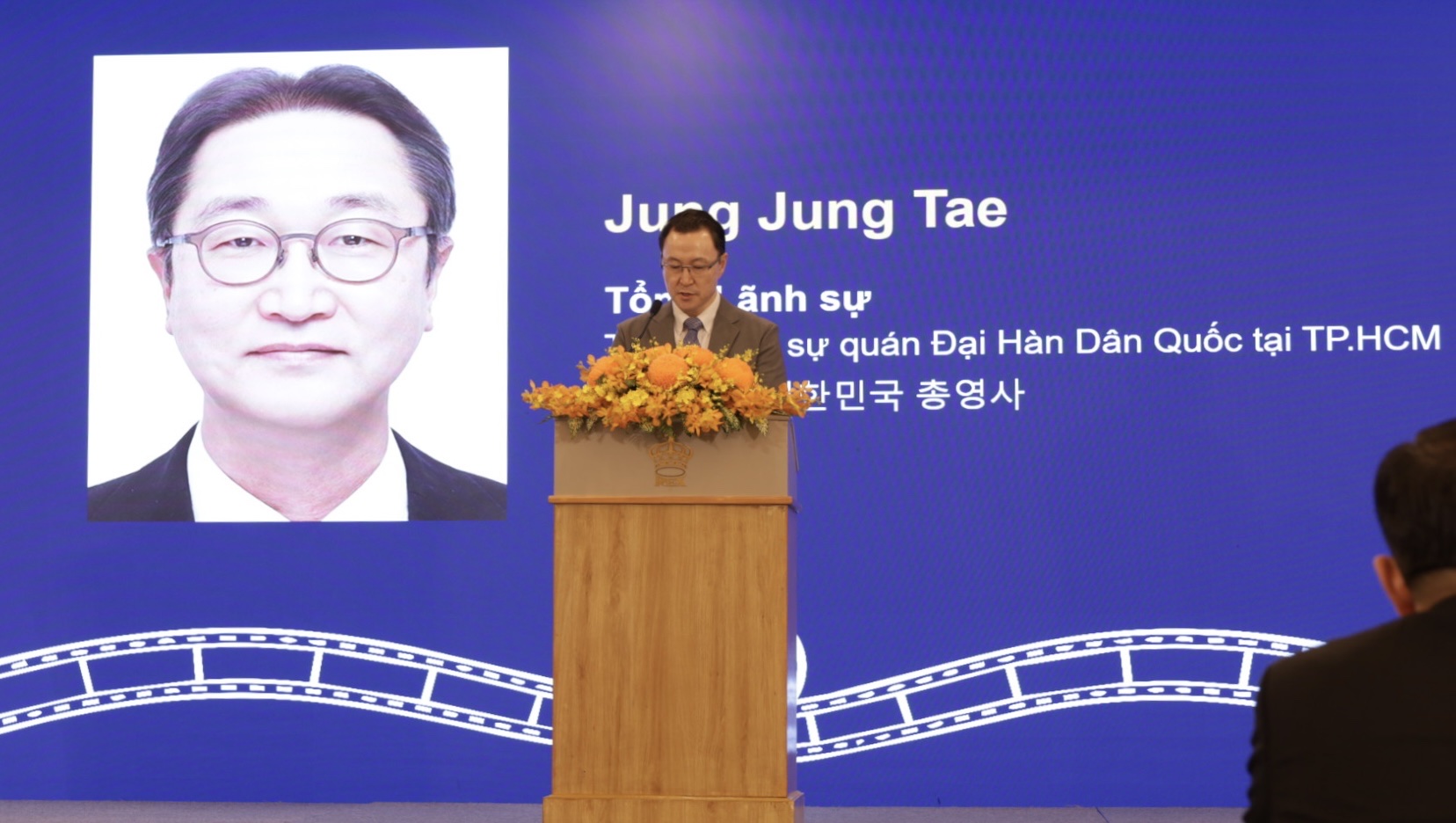
Jung Jung Tae, South Korean Consul General in Ho Chi Minh City, shares his country’s experience in developing its film industry. Photo: Mai Nguyet
Discussions also addressed the conditions needed for film projects to succeed, including cooperation mechanisms, market access, and financing.
Jung Jung Tae, Consul General of South Korea in Ho Chi Minh City, emphasized that film should be viewed not only as an art form but also as an industry capable of generating economic value and employment.
He highlighted South Korea’s experience in building the sector through government support, infrastructure investment, and workforce training.
The South Korean diplomat proposed closer collaboration in screenplay development, talent training, technology transfer, and co-production projects, while also calling for transparent licensing procedures and stronger intellectual property protection.
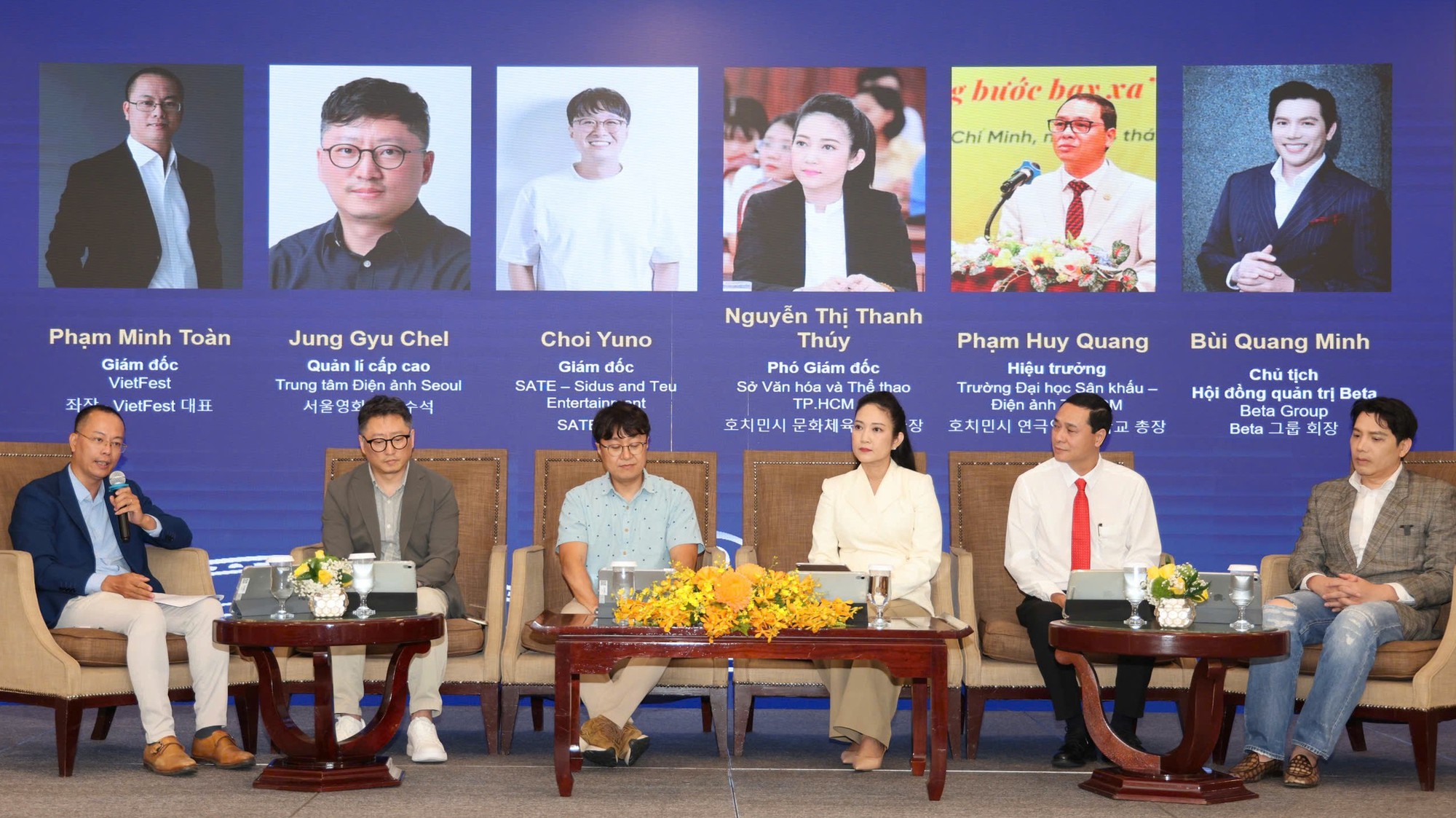
Delegates participate in a panel discussion on future Vietnam-South Korea film cooperation, Ho Chi Minh City, November 19, 2026. Photo: Sai Gon Giai Phong
Industry representatives said that Vietnamese films are gaining a stronger position in the domestic market, especially in genres such as horror, comedy, and family dramas.
However, filmmakers were encouraged to move beyond proven formulas and pursue more innovative projects.
The forum also examined successful co-production experiences, including the film ‘Mang Me Di Bo’ (Leaving Mom), where Vietnamese and Korean partners collaborated from script development through post-production and promotion.
Both sides agreed that deeper cooperation in workforce training, technology, production, and film distribution could help create a stronger cinematic ecosystem and attract more domestic and international projects to Vietnam.