








Ukraine has intensified its long-range attacks against Russian industrial infrastructure, with Moscow reporting an unprecedented number of drone interceptions overnight as diplomatic efforts to end the war gather momentum.
Russia’s defence ministry claimed on Friday that its air defences had intercepted 1,198 Ukrainian drones during the preceding night. The figure has not been independently verified, and the total number of aircraft launched by Ukraine remains unknown.
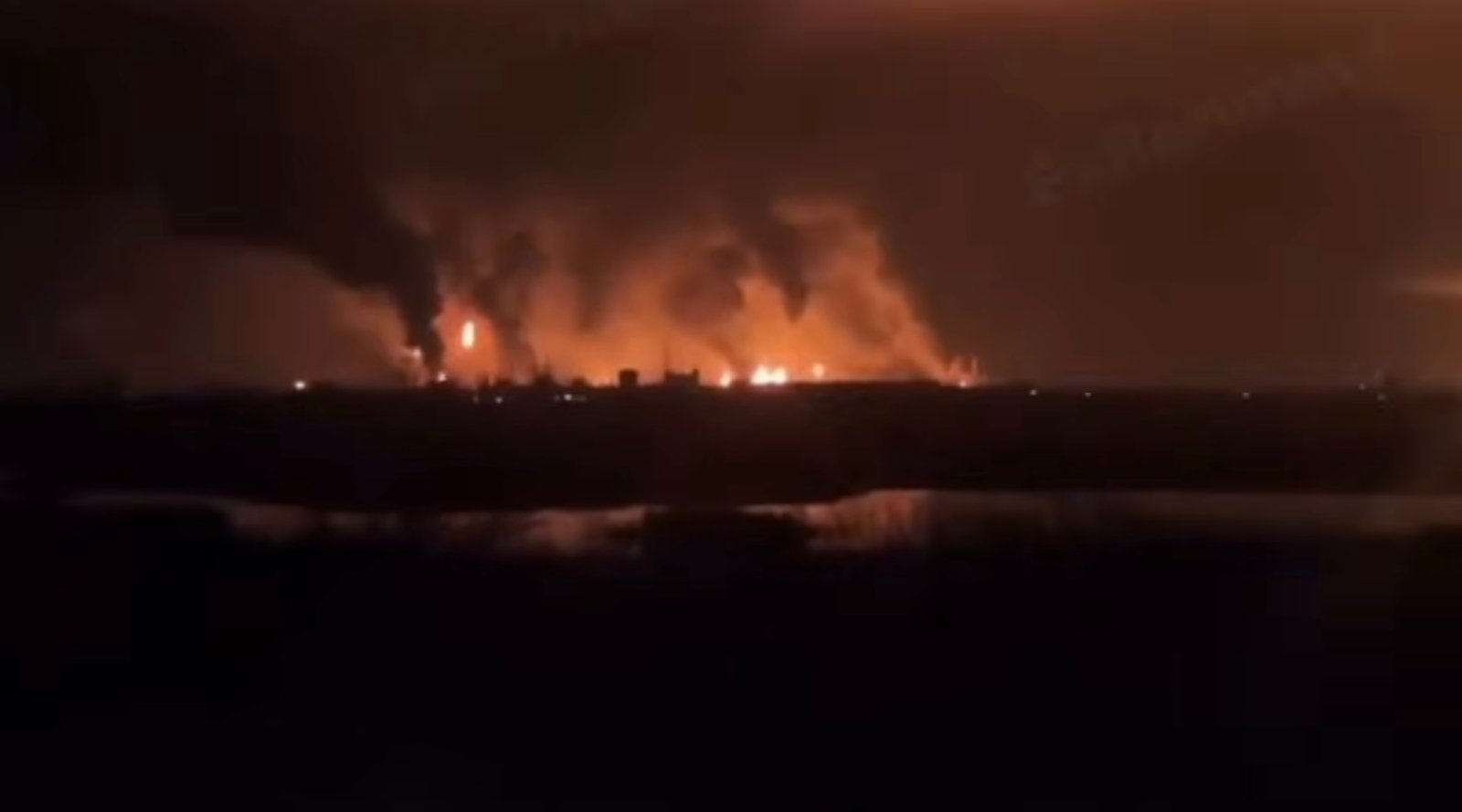
In the southern Russian city of Volgograd, regional governor Andrei Bocharov reported that four people had been killed and two injured following an attack on an industrial district.
Ukraine subsequently reported striking a major oil refinery in the city, according to Associated Press coverage of the overnight attacks.
The operation follows a series of Ukrainian attacks against Russia’s petroleum industry, undertaken as Washington attempts to establish conditions for negotiations between Moscow and Kyiv.
Pressure on Russia’s refining industry
The latest strikes form part of a sustained Ukrainian campaign against infrastructure supporting Russia’s military operations and wider economy.
On Thursday, Ukraine’s General Staff confirmed attacks against five of Russia’s largest refineries since 30 October. Several smaller facilities have also been targeted.
The campaign resumed following the breakdown of efforts to establish a temporary moratorium on attacks against energy infrastructure.
As EU Today previously reported, Kyiv’s decision to resume strikes against Russian refineries exposed disagreements with Washington over whether restrictions on Ukrainian military operations could be justified while Russia continued attacking Ukrainian infrastructure.
The economic consequences of the strikes remain difficult to quantify independently.
Reuters reported on Friday that industry sources estimated a temporary reduction of approximately 30 per cent in Russia’s refining capacity.
The duration of the disruption will depend on the extent of damage and Russia’s ability to restore operations.
Reduced refining capacity does not necessarily produce an equivalent decline in oil export revenue. Russia may be able to redirect some crude oil towards foreign markets, although shortages of refined petroleum products can create additional domestic pressures.
Russia continues its winter campaign
The Ukrainian strikes coincided with further Russian attacks against Ukrainian cities and infrastructure.
Ukraine reported that Russia had launched 117 attack drones overnight. Russian operations caused additional civilian casualties and electricity disruptions, with outages recorded across 12 Ukrainian regions.
The attacks come at a particularly difficult moment for Kyiv, as falling temperatures increase demand for electricity and heating.
The continuing assault on Ukraine’s power network has also raised concerns about the security of infrastructure supporting its nuclear generating capacity.
Earlier this month, Russian attacks against infrastructure connected to the Khmelnytskyi nuclear power station prompted renewed warnings about the consequences of the conflict for European nuclear safety.
European foreign ministers will discuss strengthening Ukraine’s resilience ahead of winter at their meeting in Brussels on 16 November.
Military pressure and diplomatic leverage
The intensification of hostilities illustrates the limitations of diplomatic progress when the parties continue to pursue conflicting military objectives.
Moscow has sought to expand negotiations beyond the immediate circumstances of the war, demanding discussion of European security arrangements and relations with NATO.
Ukraine, meanwhile, has emphasised the importance of an effective ceasefire and credible security guarantees.
Recent negotiations in Abu Dhabi have yet to resolve those differences.
For Kyiv, maintaining the capacity to impose economic and military costs on Russia remains an important element of its negotiating position.
The development of Ukraine’s domestic drone industry has reduced, although not eliminated, its dependence on foreign decisions concerning the provision and use of long-range weapons.
Moscow faces a corresponding challenge: protecting industrial infrastructure while maintaining resources for offensive military operations and domestic economic activity.
Europe’s role
European governments must consider the economic and security consequences of the continuing attacks while avoiding assumptions that diplomatic engagement will automatically reduce hostilities.
The distinction between attacks against legitimate military objectives and attacks against civilian infrastructure remains central to international humanitarian law. Civilian casualties in Russia and Ukraine underline the need for compliance with those obligations.
For the EU, support for Ukraine’s energy resilience, air defence and defence-industrial capacity remains relevant irrespective of the progress of negotiations.
The latest attacks demonstrate that the military and diplomatic dimensions of the war cannot be treated separately. Negotiating positions will continue to be shaped by developments on the battlefield and by the capacity of both countries to sustain the economic demands of the conflict.