






While Kazakhstan is the only current overlap between the two AI organizations, it is not the only case of global middle powers seeking to hedge amid the U.S.-China strategic rivalry. Several of WAICO’s founding members currently participate in U.S.-aligned security arrangements. For example, several months before joining WAICO Indonesia announced a major defense partnership with the United States. Similarly, Singapore, which is a Pax Silica signatory, has explicitly sought to remain interoperable across both the U.S. and Chinese AI ecosystems.
Other Global AI Frameworks
In addition to Pax Silica and WAICO, there are several other global approaches to managing AI issues and governing AI technology. However, at present, these institutions face even larger challenges, not the least of which is enforcement capabilities.
Perhaps the most advanced of these other frameworks is the G7 Hiroshima AI process. This is a voluntary policy framework, launched in 2023 and now endorsed by 49 participating countries, that aims to promote “safe, secure, and trustworthy AI.” In 2025, a related global reporting framework, administered by the OECD, was launched, under which AI developers can disclose their AI risk-management practices. The G7 has continued to engage closely on AI issues. A May 2026 Ministerial Declaration on Digital & Technology highlighted “strengthening the digital economy by reaffirming our commitment to an open, innovation‑friendly approach to digital environments, with particular emphasis on supporting AI openness and fostering AI adoption by micro-, small‑, and medium‑sized enterprises . . . while ensuring that AI is secure.” The 52nd G7 Summit in Évian-les-Bains, France, took place in June and featured in a working lunch on AI with industry heads, though it did not lead to a new leaders’ declaration.
The UN Global Dialogue on AI Governance was established by General Assembly resolution in 2025 and convened its first session in Geneva in July 2026. The dialogue’s design is deliberately deliberative: It convenes discussion on AI-related issues among representatives from government, industry, civil society, and academia, but it does not issue binding recommendations. The second session for this body is scheduled to occur in New York in May 2027. Notably, China has invested in the UN track while simultaneously building WAICO outside of it. For example, in May 2026, China’s vice minister of science and technology, Chen Jiachang, spoke at the United Nations about how “China is promoting global AI governance within the UN framework.” This shows that China is taking an aggressive dual-track diplomatic approach to the regulation of AI, which is a strategy that the United States has not matched.
Globally, the EU AI Act, adopted in 2024, is the most legally consequential of the existing frameworks to regulate AI. This act has not been designed for global coalition building; the European Union has not sought to enroll other countries in the act, and the bloc itself has signed the Pax Silica Declaration. But the act does serve as a Western bloc model for AI regulation that could be expanded and exported to other countries, should the need arise, and the European Union is advocating to other countries to adopt national AI frameworks modeled after the act—although this is happening over the objections of U.S. policymakers, who do not support the act itself or resting international agreement on its principles.
Finally, starting in 2023, a global series of AI summits began, initially focused on AI safety. However, over the years this AI summit series has shifted away from having AI safety as its organizing frame. For example, the 2023 summit in Bletchley Park was explicitly an “AI Safety Summit” and produced the Bletchley Declaration on AI safety. But the following year, the 2024 Seoul meeting broadened the frame to “safety, innovation, and inclusivity,” though it did produce a new round of frontier safety commitments. This broadening of scope continued: The 2025 Paris meeting was an “AI Action Summit” and the 2026 New Delhi meeting was an “AI Impact Summit.” While the international network of AI safety and security institutes continues to function, and the second International AI Safety Report was presented in New Delhi, the political center of gravity for these summits has shifted from safety and governance toward AI access and deployment.
The U.S.-China Summit
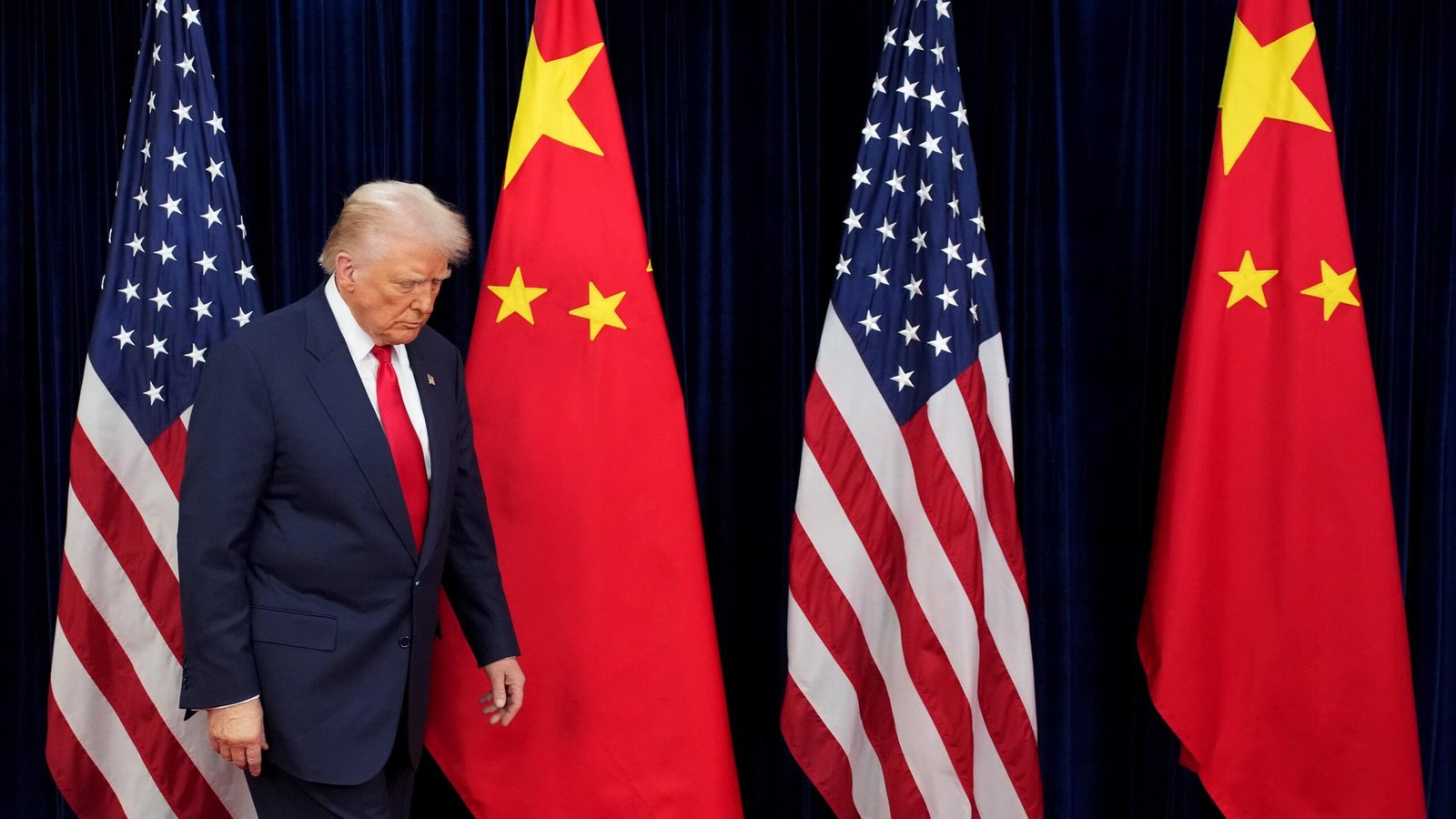
The United States and China are expected to hold their first official bilateral AI dialogue under the current administration on September 24, as part of President Xi’s planned visit to Washington. In these AI talks, which were an outcome of the May 2026 summit between President Trump and President Xi in Beijing, the U.S. side is expected to be led by Treasury Secretary Scott Bessent.
According to current reporting, the agenda for these talks includes issues such as cooperation on monitoring AI-directed cyberattacks, Chinese access to U.S. frontier AI models, U.S. restrictions on Chinese open-weight AI models, and whether China will regulate open-source AI, with a broader focus on preventing the most capable systems from reaching nonstate actors. It is highly likely that ongoing developments—including new revelations of autonomous AI agent breaches and the “pace the frontier” push—will be key parts of the discussions.
Analysts following the process have suggested that this first meeting is unlikely to resolve major geopolitical or trade disputes. Rather, the summit will likely focus on establishing baseline definitions, such as what qualifies as a frontier AI model, that can be used to support future follow-on discussions, although the urgency of cyber cooperation has increased dramatically in recent weeks following multiple and ongoing revelations of autonomous AI hacking.
Two structural obstacles may limit what is achievable in this summit. The first is a series of U.S. policy decisions that have antagonized Chinese officials. For example, export controls on advanced technology remain a major friction point in the U.S.-China relationship—Chinese labs continue to struggle with obtaining computing resources due to export controls on high-end chips. Meanwhile, in June 2026, Washington used export controls to restrict non-U.S. nationals from accessing the Anthropic Fable model. The United States is likewise aggressively targeting “distillation attacks” by Chinese labs, and has reportedly considering taking actions to block or limit access to certain Chinese open-weight models. These are exactly the kind of actions President Xi targeted with his “overstretching national security” rhetoric. China has responded to these controls by seeking to stimulate domestic innovation in AI and related technologies, such as semiconductors.
Verification is another unsolved issue that may limit the discussions at the summit. In the AI space, verification means establishing that claims about an AI model’s capabilities and safety properties, and how an actor is using that model, are true. Currently, there is no established technical means by which either the United States or China can confirm the other’s compliance with a commitment about model capabilities or testing, and neither government is inclined to accept the other’s assurances. There are, however, a number of technical approaches—such as workload monitoring and verification of model integrity—under active development and could serve as a technical backbone for cross-border compliance verification.
From the Bilateral Table to the Global Arena
While the upcoming summit is being framed as a bilateral discussion between two leading global powers, it also carries significant multilateral implications. Both Washington and Beijing will likely use whatever emerges from this summit as currency for the wider institutional contest over AI governance described above. Additionally, each country’s current multilateral commitments may shape what it is able to offer in bilateral negotiations. Therefore, it is best to view these bilateral and multilateral AI governance discussions as interlinked, rather than as separate processes.
For Beijing, one major benefit from the bilateral discussions with Washington is optics. Being seen as willing to negotiate frontier AI safety with the United States establishes China as a co-architect of global technology standards, and signals to the broader international community that the future of AI governance is bipolar rather than unipolar. This supports the CCP’s claim that China is the great power, through WAICO, that is “[redefining] AI governance for the Global South.”
China will also likely seek to integrate outputs from the summit with the United States into its multilateral AI diplomacy. For example, any language on which the United States and China agree, such as a shared definition of a frontier model, could then be integrated into WAICO’s work program and the UN Global Dialogue, giving compromise language multilateral traction. Conversely, should the talks instead collapse, or should Washington be seen as making coercive demands, Beijing has a ready alternative message for the same global audience: The United States prefers control of AI to global cooperation. China’s multilateral commitments around AI will also constrain what it can offer in its bilateral talks with the United States. For example, any U.S. ask that China accept restrictions on the global release of Chinese open-weight AI models runs contrary to WAICO’s promise of freely available model weights, training programs, and turnkey applications. Thus, Chinese concessions to the United States on open-source AI could be seen by WAICO members as Beijing trading away the Global South’s access to the technology in exchange for accommodation with Washington. (As an aside, one important point to note here is that there is an ongoing discussion among Chinese policymakers about restricting foreign access to some advanced Chinese models.) Going into the talks with China, U.S. negotiators should understand how China will leverage this bilateral discussion in multilateral fora.