









Storytelling in entertainment media has come along way since the days of the old pen and paper. Books laid an important foundation for countless narratives throughout the history of the world. But theater and, eventually, film and television introduced new ways to bring those stories to life. Today, storytelling has evolved further with video games becoming commonplace in entertainment media. One only needs to look at the megalithic hype surrounding the release of Grand Theft Auto 6 to understand the mark video games have made on the entertainment industry in the past few decades. But at one point, filmmakers and producers sought new and innovative ways to bring cinematic experiences to audiences, and streaming services rightfully adapted.
Streaming services have arguably spent years altering the landscape of movies and television. It’s not just about providing access to a library of entertainment options. Streaming services have striven to offer high resolutions, consistently better audio, and even first-party content. But throughout the evolution of streaming, platforms have experimented with interesting methods for engaging audiences that have long been abandoned. Here is a look at a few of the innovative methods in cinematic storytelling that have either been drastically reduced or ignored altogether.
3D movies were about bringing the theatrical experience home
This fad was a moment in time

During the late 2000s and early 2010s, 3D movies were picking up steam in theaters. Meanwhile, 3D TV sets were being introduced to the marketplace so viewers could experience this movie format at home. Even video games began adopting 3D viewing as Sony released their own PlayStation-branded 3D TV set, while many games launching on the PS3 at this time were 3D capable. With the popularity of this new gimmick, streaming services like Netflix offered 3D options for viewers who had 3D TVs and the accompanying glasses. For a time, Netflix offered several 3D options for viewers with the appropriate equipment. However, 3D proved to be a passing fad that eventually faded from consumer consciousness. Eventually, 3D TVs began to disappear. Netflix then discontinued its 3D offerings in 2016 simply because the demand no longer existed. 3D viewing, it seems, was only ever meant for the theaters, which is where it’ll stay, unless you can track down the stray Blu-ray 3D.
Interactive movies raised the bar for audience engagement in an ambitious experiment
They were akin to choose-your-own-adventure stories

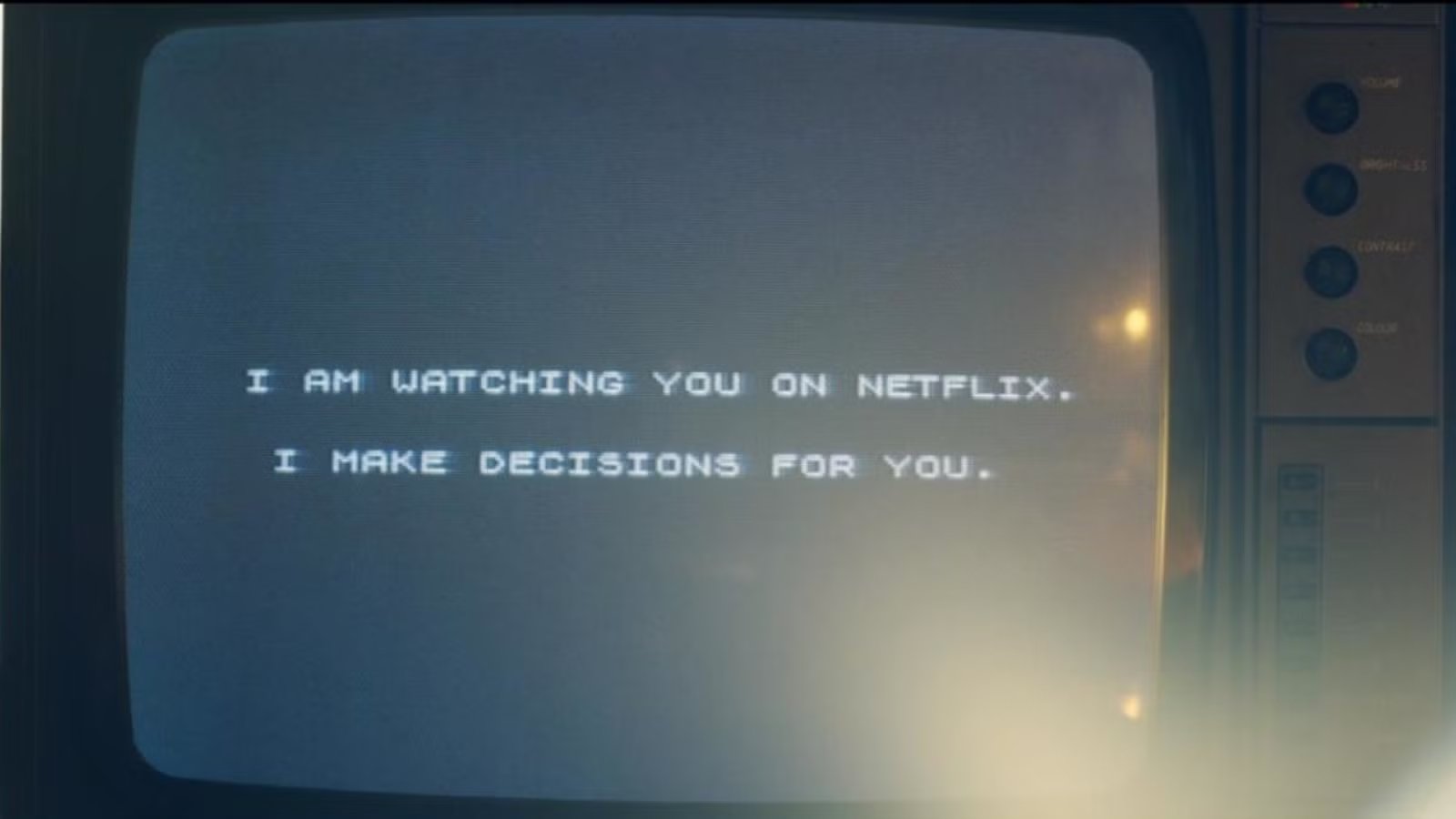
Netflix explored this interactive element thoroughly with notable productions such as the Black Mirror spin-off Black Mirror: Bandersnatch, offering viewers a chance to guide the story progression. During key sequences, the movie or show would present viewers with a choice that would determine the story’s trajectory. This was especially popular for children’s series, including shows like Cat Burglar, You vs. Wild, Puss in Book: Trapped in an Epic Tale, Boss Baby: Get That Baby!, Captain Underpants: Epic Choice-o-Rama, and more. Despite the innovation behind this new mode of entertainment, interactive movies and shows only lasted on Netflix for around seven years, with many of the shows and offerings being phased out by the end of 2024.
Virtual reality
This became a new way to immerse yourself in a theatrical experience

At one point, streaming companies experimented with virtual reality (VR). Netflix even developed a dedicated VR app in 2015 that was specifically designed for the Samsung Gear VR, a headset that users could slide their phones into for a VR experience. The app eventually moved to Oculus and Meta Quest headsets. The app would place you in a virtual theater-style setting of your choice where you could watch movies or shows on what felt like a massive screen through a VR headset. Of course, VR was never fully refined and also proved to be a fad. Output only ever achieved a 480p resolution, and VR never actually caught on as a mainstream experience. Netflix discontinued its dedicated VR app in 2024, though many headsets can still watch Netflix without the need for this app. Virtual reality hasn’t entirely disappeared like some of these other formats. But its popularity isn’t what it once was.
Short-form mobile streaming
Do you remember the rise and fall of Quibi?

Do you remember Quibi? It was a blink-and-you’ll-miss-it moment that occurred during the infamous 2020 pandemic. Quibi launched in the Spring of that year promising to provide viewers with Hollywood-quality content in bite-sized formats. Viewers could watch 10-minute episodes or less from their mobile phone and even view the content in either landscape or portrait mode. The service had a few originals around launch, including Reno 911!, The Fugitive, Survive, and Die Hart. The pitch was to give viewers a way to experience entertainment in an increasingly busy world. But with abysmally-low subscriber numbers, the service ended in December 2020 with most of its content library being sold to Roku.
Second-screen movie experiences
The companion app to movies

As if one screen attracting your attention wasn’t enough, studios experimented with the idea of using two screens to engage your brain during a movie viewing experience. At one point, Disney, AMC Networks, and other services offered a second-screen app to accompany their content. The app would sync up with the shows or movies people were watching and offer interactive features from everything to behind-the-scenes content to little-known facts. The idea was to have viewers dive deeper into the content they were engaged with by doing activities and getting added information about the content they’re viewing. Like most of these formats, this one was destined to die rather quickly. It turns out, not many people are interested in splitting their attention between two screens. Nowadays, when a person is giving their phone more attention during a show or movie, it’s typically because they’re bored or uninterested.
While these formats have mostly gone the way of the dinosaurs, they were notable innovations made by streaming platforms that attempted to push the boundaries of ordinary entertainment. But like any new idea, not every experiment will stick the landing. Some ideas are fun in practice, but impractical in the long run. Still, it’s interesting to look back at times when streaming services took some interesting risks. Perhaps innovation in the cinematic entertainment space will continue into the future, and we’ll have a new batch of formats to discuss in the coming decade.
- Subscription with ads
-
$9
- Premium Subscription
-
$20 or $26 options