








Buying a tablet can be a challenging experience, especially if you don’t know where to start. After all, you can find models that are around or even below $100, all the way up to well over $1,000. Even though there’s a middle ground where most users can find something enticing — including some of what BGR considers the most powerful Android tablets actually worth buying in 2026 – it’s important to note the differences in display technology, processing power, build quality, and more.
We’ve selected some of the biggest differences between cheap and expensive Android tablets to help you understand what you get for your budget. We primarily focused these comparisons between high-end and low-end Samsung tablets, specifically, since the company is the leading Android tablet manufacturer. However, we drew some comparisons with several off-brand tablets as well. We also wanted to avoid any operating system deviations and to demonstrate what would happen if you go below what Samsung considers the minimum you need for a good tablet experience.
Interestingly enough, as an iPad user myself, what I find interesting the most about the Android tablet market is that it can get really affordable. For iPad users, any model Apple currently sells can be a good choice, though they often run more expensive. You should pay attention to some things before buying a new iPad, as the difference between models often comes down to performance, a more premium display, and support for better accessories.
1. Display technology
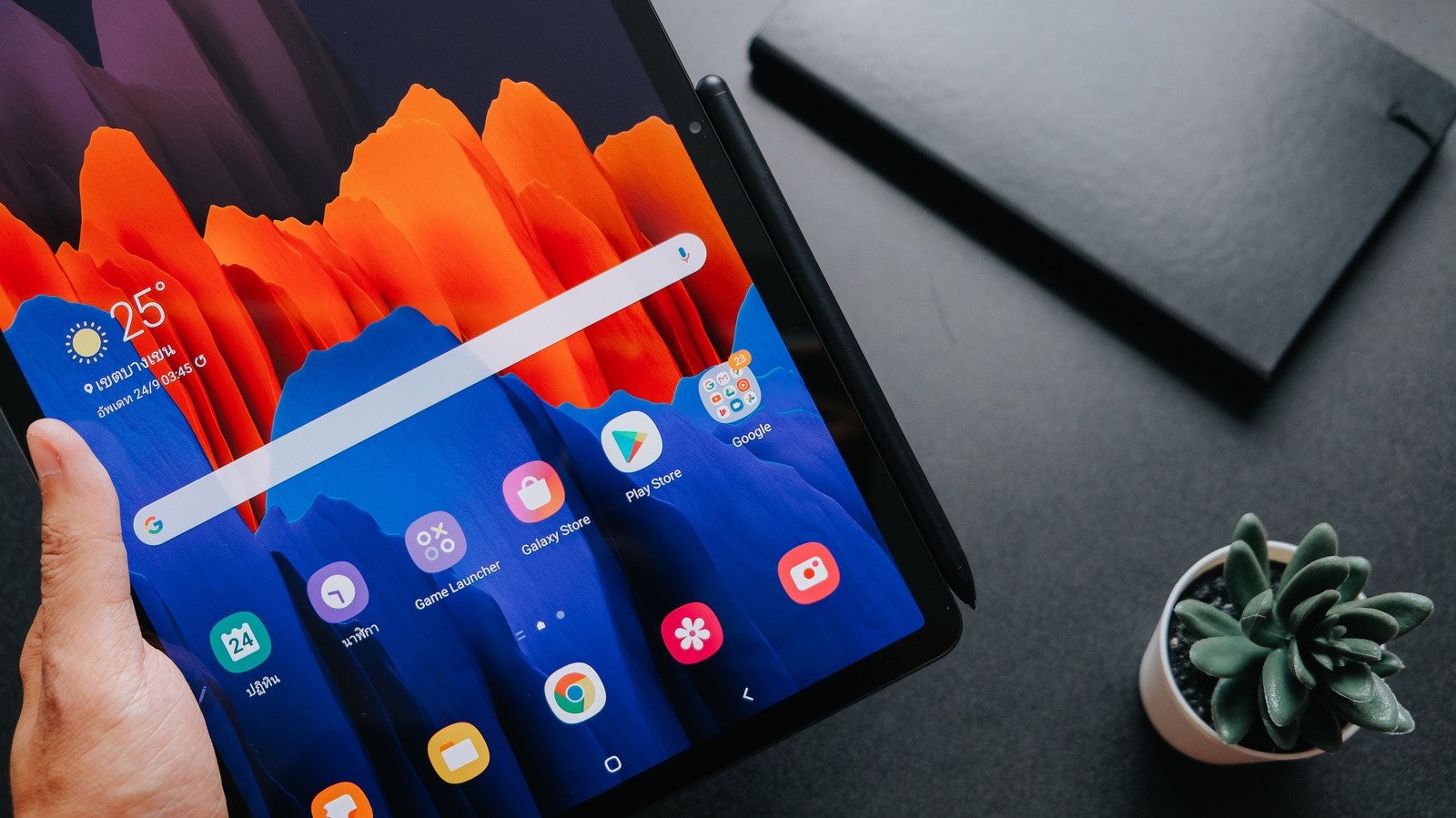
The first thing you’ll notice between a cheap and an expensive Android tablet is the display quality, as this is what dictates how you consume media, read text, and interact with your device. A device like the Samsung Galaxy Tab S12 Ultra features a beautiful pro-grade Dynamic AMOLED 2X panel with a 120 Hz refresh rate, high peak brightness, and ultra-thin bezels. With that, you also get true blacks, great contrast, vibrant color accuracy, and even anti-reflective properties. This is all very important for creative professionals, photo editors, and digital artists, as low-latency is essential to these workflows.
When we talk about a mid-range device like Samsung’s Galaxy Tab A11 series, you get an LCD screen with a 90 Hz refresh rate, which is often only Full HD. Colors are less saturated, blacks look dark gray in dim lighting, and viewing angles are tighter — even though the panel continues to be bright and sharp for everyday use.
If you go for a budget option, you might get a low-resolution LCD panel with narrow viewing angles, color shifting if the tablet is tilted, and other issues. In that scenario, you need to understand how important the display technology is depending on what you plan to do with the tablet, but the suggestion is never to go too budget, as the poor display can strain your eyes, show inaccurate colors, and impact the usability due to the difficulty of getting a (literally) clear picture of what your tablet is trying to show you.
2. Processing power
The processor and system memory are responsible for how fast apps load, how smoothly the animations are displayed, and how your tablet handles multitasking. A flagship device, such as the latest Samsung Tab S12 Ultra, features a top-tier processor (the MediaTek Dimensity 9500) with up to 16GB of RAM. With that, this tablet can easily run heavy workloads such as 3D gaming, multi-track 4K video editing, complex graphic design, and even desktop tasks when using Samsung DeX capabilities. For power users and prosumers, something like this tablet can truly become like a secondary laptop or even a replacement for their current devices.
Going to a mid-range device, such as a Samsung Galaxy Tab A, you get a reliable mid-tier processor, which can feature anything from 4GB to 8GB of RAM. While it won’t run games in its best capabilities, nor be able to export massive video projects without throttling, it’s more than enough for everyday usage like checking social media apps, reading the news, playing casual games, or having multiple browser tabs open. With a budget Android tablet, you usually get an outdated, low-cost microprocessor with around 2GB to 3GB of slow memory. In these scenarios, even simpler things like launching an app, typing on the virtual keyboard, or scrolling down a web page can give a lag or systemic stuttering. This is why if you’re looking for an Android tablet, it shouldn’t have less than 6 or 8GB of RAM, in addition to a mid-range processor, otherwise you’ll spend money now, and you’ll have to spend again soon.
3. Build quality and durability
Even if your tablet is protected by a case, its build quality will dictate how it feels in hand and how well it survives accidental drops, spills, and daily wear and tear. For example, a premium tablet like the Galaxy Tab S12 Ultra features high-grade materials with reinforced front glass, an official IP68 rating for dust and water immersion, and a thin design without compromising battery or durability. In other words, a tablet like Samsung’s S12 Ultra is a marvel of engineering and is great for outdoor exposure, people frequently traveling, and anyone who needs a durable device.
A few steps below, an entry-level tablet, like the Galaxy Tab A, removes these ultra-premium materials, but still features a solid structural integrity with an aluminum finish. It also lacks more robust water- and dust-resistance certifications, with just an IP52 rating. But, the device will still feel solid, the buttons will work properly, and the glass top can resist minor surface scratches.
However, cheap off-brand tablets are often made from thin, hollow plastics that creak when twisted; they lack internal structural reinforcement to protect components from impacts; and they usually feature cheap plastic overlays for the screen instead of scratch-resistant glass. With that, your tablet can easily suffer from hardware failure due to its cheap components. That said, it doesn’t mean users need to buy a premium tablet for a kid, or for regular usage, but getting to know the sweet spot between a well-made tablet and a very budget one is important.
4. Software support
Imagine spending a few hundred dollars on a tablet that will only support a couple more Android software updates; that’s rough. When we buy a new product, we usually expect it to last for years to come, and one of the best ways to get that is with software updates. After all, these new versions are responsible for bringing new capabilities for the product, protecting it from hacker attacks, and even continuing to offer app compatibility in the long term — like still being able to watch Netflix or your favorite TV show on your tablet in a few years from now.
On a tablet like the Galaxy Tab S12 Ultra, Samsung promises up to seven years of major Android OS upgrades and consistent security patches. This long-term commitment ensures that regular users and business customers will have a reliable device for years to come, supporting the latest technologies and being protected against software vulnerabilities. However, these are not the only devices with long-lasting software support.
More recently, even the Galaxy Tab A series with the A11+ model started to feature a longer software promise, with up to seven years of updates. With that, this device should be getting updates up to 2032, which, by then, you’d have probably upgraded to a new tablet. Still, they show a big difference between ultra-budget Android tablets, as they can already ship with outdated Android software, leaving the user with a year or two of compatibility between the most essential apps from the Google Play Store before they become completely unusable.
5. Price
Last but not least, it’s impossible to talk about the differences between cheap and expensive Android tablets if we don’t address the elephant in the room: the price. After all, price should reflect the balance of engineering, hardware components, and long-term support packed into a device. Samsung’s Galaxy Tab S12 Ultra checks every box of what a premium tablet should do and have. However, it starts at $1,399.99, going all the way to $1,999.99 depending on how much storage you require for your tablet. That said, paying this premium price will give you all the premium features, but in a value that not everybody is considering. This is why tablets like this one are focused on very specific users, like digital artists and tech enthusiasts.
Still, if we consider a device like the Galaxy Tab A11+, the price drops quickly, to $299.99, making this a more affordable choice that will still work for most customers due to its great construction, mid-tier processor, and good capabilities for everyday use. Lastly, dropping to the lowest end of the spectrum, with ultra-cheap off-brand tablets selling for under $100, you might feel like you’re doing a great investment for getting a tablet without paying too much. But they often offer so many compromises in performance, display quality, and rapid hardware failure that they can turn into e-waste within months. With that in mind, the best way is to go with a known brand and, if the price feels too prohibitive at this moment, wait for a deal, as companies like Samsung always offer them in specific moments of the year.
How we compared these tablets
There are multiple ways to compare devices, and we chose to do that between cheap and expensive Android tablets to help you visualize how important points like display, processor, build quality, software support, and even price can impact the product you might be purchasing. After all, even though the specs might look similar, they do not necessarily represent the same experience.
For example, a tablet with 128GB of storage has become the new standard for storage, but having the same numbers does not necessarily mean that high-end and low-end models will behave the same. After all, a higher-end tablet will feature faster reading and writing speeds, while the opposite will be true for the lower-end model. This means that a more expensive tablet will let you access files, load apps, and do more a lot faster, while finding something on a cheaper tablet might take a little while. Still, what’s important to notice is that the mid-range can be really good, meaning that users don’t need to spend over $1,000 to get a good tablet — not even $800 or $600.
Options below $500 can already offer good build quality, long-lasting software updates, a decent display, and a proper processor to help you enjoy your next Android tablet for years to come. With that, now you know how the components can impact the price of a tablet and which features might be better to put extra money on depending on what you need.