









Thank you dear subscribers, we are overwhelmed with your response.
Your Turn is a unique section from ThePrint featuring points of view from its subscribers. If you are a subscriber, have a point of view, please send it to us. If not, do subscribe here: https://theprint.in/subscribe/
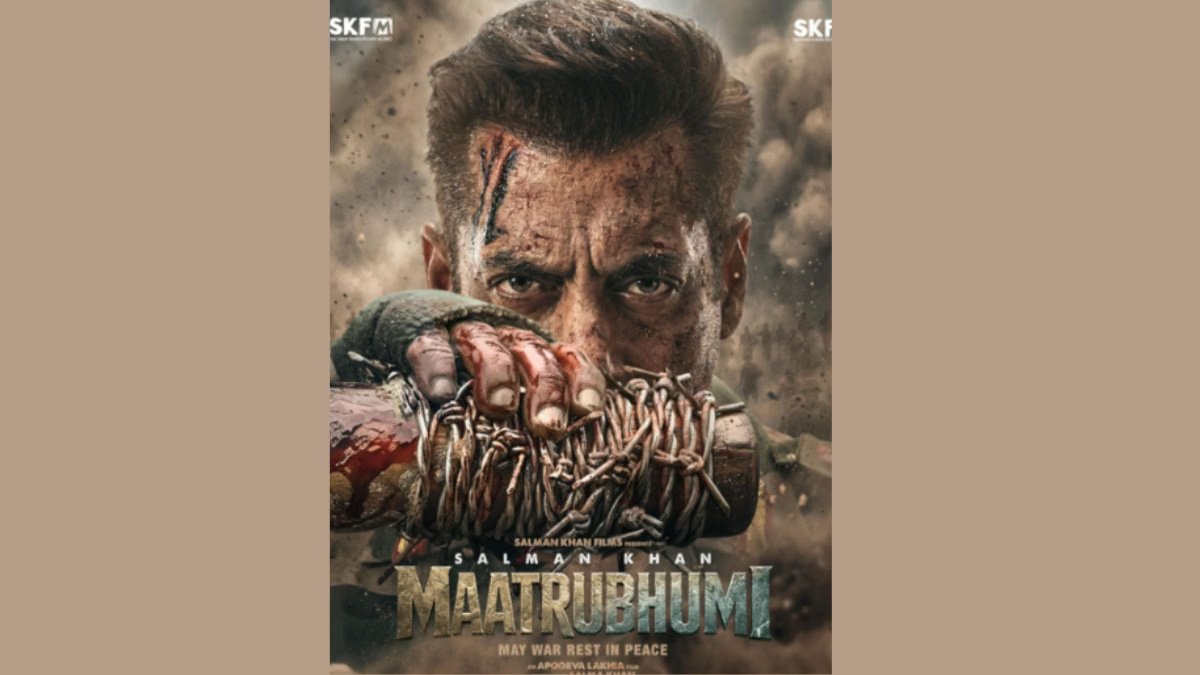
A reported plan to cast Salman Khan as an Indian soldier fighting Chinese forces raises an uncomfortable question: who gets to represent duty, courage and sacrifice on screen?
The question is difficult to separate from the story of Ravindra Patil, the Mumbai Police constable who served as Khan’s bodyguard—and later became a key witness in the 2002 Bandra hit-and-run case.
Patil was not an ordinary security guard. A 1998-batch police recruit, he had received commando training and was associated with the Mumbai Police Special Operations Squad. In 2002, after reported threats to Khan, Patil was assigned to protect him.
On 28 September 2002, Patil was in the Land Cruiser involved in the Bandra incident. He filed the initial complaint and testified that Khan had been driving. His testimony became central to a case that attracted enormous public attention.
What followed was a grim personal trajectory. Patil later went missing during the trial, was arrested for failing to appear and was dismissed from the police force. He reportedly developed tuberculosis and died on 4 October 2007 at Sewri TB Hospital. Accounts of his final days described a man gravely ill, weighing around 30 kilograms, with no one present to claim his body.
The public record establishes the broad sequence of events. Claims about pressure, intimidation or the forces behind Patil’s decline must be treated with care; they should not be presented as proven facts without evidence. But the human question remains: what does society owe someone who stood by his account when doing so came at an extraordinary personal cost?
That question resonates with another experience from my own professional life.
For years, I advised Western agencies on risks associated with Huawei and the security implications of Chinese telecommunications infrastructure. My work on the subject was part of a wider debate that reached the international press in 2012, including The Wall Street Journal. That year also saw major public scrutiny of alleged Chinese cyber intrusions into Nortel and a US congressional investigation into Huawei and ZTE.
In April 2016, I was scheduled to attend the Huawei Analyst Summit in Shenzhen. I had been travelling in a limosine arranged for the event, alongside Guru Paralkar, now associated with Nokia Bell Labs. During the journey, I was abruptly removed from that vehicle and told an Uber was arranged. An Uber eventually left me near the China border after midnight. The driver would not continue without the necessary licence to enter China.
The actual screenshot of the Uber trip that left me stranded at 2AM.
I had no local currency, did not speak the language and still had roughly 30 miles to travel. I eventually made my way to the InterContinental. The following morning, other attendees expressed surprise at what had happened.
Days later, I experienced a separate choking incident. I have described that event as part of my account of the summit, but I do not claim to know who ordered the earlier transport disruption, or to have proof that a single actor directed either incident. These are my recollections and interpretations, not findings established by an independent investigation. I am documenting the broader experience in a forthcoming book about Nortel’s collapse and Huawei.
The connection between Patil’s story and mine is not that the circumstances are identical. They are not. Nor is it that the two events prove a common hand or conspiracy. The connection is more fundamental: the vulnerability of people who make themselves inconvenient by recording, reporting or refusing to abandon what they believe to be true.
A police constable’s testimony can become inconvenient. An analyst’s warnings can become inconvenient. Institutions, powerful individuals and public narratives may find it easier to move on than to confront uncomfortable questions.
Cinema, of course, is fiction. Actors are not required to be flawless, and playing a soldier is not a certificate of personal virtue. But when a film invokes patriotism and military sacrifice, its choices invite scrutiny. If reports about Khan’s proposed role are accurate, filmmakers should expect audiences to consider the public record—not just the promotional narrative.
Patriotism cannot be reduced to a uniform, a battlefield scene or a stirring dialogue. It must also include accountability, integrity and respect for those who bear the cost of telling the truth.
Before celebrating another screen portrayal of duty, perhaps we should remember the real-life witness whose duty came at such a terrible price.
The question is not whether Salman Khan can play a soldier. It is whether the story being sold deserves our applause.
Akshay Sharma is a technology analyst and author working on an upcoming book about Nortel and Huawei and the Cybersecurity implications of Y2Q. He is a Vice President and Board Member of No More Tears.
These pieces are being published as they have been received – they have not been edited/fact-checked by ThePrint.