





This post may contain links from our sponsors and affiliates, and Flywheel Publishing may receive compensation for actions taken through them.
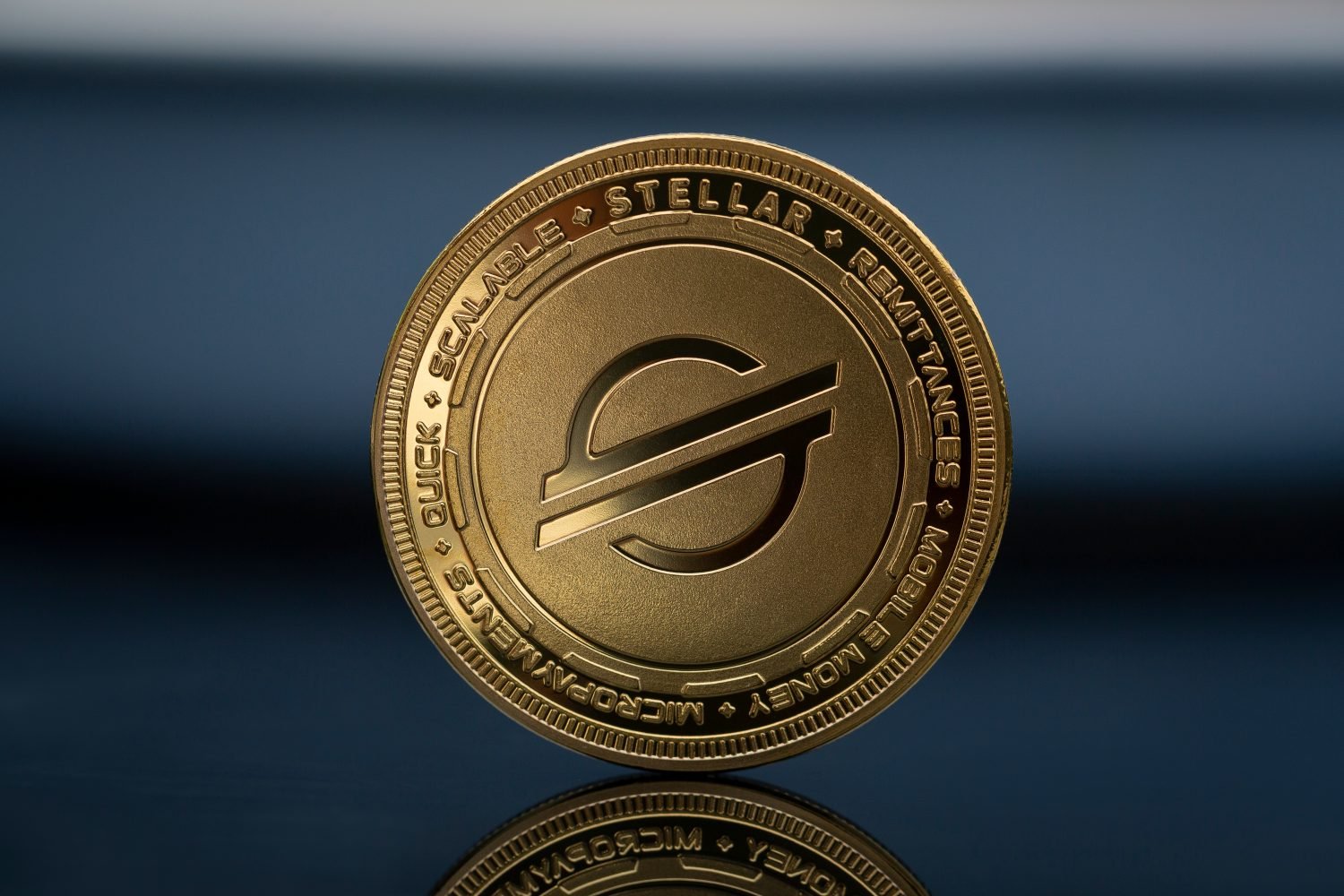
Stellar’s tokenized assets have grown about sixfold, reaching more than $5 billion. However, Stellar (CRYPTO:XLM) trades at about 14 cents, down 29% in 2026. It has fallen from a 30-day high close of about 19 cents on October 13 and now trades below its lowest daily close of the past year, set on May 22.
XRP (CRYPTO:XRP) has fared even worse. It trades at $1.02, down 44.6% in 2026 and 72% below its all-time high of $3.65 from July 2025. Meanwhile, Stellar’s network usage is rising, as the Stellar Development Foundation reports that Stellar’s real-world asset market grew 6.1 times, far outpacing the industry average of 2.3 times. So could XLM outperform XRP by 2028?
Stellar’s Tokenized Assets Hit $5 Billion, but Fund Holders Need Little XLM
These growth figures come from Stellar’s own updates. In posts on X today, Stellar summarized a report from data firm Allium that counts $4.1 billion of real-world assets on its network, and Stellar says the figure has since topped $5 billion. Real-world assets are things like Treasury bills or fund shares recorded as tokens on a blockchain.
Stellar also highlighted $319 million in tokenized non-U.S. debt and a 127% increase in stablecoin transfer volume. Stablecoins are tokens pegged to currencies such as the dollar, and Stellar’s stablecoin supply grew 91% in 2026, compared with a mere 0.4% for the overall industry.
However, these gains mostly benefit fund managers and stablecoin issuers. While Stellar fees are paid in XLM, they cost only fractions of a cent, so a tokenized fund holder needs very little XLM. That helps explain the valuation gap in our look at why XRP is worth nearly 13 times more, as XRP’s market cap of about $64.7 billion is roughly 12.8 times Stellar’s $5.06 billion.
DTCC Plans to Bring Tokenized Securities to Stellar
On May 27, DTCC, the main U.S. clearing and settlement firm for securities, announced plans to connect its tokenization service with Stellar. At the time, DTCC and the Stellar Development Foundation targeted DTC-tokenized assets on Stellar for the first half of 2027. Candidates include Russell 1000 stocks, index ETFs and Treasury securities, although neither party has publicly confirmed that timeline since.
Big partner news hasn’t lifted XLM so far. After Stellar became a default network in MetaMask, a popular crypto wallet, in late October, XLM still fell 25% over the past month.
The XRP Ledger Gains Stablecoin Demand While Tokenized Credit Shrinks
The XRP Ledger, the blockchain XRP runs on, is also seeing a mismatch between network growth and demand for the coin. Token Terminal reported on November 9 that Ripple’s RLUSD stablecoin gained $229 million in market cap over the previous month, while tokenized credit funds on the ledger shrank by $207 million. Like Stellar’s fund holders, RLUSD users need only small amounts of the native coin.
However, XRP does have a direct buyer. Spot XRP ETFs, including the Bitwise XRP ETF (NYSEARCA:XRP), hold the coin and have attracted $1.79 billion in total net inflows as of November 10, according to SoSoValue. But investors pulled $10.4 million on November 9 and $7.6 million on November 10. As of our October 11 coverage, Stellar had not launched a spot ETF.
ChatGPT’s 2028 Price Scenarios Imply $159 Billion for XRP and $11 Billion for XLM
In our November 9 comparison, ChatGPT gave XRP a base scenario of $2.50 and XLM a base scenario of 30 cents by December 31, 2028. The model’s bull scenarios put XRP at $5 and XLM at 65 cents.
Market cap is price multiplied by circulating supply. So at $2.50, XRP’s 63.5 billion circulating coins would be worth around $159 billion, while at 30 cents, Stellar’s 35.4 billion coins would be worth about $10.6 billion. XLM’s all-time high of about 88 cents on January 2, 2018, equals a market cap of roughly $31 billion at the current circulating supply.
Supply dilution raises both bars as more locked coins enter circulation. At XRP’s total supply of 99.99 billion, a $2.50 price would mean a market cap of about $250 billion. At Stellar’s total supply of 50 billion, 30 cents would mean roughly $15 billion.
Stellar vs. XRP Questions Investors Keep Asking
Is Stellar a Good Investment?
XLM has fallen 48.5% over the past year. While Stellar’s network continues to grow, XLM is unlikely to gain much until that growth turns into demand for the coin. We’ve explored what 10,000 Stellar could be worth by 2030.
Will XLM Reach $1?
If XLM reached $1, its market cap would be about $35.4 billion, above the roughly $31 billion it hit at its peak. That looks unlikely by 2028.
What’s the Difference Between XRP and Stellar?
Both projects focus on payments. XRP has spot ETFs and a large escrow of coins held by Ripple, while Stellar leads in tokenized funds. Our long-term XRP prediction covers Ripple’s escrow and ETF demand.
Will XLM Outperform XRP by 2028?
We think XLM is unlikely to outperform XRP by 2028, despite its smaller decline in 2026, because Stellar’s growth doesn’t drive much demand for XLM, while XRP has ETFs that buy the coin directly. To change that, XLM must first recover its 50-day average of 19 cents, DTC-tokenized assets need to launch on Stellar, and a spot XLM fund or similar vehicle needs to connect the network’s growth to XLM demand.
If XLM closes above 19 cents and DTCC’s Stellar launch goes live while investors keep withdrawing money from XRP ETFs, XLM could take the lead. If the DTCC launch is delayed and XLM stays below its 200-day average of 18 cents, XRP is likely to keep its advantage into 2028.
Contact [email protected] for any questions or corrections.