









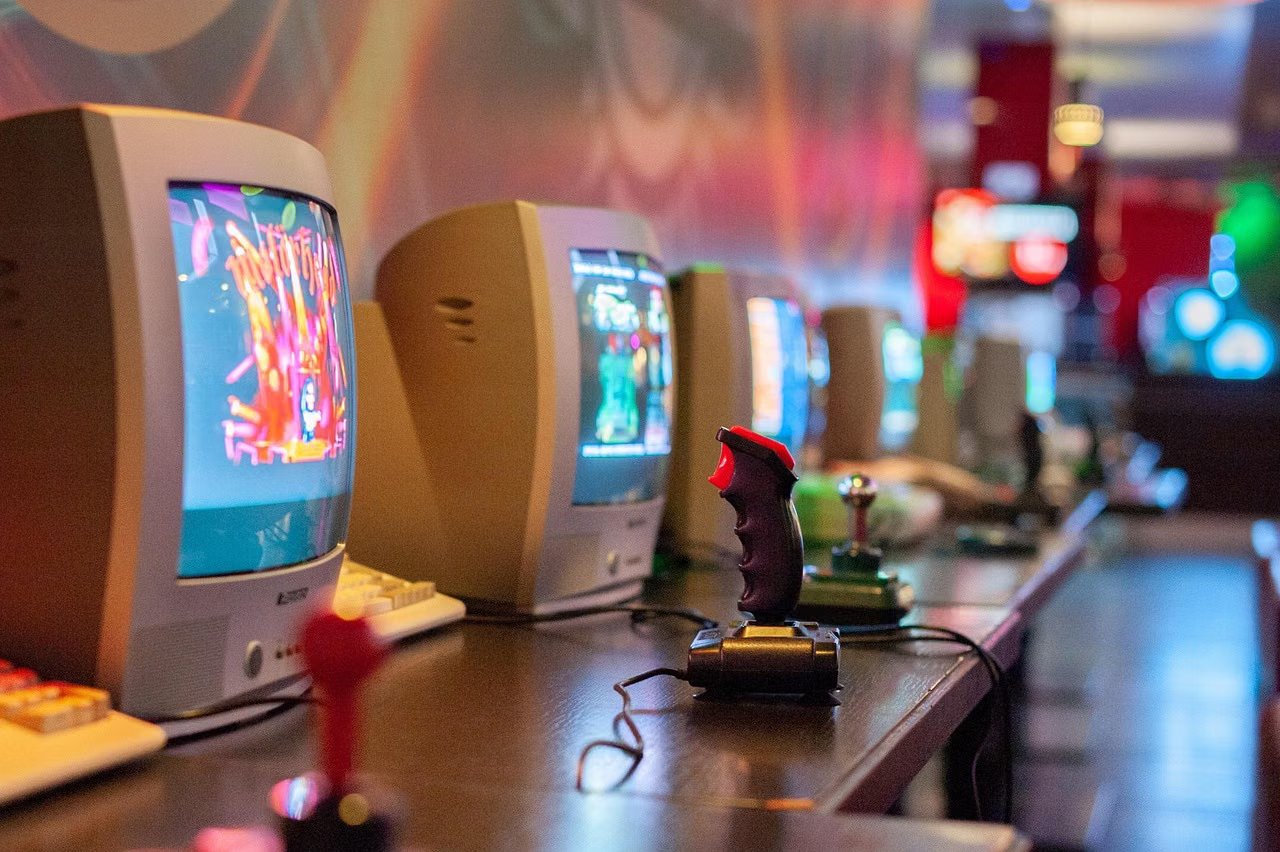
Retro gaming keeps gaining ground because older design ideas still hold up under close scrutiny. Tight controls, readable goals, limited hardware, and disciplined level design gave many classic releases a structure that remains easy to respect. Players return to 8-bit platformers, 16-bit role-playing games, and early 3D action titles for more than nostalgia. They return because those games established patterns that still shape modern releases, from movement systems to camera logic to progression loops.
Access matters just as much as history. A strong catalog makes preservation practical, and that applies across console archives, PC storefronts, and igaming libraries built around scale and discoverability. Large collections help users compare eras, formats, and feature sets without guesswork. For readers tracking breadth at a glance, an overview of sites with over 3,000 games gives useful context around how major online catalogs are structured and presented.
This helps frame what large-scale libraries look like, how platforms sort high-volume content, and where size starts to affect usability. Once the catalog question is clear, it becomes easier to judge retro services on stronger terms: ownership, compatibility, emulation quality, platform support, and the care given to legacy titles.
The 8-Bit Era Built the Rules Many Games Still Follow
Late 1970s arcade roots carried into the 1980s, but the decisive shift came after the 1983 video game crash, when the Nintendo Entertainment System and Sega Master System helped restore consumer trust. Hardware limits forced developers to prioritize direct feedback, sharp pacing, and readable visual language. That pressure led to design choices that still feel modern: enemy patterns that teach through repetition, stages that escalate with precision, and mechanics simple enough to grasp quickly yet difficult to master over time.
Side-scrolling became one of the clearest structures of the period because it fit the hardware and gave players a strong sense of forward movement. Storage constraints also shaped progression. Before common save files, many titles relied on long passwords to preserve progress, creating an early workaround for persistence. Mascots such as Mario and Sonic turned platform identity into a serious commercial asset, proving that character recognition could anchor a wider software strategy.
Seen in retrospect, the 8-bit era did more than rescue a market. It set expectations for responsiveness, challenge balance, and visual clarity. Those standards still separate lasting games from disposable ones.
The 16-Bit Generation Refined Craft Across Art, Audio, and Story
By the late 1980s and early 1990s, the Super Nintendo and Sega Genesis pushed competition into a more mature phase. This period is often remembered for the first major console war, yet the deeper story is technical refinement. Developers had more memory, broader color ranges, and stronger sound hardware, which allowed them to build worlds with greater texture and identity. Pixel art reached a polished form here, with animation work and environmental detail that still holds up on modern displays.
Role-playing games gained a stronger narrative voice during this stretch. Titles such as Chrono Trigger showed that pacing, character arcs, and mechanical depth could coexist cleanly within a 2D framework. Elsewhere, action games became faster and more expressive because controllers, level layout, and enemy design all improved together. Music also advanced in a meaningful way. Rich synthesized soundtracks gave publishers another way to distinguish platform identity and helped define the memory of entire franchises.
The 16-bit period matters because it proved polish could be a market force. This was the point where games stopped feeling like technical demonstrations and started presenting complete artistic direction across visuals, audio, and writing.
Early 3D Changed How Developers Thought About Space and Control
The mid-to-late 1990s forced a new design language into place. Sony PlayStation, Nintendo 64, and Sega Saturn moved the industry into three dimensions, but better graphics alone did not solve anything. Developers had to rethink camera placement, movement, targeting, level readability, and player orientation. Those problems were unfamiliar, and many early efforts show how experimental the shift really was. Some ideas aged poorly, while others became standard practice across the entire medium.
Super Mario 64 remains a reference point because it translated movement into 3D space with uncommon confidence. The analog stick gave players subtler control, and the camera system, while imperfect, established a working grammar for exploration. Metal Gear Solid demonstrated another side of the transition. It used cinematic staging, stealth systems, and voice direction to show that 3D space could support tension and authored storytelling at a much higher level than many previous console titles.
Looking back, this period stands out for invention under pressure. Teams were building rules in real time, and the best results became foundations that later hardware generations refined rather than replaced.
Nintendo Switch Online Makes Retro Access Fast, but the Tiers Matter
Nintendo Switch Online is built around convenience. It places a large lineup of classic games on current hardware with almost no setup, which removes the friction that once defined retro collecting. For many users, instant access is the main strength. Portable play changes the rhythm of older titles in useful ways, especially shorter arcade-style sessions, platformers built around repeat attempts, and role-playing games that benefit from quick check-ins rather than long dedicated sessions.
Modern support features make a real difference. Rewinding softens difficulty spikes without rewriting original design, while custom save states help players revisit older games on their own schedule. Online multiplayer also refreshes selected retro titles that were once restricted to local sessions. Still, the service has a clear limitation: some of the most sought-after systems, including Nintendo 64 and Game Boy Advance, sit behind the Expansion Pack tier rather than the base subscription.
That pricing structure matters when evaluating value. The service works best for players who prioritize convenience and official access on active hardware, but the full historical range only opens up once the higher tier enters the equation.
GOG.com Solves Two Long-Standing Problems: Ownership and Compatibility
Retro PC gaming has always faced two recurring issues. First, many older releases become difficult to buy in a form users actually control. Second, even legally acquired copies can break on modern operating systems without manual fixes, community patches, or extensive troubleshooting. GOG.com addresses both points directly. Its DRM-free model means buyers receive actual installer files that can be stored, backed up, and reinstalled without dependence on a launcher check.
That ownership model gives the platform unusual long-term value. A library built there feels more stable because access is tied to files rather than a single gatekeeping system. The other major strength is practical maintenance. GOG actively works on older PC games so they run properly on Windows 10 and 11, reducing compatibility headaches that often deter players from returning to classic software. That effort turns preservation into something usable rather than symbolic.
For retro players who care about permanence, GOG stands apart. It respects the commercial side of old games while also dealing with the technical realities that can make legitimate access frustrating on current machines.
PlayStation Plus Premium Adds Depth Across Generations, with Uneven Delivery
PlayStation Plus Premium approaches retro access through a layered catalog strategy. Its main draw is generational range: downloadable PlayStation 1 and PlayStation 2 titles sit alongside PlayStation 3 games delivered through cloud streaming. That creates a broad archive on paper, especially for players who want to trace how Sony’s platform identity developed from the late 1990s onward. Strong first-party titles benefit most because they carry historical weight and remain closely associated with the brand.
Several quality-of-life upgrades improve usability on older releases. Select PS1 classics now support custom video filters, quick-saves, and trophy integration, which gives returning players cleaner display options and a stronger reason to revisit familiar catalog names. At the same time, the service can feel uneven because cloud-streamed PS3 access depends on connection quality in a way local downloads do not. Catalog strength also varies by region and update cycle, so availability is not always consistent.
Even with those limits, Premium has clear value for players who want a single subscription that reaches across multiple PlayStation eras. Its strongest point is context: older games do not sit in isolation, but within a wider historical line that shows how the platform evolved.
Retro gaming earns its place because older works still explain how modern design came together. The best online catalogs do the same from another angle: they show which platforms treat history as a living library instead of a slogan. When access is broad, ownership terms are clear, and legacy support is handled with care, revisiting older games stops being a novelty and becomes a sharper way to understand the medium itself.