









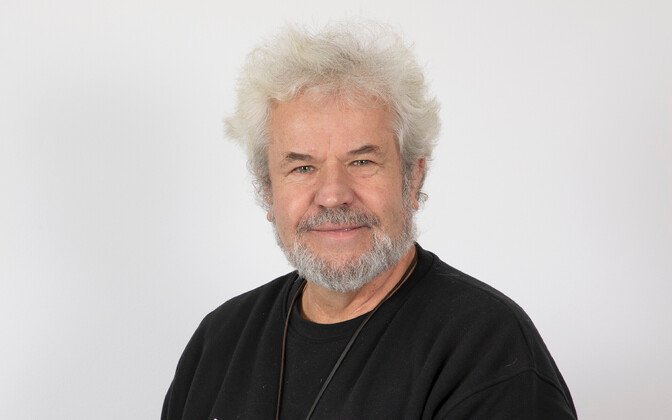
Cultural workers should not be afraid to show members of the Riigikogu some love — but they should also be ready to bite when necessary, Rein Sikk advises in his daily commentary on Vikerraadio.
I’m about to commit a crime against Estonia, but there’s no other way. I’m about to criticize the salt of our earth, the pillars of our culture — the people who run our cultural and community centers. But there really is no other way.
My offense is intended to prevent a greater crime. Namely, the cultural catastrophe that the organizers of the cultural congress, scheduled for late November, have been warning about. They claim that over the past 28 years, the Ministry of Culture’s share of the state budget has shrunk threefold.
And it continues to shrink… So what can be done to stop cultural funding from declining? To prevent us from having three times less culture? Presumably, we need to demand answers from those making the cuts — in other words, members of the Riigikogu.
The opportunity to ask questions is just around the corner. In a little over 100 days, on March 7, Estonia will hold its parliamentary elections. Broadly speaking, the country’s fate for the next four years will be decided. That includes the fate of culture and cultural centers. The salaries of cultural workers. And whether theaters will receive funding to take their productions to rural areas.
I was naive, to put it mildly, and downright stupid, to put it bluntly, to think that with elections approaching, cultural centers would be packed with election debates. Not a chance! It turns out that cultural workers are afraid of politics.
With the help of the Estonian Association of Community Centers, I sent more than 70 letters to community centers across the country, asking whether they planned to organize election debates ahead of the vote. Only a tenth of the centers responded. Just two believed that hosting pre-election debates was part of a cultural center’s duty and role.
One response read: “Here at our center in Pärnu-Jaagupi, we don’t have to invite anyone ourselves. Before every election, political parties approach us about meeting with local residents. We host both debates and simple meet-and-greet events.”
Another encouraging and commendable response came from Rapla County: “For years, I’ve organized events at my Varbola community center ahead of both parliamentary and local government elections. These include debates as well as separate meetings with individual political parties. Representatives of all parties have always been happy to attend ahead of parliamentary elections. The meetings are interesting.”
Lüganuse in Ida-Viru County said it was not ruling out the possibility of a debate: “If there is interest and demand within the community, we are ready to help.”
Most respondents said that if someone wanted to organize a debate, they were welcome to do so. But the centers themselves would not organize one. Cultural workers, they argued, should remain apolitical.
I have my doubts, and I disagree. In fact, culture is politics. Cultural policy is the most important kind of politics there is. Cultural policy is a matter of life and death for nations, including the Estonian nation. It is a question of language and identity. This applies to village cultural centers and village libraries alike.
Let me offer a few positive examples from my home area of Kadrina. For years, local high school students have organized debates between candidates ahead of both local and parliamentary elections. They have always been praised for the substance of these events. For 25 years, outspoken sauna-goers at the Kadrina sauna have been demanding answers from parliamentary hopefuls and government ministers alike. These meetings have become legendary and people speak so frankly that some politicians are downright afraid to attend.
I have moderated and organized debates on numerous occasions. Now I am urging every community center and public library in Estonia to organize debates of their own.
Debates aren’t painful; they’re wonderful. Debates aren’t tedious; they’re exciting. They are an opportunity and a duty for citizens to have their say in Estonia’s affairs. To ask questions and make demands, to bargain for the best possible deal in exchange for their vote. To demand concrete answers to concrete promises. And to remember those answers. And when things go wrong, to demand that those elected explain themselves directly. It’s as simple as that.
Besides, an election debate is a far more substantive event than having some political party pitch a tent outside your community center and lure people inside. After all, an individual voter entering a party’s tent finds themselves surrounded by party members.
But in a community center or library, the people are in charge. That’s precisely why these institutions were created in the first place. To bring people together to discuss matters that concern them. There will be plenty of time for song and dance afterward.
—