









The need to revamp the Free Trade Area of the Asia-Pacific should be a priority at the upcoming Asia-Pacific Economic Cooperation Economic Leaders” Meeting in Shenzhen, Guangdong province. Member economies should recognize the reality that this long-cherished vision can no longer be achieved through conventional tariff-reduction agreements. A 20th-century border-liberalization approach will not sustain the dynamic economic momentum of the region.
Even though it has no formal negotiating mandate, APEC has successfully reduced average intra-regional tariffs from 17 percent to 5 percent since its inception in 1989. However, border liberalization has reached its structural limit.
Conceptualized by the APEC Business Advisory Council in Hanoi, Vietnam in 2006 and advanced through the adoption of the “Pathways to FTAAP” document by APEC leaders in Yokohama, Japan in 2010, the FTAAP roadmap has passed several milestones, including the Beijing Roadmap in 2014, the Lima Declaration in 2016, the Putrajaya Vision 2040 in 2020 and the Gyeongju Declaration in 2025.
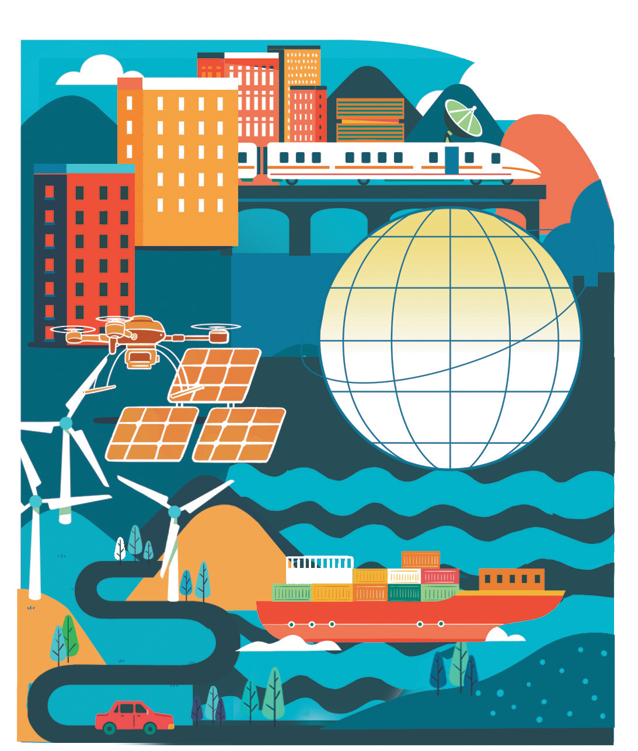
Today, the framework is back on the APEC agenda under China’s hosting in Shenzhen. But it returns to a landscape radically transformed by three powerful economic growth engines: digital transformation, the green transition and the intelligent revolution of commerce.
The China-ASEAN Free Trade Area 3.0 Upgrade Protocol, emphasizing the digital economy and green transition, is a crucial prelude to this regional shift. The economic potential in these new sectors is enormous. Southeast Asia’s forthcoming ASEAN Digital Economy Framework Agreement alone is projected to unlock a digital market of up to $2 trillion by 2030, showcasing the immense opportunities for the region.
To accelerate regional integration, there is a general consensus on the need to dismantle regulatory fragmentation and make cross-border transactions accessible to and affordable for micro-, small and medium-sized enterprises. Yet, efforts to harmonize digital standards and artificial intelligence governance are hindered by national concerns over data sovereignty and digital security, particularly when geopolitical interests weaponize these issues.
Despite these challenges, the convergence of digitalization, decarbonization and AI presents the Asia-Pacific with an extraordinary opportunity.
Digital trade is poised to democratize global value chains, transcending traditional geographical borders.
Through interoperable cross-border digital frameworks, real-time fintech settlements, paperless customs clearance and digitized logistics, cross-border commerce is no longer the exclusive preserve of conglomerates. It is now within the reach of grassroots MSMEs, which constitute the very backbone of Asia-Pacific economies. The proliferation of e-commerce across the region is creating an inclusive trade superhighway that delivers tangible benefits to grassroots entrepreneurs.
The urgency of the green transition has elevated it from an environmental obligation to an essential component of the energy security hedge on the macroeconomic agenda, highlighted by the recent trade and energy shocks.
This has prompted the region to reassess its industrial strengths, from upstream mineral resources and cutting-edge photovoltaic manufacturing to advanced battery storage and electric vehicle ecosystems. Together, they form an integrated clean-tech continuum capable of driving industrial upgrading if tariffs on environmental goods are waived and green accounting benchmarks harmonized.
As the region embraces the “Intelligent Leap” and AI for public good, a revolutionary supply chain is set to empower AI-ready economies. Algorithmic verification, automated compliance checks and blockchain-enabled origin tracking are redefining operations. Innovations such as the “Smart Certificate of Origin” show that complex customs documentation can now be verified in seconds. Intelligent customs clearance and smart multimodal transit corridors can transform regional accords into high-velocity, frictionless channels of international commerce.
However, the path to high-value integration is hindered by formidable institutional challenges. The regulatory and digital divide across APEC’s 21 member economies, with per capita incomes from $3,000 to well over $80,000, is a structural barrier. Disparate digital infrastructure, fragmented rules and uneven technical capacities pose significant challenges to regional digital connectivity. While advanced economies advocate for unrestricted cross-border data flows, emerging economies prioritize digital sovereignty and local capacity building. Imposing rigid, one-size-fits-all digital standards risks alienating developing partners and marginalizing the Global South.
Additionally, the rise of so-called green protectionism puts global economic governance to the test. While environmental integrity is paramount, unilateral carbon border adjustments and discriminatory eco-standards from certain advanced economies risk becoming nontariff barriers against export-led emerging economies in the Asia-Pacific.
In the era of AI-driven innovation, the intelligent economy is the most disruptive yet least governed frontier. APEC members should address the governance gap in trade-related AI. The absence of multilateral norms on algorithmic transparency, liability and data interoperability is a formidable obstacle to cross-border mutual recognition. This vulnerability will intensify if the race for AI primacy deepens technological polarization between competing standards.
To operationalize the FTAAP, APEC should continue to evolve. Beyond disentangling overlapping bilateral free trade pacts, the regional focus should shift from conventional border tariff cuts to deep regulatory synchronization. Regulatory simplicity is crucial for the survival of cross-border trade. In this context, mutual recognition agreements covering digital signatures, electronic bills of lading, conformity assessments and verified carbon accounting are essential to reducing transaction costs.
Under a re-engineered FTAAP, the concept of RCEP’s unified rules of origin and “regional cumulation” can be enhanced through intelligent technology. AI-powered certification platforms can enable enterprises to source materials and assemble products across the Asia-Pacific without losing the origin status of their products.
Concurrently, automated algorithmic verification can empower small businesses to navigate regional trade rules more easily. While technology makes this possible, the hard realities of geopolitical silos remain.
In re-engineering the FTAAP to meet collective imperatives, the region must remain true to its foundational ethos: inclusive, nondiscriminatory and open regionalism. Though it may seem ambitious to achieve a comprehensive agreement in a single summit, early successes in paperless trade, environmental goods, digital interoperability and AI-enabled trade facilitation are realistic goals.
Ultimately, the success of the largest free trade area in history depends not just on econometric modeling, but on the political will of all Asia-Pacific stakeholders to reconcile digital, green and intelligent standards amid shifting global tides. By focusing on regulatory synchronization and practical technology-driven facilitation, the Asia-Pacific can make APEC an enduring architecture of shared prosperity.
The author is the president of the Belt and Road Initiative Caucus for Asia-Pacific and former minister of transport of Malaysia.
The views do not necessarily reflect those of China Daily.
If you have a specific expertise, or would like to share your thought about our stories, then send us your writings at opinion@chinadaily.com.cn, and comment@chinadaily.com.cn.