






The MIT Global Seed Funds (GSF) are designed to do more than launch research projects — they build international collaborations that make ambitious science possible. By supporting early-stage collaborations with researchers around the world, the program helps faculty test new ideas, exchange expertise, and lay the groundwork for discoveries that often grow far beyond the initial award.
Matt Shoulders, professor of chemistry and department head, has experienced that impact firsthand. Since his first GSF grant in 2013, the collaborations these grants enabled have led to major research programs in protein engineering, photosynthesis, collagen biology, and gene-editing technologies, as well as subsequent funding.
The GSF help Institute faculty and principle investigators create exciting new connections with colleagues abroad. GSF supports early-stage, open and publishable research collaborations with researchers at academic universities and public research institutions around the world. Administered by the Center for International Studies, GSF has awarded more than $30 million to over 1,300 faculty research projects since its inception in 2008. The current call for proposals from MIT faculty and researchers with principal investigator status is open until Dec. 3.
Q: What makes the Global Seed Funds unique?
A: This has to be one of the standout ways to develop international collaborations that any school has anywhere. It’s an extraordinary way to build serious relationships with people who have science that you can work on together, get to synergistic and exciting outcomes, and start projects that you could never get going otherwise.
I’ve found it to be an enormously valuable bridge-building mechanism for creating opportunities to work with other groups.
I started as an assistant professor in 2012 and received my first Global Seed Funds grant in 2013, probably within eight months of starting. That opportunity let me get to know an expert whose field of research was exactly what we needed. We published only one paper together, but that collaboration led directly to my first major NIH [National Institutes of Health] funding — a Director’s New Innovator Award that brought nearly more than $2 million to the lab. It became the basis of what’s still one of our lab’s major research projects.
We never would have built that relationship otherwise. We visited their lab, they visited ours, our students exchanged visits, and together we built a whole platform for protein engineering that we still use all the time. Fourteen years later, that first GSF grant is still shaping the work we do.
That story has repeated itself over and over again. The collaborations have led us in lots of directions and created opportunities for different science along the way. Looking back, I think the GSF funding we’ve received can be directly connected to roughly $18 to $20 million in outside research funding. Of course, it wasn’t only the GSF grants, but without them much of that later funding probably wouldn’t have happened.
Q: Can you share a few examples of research that grew out of those collaborations?
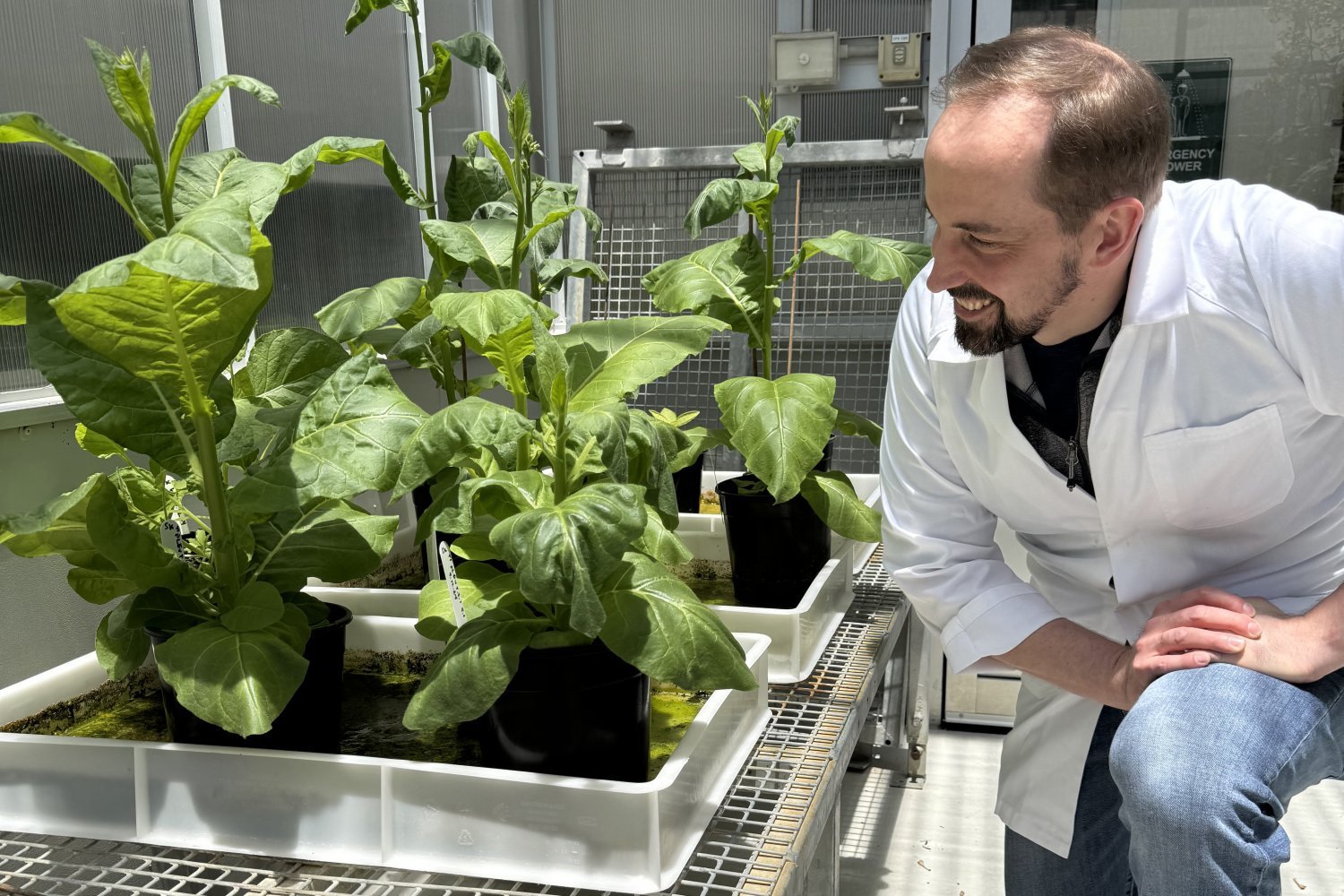
A: One project is about engineering photosynthesis. The world needs more food, the climate is warming, fertilizer is becoming harder to obtain, water is increasingly scarce, and yet we need to grow more crops than ever. We need step-function improvements in agriculture, not just gradual ones.
We’ve focused on an enzyme called Rubisco, which takes carbon dioxide from the air and turns it into the sugars that build plants — and ultimately, all of us. Improving Rubisco has been a dream in agriculture for decades, but it’s also been viewed as almost impossible.
One of the first pieces of funding we received for this project was a Global Seed Funds grant that allowed us to build a collaboration with a lab in Australia. They had technical assay expertise that existed in only a handful of laboratories worldwide. They came here, we went there, and we brought those capabilities to MIT. Now MIT is one of the few places that can perform those assays, and they’ve become part of the engine behind our entire Rubisco project.
That collaboration has since led to major foundation funding, publications, patents, and a great deal of exciting science. Whether we ultimately succeed in making Rubisco in a plant significantly better or not, we’ve already learned an enormous amount.
Another example involves collagen, the most abundant protein in the human body. There are dozens of diseases caused by collagen dysfunction, and we still can’t treat them.
I met a researcher from Australia at a conference, and we realized our expertise complemented each other. The Global Seed Funds gave us the opportunity to build that collaboration. Since then, we received funding from the Mathers Foundation and multiple NIH grants. Today we’ve developed cartilage organoids that model these diseases, allowing us to study them and screen potential drug therapies. That entire research program exists because we were able to build that partnership.
The third example goes back to my very first Global Seed Funds grant. We wanted to develop a new way of doing directed evolution inside human cells, rather than bacteria. We had the idea, but we didn’t have the adenovirus expertise to make it work.
That GSF-enabled collaboration gave us exactly the knowledge we needed. We recently published the first paper demonstrating CRISPR-Cas9 evolution inside human cells using the resulting platform. That work traces directly back to the GSF grant we received in 2013.
Q: How have MIT students benefited from these collaborations?
A: Most of the projects have involved graduate students, and they’ve really been the biggest beneficiaries. The collaborations often become the basis for their papers and dissertations.
When we’ve had the right undergraduate with the right interests, it’s also been tremendously valuable, because they can spend an entire summer abroad supported by MISTI [MIT International Science and Technology Initiatives]. Michelle Huang is probably the flagship example. She spent several months in Australia, learning techniques that she brought back to MIT. She’s a superstar who has now earned her PhD from Stanford, supported by an NSF [National Science Foundation] Graduate Fellowship awarded during her senior year at MIT.
Another great example is Julie McDonald, a superb MIT biology graduate student who worked on our Rubisco collaboration in Australia. She helped get that project going and has been tremendously successful. She’s now a postdoctoral researcher at Rockefeller.
For our graduate students, these collaborations have been scientifically invaluable because they directly led to publications and launched major parts of their research careers.
Q: Have there been benefits beyond the research itself?
A: There are definitely personal benefits. Both the students and I have had opportunities to spend time in countries we otherwise wouldn’t have visited. We’ve been exposed to different cultures and different ways of approaching science. India was a particularly memorable experience for me, in that respect.
I also think building partnerships with researchers in other countries has value beyond any individual project. On the scale of the Global Seed Funds program as a whole, strengthening those international relationships really matters.
Q: What would you tell other faculty members who are considering applying for Global Seed Funds?
A: If you’ve really got a plan and you’re committed to building the collaboration, you should apply. The program can truly make the difference between an idea and a lasting research partnership. The resulting support can turn those partnerships — and the ideas behind them — into reality.