








It wouldn’t be Vladimir Putin if he didn’t end peace talks with a threat, would it?
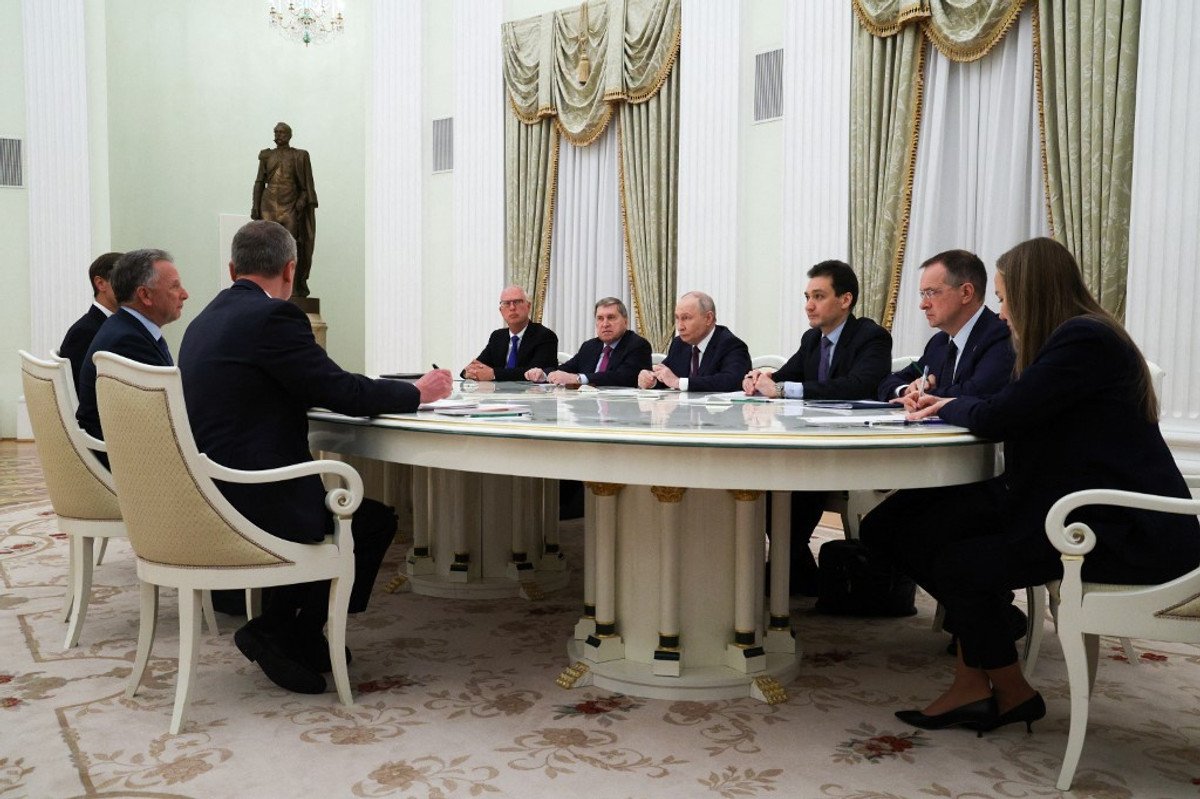
During a carefully staged Kremlin meeting with US envoys Steve Witkoff and Jared Kushner on Thursday, Nov. 12, Putin struck a conciliatory tone, even proposing a humanitarian operation in Kostiantynivka modeled on the recent ceasefire in Oleshky.
JOIN US ON TELEGRAM
Follow our coverage of the war on the @Kyivpost_official.
But the diplomatic courtesies quickly gave way to familiar intimidation: Putin warned that European troops deployed to Ukraine after a peace agreement would become “legitimate military targets” for Russian forces.
“The war would resume immediately,” Putin said.
According to a Nov. 12 assessment by the Washington-based Institute for the Study of War (ISW), Putin’s threats underscore a broader reality: despite renewed US-mediated negotiations, Moscow has not budged from its original war aims.
Instead, the Kremlin is doubling down on territorial demands extending far beyond the Donbas while reviving its sweeping 2021 ultimatums to roll back NATO across Eastern Europe.
Kremlin seeks to veto European reassurance force
Turning to Europe’s role in securing a post-war settlement, Putin flatly rejected proposals for a European-led peacekeeping mission in Ukraine.
“We’ve said from the very beginning that the presence of any foreign troops on Ukrainian territory is absolutely unacceptable to us,” Putin told the American delegation, warning that deploying such forces – even after a peace agreement – would, according to him, reignite the war.

Other Topics of Interest
Both victims were hospitalized as the overnight strike sparked a residential fire, with emergency crews responding to damaged buildings.
His remarks came just days after the British- and French-led Coalition of the Willing launched its first major military exercise, KOALICJA 26.2, on Nov. 9.
Running through Nov. 22 across Poland, France, and Turkey, the drills involve 2,800 troops from 11 nations testing how a multinational reassurance force would deploy, operate, and maintain supply lines to deter renewed Russian aggression after a ceasefire.
ISW assessed that Putin’s threat is aimed at blocking any meaningful Western security guarantees for Kyiv – a hardline stance Moscow has maintained since European allies first began planning potential post-war deployments in March 2025.
Without an international force on the ground, any ceasefire could leave Ukraine vulnerable to a future Russian offensive.
Moscow demands territory it has never captured
Putin also rejected proposals for demilitarized or “grey” zones separating Ukrainian and Russian forces after the war.
“For us, there is only one line of demarcation: the state border,” he said.
ISW interpreted the statement as a reaffirmation that Moscow demands full control of Donetsk, Luhansk, Kherson and Zaporizhzhia regions, including areas Russian forces have never occupied.
Russia illegally declared the annexation of all four regions in 2022 despite failing to establish full control over them.
The assessment also noted that Moscow was unwilling to relinquish occupied territory in northern Ukraine outside those regions.
Russian presidential aide Vladimir Medinsky, who led Moscow’s delegation during the Abu Dhabi negotiations, said Russia would reject territorial exchanges and continue expanding its so-called security zone in Sumy and Kharkiv regions – a pretext Moscow uses to justify occupying border areas.
In effect, the Kremlin is demanding that Ukraine hand over sovereign land that Russian forces have failed to seize on the battlefield, rewarding Russian aggression with territory its military cannot conquer.
Kremlin revives 2021 demands to roll back NATO
Russia’s demands extend well beyond Ukraine’s borders.
According to ISW, Russian negotiators used the Abu Dhabi talks to revive Moscow’s December 2021 ultimatums to NATO and the US, issued shortly before Russia launched its full-scale invasion.
Those demands included halting NATO enlargement, restricting military activity in Eastern Europe and limiting deployments to countries that joined the alliance after 1997.
The proposals would effectively give Moscow influence over NATO’s military posture and the sovereign security choices of European states.
Russian negotiators avoided serious ceasefire discussions and instead pushed to renegotiate Europe’s security arrangements, including NATO’s presence in Eastern Europe.
The Kremlin’s insistence on those demands suggests that Moscow views negotiations not only as an opportunity to secure territorial concessions from Ukraine but also to reshape the security arrangements of the continent.
European leaders have rejected such demands, arguing that Russia’s invasion must end rather than become the basis for dismantling existing security guarantees.
Humanitarian gestures amid uncompromising demands
The contrast between Putin’s conciliatory language and his military threats was particularly visible in his proposal for another humanitarian ceasefire.
He suggested a temporary operation in Kostiantynivka modeled on the recent ceasefire in Russian-occupied Oleshky, which allowed civilians to evacuate.
Putin thanked First Lady Melania Trump for her involvement in the earlier humanitarian initiative.
However, Ukrainian officials have warned that Russian forces used the Oleshky pause to rotate troops and move equipment.
Dmytro Lytvyn, an adviser to President Volodymyr Zelensky, warned that Moscow could attempt to exploit a similar operation in Kostiantynivka.
ISW also challenged Putin’s claims of Russian control over the city, pointing to evidence of continued Ukrainian military positions there.
The institute said the frontline situation in Kostiantynivka differed substantially from Russian-occupied Oleshky, complicating any comparable humanitarian arrangement.
Moscow Demands Concessions, Offers None
The latest US diplomatic efforts produced progress on a major prisoner-of-war exchange and plans for European representatives to participate in future negotiations.
Zelensky said the next round of negotiations would focus on possible ceasefires and measures to reduce hostilities.
But Putin’s statements in Moscow underscored the fundamental disputes that remain.
Even as peace talks advance, Putin refuses to abandon his ambitions: demanding Ukrainian territory his army has failed to conquer, threatening European forces meant to prevent another invasion, and seeking to rewrite Europe’s security order on Moscow’s terms.