









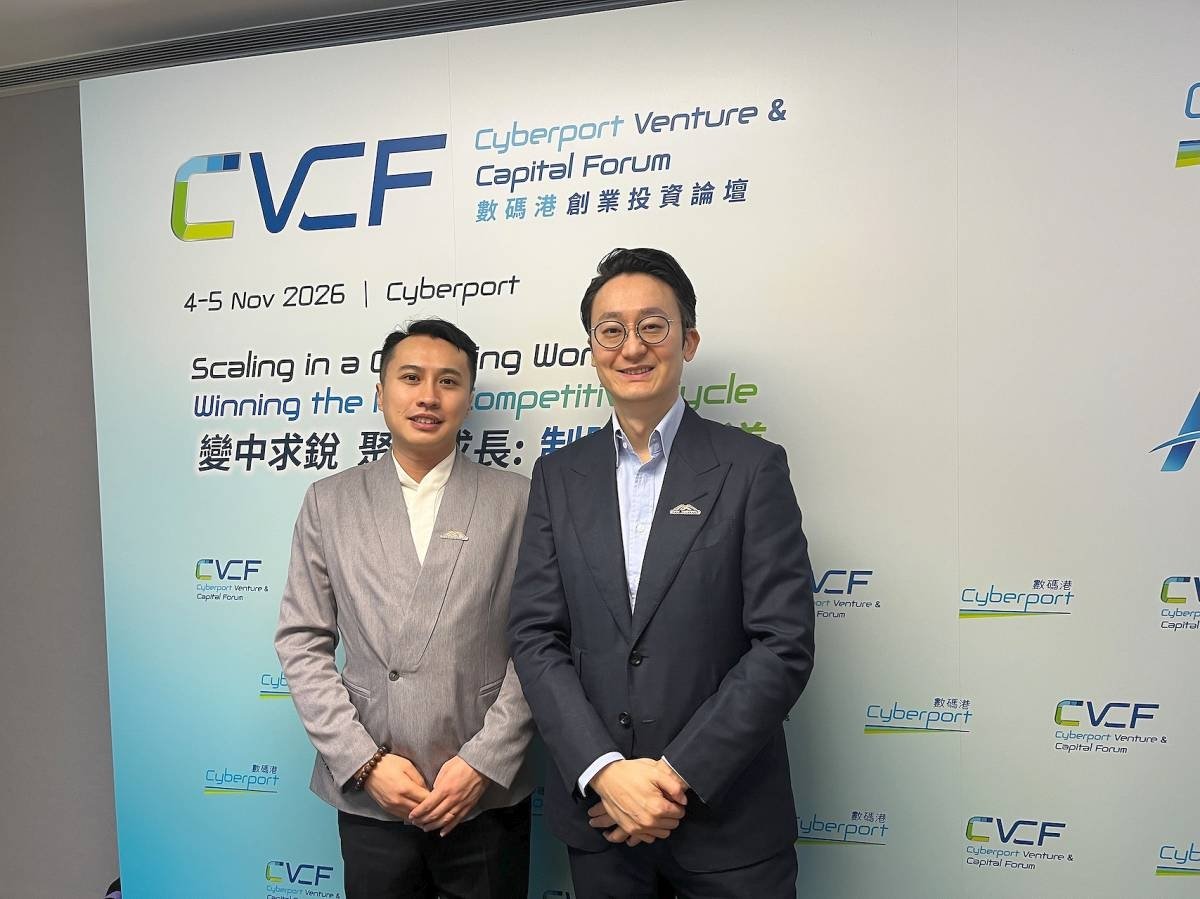
HONG KONG — The Philippines needs more venture capital funds, government-backed investment programs and stronger links between universities and industry to develop its startup ecosystem and help local technology companies compete across Southeast Asia, executives of regional venture capital firm Gobi Partners said.
At an exclusive roundtable interview with The Manila Times on the sidelines of the Cyberport Venture & Capital Forum 2026 on Nov. 4 to 5, Gobi Partners Managing Partner Chibo Tang and Managing Director and Head of University Ventures Fred Li said the country had made progress in attracting investment but continued to lag behind other Southeast Asian markets.
Tang said Filipino startups raised about $120 million in 2025, compared with $4.2 billion in Singapore and $360 million in Vietnam. Thailand raised about $80 million, placing the Philippines ahead of only that market in Southeast Asia, according to the figures he cited.
The outlook for 2026, however, appeared stronger.
“Year-to-date in 2026, Filipino companies have raised close to 300 million,” Tang said, adding that the increase was “mostly fueled by growth stage funding.” He said the Philippine startup market was growing but remained behind more established regional ecosystems.
Gobi’s Philippine presence
Founded in 2002, Gobi Partners is a Pan-Asian venture capital firm with about $2 billion in assets under management and 18 offices across the region. Tang said the firm is headquartered in Hong Kong and Kuala Lumpur, with investments and operations spanning China, Southeast Asia, South Asia and Pakistan, and plans to expand into the Middle East and Central Asia.
The firm has an office in Manila and invests in Philippine startups through its Gobi Core Fund, which focuses on seed-stage companies.
“We’ve invested in 10 companies in the Philippines already,” Tang said, citing Qumu, CloudEats and Etaily among its portfolio companies. He also referred to FlowerStore, an e-commerce business in the flower retail sector.
Beyond its direct investments, about 30 other Gobi portfolio companies are already active in the Philippines, reflecting the firm’s strategy of helping startups expand across markets.
Tang described the Philippine startup ecosystem as being at an early stage, with a slowly increasing number of startups and limited numbers of venture funds and investors.
He said many local technology companies remained concentrated in e-commerce, fintech and platform-based businesses, while deep technology ventures were less common.
“That’s a big difference from what we see here in China because here in China, we’re only investing in deep tech, which is, you know, AI, semiconductors, robotics,” Tang said.
He said Gobi was working with its Philippine team to develop local capabilities and partnerships that could help expand investment into deep technology.
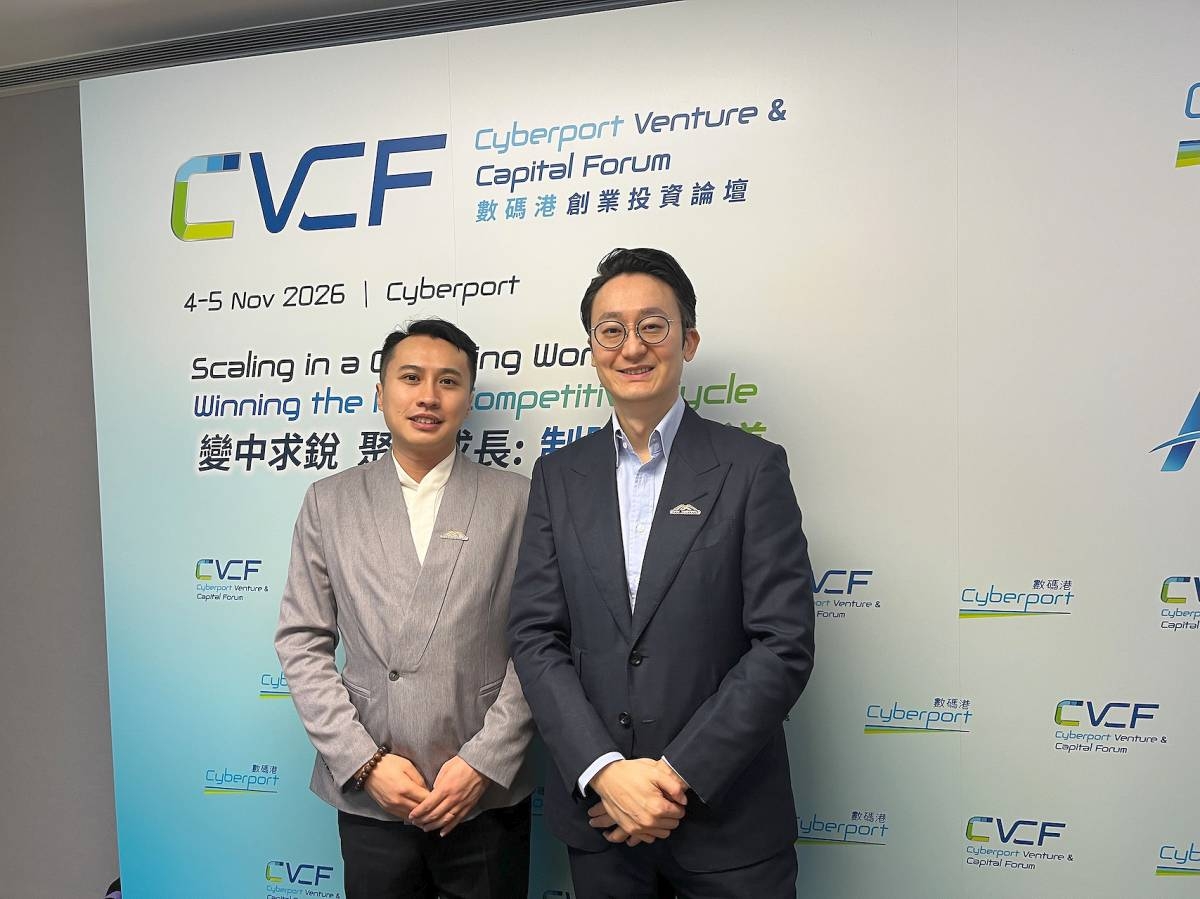
GOBI EXECUTIVES Gobi Partners Fred Li (left), managing director and head of university ventures, and Chibo Tang, managing partner, discuss investment opportunities in the Philippines at the Cyberport Venture & Capital Forum 2026 in Hong Kong Nov. 4 and 5. PHOTO BY THE MANILA TIMES
University links and tech transfer
For his part, Li said partnerships with universities could help address the gap by connecting research and development capabilities with venture funding and commercial opportunities.
He cited Gobi’s partnerships with universities in Hong Kong, including the University of Hong Kong and the Hong Kong University of Science and Technology, through strategic co-branded investment funds. He also referred to a planned partnership with Hong Kong Baptist University.
The partnerships allow Gobi to invest in university-linked ventures and support the commercialization of research. Li said the firm’s portfolio included more than 45 companies spun off from Hong Kong universities, with investments of about $18 million in deep technology.
He said Gobi wanted to apply a similar approach in the Philippines by bringing technology companies into the country and working with local research institutions and universities.
One example involves a satellite and space technology company developing remote-sensing and tracking capabilities, including systems for monitoring hazardous gas emissions. The company is also developing climate models that could help identify wind-related risks and support climate-risk management in the Philippines.
Another company, InfiX.ai, is developing decentralized large language model technology and a low-orbit training framework designed to reduce the cost of training newer AI models. Li said the company, which works with Cyberport and has access to its computing resources, was discussing possible applications with several Southeast Asian markets.
He said these technologies could be introduced through software solutions or integrated AI data center facilities, depending on local requirements.
Building sustainable funding base
Tang said government support was important not only for startups but also for the venture capital firms expected to finance them.
“Government support, government funding, and a lot more communications and PR,” he said when asked what the Philippines needed to strengthen its startup ecosystem.
He explained that venture capital firms relied on limited partners to provide the funds they invest in startups. In the Philippines, government entities could play an important role in encouraging investment by becoming strategic capital allocators.
“The Philippines is just starting to set up its own fund of funds,” Tang said. He urged the government to consider measures similar to those used in Hong Kong to attract venture funds and private-market investors.
Tang said incubators and accelerator programs that emerged in the Philippines during the mid-2010s may have struggled because they lacked sustained capital to support startups beyond their initial development.
He said Hong Kong had experienced a similar cycle, with corporate-sponsored programs and coworking spaces eventually closing when sponsorships and subsidies could no longer sustain them.
“Without the private capital, as I mentioned earlier, these companies are not able to continue to fund their development,” he said.
Tang cited Hong Kong’s government-backed investment initiatives, including programs supporting private capital allocators and venture fund managers, as well as subsidies through institutions such as Cyberport and the Science Park. These programs help startups with expenses such as hiring and computing resources.
He said a combination of equity funding, subsidies and public-private partnerships was needed to sustain a startup ecosystem.
Regional challenges and exit opportunities
Tang said Southeast Asia’s 10 markets required localized investment strategies because of differences in regulations, culture and language. Investors initially assumed they could cover the region from a single hub, but experience showed that a local presence was necessary to understand individual markets.
He said the Philippines and Thailand had fewer venture funds dedicated to their markets than Singapore, Indonesia, Malaysia and Vietnam, contributing to their slower development.
The region also faced a shortage of viable exit opportunities for investors. Tang said Southeast Asian companies often struggled to attract attention and liquidity when seeking listings in the US, where even multibillion-dollar companies from the region could be relatively small compared with local market leaders.
Without viable initial public offering markets, venture capital investors face greater difficulty realizing returns and recycling capital into new companies.
For Philippine entrepreneurs, Tang advised seeking investors with regional operations, networks and sufficient capital to support expansion beyond the domestic market.
He also pointed to artificial intelligence as an opportunity for startups that may lack access to large engineering teams or specialized talent.
“In an age of AI, I think there’s a lot more opportunity,” he said. “AI, we do feel like can help flatten the curve for any entrepreneurs.” He said AI tools could help Filipino founders address markets beyond the Philippines, including opportunities that would otherwise require engineering or language capabilities that may be difficult to build locally.