









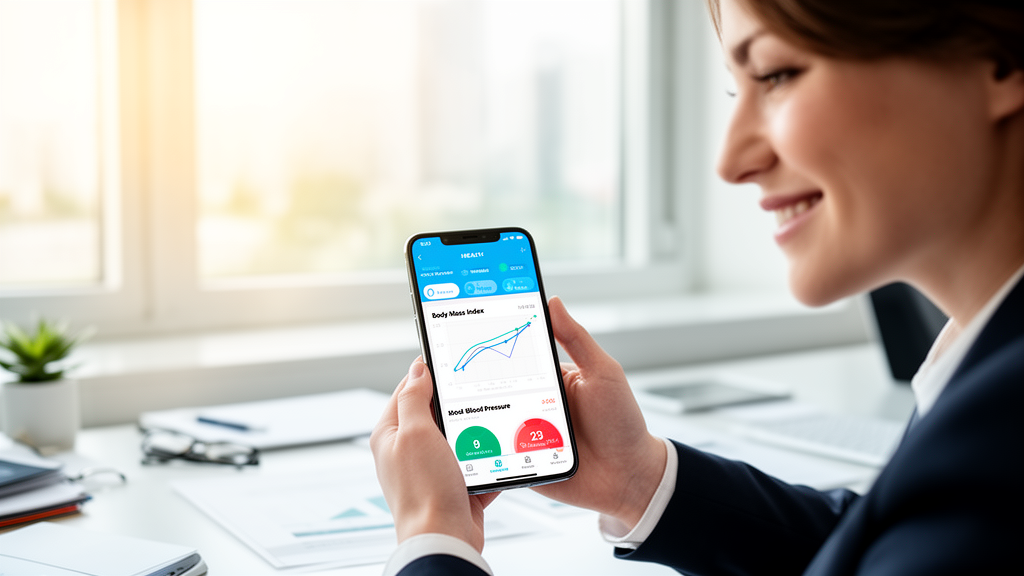
A structured mobile health intervention integrating behavioral planning with health management was associated with modest reductions in body mass index and blood pressure among office workers, according to a prospective cohort study published in the Journal of Health, Population and Nutrition. Researchers evaluated the novel intervention, termed the HH model, to determine its relationship with body mass index and various metabolic health indicators over a twelve-month period. The investigation specifically tracked office employees to observe how digital guidance, structured behavioral phases, and professional support operated within workplace health routines, with analytical emphasis placed on identifying potential differences in outcomes between male and female participants.
The investigated digital intervention integrated the Health Action Process Approach, known as HAPA, alongside comprehensive health management strategies. Operationally, the HH model was structured into three sequential phases directly aligned with core HAPA behavioral components: intention formation, action planning, and action or maintenance. Participating employees accessed the program through a dedicated mobile application designed to deliver educational modules and personalized feedback throughout the year-long period. In addition to digital resources and structured behavioral guidance, the intervention protocol incorporated active health manager support to facilitate participant engagement across the progressive stages of behavioral change.
The study initially enrolled a cohort of 4,490 office employees between 18 and 60 years of age, allocating individuals either to the mobile health HH model intervention group or to a parallel control group receiving standard care. To minimize selection bias inherent in the observational structure, the investigators conducted propensity score matching to balance baseline covariates between cohorts. This matching procedure produced a balanced final complete-case analytical sample of 4,024 participants, comprising 2,012 individuals in the active intervention arm and 2,012 individuals in the control arm. Key physiological metrics, including body mass index, resting blood pressure, fasting lipid markers, and fasting plasma glucose, were recorded at baseline and re-evaluated at the twelve-month conclusion.
Analytical comparisons between cohorts at the twelve-month assessment point were conducted using analysis of covariance to evaluate changes while adjusting for baseline measures. In the overall matched study population, employees in the mobile health HH group exhibited statistically significant, though modest, improvements compared with their counterparts receiving standard care. Specifically, participants utilizing the application achieved a greater adjusted mean reduction in body mass index of 0.151 kilograms per square meter (p < 0.05). Furthermore, systolic blood pressure showed a greater adjusted mean decrease of 0.96 millimeters of mercury, while diastolic blood pressure demonstrated a corresponding adjusted mean decrease of 0.826 millimeters of mercury (both p < 0.05).
Evaluation of circulating blood lipids demonstrated mixed patterns across the study groups. High-density lipoprotein cholesterol increased significantly more among members of the HH intervention group than among control subjects, showing an adjusted mean difference of 0.027 millimoles per liter (p < 0.05). Conversely, total cholesterol concentrations were reported to be higher in the HH intervention group than in the control group across the overall population (p < 0.001) as well as within the subgroup of male participants (p < 0.001). However, the investigators noted that the effect sizes for this total cholesterol observation remained small, reflecting a partial eta-squared of 0.005 overall and 0.001 among men, which points to limited clinical significance.
The investigation revealed neutral outcomes for certain metabolic biomarkers while highlighting distinct patterns during secondary subgroup evaluations. No statistically significant between-group differences were detected at twelve months for circulating low-density lipoprotein cholesterol or fasting plasma glucose levels. Following false discovery rate correction, sex-stratified analyses revealed notable variations in intervention associations between female and male employees. Specifically, female participants in the mobile health group exhibited significantly greater improvements across multiple parameters compared to female controls, showing favorable changes in body mass index, triglycerides, systolic blood pressure, and diastolic blood pressure (all p < 0.05).
The research team emphasized that the observed associations must be interpreted within the clear limitations of the observational cohort design. Because the investigation utilized a prospective non-randomized allocation rather than a randomized trial framework, the reported findings cannot establish causal effects. Additionally, while theoretical mechanisms involving Health Action Process Approach constructs, health-seeking behaviors, or biological sex distinctions were discussed as potential contributors to the observed female-specific responses, these factors were not directly measured during the study and remain strictly hypothesis-generating. The authors concluded that while the integrated workplace mobile health model shows promise for supporting lifestyle adjustments, the small effect sizes warrant formal verification through future randomized controlled trials.
Subject of Research: Mobile health behavioral intervention and cardiometabolic outcomes in office employees
Article Title: Association of a mobile health HH model intervention with BMI changes in office employees: a sex‑stratified prospective non‑randomized controlled cohort study
Article References: Hao, X., Zhou, Q., He, H., Tao, L., Li, X., Gong, Y., Tian, L., Che, Y., & Wang, P. (2026). Association of a mobile health HH model intervention with BMI changes in office employees: a sex‑stratified prospective non‑randomized controlled cohort study. Journal of Health, Population and Nutrition. https://doi.org/10.1186/s41043-026-01478-5
Image Credits: AI Generated
DOI: 10.1186/s41043-026-01478-5
Keywords: mobile health, body mass index, blood pressure, Health Action Process Approach, office employees, workplace health, propensity score matching, cohort study, sex differences, HDL cholesterol, systolic blood pressure, diastolic blood pressure, triglycerides, total cholesterol, fasting plasma glucose, digital health intervention