








This article originally appeared in Governing’s Inside Politics newsletter. Subscribe here to get the latest state and local politics news and analysis right in your inbox. Also in this issue of Inside Politics: Faster Building in New York?
America’s second-biggest city, long mocked for its traffic congestion and its threadbare transit network, just elected an urbanist mayor.
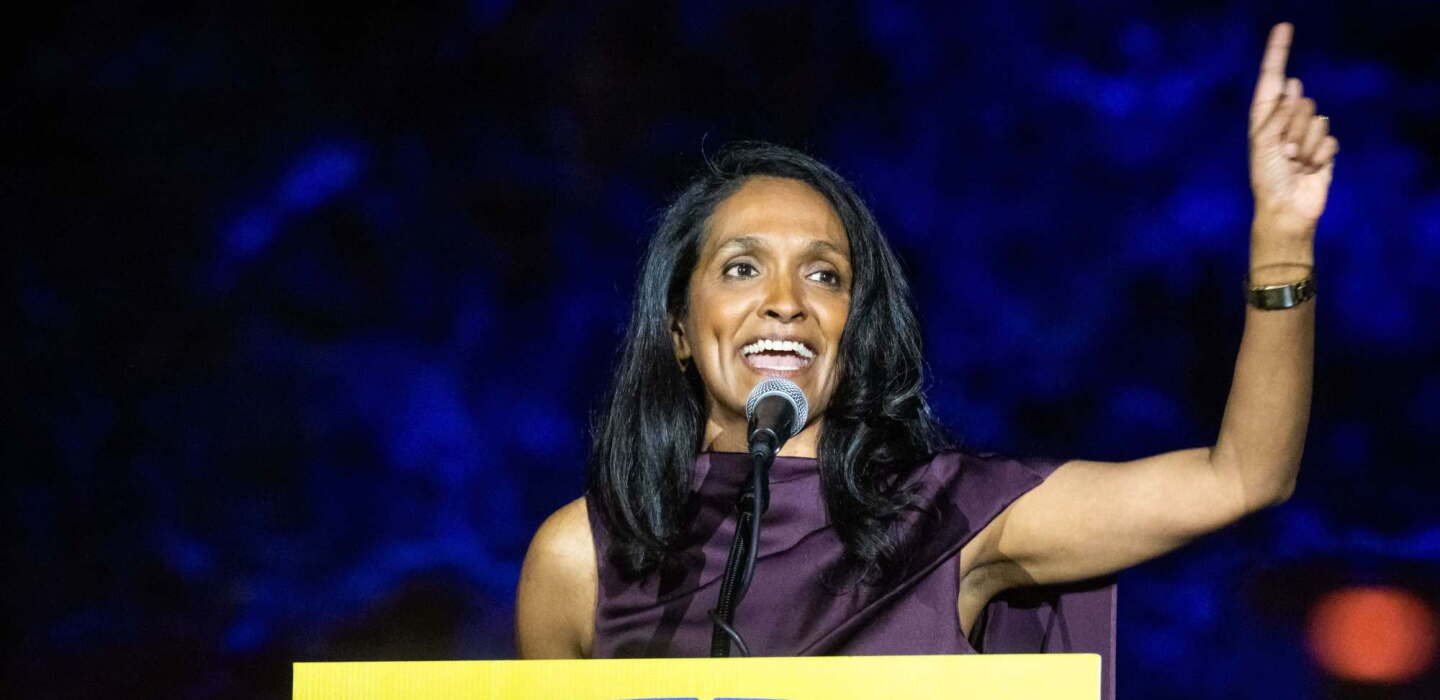
L.A. City Councilwoman Nithya Raman beat incumbent Mayor Karen Bass, a former U.S. congresswoman and longtime presence in Democratic politics, by more than 100,000 votes. Raman made a last-minute entry into the mayor’s race last spring, after initially endorsing Bass for a second term. She capitalized on anger over Bass’s handling of wildfires, but focused her critique on Bass’s management of the city’s finances, saying she overspent on a signature homelessness program that has produced mixed results, and was too generous with pay raises for police officers that the city couldn’t afford.
Raman was aligned with a leftwing faction in L.A. politics, having been elected to the City Council in 2020 with the backing of the local Democratic Socialists of America (DSA) and getting the group’s endorsement again in the mayoral race. But Raman doesn’t have an easy relationship with the DSA. The national organization nearly forced the local chapter to un-endorse her in the final days of the race, partly because she hasn’t fully embraced the movement to boycott and divest from Israel over its occupation of Palestinian lands.
And in any event, the L.A. mayoral race was never really a left-versus-moderate campaign. Instead, Raman’s pitch was built on taking a different approach to the city’s built environment, calling for denser housing, safer streets and better public transit. Raman earned a master’s degree in city planning from the Massachusetts Institute of Technology before moving to Los Angeles, where she has worked on housing and homelessness issues for the city and founded a homeless-outreach organization in her neighborhood.
On the City Council, Raman pushed for stronger tenant protections, and was among a minority of councilmembers who didn’t oppose SB79, a state law that permits denser housing near transit stations. She has said she plans to accelerate housing development in the city by cutting red tape and implementing a “shot clock,” requiring city departments to review zoning applications within a certain period of time.
“She has a very fine eye for finding the knots in the hose,” says Mike Bonin, a former council member who served with Raman and is now director of the Pat Brown Institute for Public Affairs at Cal State L.A.
Like many other left-leaning candidates for municipal office this year, Raman has been compared to New York Mayor Zohran Mamdani. During the mayoral campaign she developed a touch for the quality-of-life issues that irk urban voters, filming Mamdani-esque videos about, for instance, urban heat and shade infrastructure. She campaigned for increasing the parks budget and adding new parks as part of a broader climate platform.
On transportation issues, voters have provided tools in recent years that should help Raman advance her goals. L.A. County voters approved a half-cent sales tax in 2016 to fund transit expansion and upgrades to street infrastructure. In 2024 they approved Measure HLA, which requires the city to implement parts of its mobility plan, adding planned bike lanes and making pedestrian upgrades every time it repaves a street. Pedestrian and bike advocates have complained that the city’s progress on Measure HLA has been slow. The city has paused and altered its street paving program to avoid triggering the law in some cases.
Entrenched opposition to new development in single-family neighborhoods will remain an obstacle to boosting housing growth enough to make a dent in the cost of rent. But the biggest obstacle to Raman’s transportation agenda will likely be money. One reason the city hasn’t made more progress on Measure HLA is because Karen Bass never seemed fully committed to it, says Michael Schneider, CEO of the advocacy group Streets for All, which pushed for the measure. Another reason is that it costs a lot of money to install all the features the measure requires, especially accessible curb ramps. Meanwhile, the city is facing larger fiscal challenges. A recent report from the city administrative officer projects that Los Angeles will overspend its budget by about $322 million in the fiscal year that ends next June.
“My biggest fear for Raman is that she’s going to spend the first year just digging the city out of Bass’ bad decisions,” Schneider says. “I’ve never been more hopeful from a political will point of view, and I’ve never been more frustrated from a finances point of view.”
There are questions too about how well Raman will get along with the City Council. None of the council members endorsed her campaign, though that’s not surprising given the fact that many of them had lined up behind Bass even before Raman joined the race. Some reports have suggested that Raman has stormy relationships with some of her former council colleagues. She may be able to start out on a good footing now that the campaign has ended and she won by such a decisive margin.
But carrying out an urbanist vision for the city requires on-the-ground interventions in individual council districts. To the extent that Raman’s plans prioritize a citywide vision for the built environment, rather than neighborhood-by-neighborhood negotiations, those council relationships could get complicated. If she ends up fighting with enough members, it could compromise the broader agenda. And the city’s financial issues won’t help.

(Barry Williams/New York Daily News/TNS)
Faster Building in New York?
Meanwhile in New York, voters are giving a boost to Mayor Mamdani’s urbanist vision. Last week they approved five charter amendments that Mamdani had promoted under the heading of “faster government.” Some of the amendments clarify rules to make it easier to build sidewalk cafes, streamline city contracting, and establish a savings target for the city’s rainy-day fund. Two relate directly to how the city reviews and permits construction of transportation infrastructure and housing.
Question 3 asked whether the city should “Simplify review of street safety projects to reduce construction timelines.” The amendment gives the city’s transportation commissioner the authority to immediately construct a project when it’s determined that “there is a risk of significant injury that may occur absent immediate implementation based on the incidence rate of crashes involving motor vehicles, pedestrians, cyclists or other persons or any other consideration relating to the need to preserve public safety.” Mamdani said the amendment will help reduce by a third the time it takes to build bus and bike lane projects, perennially controversial and regularly delayed during his predecessor’s administration. More than 65 percent of voters supported the amendment.
Question 4 will establish a centralized hub for building applications, so that developers and agencies seeking construction approval can submit their documents in one place and receive all the approvals they need. Mamdani said it would move “40 approvals from 18 separate offices and agencies into one place, saving builders time and frustration.” It won with almost 68 percent of the vote.
Mamdani took office on a socialist, soak-the-rich platform, but since taking office has focused much of his energy on fixing streets and delivering basic government services as quickly and efficiently as possible. His approach frames competent administration (paired with a nonstop communications operation) as a political strategy. The recent round of ballot questions accepts the premise of many critiques of Democratic urban governance in recent years — that blue cities take too long to do anything — and attempts to chip away at the obstacles. Urban leaders around the country, left, right and center, may be looking to see whether the strategy works.
“New Yorkers voted for a government that moves as fast as they do,” Mamdani said after the vote. “We are cutting red tape that will directly address the affordability crisis and help New Yorkers stay in the city they love.”