







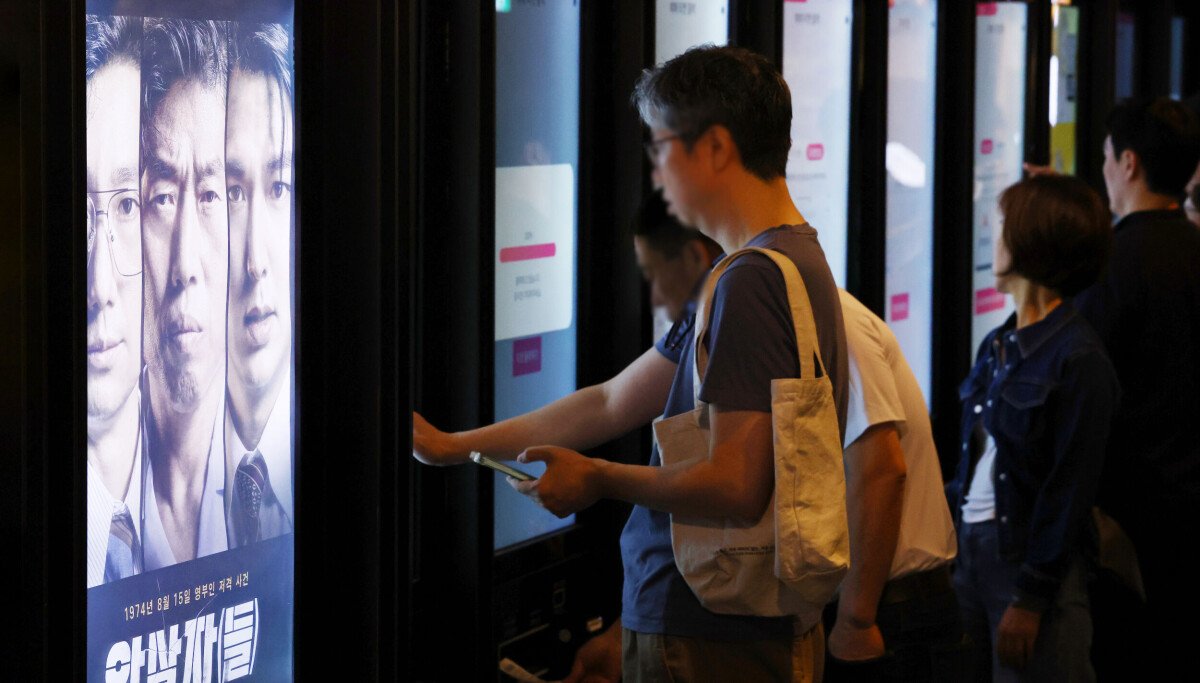
When an office worker in their 30s surnamed Park, who lives in Bundang District, Seongnam, Gyeonggi, heard in early August that tickets for IMAX screenings of “The Odyssey” were in high demand, a nearby movie theater immediately came to mind.
CGV at Hyundai Department Store’s Pangyo branch, home to the largest IMAX screen in southern Gyeonggi, was conveniently close to Park’s home. But just two weeks after the film’s release, the theater abruptly shut down.
“It was more than just a movie theater,” Park said. “It served as a community space where residents could spend time with family and loved ones. Its sudden closure has been a huge disappointment for the people of Pangyo.”
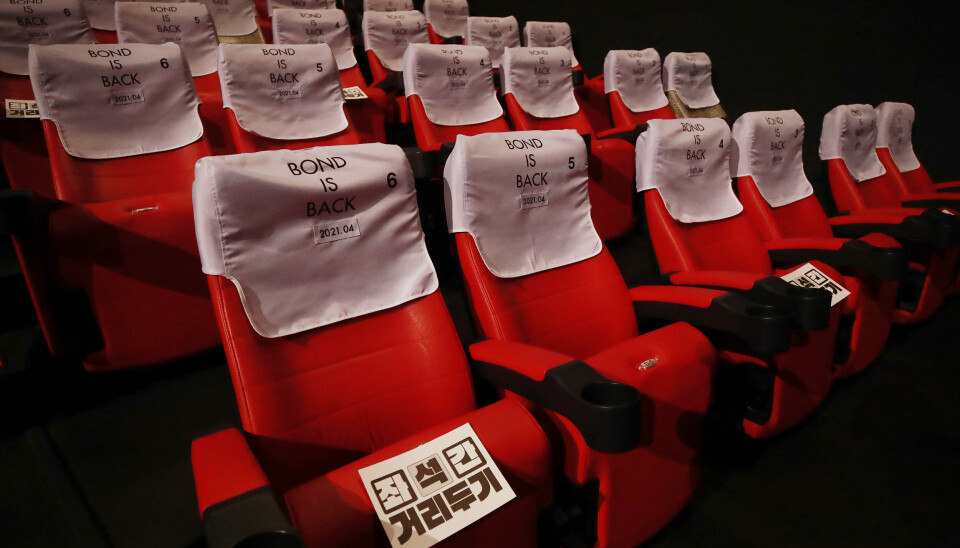
A record 105 movie screens shut down across Korea last year, the highest annual figure on record. This year, 74 screens had closed as of Sunday.
The number of screens closed annually fell from 90 in 2020, during the Covid-19 pandemic, to 42 in 2023 before climbing sharply to 73 in 2024 and 105 in 2025, according to an analysis of movie theater data from the Ministry of the Interior and Safety conducted through its application programming interface.
Even during the 2008 global financial crisis, the number of screens that closed stood at 90. Last year marked the first time annual closures exceeded 100.
The recent wave of theater closures differs from those seen during economic crises such as the global financial crisis or the pandemic. In previous downturns, smaller theaters with limited financial resources were typically the first to shut down. Recently, however, major multiplexes — such as CGV, Megabox, Lotte Cinema — with numerous screens have also been closing.
The average number of screens per theater that closed rose from 2.3 in 2020 to 3.3 in 2022 and 4.3 in 2025. This year, the figure has reached 4.6.
Despite a substantial recovery in movie attendance this year, driven by Korean hits such as “The King’s Warden,” “Salmokji: Whispering Water” and “Colony,” alongside Hollywood releases including “The Odyssey” and “Spider-Man: Brand New Day,” major multiplexes in the greater Seoul area have continued to shutter. Among them are CGV at Hyundai Department Store’s Pangyo branch, Megabox in Sinchon, western Seoul, and Lotte Cinema in Hapjeong, western Seoul.

“During the pandemic, theater operators held on in the hope that the industry would recover once social distancing measures were lifted,” a representative at a multiplex chain said. “But the slump continued even after the pandemic ended, prompting operators to scrutinize the profitability of major locations in the greater Seoul area more closely.”
Some industry observers see the closures as a sign that the era of aggressive expansion in Korea’s movie theater industry, which began in the 2000s, has come to an end.
Since the country’s first multiplex opened in 1998, theater chains have competed fiercely to secure locations in major commercial districts nationwide. Competition became particularly cutthroat between 2013 and 2019, when annual movie attendance exceeded 200 million, as operators battled to take over one another’s locations.
That aggressive expansion became a major burden during the Covid-19 pandemic. Even when social distancing restrictions prevented theaters from operating normally, operators were forced to maintain or expand their screen counts because of rental agreements signed years earlier.
This is shown by the total number of movie screens nationwide, which continued to grow and reached a record 3,783 at the end of 2023 despite being hit hard by the pandemic in previous years.
Movie theaters occupy large commercial spaces and typically sign long-term leases of at least 10 years with department stores, shopping malls and other property owners. When those leases expire, landlords may choose not to renew them.
“As the industry’s structure changed rapidly, department stores also had little choice but to revise their strategies for how they use their space,” said Lee Sung-min, a professor in the Department of Media Arts and Sciences at Korea National Open University. “A combination of these factors has contributed to the end of the era of quantitative growth in the movie theater industry.”
Theater operators have also shifted their strategies from expanding the number of locations to improving the quality of the moviegoing experience.
Rather than maintaining large numbers of conventional screens, chains have been expanding premium formats such as IMAX, ScreenX and 4DX while screening concerts and sporting events to transform theaters into more experience-driven entertainment venues.
The shift toward leaner operations and new business strategies has also improved profitability.
CGV, which developed premium screening formats like ScreenX, posted an operating profit of 73.6 billion won ($55 million) in the third quarter, its highest since 2016. ScreenX is a panoramic cinema format that extends images beyond the main screen onto the theater’s side walls and, in some cases, the ceiling.
Higher ticket prices contributed to the gains, while the box-office success of “The Odyssey” and “Spider-Man: Brand New Day” drove revenue at both standard and premium screens like IMAX.
Lotte Cinema operator Lotte Cultureworks also reported a third quarter operating profit of 14.7 billion won on revenue of 146.3 billion won, with operating profit rising 77.9 percent from a year earlier.
For Lotte Cinema, premium screens also played a major role in the improvement. At its sound-focused premium theaters, known as Gwangum Cinema, attendance surged 230.9 percent while net revenue jumped 269.1 percent. Gwangum means intense sound in Korean.

Theater chains are also diversifying their content beyond traditional films, particularly through concerts and other live performances.
With fewer major blockbuster releases in November, CGV is preparing to screen trot singer Lim Young-woong’s concert film “Lim Young Woong: I’m Hero the Stadium 2,” scheduled for release on Wednesday. As of Sunday, it topped CGV’s advance ticket reservation rankings with a 29 percent share.
At Megabox, “TWS VR Concert: Rush Road,” rereleased on Friday, ranked No. 2 in reservations as of Sunday. It accounted for 13.5 percent of bookings.
Lotte Cinema also screened “Enhypen VR Concert: Destiny” in September.
“Qualitative growth in the movie theater industry cannot be achieved simply by expanding premium screens and improving the viewing experience,” Noh Chul-hwan, a professor of theater and film at Inha University, said. “It must also be accompanied by strategies that take into account the fundamental nature of cinema.”
“Theater operators could consider more audience-friendly strategies, such as subscription plans that ease the financial burden of ticket prices for dedicated moviegoers, who make up a core segment of their customer base.”
BY JEONG EUN-HYE [kim.jiye@joongang.co.kr]