
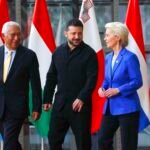




DUBLIN — European Union leaders have agreed that Europe Ukraine peace talks will be handled by EU institutions together with France, Germany, Italy, Poland and the United Kingdom, creating a five-country team to coordinate the continent’s role in diplomacy aimed at ending Russia’s war.
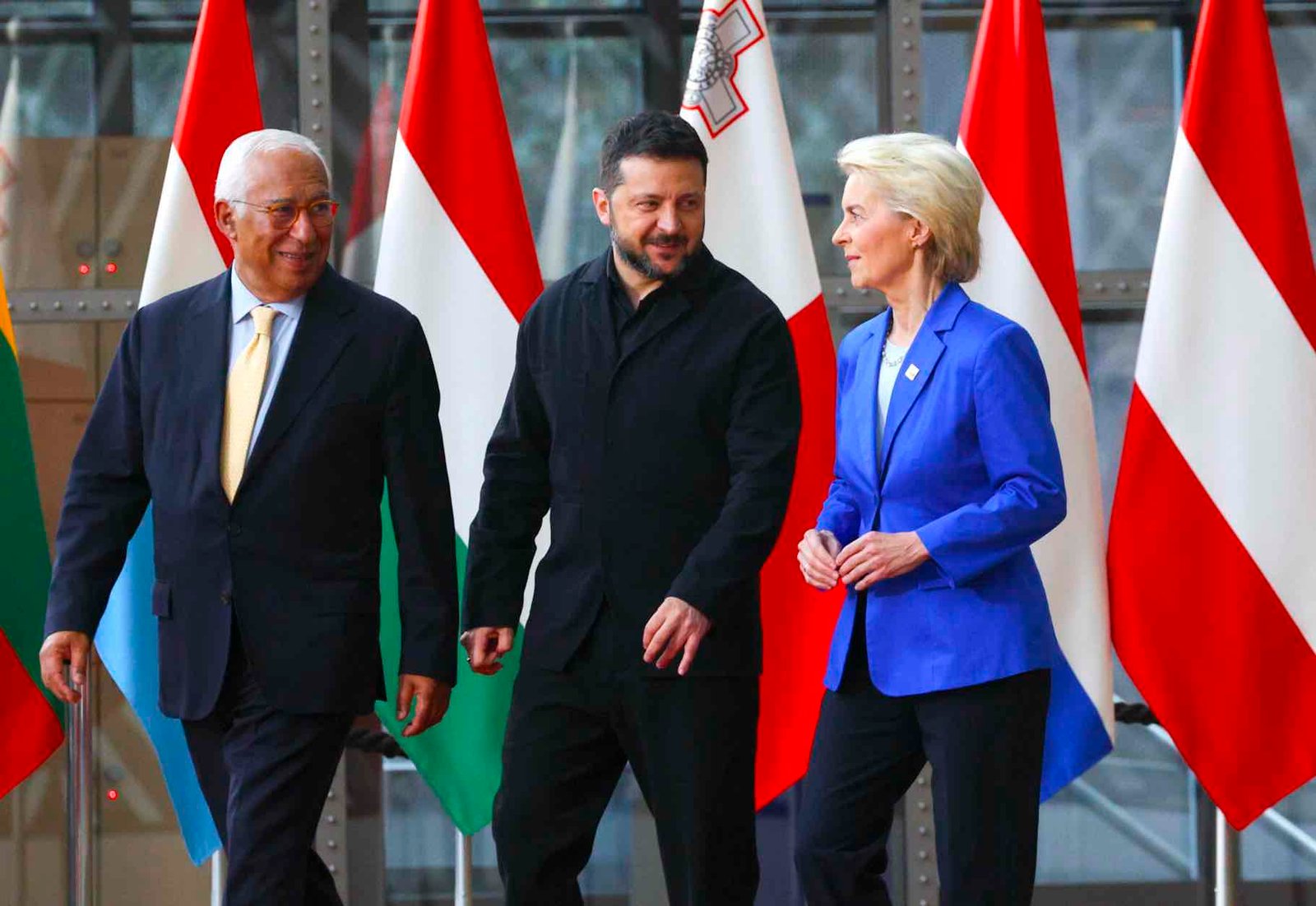
European Council President António Costa announced the arrangement after an informal summit in Dublin on Nov. 13. The team will work with all 27 EU member states, the European Council said, while coordinating Europe’s contribution to negotiations alongside Ukraine, the United States and NATO.
The decision gives institutional form to a European demand for representation in a U.S.-backed diplomatic process that has produced direct contacts among American, Ukrainian and Russian officials but no settlement on territory or a ceasefire. The United Kingdom is not an EU member but is part of the Coalition of the Willing supporting Ukraine.
“Europe must speak with one clear and united voice” in talks shaping Ukraine’s future and the continent’s security, Costa said in remarks published by the European Council.
The European Council’s account of the Dublin meeting identified the five participating countries as France, Germany, Italy, Poland and the United Kingdom. It said the group would coordinate Europe’s diplomatic contribution while working with member states to maintain a common position.
A formal team after uncertainty
The move follows months of debate over who could speak for Europe as Washington pressed for negotiations with Moscow and Kyiv. Reuters reported that the agreement resolved uncertainty over representation by placing EU institutions alongside five of Europe’s larger military powers, with NATO also expected to participate in the wider process.
The European Council said the team’s mandate is not to negotiate Ukraine’s territory on Kyiv’s behalf. Costa said only Ukraine has the legitimacy to decide matters concerning its territory and sovereignty. He said the EU has a central role in discussion of Ukraine’s European future, reconstruction and economic prosperity, while security guarantees belong within the Coalition of the Willing and in close coordination with NATO.
The structure puts Britain in the group despite Brexit and includes Poland, which has become a principal logistical and military-support hub for Ukraine. France, Germany and Italy bring the three largest economies in the European Union into the common team.
Associated Press reported that the team will include diplomats from the EU and the five countries. Costa said the purpose was to integrate the different European participants rather than allow several uncoordinated channels to compete for influence.
Ceasefire remains the stated priority
The composition of the team emerged amid disagreement over whether broader European security arrangements should be negotiated in parallel with a Ukraine settlement. Russia has pressed for discussion of Europe’s security architecture, while European leaders have argued that a ceasefire must come first.
EU foreign policy chief Kaja Kallas made that position explicit in a Nov. 13 post on X, saying that concentrating on Russia’s demands about European security risked shifting attention from a ceasefire. She said Europeans had to be present in the talks “not just to attend, but to influence the outcome.”
Kallas’s remarks followed her public statement at the Dublin summit, in which she set out the sequencing favored by the EU: first a ceasefire, then a peace agreement, and only afterward wider discussions about European security. The European External Action Service transcript records her warning that moving first to security-architecture talks could divert attention from stopping the fighting.
That sequence reflects the EU’s position that existing European security commitments, including the Helsinki Final Act, the Paris Charter and the Budapest Memorandum, already establish core principles on sovereignty and territorial integrity. EU officials argue that the central problem is Russia’s compliance with those commitments, rather than the absence of a framework.
Costa said the weeks ahead would test whether Russia is prepared to end the war. He pointed to continuing escalation and strikes on civilians, while calling for Russia to change course.
Abu Dhabi talks produced no territorial breakthrough
The European decision comes after U.S.-mediated discussions in Abu Dhabi involving Ukrainian and Russian representatives. Those meetings were the first direct discussions between the two sides in nine months, according to the AP. They produced an agreement to pursue a prisoner exchange and plans for another round, but no reported breakthrough on territory, security guarantees or a ceasefire.
U.S. envoys Steve Witkoff and Jared Kushner met Russian President Vladimir Putin in Moscow before meeting Ukrainian President Volodymyr Zelenskyy in Dublin, the AP reported. The agency said Russia had continued to oppose the prospect of European troops in Ukraine after any ceasefire and had maintained claims to four Ukrainian regions it says it annexed.
Reuters reported that European leaders warned that a broad discussion on continental security could become a distraction from the immediate objective of a ceasefire. German Chancellor Friedrich Merz said there could be no discussion of Ukraine without Ukraine, or of Europe without Europe.
Russia has said it would welcome European participation if European governments genuinely sought peace, Reuters reported. Moscow has also called for a wider security agreement before addressing some details of the war, a position European leaders have rejected as the starting point for negotiations.
Support, sanctions and 2027 financing
The Dublin decision did not change the EU’s military or financial-support commitments. In a joint statement after meeting Zelenskyy on Nov. 12, Costa and European Commission President Ursula von der Leyen said the EU would continue financial and military assistance, work on a postwar reconstruction plan and support Ukraine’s path toward membership.
The statement said the Commission was mobilising 500 generators from rescEU reserves, emergency-support centers and essential equipment as Ukraine entered another winter of war. It also cited four floating bridges from Norway and 200 buses that European teams were helping deliver.
EU leaders are scheduled to address Ukraine’s financing needs for 2027 and beyond at their next European Council meeting on Nov. 26 and 27. Costa said those discussions would build on forthcoming Commission proposals.
The Commission is also expected to present a 22nd package of sanctions against Russia. Kallas said in Dublin that foreign ministers would discuss additional listings at their meeting on Monday and that she expected willingness to advance the broader package before year-end.
For now, the immediate diplomatic task is to turn Europe’s newly agreed team into a coordinated presence in the next negotiating round. The confirmed timetable is that EU leaders will return on Nov. 26–27 to consider Ukraine’s financing needs for 2027 and beyond.