





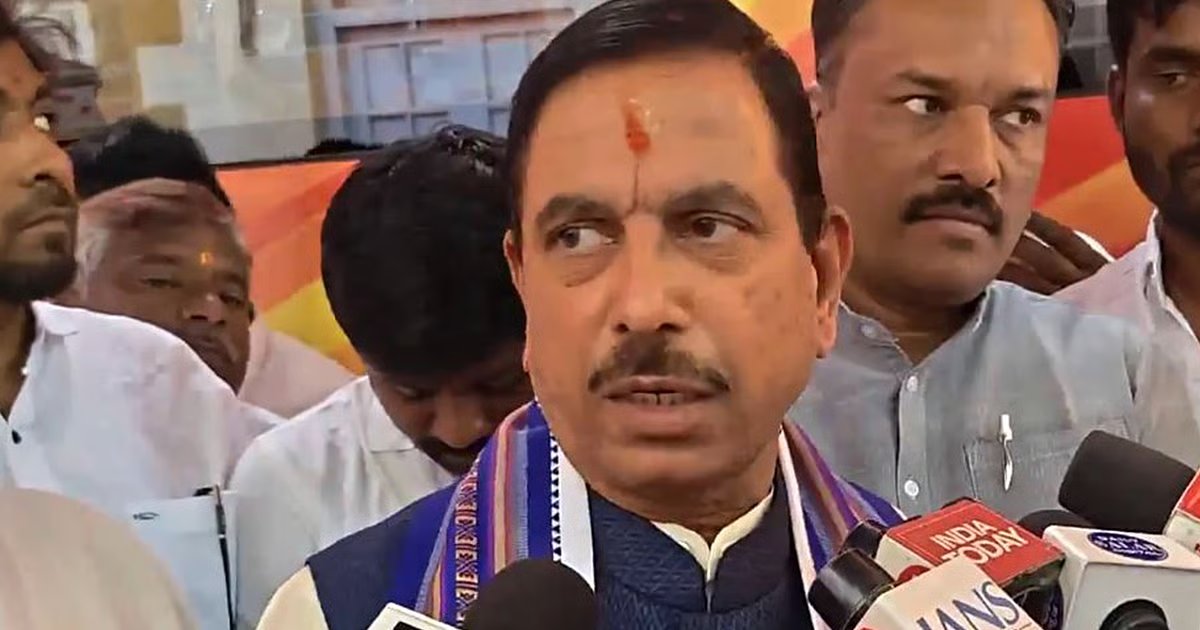
He also proposed a joint meeting involving officials from Oil Marketing Companies (OMCs) and representatives of the state government. Joshi suggested that Karnataka Minister Rizwan Arshad could preside over the discussion and oversee the proceedings.
However, Arshad rejected Joshi’s intervention, pointing out that the Union Minister does not head the Petroleum and Natural Gas Ministry, which is responsible for the matter. He accused Joshi of responding on behalf of Petroleum Minister Hardeep Singh Puri.
Taking a sarcastic swipe at Joshi, Arshad suggested that he could assume the petroleum portfolio following Puri’s resignation.
Clarifying the state’s position, Arshad said Karnataka was not opposed to ethanol blending, acknowledging its potential benefits for farmers and the sugar industry. However, he insisted that consumers should not be left without answers about the actual composition of the fuel being sold.
He questioned the practice of marketing petrol containing between 26 and 31 per cent ethanol as E20, arguing that consumers had a right to know precisely what they were purchasing.
Arshad also challenged the reliability of the Centre’s testing figures. Referring to 893 samples reportedly found compliant across the country, including 56 from Karnataka, he alleged that the samples had been examined and certified by the OMCs’ own laboratories.
He questioned whether oil companies could independently establish their compliance when they were also responsible for testing their own products.
The Karnataka minister further claimed that none of the reports issued by OMC laboratories revealed the actual ethanol concentration when the state initially submitted 63 samples for examination.
Calling for a credible verification mechanism, Arshad said disagreements over the findings should be resolved through independent testing rather than political statements or allegations.
He demanded the establishment of an impartial fuel-testing system, public disclosure of ethanol percentages at petrol stations and the availability of different fuel options, including E10, E20 and petrol without ethanol blending.
Arshad maintained that the controversy was fundamentally about consumer rights and accountability, not a confrontation between farmers and ordinary citizens.
He also criticised Joshi for resorting to personal remarks, arguing that political attacks could not replace scientific evidence or provide answers to questions raised by the public.
(With inputs from PTI)