






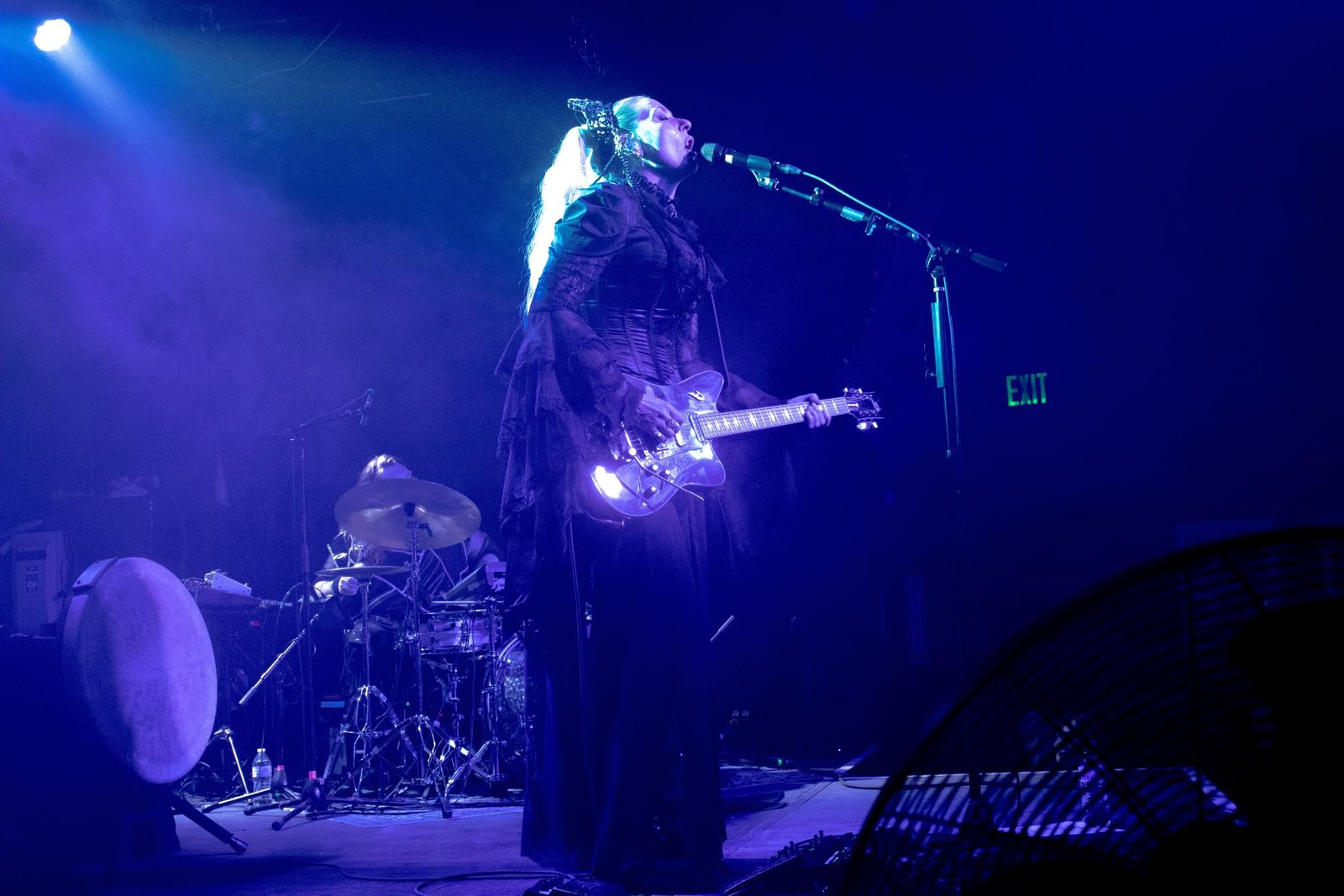
Bathed in a blue light, Eivør took to Metro Music Hall’s stage on Nov. 13 for a performance to a crowd of about 400.
Eivør Pálsdóttir, a Faroese singer and composer, takes inspiration from a range of genres, including Nordic folk, synth-pop and classical. The artist recently released her 11th studio album in October of this year, titled Tungl. Pálsdóttir has been making music for 28 years, and has built a rich history as a musician. “Curiosity leads you to different genres,” she said in an interview with The Daily Utah Chronicle.
Pálsdóttir’s history
Pálsdóttir sings in many different languages, including her native language of Faroese and English. “Some songs just want to be sung in English and others in Faroese. It’s like switching instruments for me,” she said. “They have different possibilities, different colors.”
She still gets nervous before concerts, Pálsdóttir said, despite having performed live music since the age of 13. She released her first solo album in 2000, when she was 16.
Having grown up in a small village in the Faroe Islands, Pálsdóttir has been obsessed with music all her life, she said. “My mom was always singing around the house and in choirs,” Pálsdóttir said. “[My dad] would write poetry a lot and somehow it was just a natural part of my life. It was my calling to be a musician somehow.”
The artist has composed music for media across a range of mediums, including the game God of War, the show “The Last Kingdom” and a teaser for “Game of Thrones.” Pálsdóttir said that working on the God of War game was a treat for her. “It’s very much based on Nordic mythology, which is a big part of my roots,” she said. “Although it was a whole new world to me to be in these video games singing, at the same time it felt really familiar.” Eivør will also work in the upcoming third game of the series, “God of War Laufey.”
During Eivør’s performance, Pálsdóttir provided context to the song “Í Tokuni“. “[The song] is inspired by a childhood memory when I got lost in the misty mountains in the Faroe Islands,” Pálsdóttir said. “I walked for hours and hours, and my imagination started to wander.”
Tungl Performance
Before the show, the quartet of performers huddled together to prepare for their performance.
The song “Verjugarðar / Walls” is about “the walls we sometimes build around ourselves, maybe to protect our hearts. They can be really hard to tear [those walls] down again,” Pálsdóttir said during the concert. The song “Spøkilsir / Revenants” is about the ghosts we carry around that affect our lives and not being too hard on ourselves for carrying them, she said.
Tugnl is the Faroese word for moon. During her interview with The Chronicle, Pálsdóttir said, “In the [dark of] night, this beautiful moon is a symbol of the light still being there.”
Pálsdóttir said that she didn’t “want to plant too much in [the audience’s] heads because [she] likes to create a space for people to dream with her albums and concerts,” she said. “It’s a sort of freedom for people to experience it and make their own stories out of it.”