







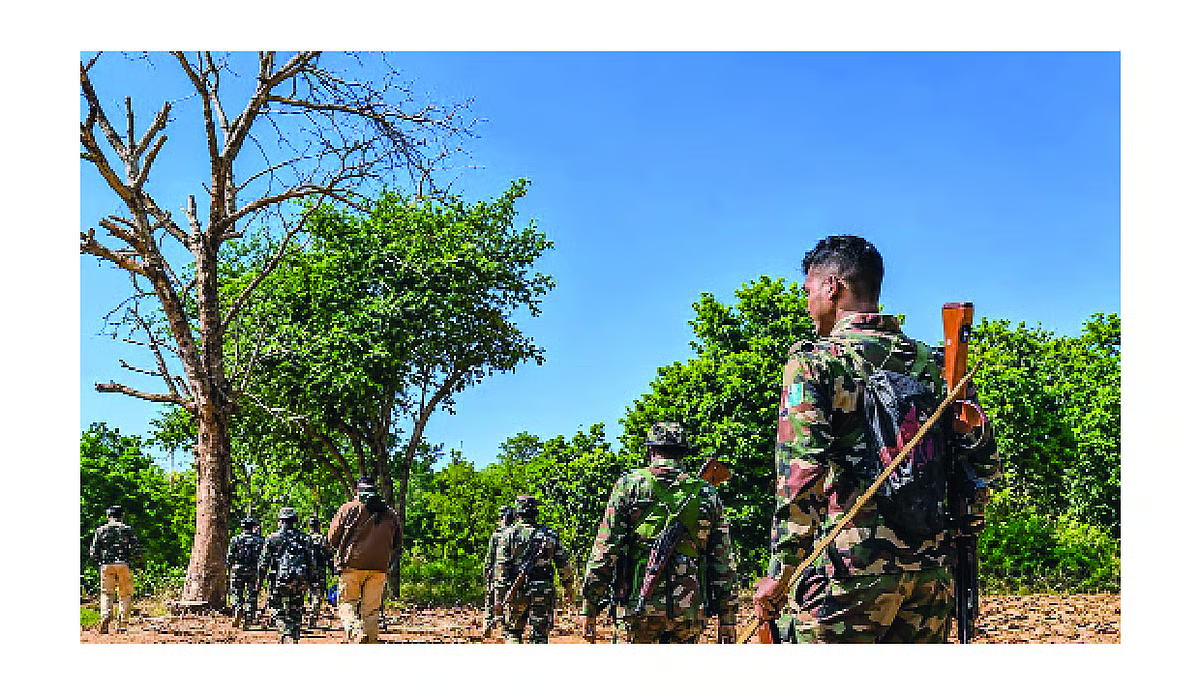
The Central Reserve Police Force (CRPF) has ordered the withdrawal of a full general-duty battalion of more than 1,000 personnel from the anti-Naxal operations grid in Chhattisgarh and directed the unit to Manipur, marking the first complete de-induction of any Central Armed Police Force formation from the Left Wing Extremism theatre since the Union government declared armed Maoism over in March.
The battalion (until recently based in Sukma district in south Bastar) had for years been engaged in offensive operations against Maoist cadres and, following the March declaration, had switched over to large-scale de-mining and IED neutralisation along public routes. CRPF HQ have issued movement orders for the unit to Manipur, where the ethnic violence which broke out in May 2023 is still very much with us over three years later. Senior security officials in Delhi said the move is to bolster the force’s presence in the state, given ongoing logistics and accommodation pressures on the existing deployment.
Two CoBRA jungle warfare battalions were deployed to Manipur a few months ago, joining the existing CRPF and RAF contingents in the state. As with other central forces in Manipur, the CoBRA battalions also suffer from a lack of barracks and support infrastructure. The authorities have been asked to provide both temporary and permanent accommodation for the personnel. The CRPF is by far the main anti-Naxal force with over a lakh personnel engaged across the country in the fight against the Naxals. This includes over 25 regular and special CoBRA battalions which were previously based in Chhattisgarh (long the heartland of Naxal activity).
The adjacent CRPF units and the Chhattisgarh Police have been put on the spot to take over the posts and operational responsibilities of the battalions being withdrawn. A senior Chhattisgarh Police officer admitted this will create a “vacuum” in the local grid and pointed out that the unit in question had just completed its de-mining work, which allowed roads in Sukma to reopen for civilian movement.
The withdrawal is the first full battalion-level withdrawal following the Government’s March announcement that organised armed Naxalism was over. Further reductions are under consideration, with a proposal to pull out three more paramilitary battalions from anti-Naxal areas in Chhattisgarh and Odisha for redeployment to Manipur and to bolster border security along the Pakistan and Bangladesh borders.
As one Delhi-based security officer put it, this is also a reflection of the view that security in the former heartland of the Maoists has improved to the point where the onus of security can now be passed to the state police, who are the ones who are in the best position to deal with the day-to-day law and order.
The redeployment is a stark reminder of the competing demands on central paramilitary resources. The anti-Naxal grid is being significantly thinned for the first time in years, and Manipur still needs a huge amount of additional workforce to deal with the ethnic clashes, to protect the camps of the displaced and to maintain the buffer zones.
Force HQ has made it clear that the transfer is temporary to accommodate other internal security requirements (elections, Amarnath Yatra, etc.). Still, permanently moving this Sukma-based battalion shifts the force’s structure away from the LWE theatre.
Security officials reiterated that the residual threat from the remaining Maoists and the UEO in Bastar remains and will continue to require attention. The incident situation has improved dramatically since the March 2026 declaration.