









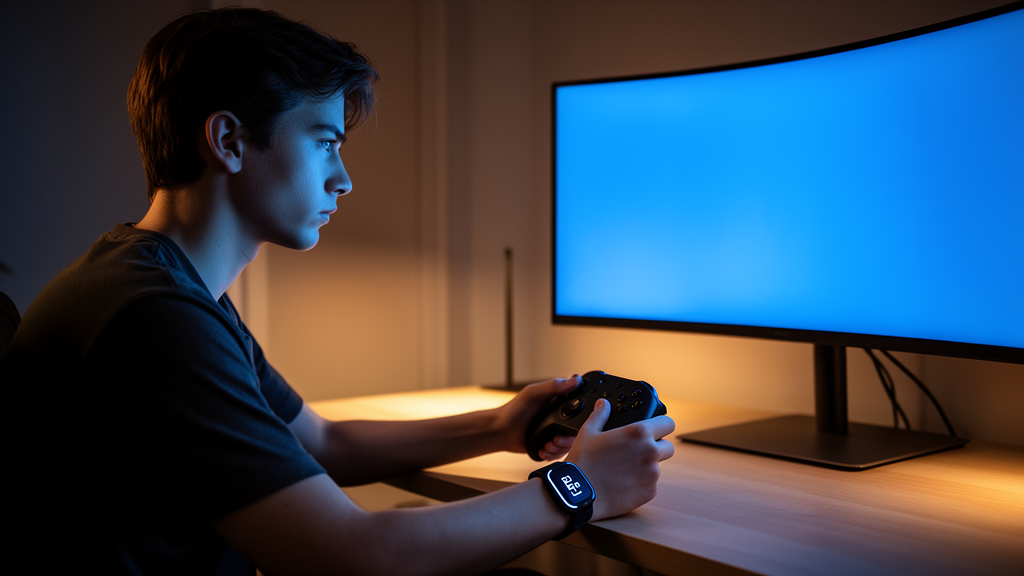
Conducted at the eSport.Hub in Solingen, Germany, and approved by the ethics committee of the University of Wuppertal, the experimental investigation directly compared the acute physiological impact of intense digital soccer matches against an equivalent period of seated television watching. While previous literature on gaming physiology reported conflicting outcomes ranging from sharp sympathetic activation to negligible responses, this standardized trial examined cardiovascular, autonomic, and endocrine pathways concurrently within the same experimental framework. The core findings revealed that differences in cardiac autonomic regulation between conditions were driven by increases in heart rate variability markers during the passive control session, whereas players engaged in competitive matches exhibited flat temporal variability trajectories alongside moderately higher average heart rates and peripheral diastolic blood pressure throughout the bout.
The study addressed an emerging question in public health and sports medicine regarding whether the high cognitive and emotional demands of structured competitive video gaming trigger systemic stress reactions distinct from general sedentary screen exposure. Video game players frequently spend substantial weekly durations in seated positions, with competitive players averaging around twenty hours per week and many exceeding thirty hours. Prolonged physical inactivity is an established independent contributor to chronic metabolic and cardiovascular risks, yet competitive digital gaming introduces concurrent performance pressures, continuous visuomotor tracking, tactical adjustments, and immediate emotional consequences linked to scoring or conceding goals. Prior investigations into these acute dynamics predominantly focused on isolated indicators such as heart rate alone or restricted observations to brief playing intervals lasting between ten and thirty minutes across disparate genres. To isolate gaming-specific stress from unspecific sedentary screen time, the research team designed a standardized protocol measuring continuous interbeat intervals, arterial stiffness, peripheral and central blood pressure, salivary hormone concentrations, and perceived mental exhaustion.
To evaluate these physiological parameters, sixteen healthy male participants aged eighteen to forty years who regularly played EA Sports FC were recruited through flyers, university presentations, and social media groups. The cohort included seven hobby players, five competitive players, and four professional competitors who reported typical gaming sessions averaging 3.3 hours. Exclusion criteria eliminated volunteers presenting with acute or chronic pain conditions, diagnosed cardiovascular diseases, recent acute illnesses, or concurrent use of analgesic and cardiovascular pharmacotherapies. Participants strictly refrained from food consumption for one hour, caffeine intake for four hours, vigorous physical exertion for twenty-four hours, and video gameplay on the day of testing. An a priori power analysis assuming a large effect size of f equal to 0.4 indicated that twelve participants would provide eighty percent power at an alpha of 0.05, leading investigators to recruit sixteen participants to accommodate potential attrition. Each participant completed two laboratory visits separated by a minimum one-week washout interval, scheduled between 10:00 and 14:00 under identical ambient conditions.
The testing environment maintained strict standardization, pairing each participant with a single investigator inside a quiet room with controlled illumination. At the outset of both visits, participants completed a ten-minute seated rest period to permit baseline physiological stabilization before initial measurements designated as T0. These baseline assessments recorded subjective cognitive fatigue on an eleven-point numeric scale, resting salivary samples via synthetic suction swabs, and cuff-based hemodynamic variables. Following baseline collection, participants completed their randomly allocated sixty-minute intervention before undergoing an immediate post-session measurement battery designated as T1, followed by a final assessment series designated as T2 following fifteen minutes of quiet recovery. During the gaming session, participants played competitive online Division Rivals or Weekend League matches on their personal accounts using a PlayStation 5 console and standard wireless controllers, averaging 60.9 minutes across three to seven individual fixtures without background music or external applications. During the control visit, participants quietly watched the nature documentary Our Planet II on Netflix under identical seating and screen configurations.
Cardiovascular metrics were recorded using automated, validated instrumentation conforming to clinical hypertension management standards. Peripheral systolic and diastolic blood pressure, central systolic and diastolic blood pressure, and pulse wave velocity were evaluated with a Mobil-O-Graph device fitted to the left upper arm at heart level with cuff dimensions tailored to individual arm circumference. Cardiac autonomic regulation was recorded continuously across the entire appointment using a chest-worn Polar H10 band linked to the HRV Logger application on a mobile smartphone, capturing raw interbeat RR intervals with a twenty-five percent threshold filter for artifact correction. Additionally, mean heart rate, RMSSD, and SDNN were calculated specifically for active gameplay time, excluding minor in-game pauses between match matchmaking, and compared against average continuous values recorded during the sixty-minute documentary screening.
Endocrine stress responses were quantified through salivary cortisol sampling collected at each measurement point using Sarstedt Salivette tubes retained orally for two minutes. Linear mixed-effects models tested the fixed effects of experimental condition, measurement time, and their statistical interaction, while incorporating visit period and sequence order as fixed factors to control for carryover or familiarization phenomena, alongside individual participant random intercepts. Pairwise post hoc contrasts applied Bonferroni adjustments to maintain conservative family-wise error rates, with effect sizes interpreted using partial eta-squared metrics categorized as small, medium, or large. Paired Student t-tests compared in-session physiological averages, complemented by sensitivity analyses that accounted for momentary pauses between successive online fixtures to ensure matchmaking interludes did not distort observed cardiovascular patterns.
The primary statistical analyses demonstrated a significant condition-by-time interaction for cardiac autonomic regulation rather than for hemodynamic parameters or endocrine excretion. Both RMSSD, showing a large effect size with partial eta-squared of 0.13, and SDNN, yielding a medium effect size with partial eta-squared of 0.08, revealed significant interactions across the sampling time points. Pairwise decomposition revealed that RMSSD increased significantly from baseline to the immediate post-session mark in the documentary condition by an estimated mean difference of 11.51 milliseconds, whereas no significant temporal alteration appeared across the gaming intervention. Similarly, SDNN increased significantly during documentary viewing from baseline to post-session by 15.93 milliseconds and remained 10.44 milliseconds higher after fifteen minutes of recovery, while remaining completely stable across competitive gaming.
Analysis of continuous in-session recordings revealed that average heart rate was significantly elevated during competitive digital gaming, registering an average of 82.5 beats per minute compared with documentary viewing, reflecting an estimated mean difference of 7.31 beats per minute. Correspondingly, mean SDNN during gameplay was significantly reduced by 10.49 milliseconds relative to passive viewing, whereas mean RMSSD showed no statistically significant divergence between the two activities. Sensitivity analyses incorporating inter-match waiting intervals confirmed these results, showing an average heart rate elevation of 7.39 beats per minute and an SDNN depression of 10.05 milliseconds during gaming. In contrast, linear mixed-effects modeling revealed no significant condition-by-time interactions for peripheral systolic pressure, central blood pressure, or arterial pulse wave velocity. Peripheral systolic pressure and pulse wave velocity decreased over time across both experimental conditions, while peripheral diastolic pressure demonstrated a significant main condition effect averaging 4.33 millimeters of mercury higher during the gaming visit without displaying any condition-specific temporal divergence.
Endocrine assessment revealed that salivary cortisol concentrations decreased consistently over time across both experimental arms, dropping from baseline to post-session by an estimated mean difference of 0.187 micrograms per deciliter and by 0.221 micrograms per deciliter after recovery. This robust temporal decline yielded a large partial eta-squared of 0.33 without any significant condition-by-time interaction, demonstrating that competitive digital soccer failed to stimulate acute adrenal activation above passive media viewing. Concurrently, subjective ratings of mental exhaustion exhibited a significant main temporal increase from baseline to post-session of 0.72 points across both visits, indicating that prolonged screen observation produced equivalent cognitive fatigue regardless of interactive engagement. Noticeable period effects appeared across hemodynamic, autonomic, and hormonal indices, as first-visit appointments displayed higher initial heart rates, elevated diastolic blood pressure, lower baseline heart rate variability, and higher baseline cortisol, reflecting anticipatory arousal and laboratory unfamiliarity that subsequently normalized across counterbalanced testing.
The study investigators highlighted several methodological boundaries when interpreting the experimental outcomes, emphasizing that the healthy, all-male sample restricts broader extrapolation to female esports athletes, older demographic groups, or individuals managing clinical cardiovascular impairments. Because sample size calculations were constructed around large prospective effects, the statistical architecture possessed limited sensitivity for identifying subtle, small-to-moderate hemodynamic shifts, leaving open the formal possibility of type II statistical error. Furthermore, elevated pre-test baseline values suggest that ten minutes of seated rest may not have completely extinguished pre-experimental apprehension, potentially dampening subsequent physiological escalation during play. The authors noted that controlled laboratory conditions lack the extensive social-evaluative scrutiny, financial stakes, spectator crowds, and team communication dynamics inherent to high-profile professional esports tournaments. Finally, the experimental protocol examined a single sports simulation franchise over approximately sixty minutes, meaning physiological profiles may differ substantially during extended gaming sessions or within faster, high-intensity formats such as tactical first-person shooters or multiplayer online battle arenas.
Subject of Research: Acute cardiovascular, autonomic, and endocrine responses to competitive esports versus passive screen viewing
Article Title: Acute cardiovascular, autonomic and endocrine responses to a one-hour competitive esports session: a randomized controlled crossover study
Article References: Soffner, M., Tomschi, F., Wehmeier, U. F., & Hilberg, T. (2026). Acute cardiovascular, autonomic and endocrine responses to a one-hour competitive esports session: a randomized controlled crossover study. BMC Sports Science, Medicine and Rehabilitation, 18(1), Article 484. https://doi.org/10.1186/s13102-026-02159-w
Image Credits: AI Generated
DOI: 10.1186/s13102-026-02159-w
Keywords: esports, heart rate variability, cardiac autonomic regulation, EA Sports FC, cortisol, blood pressure, pulse wave velocity, randomized crossover trial, RMSSD, SDNN, sedentary behavior, hemodynamics, cognitive fatigue, Mobil-O-Graph, Polar H10, sports science, sympathetic activity