MTV used to rule pop culture. Now it mostly breaks through once a year.


MTV, the 45-year-old network and music video pioneer, was once the arbiter of cool. They played all the hottest new songs from some of the biggest stars the country has ever seen: Madonna, David Bowie, Michael Jackson and Prince. They ushered in the era of boy band domination and made a space for teen culture to thrive. 

Now, MTV isn’t dead, but it’s more of a nostalgic icon than a network that people turn on to actively watch or listen to music. These days, you’ll find seemingly endless reruns of the 49-season clip show Ridiculousness, which stopped making new episodes in 2025. 

Gen X-ers and millennials remember MTV’s former life fondly: They recall rushing home from school to catch Total Request Live. But somewhere between “Thriller” and Jersey Shore, the cable channel shifted its identity away from music entirely — save for one night a year, when they air the Video Music Awards. So what happened? 

What was MTV, anyway? 

To figure out where the network has gone, we have to look back on what it originally was. From the 1980s to the early 1990s, MTV was at its most culturally influential. It launched in 1981, manufactured to captivate teenagers — an audience advertisers weren’t reaching well. 

Then, VJs, or video jockeys, introduced music videos to audiences of millions. Getting your video to play on the network was an honor. 

In the book I Want My MTV: The Uncensored Story of the Music Video Revolution, authors Craig Marks and Rob Tannenbaum explain that making music videos was once an expensive promotional afterthought; MTV, however, made it one of the most important factors in the industry. A video could make or break a career. 

“MTV changed the architecture of being an artist,” Mark Mothersbaugh of Devo, whose racy video for “Whip It” dominated the network in its early days, says in the book. (In a true sign of the times, Mothersbaugh collaborated on the theme song for Ridiculousness, which is a cover of Devo’s “Uncontrollable Urge.”) 

It was a massive force of monoculture, uniting audiences around the same songs — something nearly unfathomable now that the algorithms powering streaming services tailor what we listen to to our precise tastes.

When did MTV lose the music? 

The reality of differing tastes was a problem MTV quickly encountered. Executives realized that if fans don’t like what’s playing, they’ll change the channel. That means they might not come back, and their value to advertisers could be lost. They started testing different programming, including the 1987 game show Remote Control, but what really hit was 1992’s The Real World. The show, which filmed a group of strangers living together, laid the groundwork for modern reality TV. 

1993’s raunchy animated series Beavis and Butt-Head and 2006’s soapy reality program The Hills (a spinoff of the buzzy high school drama Laguna Beach) followed, and MTV became known for more than just music. People said they missed the videos, but did they really, since they were tuning in now more than ever? MTV’s most popular show came in 2009 with Jersey Shore, the raucous reality show about hard-partying pals, which ran for six seasons. Its most-watched VMAs were in 2011.

In 2010, MTV dropped the words “Music Television” from the bottom of its iconic logo, signaling that it had entered a new era. Music videos were relegated to spinoff cable channels like MTV Music, MTV 80s, MTV 90s, Club MTV and MTV Live. YouTube had emerged as an on-demand music video streaming platform, so there was no need to endure all the friction of waiting to see an artist you like appear on your television. 

What has MTV become? 

With cord-cutting and the rise of streaming services, MTV just couldn’t hang, slowly cutting its shows and losing its hold in the youth-driven reality programming space. Parent company Paramount Skydance shut down MTV’s U.K. music-only channels at the end of 2025, and rumors began to spread that the network was entirely dead. It’s not! We still have reruns of Ridiculousness, and of course, the 2026 VMAs. 

“Nobody is saying MTV is what it was when you were 15. But it is still on the air, it is still profitable,” former VJ Dave Holmes wrote in Esquire earlier this year. 

And the VMAs are still culturally relevant. The 2025 show was its most-watched since 2019 — but that’s also because it was simulcast on fellow Paramount network CBS for the first time. Even so, it’s an indication that people still want to know what the kids are into musically these days. The nominations for this year’s awards suggest MTV would like us to think that’s Madonna, but also newer names like Sienna Spiro, Olivia Dean and (of course) Ella Langley. 

MTV still programs some music video channels in the U.S., including “MTV Classic” (which plays music videos from the 1980s to 2000s), “MTV Live” (which runs current music videos) and a collection of MTV-branded FAST channels streaming on Pluto like “MTV Biggest Pop,” “MTV Spankin’ New,” “Yo! MTV” and “MTV Flow Latino.” 

But MTV, or any other TV network, likely won’t be able to run on music alone. According to MIDiA Research, 16- to 24-year-olds discover music mostly through TikTok, then YouTube. You can also replicate the MTV VJ experience in your own home by hosting “Gay Guy Music Video Night,” a queer party pregame phenomenon in which a friend group queues up pop videos to watch and talk over before heading out. When people get nostalgic about the MTV they grew up with, it’s not because they’re mourning a steady stream of music videos. It’s not the Music Television that people miss, but the way things used to be, when culture was united.

Video may have killed the radio star — which, by the way, was both the first and last music video played on MTV proper — but algorithms killed the video star. 
Patience urged over Man City outcome – sports integrity boss


Fans must be patient for the appeal outcome in the Manchester City case because it “cannot leave room for doubt,” a sport integrity chief has said.

The club were found guilty by an independent commission of breaking Premier League financial rules over a nine-season period, with the judgement made public on Sept. 29.

The commission found City clearly intended to breach the rules by inflating revenues or reducing costs by more than £900 million ($1.2m) through a series of “sham” arrangements in order to avoid breaking league and UEFA financial regulations.

The club have appealed against the commission’s decision, meaning the English top-flight season continues without a final outcome or knowledge of what sanctions — if any — the club may face.

That has led some observers to call into question the integrity of what unfolds on the pitch across the rest of the season, but Emanuel Macedo de Medeiros, the co-founder and global chief executive of Sport Integrity Global Alliance (SIGA), insisted the overriding priority must be to ensure justice is served.

“I understand the fans’ frustration, and I understand also the fans’ anguish, especially those who follow and support Manchester City,” he told the Press Association.

“This is not a pleasant situation for anybody, but the law is the law, and it must be served on its own time, without constraints.

“Being a lawyer, I know that justice sometimes is served slowly. That is not because those who are in charge of the procedures are lazy, or they neglect their duties. It’s because there cannot be room for doubt. There cannot be room for failure.

“There cannot be any breach of the constitutional rights that those who are being scrutinised or judged enjoy. But I think it’s fair to say that the process is coming to an end.”

Medeiros, speaking during Sport Integrity Action Month, insisted the significance of the case could not be underestimated.

“This is also a test, not just for the Premier League and the credibility of the whole system, it is a test for the entirety of European football,” he said.

“It has involved rivers of ink and hours and hours of public debate. It is a matter of utmost interest for the football community.

“But there are no reasons for speculating regarding due process, and I’m pretty sure that the case will be finished sooner rather than later. Justice is served when it is served on the right time, and I think everyone is aware of that and conscious about their responsibilities.”

The commission found City operated a “disguised funding scheme” whereby companies from Abu Dhabi paid a fraction of the sum recorded on the club’s books, with the balance settled by Abu Dhabi United Group (ADUG), the company through which Sheikh Mansour owns the club.

– Manchester City charges: Features, explainers, what’s next after guilty verdict
–
Manchester City guilty charges explained: Premier League’s options, how appeal works, more

That scheme was found to have inflated revenue by more than £830m over the nine-season period between 2009-10 and 2017-18.

The club were also found to have overstated income from image rights by almost £74m, and understated liabilities for staff contracts by almost £17m.

City said the decision contained “clear material errors, of law, principle and fact, and is unsafe.”

City chief executive Ferran Soriano told staff on a video that the commission had gone along with the Premier League’s “conspiracy theory.”

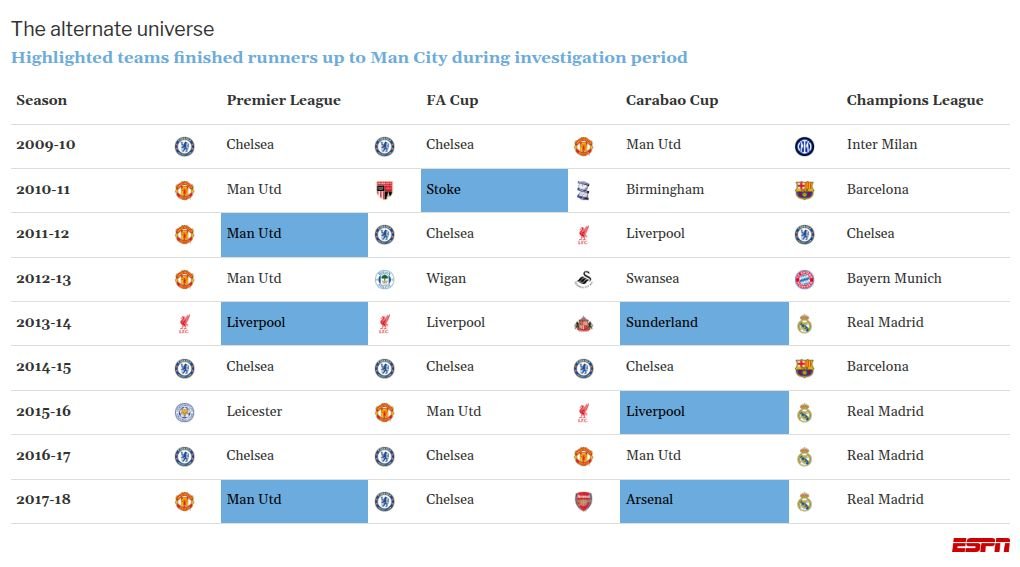
table visualization

Carney to raise foreign interference concerns with Xi as Canada prepares for China talks · Business Upturn


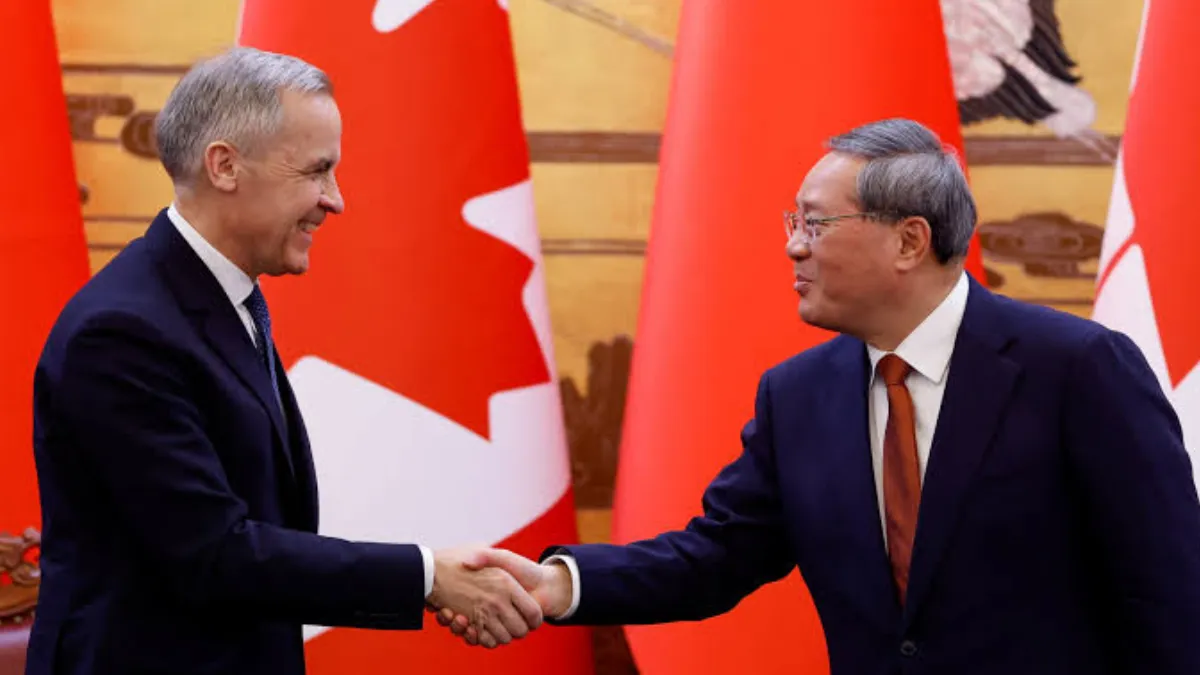
Canadian Prime Minister Mark Carney plans to tell Chinese President Xi Jinping that Canada considers foreign interference by China and other countries a serious concern, reinforcing Ottawa’s position on national sovereignty ahead of his upcoming visit to China. Carney is expected to raise the issue during his engagement with Xi as part of a broader diplomatic trip across Asia and Europe scheduled for November 11-19.

Carney intends to emphasise that Canada expects other nations to respect its domestic affairs and institutions. The message comes as Ottawa attempts to strengthen economic cooperation with Beijing while addressing security concerns, including alleged foreign interference in Canadian democratic processes. The precise details of the planned discussion have not yet been published in an official meeting readout.

The planned engagement follows Carney’s earlier discussions with Xi on foreign interference during their meeting on the sidelines of the Asia-Pacific Economic Cooperation (APEC) summit in South Korea in November 2025. After that meeting, Carney said he had raised the issue but suggested Beijing did not fully recognise the seriousness of Canadian concerns.

Canada has continued to identify foreign interference as a national security priority. On October 29, Carney’s government launched its first national security strategy in more than two decades, identifying foreign interference, espionage, cyberattacks and foreign information manipulation among the threats facing Canadian institutions and sovereignty.

The issue adds a sensitive dimension to efforts to improve Canada-China relations. In January 2026, Carney met Xi in Beijing, where the two leaders announced a new strategic partnership covering energy, trade, public safety and security, multilateral cooperation and cultural exchanges. Ottawa said the arrangement was intended to create greater stability and economic opportunities for both countries.

Carney’s upcoming visit will also include participation in the APEC Economic Leaders’ Meeting in Shenzhen. According to Canada’s Prime Minister’s Office, the trip is intended to expand international partnerships, attract investment and create new export opportunities. The government has described China as an important market for Canadian businesses, particularly in trade and energy.

The diplomatic challenge for Ottawa is to pursue commercial opportunities without compromising its security priorities. Canada wants stronger access to international markets, but it also faces pressure to protect political institutions, sensitive infrastructure and public decision-making from external influence.

Carney’s discussions with Xi are expected to cover the broader bilateral relationship, including trade, investment and security. Whether the leaders make further progress on foreign interference concerns will be an important measure of how far their strategic partnership can develop.


Source link

Amid Frosty Relations With India, a Reset in Bangladesh-Pakistan Ties


Although the distance between Dhaka and New Delhi has increased, Bangladesh has been resetting its ties with Pakistan.

In the post-Sheikh Hasina days, Bangladesh has called for a recalibration of its foreign policy, which many Bangladeshis argue was “disproportionately India-centric”. The Tarique Rahman government has called for a “Bangladesh First” foreign policy, emphasising strategic autonomy, economic diplomacy, balanced global engagement, regional connectivity, and climate diplomacy. Rahman has not yet visited New Delhi despite an invitation from prime minister Narendra Modi. Bangladesh has also decided to review around 101 bilateral ties that Hasina’s government signed with India.

There are some notable reasons why the distance between India and Bangladesh is widening. First is the extradition of Hasina, who is staying in New Delhi, and her political statements from the Indian capital. In August 2026, Hasina appeared online at an event hosted by the Foreign Correspondents’ Club in New Delhi, where she announced her plans to return to Bangladesh in December 2026. The Bangladesh government was “outraged”  and in a statement added that the country will “never be a client State”, an apparent reference to what some Bangladeshi analysts see the country as during Hasina’s rule.

India maintained that the event was privately organised and that the government does not endorse what was said from the event’s platform. Second, water-related matters. The Ganga/Ganges Waters Treaty (GWT) is going to expire in December this year. Bangladesh is seeking a long-term pact with a guarantee clause, while the Janata Dal (United), an important ally of the Narendra Modi-led Indian government, opposes its renewal. Connecting India-Bangladesh ties with the GWT, in April, in an interview with Indian channel NDTV, Bangladesh’s foreign minister Khalilur Rahman said, “…the Ganges water-sharing agreement – based on fairness and climate resilience – will be the first test of fixing bilateral ties”.

The Teesta River water issue also remains to be addressed. After a change in the government in West Bengal, Bangladesh’s ruling party, the Bangladesh Nationalist Party (BNP), congratulated the Suvendu Adhikari government, expressing hope that the Teesta water issue will be resolved soon. Third, after Adhikari was elected as chief minister of West Bengal, he ordered district administrations to set up “holding centres” for suspected illegal foreigners and foreign prisoners awaiting repatriation, backing the “detect, delete and deport” policy.

The Tarique Rahman government has already talked about taking action if people are pushed inside Bangladesh. This issue adds to the confrontation between India and Bangladesh. Fourth, the increasing strength of Islamists in Bangladesh and Hindutva forces in the Indian states bordering Bangladesh create competitive communalism in the region, affecting ties between people from the two countries.

Bangladesh’s growing proximity to Pakistan

Although the distance between Dhaka and New Delhi has increased, Bangladesh has been resetting its ties with Pakistan. In January 2025, the Bangladesh Naval ship Samudra Joy participated in the multinational naval exercise Aman in Karachi. Bangladesh has previously participated in the 2007, 2009, and 2013 editions of the exercise Aman. Among all, the most important development in the bilateral visit was the landing of Pakistan’s deputy prime minister and foreign minister, Ishaq Dar, in Dhaka in August 2025.

During Dar’s visit, Pakistan and Bangladesh signed six agreements, memorandum of understandings (MoUs) and instruments. A new shipping route linking Karachi and Chattogram has opened, the two countries resumed direct flights , agreed to increase cooperation in trade and business and signed an MoU to strengthen cooperation to prevent illicit drug trafficking, narcotics abuse and related money laundering activities through intelligence sharing.

In May, a delegation of Bangladeshi bureaucrats attended an executive training programme at the Civil Services Academy in Lahore. Further, reports from Dhaka say that it could consider joining the Mecca Pact, a mutual defence pact between Saudi Arabia, Pakistan and Turkey.

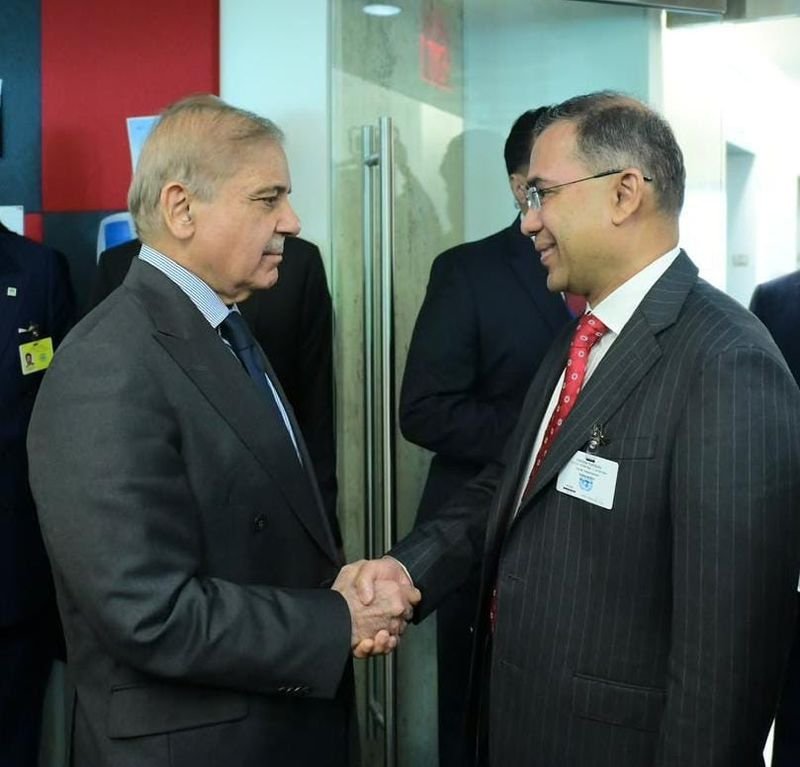
On the matter, state minister for foreign affairs Humaiun Kobir said, “ If there is a security arrangement among Islamic nations in the Middle East, it is not unusual for us to consider participating. It is being viewed positively.” In September, Tarique Rahman met Pakistani prime minister Shehbaz Sharif on the sidelines of the 81st United Nations General Assembly in New York.

Such developments in Bangladesh and Pakistan worry India. India’s former Chief of Defence Staff, General Anil Chauhan, noted that “there is a possible convergence of interest…between China, Pakistan and Bangladesh, [which] may have security implications for regional stability and security dynamics.”

Then, Indian media reports and some commentators feel that Pakistani security agencies may fan “anti-India” sentiment in Bangladesh. Further, Hasina’s son, Sajeeb Wazed, has alleged that “Bangladesh has become another Pakistan on India’s eastern front” and that there is a presence of foreign countries’ intelligence agencies in Bangladesh.

Despite such growing cooperation, some serious past issues remain unsettled in Pakistan-Bangladesh ties. First, Bangladesh demands US$4.52 billion in financial claims from Pakistan to cover its share of pre-1971 assets, including foreign aid, unpaid provident funds and savings instruments, and the share of foreign aid sent to then-East Pakistan following Cyclone Bhola in 1970. Second, Bangladesh seeks a formal apology for the atrocities committed on the Bengali-speaking population by the Pakistani Army and its collaborators in East Pakistan. Finally, Dhaka wants Islamabad to take back around 324,000 stranded Pakistanis living in camps in Bangladesh.

As Bangladesh and Pakistan reset their ties, India has also been taking measures to restore its derailed relations with Dhaka. On India’s efforts, former Indian high commissioner to Dhaka, Pinak Ranjan Chakravarty, said India has already made many “overtures”, to which Bangladesh has to respond. India may have made “overtures”; most of the contending issues between the two countries remain largely unaddressed. Unless a few issues, even symbolically, are addressed, there is less chance of repairing India-Bangladesh ties.

Amit Ranjan is a Research Fellow at ISAS, NUS, Singapore. 

This article went live on October twenty-first, two thousand twenty six, at twenty-four minutes past two in the afternoon.

The Wire is now on WhatsApp. Follow our channel for sharp analysis and opinions on the latest developments.


Source link

Norway’s Arctic Bioscience Q3 sales rise 7% as Americas revenue more than doubles — TradingView News


Source link

Milken Institute Unveils Details for Its Middle East and Africa Summit During Abu Dhabi Finance Week


This event signals the Institute’s commitment to the Middle East region, gathering prominent business leaders and global investors to explore investment opportunities in the Middle East and Africa

ABU DHABI, United Arab Emirates, November 10, 2026–(BUSINESS WIRE)–The Milken Institute, a nonpartisan think tank focused on health, finance, and philanthropy, announced today its eighth annual Middle East and Africa Summit on December 7–8, 2026, hosted at Abu Dhabi Global Market (ADGM) on Al Maryah Island. The Summit, underwritten by Mubadala Investment Company, will gather the global investment community alongside innovators, business leaders, and senior government officials during Abu Dhabi Finance Week.

“What has defined the Middle East and Africa in recent years is not simply change but also the economic resilience and business continuity with which the region has responded to it,” said Laura Deal Lacey, executive vice president of International at the Milken Institute. “At a time of profound global transformation, we are seeing economies across the region accelerate diversification, embrace innovation, and build new connections to global markets and capital. The Milken Institute is proud to return to Abu Dhabi and bring together our global investor community to look beyond the immediate moment and focus on what comes next: where capital can unlock growth, where new partnerships can be built, and where the Middle East and Africa can help shape the next chapter of the global economy.”

The public program will be posted on the Institute’s website and available for streaming. Under the theme Leading with Intent, the program will explore how countries across the region are not simply responding to a changing global order; they are shaping it with intent and purpose. Across the Middle East and Africa, ambition is being translated into sustainable infrastructure, capital into partnership, and long-term strategy into durable economic and social progress.

For sponsorships, partnership engagements, and program collaborations, please email middleeast@milkeninstitute.org. For media inquiries, please reach out to Rose Prinelle at rprinelle@milkeninstitute.org.

Middle East and Africa Summit at a Glance:

  • What: The Milken Institute Middle East and Africa Summit is a convening of global business innovators, investors, and public-sector leaders.

  • Date: December 7–8, 2026

  • Location: ADGM Authorities Building, ADGM Square, Al Maryah Island, Abu Dhabi, United Arab Emirates

  • Format: The program will feature fireside chats and panels focused on investment, talent, and growth opportunities in the Middle East and Africa.

  • Website: https://milkeninstitute.org/events/middle-east-and-africa-summit-2026

  • Hashtag: #MIGlobal

About the Milken Institute

The Milken Institute is a nonprofit, nonpartisan think tank focused on accelerating measurable progress on the path to a meaningful life. With a focus on financial, physical, mental, and environmental health, we bring together the best ideas and innovative resourcing to develop blueprints for tackling some of our most critical global issues through the lens of what’s pressing now and what’s coming next. For more information, visit www.milkeninstitute.org.

About Milken Institute International

Milken Institute International connects global markets through regional convenings and research to drive locally grounded, globally informed solutions. For more information, visit www.milkeninstitute.org/international.

View source version on businesswire.com: https://www.businesswire.com/news/home/20261109431178/en/

Contacts

MEDIA CONTACT:
Rose Prinelle
+44 781 496 8149
rprinelle@milkeninstitute.org


Source link

Nobody should be made to feel unsafe on our buses


Imagine you’re on the bus home when another passenger starts behaving aggressively or making unwanted, explicit comments. You want to report it discreetly. But who do you contact? The bus company? The police? The council? Is there a number to text or an app to download?

And why should someone already feeling worried have to figure that out?

Around 11 million bus journeys are made every day. Buses connect people to work, school, shops, friends and family, giving us the independence to go where we want, when we want.

The overwhelming majority of journeys are safe. But when harassment, intimidation or anti-social behaviour does occur, passengers deserve to know that help is at hand.

That’s why we were delighted to join the Confederation of Passenger Transport (CPT) recently to launch its new industry charter tackling anti-social behaviour and violence against women and girls.

It’s an important step forward. And we believe there’s an opportunity to go further.

Keeping buses safe and welcoming: Alex Mayer MP

Every day, millions of people hop aboard a bus or coach surrounded by well-behaved passengers. And that’s exactly how it should be. Transport Focus research found that eight in 10 passengers feel safe on board.

But occasionally a handful of troublemakers can spoil things for everyone else. Bus operators raise this with me, particularly the importance of supporting drivers and frontline staff when incidents occur.

That’s why I welcome CPT’s practical, common-sense charter launched last week in parliament.

Better training for drivers. Making good use of CCTV to help police identify offenders. Sharing intelligence and getting operators, councils and police working together to nip problems in the bud. It’s good stuff, much of which bus and coach operators can get on with delivering.

There are already good ideas we can build on. For example, in the West Midlands, passengers can discreetly report anti-social behaviour by text.

Serendipitously, the charter came in the week that the prime minister got tough on so-called “headphone dodgers”. That’s a type of anti-social behaviour that many constituents raise with me. So that’s welcome.

But while a few areas have dedicated transport safety officers, very many do not. We need to make sure these new powers can work on a bus in a market town, not just in our biggest cities.

Above all, I see the charter as about building confidence. So more people hop aboard. Most journeys are already safe, but knowing there’s an easy way to report problems and that action will follow will give passengers that extra reassurance.

Women should not have to organise their lives around fear: Elsie Blundell MP

For far too many women and girls, being constantly “on guard” has become an almost routine part of travelling.

Choosing where to sit. Keeping a phone close at hand. Thinking twice about travelling alone after dark. These are calculations no woman should make simply to get from A to B.

Nearly one in three women experienced sexual harassment on public transport in the previous 12 months.

Among women aged 18 to 34, that rose to a shocking 54%.

The government has rightly made tackling violence against women and girls a national priority. That ambition must extend to the everyday experiences of women travelling by bus. To that end, I welcome the charter’s clear commitments to promote an environment where unacceptable behaviour is challenged, victims feel supported, and better data is collected to understand the scale of the problem.

But we need to go further. At present, reporting an incident can mean navigating a confusing mishmash of different systems, with support varying considerably depending on where in the country you live.

That’s why, alongside the charter, we support calls to create a simple, national digital reporting system for all forms of harassment, crime and anti-social behaviour on public transport, something we know ministers are looking into.

The principle is simple. Wherever you are, there should be one clear, recognisable way to report a problem and seek help. A live chat function could connect passengers directly with local transport safety teams or police, offering advice and reassurance while they’re still travelling.

Emergencies would, of course, still mean calling 999. This isn’t about creating a great new bureaucracy, but joining up existing systems and making them work better for passengers.

Greater Manchester, in my part of the world, is already showing what’s possible. Its TravelSafe Partnership brings police and operators together, with a new 24/7 LiveChat service launched last October by the then mayor Andy Burnham, allowing passengers and staff to discreetly report incidents in real time.

It’s precisely the kind of practical solution we should be looking to roll out across the country.

Next stop?

The charter is a welcome commitment from industry. Now we need to go even further – introducing one recognisable national digital reporting system on public transport.

Eleven million people catch the bus every day. Every single one deserves to feel safe.


Source link

World Leaders to Address COP31 as Turkey Pushes for New Climate Deal


By Tuvan Gumrukcu and Valerie Volcovici

ANTALYA, Turkey, Nov 11 (Reuters) – World leaders will ⁠set ⁠out their climate priorities in speeches at COP31 ⁠in Turkey on Wednesday, as negotiators seek agreement on a plan to increase the share of ​electricity in global energy use and revive stalled efforts to move away from fossil fuels.

Delegates from nearly 200 countries are meeting in the Mediterranean resort city ‌of Antalya as global greenhouse gas emissions ‌show little sign of falling and wars, inflation and other crises compete for political attention. 

A UN report last month found the world on course ⁠to break through ⁠the 1.5 degrees Celsius (2.7 degrees Fahrenheit) warming limit that countries had agreed to pursue under ​the Paris Agreement to prevent the worst of climate change.

Former French Prime Minister Laurent Fabius, who presided over the 2015 Paris climate conference and leads an advisory council of former COP presidents, said the speeches could give political impetus to the negotiations.

“It is an opportunity for leaders to make some announcements, and more ​this time, to explain how they will implement, because the key word in Antalya is implementation,” he told Reuters.    

Scores of world leaders – ⁠including ⁠presidents and heads of government – will ⁠begin their rapid-fire speeches ​on Wednesday afternoon and continue through the day on Thursday, according to the COP31 schedule.

Wednesday’s speakers are expected to include Brazilian ​President Luiz Inacio Lula da Silva, who ⁠was re-elected at the end of October, and whose country hosted last year’s climate talks.

European Commission President Ursula von der Leyen, Chinese Vice President Han Zheng, and Marshall Islands President Hilda Heine will also speak on Wednesday.

The United States, the world’s largest historical emitter, has skipped the talks for the second year in a row after President Donald Trump – who has called global warming a hoax – withdrew the US from climate cooperation following ⁠his return to office in 2025.

COP31 host Turkey has so far been pushing the government representatives attending ⁠the conference to put a goal on electrification at the centre of a final deal, even as critics say it may do little to curb warming.

The proposal targets a rise in electricity’s share of total global energy consumption to 35% by 2035, up from a little over a fifth now, theoretically reducing greenhouse gas emissions from cars, factories, and buildings.

But the proposal does not include language requiring new power to be generated by clean energy sources, and world governments have yet to clarify a broader plan to transition away from fossil fuels like coal, oil and gas.

“It is long past time to stop treating the transition away from fossil fuels as taboo or intractable,” United Nations Secretary-General Antonio Guterres told the conference on Tuesday, urging countries ⁠to produce clear timelines for the transition.

The previous COP in Brazil was unable to reach consensus on the need for a global plan to reduce dependency on fossil fuels.

The Brazilian COP presidency has in recent weeks, however, published a roadmap aimed at keeping that idea central to the climate negotiations. It asks countries to first plan and assess their energy systems by 2028, ​then work together to reduce fossil fuel supply from 2031.

(Reporting by Valerie Volcovici, Tuvan Gumrukcu, Ezgi Erkoyun, Simon ​Jessop, and William James; editing by Richard Valdmanis and Barbara Lewis)

Copyright 2026 Thomson Reuters.

The Month in Photos: Sept. 2026

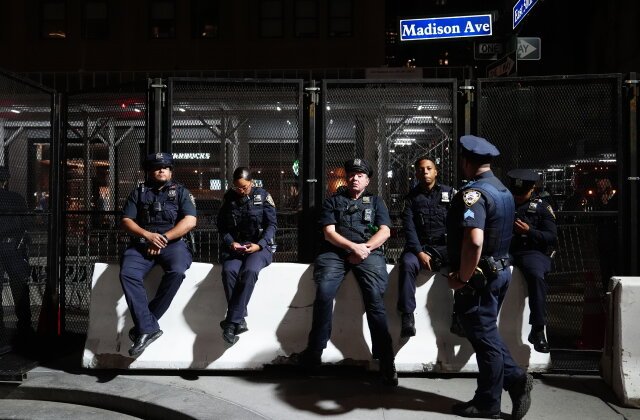
New York City police officers are on duty outside the Lotte Palace Hotel during a United Nations General Assembly leaders reception, late Tuesday, Sept. 22, 2026, in New York. (AP Photo/Julia Demaree Nikhinson)

Teachers Discuss How the Political Climate Has Affected Their Classrooms (Opinion)


Classrooms are obviously not insulated from what is going on outside school walls.

Last week, voters across the country rewrote the political map, giving Democrats control of both the U.S. Senate and House of Representatives, as well as making major inroads into governorships and state legislatures. As the new class of lawmakers prepares to take office in January, it’s worth taking stock of the political status quo they will be inheriting.

Today’s post features commentaries from teachers sharing how this political status quo has been affecting their classes.

We can only hope that change begins to impact the day-to-day lives of students and their families and create more positive climates inside and outside the school’s four walls.

‘Fire and ICE’

Manuel Rustin is a high school history teacher in Pasadena, Calif., enjoying his 23rd year in the classroom:

The present political climate is trying its best to disassemble the connectedness of America’s classrooms, one of the few remaining places where people still come together and share a physical space designed for both personal and interpersonal growth and well-being.

My particular classroom has been affected by the one-two punch of authoritarian immigration policy and the looming climate crisis, each having tested the resolve of our school community. Toss in the attacks on the so-called “woke” curriculum that we engage with here in California public schools, and one might expect students to lose themselves within the toxic currents of our political climate. However, rest assured. My students are enduring and holding tight to their emerging understanding of the critical importance of community and connection.

One juxtaposition often tossed about in our city is fire and ICE. The 2025 Eaton fire in Los Angeles County that killed 19 people devastated our school and displaced several hundred students and dozens of faculty members from their homes.

Months later, masked federal agents descended on our region and began snatching valued members of our community, including the parent of one of my brightest students whose senior year suddenly became an unimaginable nightmare. Occasional lockdowns at schools in our district due to nearby ICE activity, multiple citywide student-led walkouts to protest immigration policy, and ongoing displacement from the fires have become a seemingly ordinary presence in our learning environment. In the midst of it all, students in my classroom appear to be more united in their beliefs and political frustrations than ever. In a way, the national division and political calamities have seemed to unify them.

Whereas students in my American government classes used to express a moderately left-leaning but notably diverse set of politics, during these past two years, I have witnessed a profound movement and coming-together of students toward what many would label progressive or leftist politics. My students, who have endured the trauma of seeing their homes on fire, are steadfast in their belief in safe, stable, and affordable housing for all.

My students, whose very family members have been swept away by masked agents, are steadfast in their resolve to abolish ICE and shut down the detention centers. My students, whose households are increasingly strained by the high cost of living, are incensed that corporations and a select few individuals are reaching record levels of wealth. I can feel the collective frustration among them, the collective sense of being in this fight for their future together.

As recently as the 2024 presidential election season, I had plenty of students who seemed to like what Donald Trump was offering or who enjoyed being contrarians and joking with their peers about his podcast appearances and debate clips. Today, there are no jokes. No contrarians. No piqued interest. No “whataboutisms.” So how is the present political climate affecting my classroom? It is galvanizing my students. I do hope the adults are paying attention, particularly the ones who claim that young people don’t care about anything besides TikTok and silly trends.

sohowrustin

Watch the ‘Thermostat’

Jacob Goodwin is a 6th grade teacher, the former New Hampshire history teacher of the year, and the author of Teach Like a Community Organizer:

The insurrection at the U.S. Capitol, two impeachments, and bruising battles over seats on the Supreme Court—we have all lived a lesson in civics these past 10 years. At the same time, the institutions and procedures of our republic feel like they are a great distance from our classrooms. That could be why as a teacher, part of my job has become helping students to metabolize “this moment in U.S. history.”

Reflecting on this, I find myself diverging from what we, as teachers, are so often asked to be, explainers. Simply put, there is too much to explain and too many terrible events in the news. The “teacher as explainer” quickly finds himself in the center of the learning, a space where a calm reassuring voice can soothe and comfort students, an important position in times of distress.

But constant distress cannot be calmed by one voice alone, and reassurances from well meaning adults wear thin despite our good intentions. That’s why I have opted to let classroom life take its course. As we work on projects, I listen for what students have to say about the work and the conversations that naturally bubble up. These small-group and one-on-one conversations often allow kids to talk about life on their own terms.

From these small-group and one-on-one conversations, we develop the habit of hearing each other, of knowing each other, and of building more trust./////////////You can’t have meaningful dialogue about the heavy topics or the hot issues all the time.

Instead, I’ve learned that you have to think of the classroom as having a thermostat. As the teacher, I try to have my hand on the thermostat to try to figure out when we need to “turn up the heat” and have a hard conversation or “turn down the heat” because the issues we’re having are becoming detrimental to the class community.

It’s easy to read about education and think that “good teachers” are constantly having tough conversations. That’s a myth that we need to dispel. That’s a recipe for exhaustion, it is self-defeating, and it isn’t practical. Every community has peaks and valleys when it comes to climate—and we, as teachers, have to have a hand on the thermostat to help the students to learn about themselves and one another. That’s how we all learn to coexist. Otherwise, the heat will cause us to burn out, and that’s no model for school health.

I didn’t learn this right away. Instead, at first, I thought I needed to have a formal lesson that addressed the hard topics of the day. Then events involving violence—both political violence and gun-related to schools—kept happening. Sandy Hook. Pulse. Charlottesville. Parkland. Tree of Life. Minneapolis. So many broken hearts and lives. I didn’t want to go numb to the pain—and I kept thinking of the students who would share the classroom together with me. I needed to build the conditions for their own agency, their own community that could, I hoped, one day help move us beyond this period of grief.

It’s difficult to imagine moving beyond grief when you’re in it. It is even more difficult when personal grief is magnified by mass anxiety. It’s that kind of mixture, along with the doom loop of social media that led me to read my students more and the news less. In looking to my students, it helped us all to escape the doom loop while honoring the sincere concerns of children—giving room for students to have developmentally appropriate conversations and to also not be weighed down by the burdens of the adult world.

Listening to our students through small groups and one-on-one conversations can surface real issues—the things that matter to our students. These issues can then be the driving force for larger conversations and student-driven learning. This is the core work of teaching like a community organizer, which to me, moves us from being reactive to “adult events” to being responsive to student needs and interests.

Teaching like a community organizer has been my response to the need for a responsive civic education. At its core is a trust in people: in students, teachers, parents, and community members. By listening to one another, cultivating long-term relationships, we can start to grow the capacity to take on what matters most to us—rather than what is imposed on us from outside (or above).

Yes, we should talk about the heavy topics. Yes, we should widen students’ points of view through learning about a wide variety of topics. And, yes, we can do both while placing student interests and the idea of community learning at the core of what we do as a classroom.

With a watchful eye on the classroom “thermostat” and an empathic ear to how students are relating to the world around them, we, the teachers, can make a difference building a durable civic ethic.

teachinglike

Thanks to Manuel and Jacob for contributing their thoughts.

Responses today answered this question:

How is the present political climate affecting your classroom and, if it is in a negative way, how are you trying to mitigate its effects?

Consider contributing a question to be answered in a future post. You can send one to me at lferlazzo@epe.org. When you send it in, let me know if I can use your real name if it’s selected or if you’d prefer remaining anonymous and have a pseudonym in mind.

You can also contact me on X at @Larryferlazzo or on Bluesky at @larryferlazzo.bsky.social

Just a reminder; you can subscribe and receive updates from this blog via email. And if you missed any of the highlights from the first 13 years of this blog, you can see a categorized list here.