








[Financial News] Cuts to generic drug prices are expected to trigger a restructuring of South Korea’s pharmaceutical industry. Although drug prices will fall, fixed costs such as production facilities, quality control and sales organizations will remain unchanged, potentially causing profitability to deteriorate sharply. Analysts expect pressure to mount for restructuring—including the sale of non-core products, production consolidation and mergers and acquisitions (M&A)—particularly among traditional pharmaceutical companies that sell many generic drugs in small volumes.
According to a report titled “Reforming the Drug Pricing System: Strategic Choices for Traditional Pharmaceutical Companies,” published by Samil PwC on the 18th, pharmaceutical companies’ profit structures are also expected to change as the basic pricing rate for generic drugs falls from 53.55% to 45%. Applying the same reference price would amount to a roughly 16% reduction in drug prices.
This is the first major adjustment to the drug pricing calculation system in about 14 years, since 2012. Following the implementation of changes for newly listed drugs last August, existing listed medicines are also scheduled for phased price adjustments starting next April.
The report noted that “drug price cuts could do more than reduce revenue; they could erode profits to an even greater extent.” Costs for drug manufacturing facilities, quality control, maintaining product approvals and sales organizations are difficult to reduce in the short term. In a structure where fixed costs remain even as revenue declines, the downside of so-called “operating leverage”—a faster drop in operating profit—could emerge.
The burden is expected to be greatest for pharmaceutical companies that have built sales by expanding their range of generic products. That is because even products with low sales incur costs for production, quality control and maintaining approvals. The report warned that continuing to carry low-profitability products could eat into cash available for research and development (R&D) or new businesses.
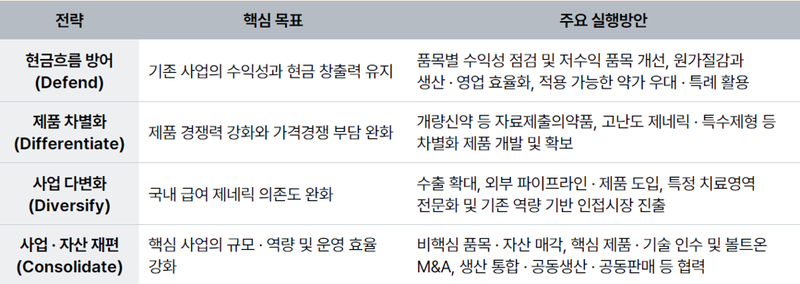
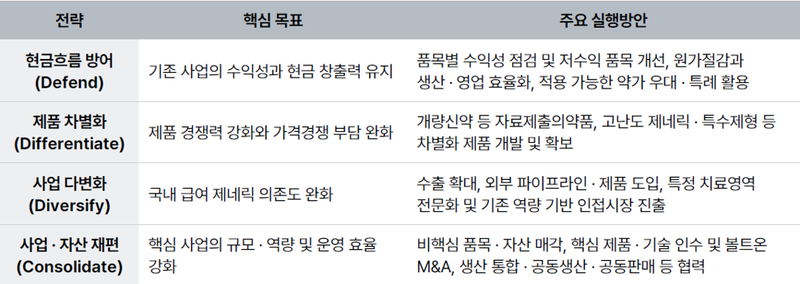
Accordingly, the basis of competition in the pharmaceutical industry is expected to shift from top-line growth to profitability and cash generation by product. Samil PwC recommended analyzing not only each product’s production, quality and sales costs, but also working capital tied up in inventory and accounts receivable, and classifying products into those to retain, improve, withdraw or transfer to an outside party.
Changes are also expected in the pharmaceutical industry’s M&A market. In addition to acquisitions of entire companies, business-unit transactions may expand, including acquisitions of product portfolios in specific therapeutic areas, transfers of individual products, and joint production or sales. Companies can raise funds by selling products with declining profitability and achieve economies of scale by acquiring competitive product portfolios.
Seo Yong-beom, Samil PwC’s pharmaceutical and biotech industry leader (partner), said, “This reform of the drug pricing system will give generic-focused pharmaceutical companies an opportunity to reassess the economics of each product and their approach to capital allocation. It is important to manage cash generation from existing businesses while investing in differentiated products and production and supply capabilities that align with a company’s strengths, and to secure the capabilities it needs through product acquisitions, M&A or partnerships.”[email protected] Kim Hyun-jung Reporter