






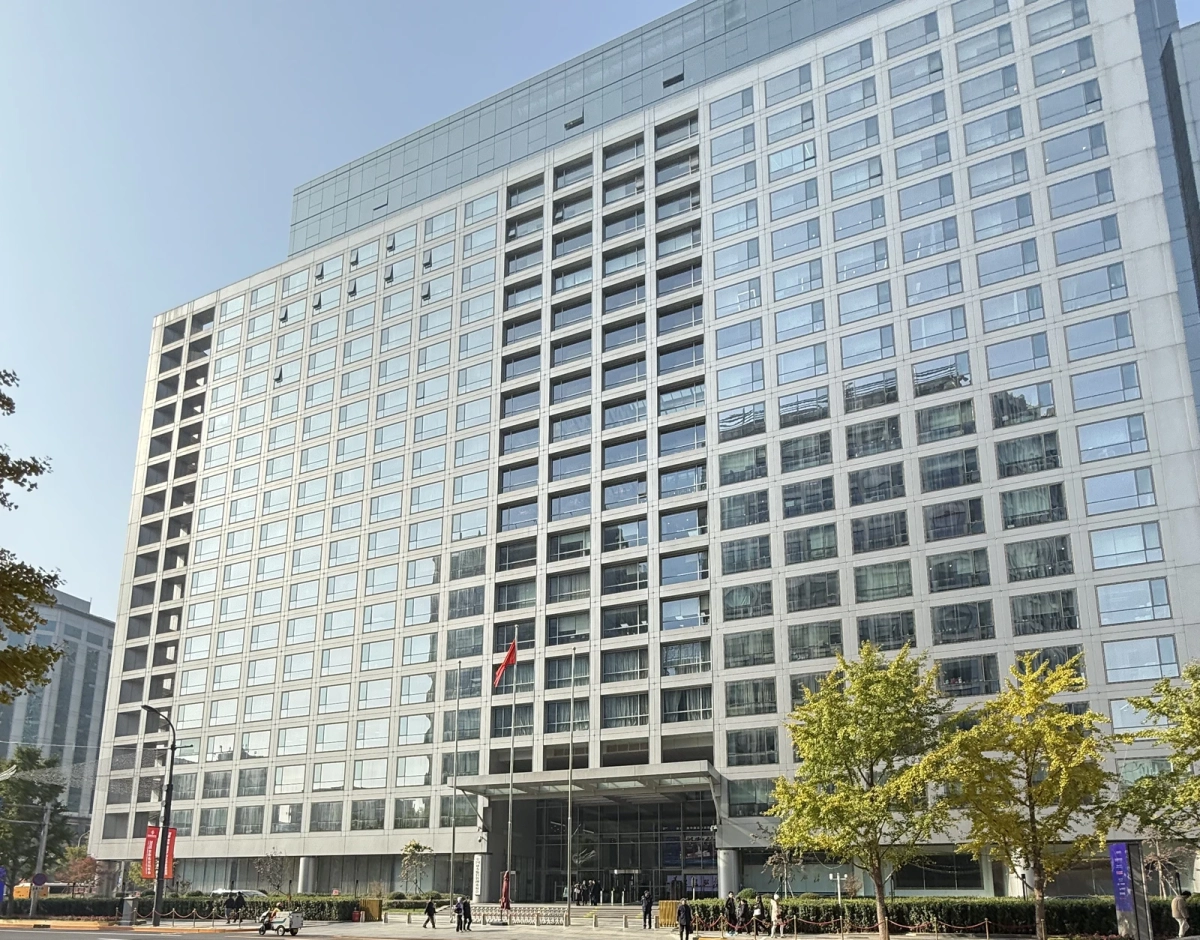
The 23rd meeting of the International Advisory Council (IAC) of the China Securities Regulatory Commission (CSRC) was held in Shanghai on November 13. According to a report by a media outlet under Xinhua News Agency, the one-day meeting was attended by 14 members including IAC Chairman Howard Davies and Vice Chair Laura Cha, together with CSRC Chairman Wu Qing and Vice Chairman Liu Haoling. Representatives from the People’s Bank of China, the National Financial Regulatory Administration and the Shanghai municipal government, as well as the heads of relevant CSRC departments, local offices and affiliated institutions, also attended.
The theme of the meeting was “China’s Capital Market Toward 2030 — Building an Inclusive Ecosystem, Enhancing Market Resilience and Improving Global Governance.” Participants held extensive and in-depth discussions on how to build a more inclusive and dynamic capital market ecosystem, effectively respond to various external shocks, enhance market resilience, and implement global governance initiatives and deepen financial governance reform and cooperation.
IAC members spoke highly of the Chinese government’s determination and strategic resolve in continuously deepening capital market reform and opening-up and promoting stable and healthy market development, and affirmed the top-level design of the 15th Five-Year Plan for the steady and long-term development of the capital market. Members generally agreed that since last year’s IAC meeting, amid a highly uncertain external environment and various shocks, the CSRC has advanced risk prevention, stronger supervision and high-quality development in an integrated manner, achieving positive results in maintaining stable market operations, deepening comprehensive investment and financing reform, serving the development of new quality productive forces and promoting high-level opening-up.
On policy recommendations, members agreed that during the 15th Five-Year Plan period, China’s capital market should uphold a development direction that is safe, standardized, transparent, open, dynamic and resilient, provide stronger services and support for China’s high-quality economic and social development, and contribute more Chinese solutions and Chinese wisdom to improving global financial governance.
The specific advisory opinions put forward by members centered on several key areas, summarized as follows:
| Recommendation Area | Specific Content |
|---|---|
| Funding structure | Expand medium- and long-term funding sources, channels and entry methods to enhance the capital market’s intrinsic stability |
| Private fund ecosystem | Smooth the private fund cycle and promote efficient coordination between private investment and the public market |
| Technology supervision | Deeply understand and accurately grasp the opportunities and challenges brought by artificial intelligence development, and accelerate improvements in regulatory intelligence and financial infrastructure security |
| Opening-up | Deepen high-level, institutional opening-up and jointly build a pragmatic and effective global financial governance framework |
Note: The table content is compiled based on meeting information released by the CSRC.
The IAC is an expert advisory body of the CSRC. Since its establishment in June 2004, it has continued to play a positive role in helping the CSRC draw on international best practices and useful experience and in promoting capital market reform, opening-up and stable, healthy development. The choice of Shanghai as the meeting venue also echoes the city’s pivotal role as an international financial center in the capital market’s opening-up.
From a market-impact perspective, while the IAC’s recommendations as a CSRC advisory platform are not administratively binding, they have long been regarded as one of the bellwethers for observing the regulatory authorities’ policy orientation. Among the signals released at this meeting, the two phrases “expanding medium- and long-term funding sources” and “smoothing the private fund cycle” deserve particular attention. The former points to the prospect of further broadening entry channels for long-term capital such as insurance funds, social security funds and enterprise annuities, while the latter concerns the coordination between primary-market exit paths and secondary-market absorption capacity, constituting a marginal positive for fundraising and turnover expectations in the private equity and venture capital industry.
On the other hand, the meeting explicitly placed artificial intelligence on the agenda of regulatory capacity building, proposing improvements in regulatory intelligence and financial infrastructure security. This means that against the backdrop of rapidly penetrating applications such as algorithmic trading and robo-advisory, investment in regulatory technology and data security standards may be upgraded in tandem, and related fintech service providers and infrastructure suppliers will face new compliance requirements and business opportunities.
On the opening-up front, members reiterated the deepening of “institutional opening-up,” a formulation that differs from mere channel liberalization and places greater emphasis on international alignment of rules, standards and supervision. Combined with the phrase “jointly building a pragmatic and effective global financial governance framework,” it can be expected that the CSRC will continue to advance pragmatic arrangements in areas such as cross-border regulatory cooperation and mutual recognition of auditing and information disclosure.
Overall, the meeting did not release new specific policy measures, but it provided a reference framework from an international perspective for the capital market’s reform roadmap during the 15th Five-Year Plan period. Going forward, attention should be paid to how the CSRC translates the above advisory opinions into operable regulatory arrangements in its annual work conference and related special documents.