Seminole Science Charter School wrapped up Hispanic Heritage Month in style. The campus recently invited families to taste classic dishes from different countries, including Venezuela and Puerto Rico. Food was cooked by parents and businesses Parva Colombian Bakery, Tortilleria La Mexicana and Cocina Maya Mexican Grill & Mezcaleria. Attendees also enjoyed dance performances in several styles – such as plena and merengue – and a re-creation of the Disney movie “Coco.” The event continued the school’s tradition of honoring the rich diversity of its students and staff.
NYC Ferry’s horn will soon become a new school bell, turning ferries into floating classrooms.
A new partnership between the Billion Oyster Project and NYC Ferry is using New York Harbor as a hands-on learning environment for students across the city. Starting this school year, the harbor will give thousands of students an opportunity to explore marine science up close and personal.
The 90-minute educational trips will take place during off-peak ferry travel hours on school days throughout the academic year. The goal is to bring approximately 10,000 students aboard each year to learn about marine ecology, oyster restoration and climate resilience.
“There’s a lot of people that are relying on NYC Ferry every single day, but during those off-peak hours, we have a little bit more capacity and this is a great opportunity to use it,” said James Wong, executive director of NYC Ferry.
For some students, that exposure could help shape their future.
“Thousands of students will have the opportunity to see New York in a whole new way,” said Pete Malinowski, president and CEO of the Billion Oyster Project.
Sara Soto, a senior at Urban Assembly New York Harbor School, said she hopes to become a marine biologist.
“It’s definitely like an experience that opens like your eye, and like your imagination, and how you perceive the city,” Soto said.
For fellow senior Jocsan Rojas, an early introduction to the Billion Oyster Project sparked an interest. The Sunset Park, Brooklyn, native is now studying vessel operations.
“It’s important to let people know about the opportunities they have. I know a lot of people from Sunset and my background don’t know and like they’re shocked when they hear you take a boat to school every day,” Rojas said.
Michael Hojnacki, principal of New York Harbor School, said introducing students to careers on the water can open doors to careers they may not have previously considered.
“Maritime careers are a big industry. It’s booming right now, from being ship captains, deck hands to building ships, building submarines, welding underwater,” Hojnacki said.
Brooklyn City Council Member Lincoln Restler said the Harbor School’s model proved the interest is there.
“This is really going to capture the imagination of young people all across the city,” he said.
Educators interested in bringing their students aboard can contact the Billion Oyster Project, which is leading the educational programming.
Have a story idea or tip in Brooklyn? Email Hannah by CLICKING HERE.
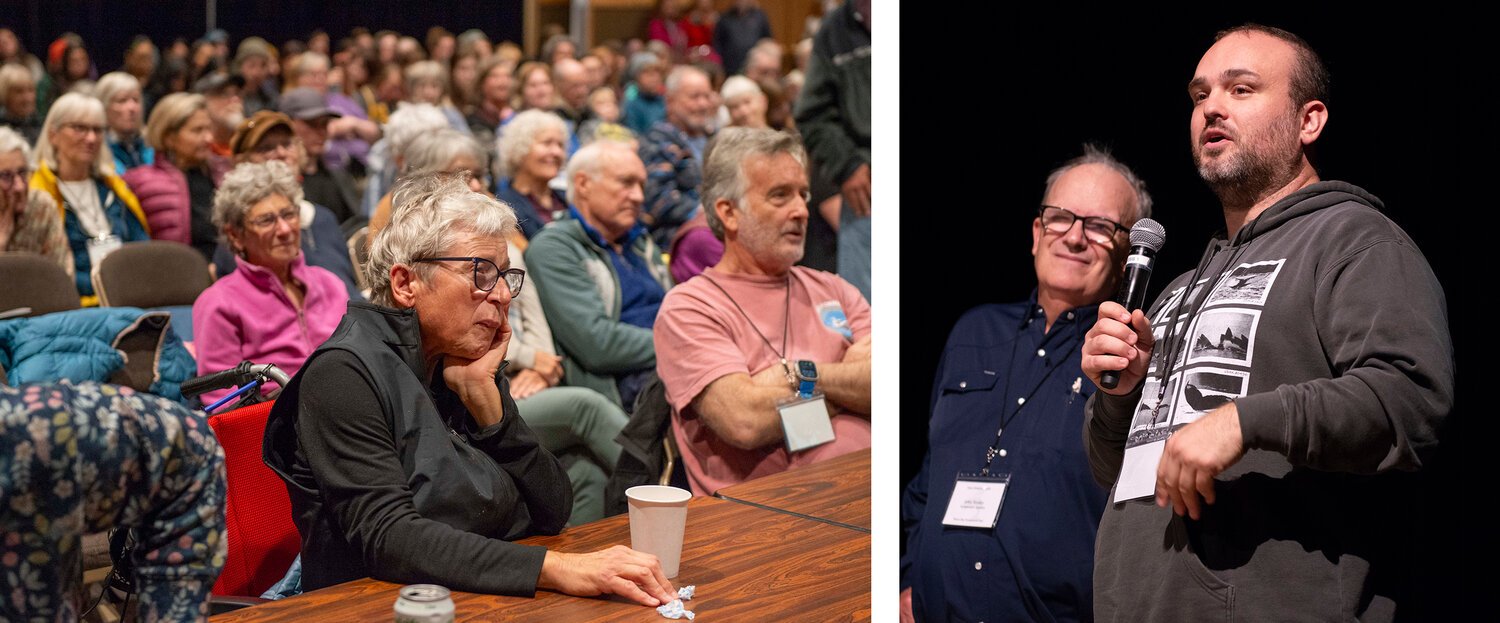
CONTRIBUTION TO SCIENCE – At left marine biologist and former Sitkan Jan Straley listens to her son, Finn, pictured at right with John Straley, speak on stage at Harrigan Centennial Hall Saturday during the Whalefest symposium. Her husband, John,…
British writer Michael John Harrison has won the 2026 Booker Prize for his novel The End of Everything (“The End of Everything”). At 81, he became the oldest winner in the award’s history and the first laureate to come from the science fiction genre, UNN writes.
Details
The novel tells the story of the near future, in which humanity has survived a mysterious catastrophe that led to the collapse of the social order. The author deliberately does not explain all the circumstances of the catastrophe, so that readers experience the same bewilderment as the characters in the work.
The previous age record belonged to Canadian writer Margaret Atwood, who received the Booker Prize in 2019 at the age of 79.
What is known about the writer
Michael John Harrison, also known as M. John Harrison, began his literary career in the 1960s with publications in the science fiction magazine New Worlds, where he later worked as a literary editor.
Over the course of his career, the writer has published 13 novels. Among his best-known works are the Viriconium series (“Viriconium”), as well as the novels Light (“Light”) and Nova Swing (“Nova Swing”).
Although Harrison dislikes genre classifications of his work, he is regarded as one of the most influential science fiction authors.
He is a truly original thinker, a writer who has shaped his genre and takes ideas seriously
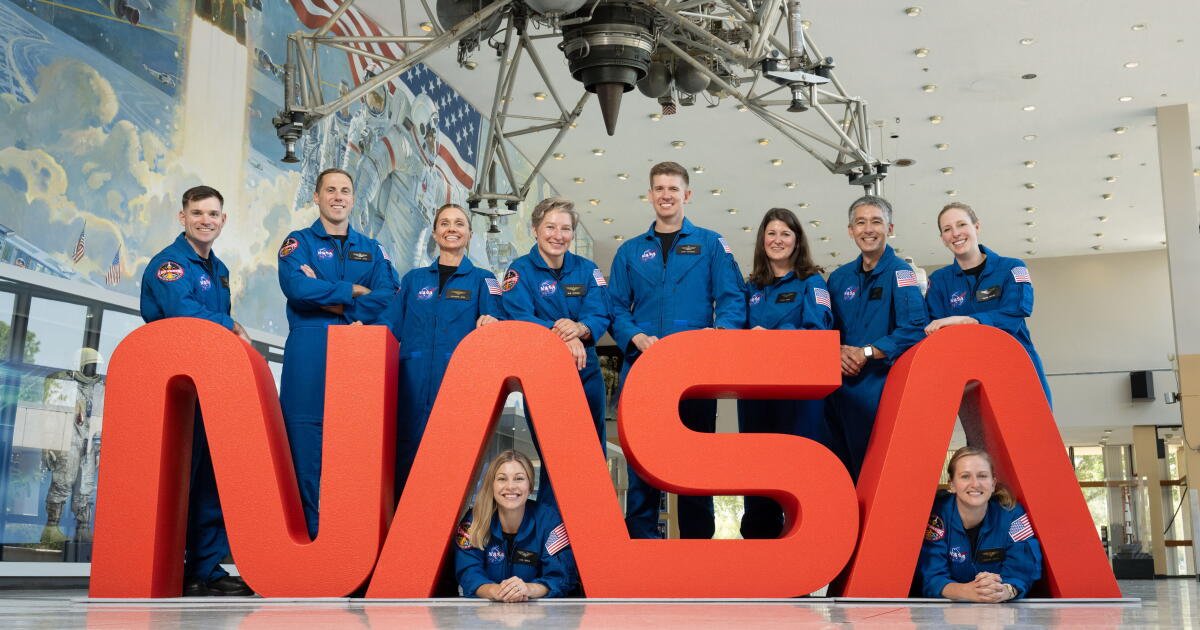
CAPE CANAVERAL, Fla. — Want to fly to the moon and help build a permanent lunar base? NASA is accepting applications for a new astronaut class that will help grow the Artemis program.
Officials announced the news during a Kennedy Space Center air show promoting lunar exploration as well as advances in aviation and technology.
NASA’s last call for new astronauts was two years ago. More than 8,000 applied, with 10 making the final cut in September 2025.
With only 32 active astronauts, the space agency needs more recruits as it looks to expand humanity’s presence beyond low-Earth orbit as quickly as possible. April’s lunar flyaround by the Artemis II crew kicked off the lunar campaign.
“We have far more work than we have astronauts,” Artemis III commander Randy Bresnik told the Associated Press on Saturday.
Aspiring astronauts have between now and Dec. 3 to submit their applications. NASA expects to make its final selection by late next year, with the new candidates beginning their training by early 2028 — the same year that NASA intends to return astronauts to the lunar surface after an absence of more than half a century.
By then “we’re going to have people on the moon — so don’t delay,” Bresnik urged potential candidates.
Bresnik and his three crewmates will blast into orbit next summer to practice docking their capsule with a pair of lunar landers, one built by Elon Musk’s SpaceX and the other by Jeff Bezos’ Blue Origin. Their mission will stick close to Earth — no lunar flyby — and serve as a dress rehearsal for the following year’s Artemis IV mission that will attempt to land two astronauts near the lunar south pole.
The moon base will materialize as more rovers, robots, structures and power grids are launched.
Patience is essential for becoming an astronaut, noted Artemis III’s Frank Rubio, whose 371 consecutive days in space set a U.S. endurance record. Candidates also must be U.S. citizens with college degrees and professional work experience.
The two years of mandatory training can be grueling, and it could take another several years for the new recruits to rocket into space.
“It’s important for them to realize most of that work is not going to the moon, right?” Rubio told the AP. “That will be about 1% of your experience. What you’re doing is contributing to the mission of going to the moon.”
This will be NASA’s 25th astronaut class since the original Mercury Seven in 1959.
The old adage “monkey see, monkey do,” appears to have a bit of truth to it. Chimpanzees (Pan troglodytes) likely watch adults making different vocalization to learn how and when to use those sounds themselves, particularly when they purse their lips to blow “raspberries.” The findings detailed in a study published today in the journal Proceedings of the National Academy of Sciences (PNAS) show that the primates’ sounds are not instinctual and set in stone, as previously believed.
Humans learn what words mean from the world around us, and different communities will use different sounds for the same thing. For example, English speakers mimic dogs with “woof,” while French speakers say “ouaf.” When it comes to our primate relatives, biologists generally used to believe that they didn’t learn sounds from one another, and that instead biology dictated their sounds. However, that’s changing with some new research into two groups of Chimpanzees in a couple of west African countries.
To probe how chimpanzees learn to use sounds, the study’s team focused on the raspberry. Chimpanzees make this unvoiced sound that’s similar to how humans push their lips together to blow raspberries. The team looked at how 91 chimpanzees, from birth to 55 years old, used the raspberry call. They studied a group of wild chimpanzees from four communities in Taï National Park, Ivory Coast, and a group of young, orphaned, and peer-raised chimpanzees at Tacugama Chimpanzee Sanctuary in Sierra Leone.
The team found that the wild Ivory Coast chimpanzees almost exclusively used the raspberry while grooming others. However, the juveniles at the Tacugama Chimpanzee Sanctuary used it across a much wider range of social situations.
If blowing a raspberry is only an instinctive call, the groups should be using it in similar ways no matter where they were raised. According to the team, these differences suggest that chimpanzees learn from adults how to make a call, as well as when and why to use it.
Valet et al. Signal convention in natural chimpanzee communication Supplementary video
“In everyday communication, we use the words that we do only because our peers do too. It’s communal practice that fixes their meaning, rather than features of the words themselves,” Richard Moore, a study co-author and mind, language, and psychology philosopher at the University of Warwick, said in a statement.
“The discovery that this is true not just for natural languages but also some chimpanzee calls means there’s more continuity between chimpanzees’ vocal learning and our own than we previously suspected.”
The team also say that when an adult chimpanzee was introduced to one of the groups living in the Tacugama sanctuary, the young chimps gradually began to use the raspberry more consistently and began to resemble the adult’s noises. This suggests that adults serve as role models, helping a community settle in on shared communication patterns.
The researchers say this is the first time that this kind of learned and agreed-upon sound use has been shown in chimpanzee calls. The link between the raspberry sound and its use appears to be shared from one chimpanzee to another, and is not built in at birth. While chimpanzees struggle to learn entirely new call sounds, the study suggests that they can learn the meaning behind sounds that they already know how to make but didn’t use in the same way as other chimps.
“Even aspects of chimpanzee vocal communication that seemed fixed and unlearned may be shaped by learning, suggesting that there is still much to discover about their vocal repertoire,”
added Antoine Valet, a study co-author and cognitive scientist at the Institute of Cognitive Sciences (CNRS) in France.
Additionally, the team has some theories on why different chimpanzee populations use the raspberry in similar ways if it is a learned sound.
“One possibility is that, whilst grooming, as chimpanzees use their lips to extract parasites from another’s fur, it may be easier to generate a vocalisation that uses similar lip movements, a call that is known to prolong grooming bouts,” explained study co-author and CNRS behavioral ecologist Catherine Crockford. “Communities may have found this useful independently, but that wouldn’t change the fact that the call is a convention. We need more research to test it.”
The events below, listed in chronological order, will take place on Tuesday, 10 November.
All times are in CET (Geneva time), with corresponding times in other time zones provided where relevant. Most events will be livestreamed unless otherwise indicated.
Join us by registering for an event or watching the available livestreams!
Consortium of Universities for Global Health webinar on the launch of Together for Science and Health – Asia focus
Time: 2:30-3:30 AM CET Corresponding times: New Delhi 7:00 AM | Bangkok and Jakarta 8:30 AM | Singapore, Manila and Beijing 9:30 AM | Tokyo and Seoul 10:30 AM | Sydney 12:30 PM | Auckland 2:30 PM Organizer: Consortium of Universities for Global Health
Short description: CUGH is hosting a one-hour regional webinar to bring together science and health leaders from Asia on the occasion of the launch of Together for Science and Health. The webinar will reinforce the central importance of communication in building trust in science, and showcase promising efforts that ensure scientific progress is understood, reaches the right people, and inspires change.
South-East Asia regional science dialogue webinar: Together for Science and Health
Time: 9:00-10:20 AM CET | 1:30-2:50 PM IST Organizer: WHO South-East Asia Regional Office
Short description: Through compelling examples of scientific discoveries that have transformed public health, the dialogue will demonstrate the value of evidence and research, showcase how evidence informs WHO recommendations and national policies, and explore emerging opportunities to strengthen evidence generation and its translation into health impact.
Youth Futures Lab: Imagine 2035, together
Time: 9:30 AM-12:00 PM CET Location: Learning Planet Institute, Paris, and online Organizers: WHO, Learning Planet, the UNESCO Chair Global Health and Education, the WHO Youth Council and the WHO Fides network.
Short description: The Youth Futures Lab brings together 40 young people aged 18 to 30, from health and non-health backgrounds, for a two-and-a-half-hour foresight workshop. Working in groups coached by experts and members of WHO’s Fides network, participants will imagine a world in 2035 in which trust in health information and in science has been restored. Each group will design the cover of a magazine published that year, then defend it in a one-minute pitch before a jury. Please note that applications to participate in this event have closed. Please note that the livestream will be available only from 11:00 AM CET onwards.
Launch of the OECD-WHO Tool for the Anticipatory Governance of Emerging Technologies in Health
Time: 10:00-11:30 AM CET Location: OECD Headquarters, Paris and online Organizers: OECD, WHO
Short description: The WHO and the OECD have partnered to develop TArGET Health, a tool designed to strengthen stakeholders’ capacity to respond to emerging assessment needs, evaluate technologies as potential solutions to health challenges, support strategic decision-making, and inform policy and technology governance processes.
Launch of WHO Global movement Together for Health and Science in Chile
Time: 12:45-2 PM CET | 8:45-10 AM CLST Location: Salón de Honor, Pontificia Universidad Católica, Santiago, Chile Organizers: Chilean Collaborating Centres (Chilean League against Epilepsy ; Escuela de Salud Publica, Universidad de Chile ; Escuela de Obstetricia, Departamento de Promoción de la Salud de la Mujer y el Recién Nacido; Centre for Global Intercultural Health, I Facultad de Medicina Clínica Alemana, Universidad del Desarrollo; Department of Occupational Health , Institute of Public Health ; División de Planificación y Desarrollo Estratégico, Fondo Nacional de Salud ; Centro Interdisciplinario para el Desarrollo del Adulto Mayor – Gerópolis, Universidad de Valparaiso. Sponsorship: Facultad de Medicina Universidad Católica de Chile
Short description:The objective is to highlight the role of science in serving people and strengthening trust in scientific knowledge. The discussion will draw on experiences across health, public policy, refractory epilepsy, the workplace, and other areas of society. Please note that this event may not be livestreamed.
Strengthening evidence-informed and participatory policy-making for better health
Time: 1:30-5:30 PM CET Location: Campus Biotech and online (only the high-level segment from 1:30-2:30 PM and the plenary reporting back and closing from 4:45-5:15 PM will be available for online participation and livestream) Organizers: Geneva Health Forum, Geneva Digital Health Hub, WHO
Short description: Organized as part of the Geneva Health Forum, this event will bring together policy-makers, scientists, health professionals, civil society and international organizations to explore how scientific evidence and citizen participation can strengthen health policy and decision-making. Through a high-level panel, interactive workshops and an immersive anticipatory lab, participants will exchange experiences and identify practical approaches to bridging science, policy and society, fostering more inclusive, evidence-informed policies for better health outcomes. Registration: Geneva Launch (in-person registration)|Geneva Launch (online registration) Flyers:Programme | Immersive Anticipatory Lab | Agenda
Child Health in the Age of Digital Information
Time: 2:15-3:15 PM CET Location: Paris Peace Forum, Paris Organizers: Paris Peace Forum, WHO
Short description: Held as part of the Child Summit at the Paris Peace Forum, this high-level session examines how digital environments shape the way children, adolescents and their parents access, understand and use health information. Ministers, scientists, media and digital actors will address three priorities: ensuring that children and their families have access to reliable health information, mobilizing research and evidence to inform public policy, and strengthening the accountability of platforms and digital actors. This event will not be livestreamed. The recordings will be made available shortly after.
Africa regional webinar: A dialogue on Together for Science and Health
Time: 15:30–17:00 CET | 15:30–17:00 WAT Organizer: WHO Regional Office for Africa, in collaboration with WHO Headquarters
Short description A regional dialogue to introduce the Together for Science & Health movement to regional stakeholders and identify opportunities to strengthen the contribution of African research to health policy and practice. Approaches to translating scientific evidence into health policies and programmes and strengthening public engagement and trust in science will be explored. Registration/participation:https://who.zoom.us/j/99968269978 (Meeting ID: 999 6826 9978 Passcode: dG7x#MNa)
Consortium of Universities for Global Health webinar on the launch of Together for Science and Health – Africa and Middle East focus
Time: 4:00-5:00 PM CET Corresponding times: Accra andamp; Dakar 3:00 PM | Lagos 4:00 PM | Johannesburg and Cairo 5:00 PM | Nairobi | Riyadh and Doha 6:00 PM | Dubai 7:00 PM Organizer: Consortium of Universities for Global Health
Short description: CUGH is hosting a one-hour regional webinar to bring together science and health leaders from Africa and the Middle East on the occasion of the launch of Together for Science and Health. The webinar will reinforce the central importance of communication in building trust in science, and showcase promising efforts that ensure scientific progress is understood, reaches the right people, and inspires change.
Scaling Innovation for Global Health: Bridging Science, Technology, Policy and Access
Time: 5:30–7:30 AM CET / 10:00 AM–12:00 PM IST Organizer: Kalam Institute of Health Technology (KIHT), WHO Collaborating Centre for Health Innovation Format: Kalam Convention Centre, AMTZ, Andhra Pradesh, India, and online
Short description: This event will bring together researchers, innovators, health professionals, industry partners and policymakers to explore how science and health innovation can be translated into accessible and scalable solutions. The discussion will focus on strengthening connections across science, technology, policy and access to support evidence-informed innovation and advance better health for all.
Strengthening Trust in Public Health Worldwide
Time: 6:00-7:00 PM CET | 12:00-1:00 PM EST Location: Winslow Auditorium, Yale University Organizers: Yale School of Public Health, Jackson School of Global Affairs
Short description: A panel bringing together Yale faculty and students to discuss Together for Science and Health, the broader landscape of trust in public health, and ongoing work to better understand its drivers, consequences, and potential responses.
Quality Communication for Science and Health: Building Trust in the Digital Era
Time: 6:00-7:00 PM CET | 12:00-1:00 PM ET Event type: Webinar Organizers: CUNY Graduate School of Public Health and Health Policy, its Health Communication for Social Change program, and the Journal of Health Communication: International Perspectives
Short description: An online session exploring how to communicate quality health information effectively, including what people around the world want to know, whom they trust, and the opportunities and challenges of communicating science in the digital era. Please note that this event will not be livestreamed.
Pre-launch event: PAHO for Science and Health: Clinical trial accelerator milestones
Day: Friday 6 November Time: 5:00-5:00 PM CET | 10:00-11:00 AM EST Organizer: Pan American Health Organization
Short description: This virtual seminar will highlight PAHO’s work over the past three years to improve the efficiency and impact of clinical trials. It will also feature the launch of PAHO’s Regulation for Research in the Americas (REGIA) platform. English – Spanish translation will be available.
Please note that this event will not be livestreamed.
Scientists are pushing to undo a Trump administration plan to shut down the National Science Foundation’s social and behavioral sciences division, which funds two-thirds of such research nationwide with nearly $250 million in grants.
The lawsuit filed Monday in the US District Court for the District of Massachusetts said the move to close down the NSF’s Directorate for Social, Behavioral and Economic Sciences will devastate the field, which has led to innovations and research that’s helped address societal issues including opioids and Covid-19.
“Without that funding, hundreds of promising research projects directed to the pressing problems of our time — …
Australia’s broad-headed snake (Hoplocephalus bungaroides) is as unique as it is threatened. However, ecologists at the University of Technology Sydney (UTS) have good news about this reptile. According to researchers, four of six captive-bred juveniles recently released into the Australian bush have survived their initial, most dangerous months outdoors. The team’s first-of-its-kind program may provide a promising path forward for the species—and a set of bespoke, artificial rocks may be the key.
“Reintroducing any threatened species is challenging, especially when they’re captive bred,” explained University of Technology Sydney (UTS) wildlife ecologist Jonathan Webb. “When the juvenile snakes are released, they risk getting eaten by either native predators, like kookaburras and brown snakes, or invasive predators such as cats or foxes.”
The broad-headed snake’s current predicament is the result of multiple issues. The distinct, yellow-banded serpent is slow to mature, and only begins reproducing around five years old. When it does, the nearly three-foot-long snake is one of the only venomous species known to give birth to live offspring. Although adults can live as long as 23 years in their native Sydney Basin, females only mate every two or three years. This leaves the broad-headed snake extremely susceptible to climate change, human impacts, and invasive predators. Any disruptions to the reproductive cycle can destabilize Australia’s population for generations—and the species has experienced plenty of disruptions over the last few decades.
“The broad-headed snake fascinated me because it used to be very common in the Sydney region, but even in the 1990’s it was quite rare,” said Webb. “Why was this species in trouble when other snake species were doing okay?”
Webb noted that Australia’s increasingly frequent droughts and wildfires, coupled with habitat destruction, have made the broad-headed snake one the continent’s most threatened species. The intentional removal of bush-rocks for landscaping projects is also rough on the animals.Juveniles are particularly hard hit, as they rely on the bush-rocks for shelter and a steady diet of other reptiles like skinks and geckos.
“You can still buy rocks and boulders taken from the bush at your local landscape supplier, which is something I find really frustrating,” said Webb, adding that a single attractive boulder can sell for as much as $450. “That’s a pretty strong incentive for people.”
In collaboration with the conservation organization Aussie Ark and Indigenous representatives of the Traditional Owners of the Shoalhaven region, Webb’s team have bred eight broad-headed snakes in captivity since 2024. Biologists kept one pair of snakes for their genetics, then released the other six at restoration sites in May. However, the juveniles weren’t left stranded in the bush. Researchers placed them beneath custom artificial rocks designed with ideal crevice measurements to mirror natural geologic formations’ thermal properties. Webb said the rocks were “critical” to the snakes’ survival odds.
“Broad-headed snakes are nocturnal so they shelter under these rocks during the day and rely on them for warmth, protection and to attract prey,” he explained.
Biologists hope to expand the program elsewhere in Australia, and breed even more broad-headed snakes for release. Although it’s a slow process, their early successes indicate a potentially ecosystem-altering solution for the reptiles.
“We now have a unique, multi-faceted, holistic program that’s a model for threatened species conservation Australia-wide, and I couldn’t be prouder of our team and our partners,” added Aussie Ark founder Tim Faulkner.