

The literary world has long been reluctant to allow science fiction works into the starry ranks of literary fiction. Will M. John Harrison’s landmark win for The End of Everything finally change that?

ST. PAUL (WJON News) — The Science Museum of Minnesota has received $2.5 million in federal funding to establish a statewide network of Regional STEM Educator Resource Centers.

The funding will allow the Museum to partner with regional organizations to open five new Resource Centers in greater Minnesota, bringing the Museum’s total network to six sites statewide.
The new centers are expected to put STEM teaching materials, equipment, and professional development within reach of more than 87 additional rural school districts. The Science Museum’s existing Educator Resource Center in St. Paul has served metro-area teachers for years with consultations, professional development, and a lending library valued at more than $500,000. The library includes stream tables, curriculum kits, skulls, and fossils. Because teachers typically visit the library outside school hours, its reach has been effectively limited to about a one-hour drive from the Museum.
The initial phase is already underway in partnership with Headwaters Science Center in Bemidji. Specific sites and collaborations are being finalized for the remaining sites.
From Demi Moore’s groundbreaking pregnancy portrait to Janet Jackson’s provocative Rolling Stone cover — and even “Bat Boy” makes an appearance — these unforgettable ’80s and ’90s magazine moments defined pop culture and captured an era before the internet took over.
Gallery Credit: Stephen Lenz

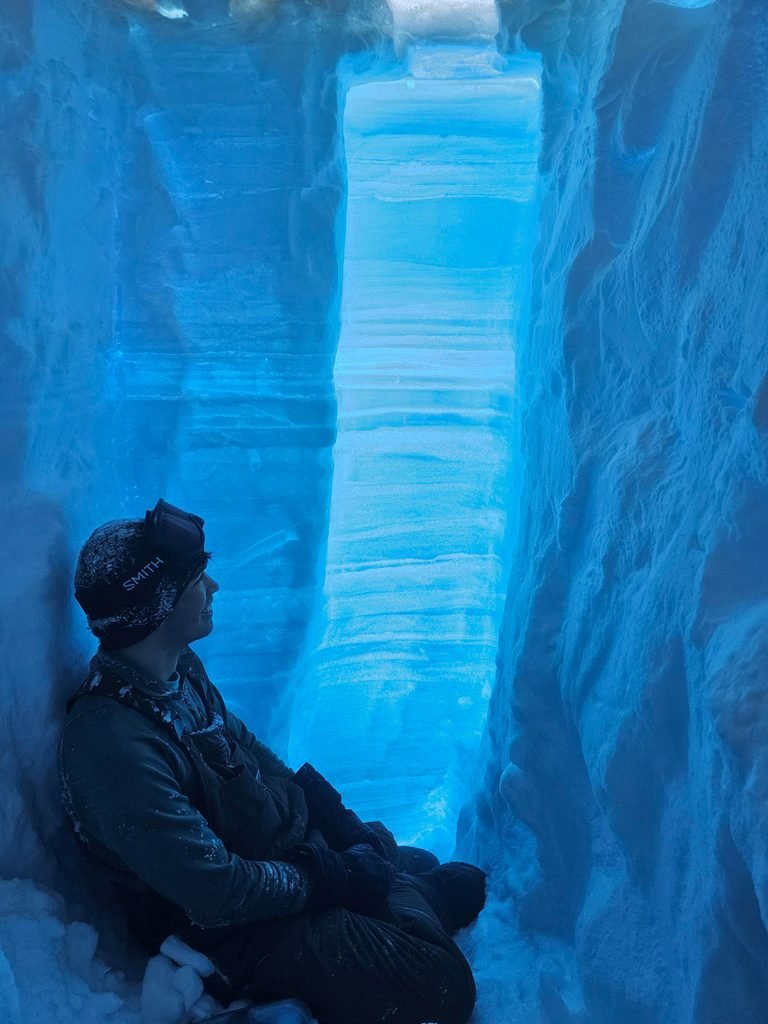
Joe McConnell has been studying ice cores from Greenland, northern Canada, and the Russian Arctic for decades. These cores contain stories about the history of Earth’s climate, including how humans have affected it.
McConnell and his colleagues have long been aware of a rise in levels of bismuth and antimony in these cores dating to the early 20th century. Both metals can be a by-product of anthropogenic activities such as mining, so researchers concluded their presence was likely the result of pollution from the Second Industrial Revolution. But pollution from industry continued—and indeed rose—long after the spike.
“Why did these things peak in the 1910s, 1920s?” wondered McConnell, a climate and environmental scientist at the Desert Research Institute specializing in ice cores. “It didn’t seem to fit.”
A few years ago, McConnell’s lab developed a method for measuring arsenic in ice cores. Arsenic is harder to measure than metals such as lead because it doesn’t have an isotopic signature and is found in such small amounts in ice cores. But like lead, bismuth, and antimony, arsenic can be a by-product of copper smelting.
In a new study published today in Nature Sustainability, the researchers used the arsenic information to trace the source of metals in 10 Arctic ice cores back to one dominant origin: the Anaconda Copper Mine in Montana, thousands of kilometers away.
“It’s a really neat piece of detective work.”
“It’s a really neat piece of detective work,” said Karl Kreutz, an Earth scientist at the University of Maine who was not involved with the research. “What they presented [with arsenic] seems pretty convincing to me, that they can trace it back to one major mine in Montana. That’s the first time I’ve seen somebody try to do that with arsenic.”
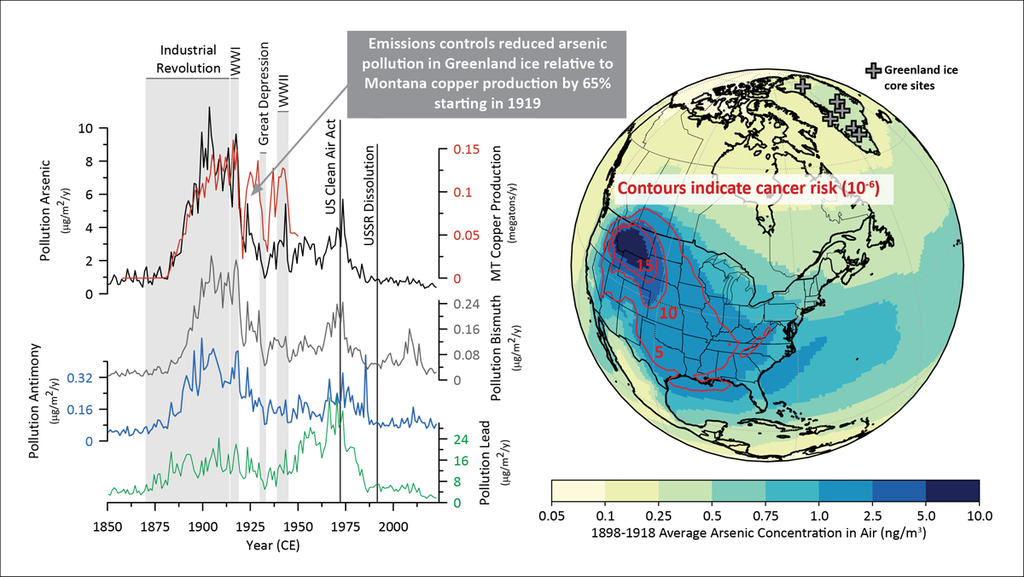
The installation of electrostatic precipitators on the Anaconda smelter was likely responsible for the reduced pollution levels after 1919, despite the mine’s continued operation until 1947. The study’s findings suggest that the precipitators reduced heavy metal emissions by about 65%. The precipitator was patented in 1908, and its inventor personally designed a plan for how to install one at Anaconda, but the devices weren’t installed at the facility for years.
“Montana government policy at the time was they only had to install pollution controls if it was profitable to the polluter,” McConnell said.
The researchers estimate that this delay in pollution control resulted in an additional 60,000 tons of arsenic and 24,000 tons of lead being released from the mine. By referencing 1910 and 1911 census records and modeling the paths of these particles, the researchers estimated that between 1898 and 1918, about 55% of Americans at the time (50.5 million people) and 11% of Canadians (600,000 people) were exposed to levels of arsenic that increased their risk of lung cancer. About 1.4 million people were likely affected by elevated lead pollution levels. According to the EPA, there is no safe level of lead exposure for children.
These statistics may not be surprising to historians. The Anaconda mine was involved in lawsuits from nearby farmers and ranchers and, eventually, the U.S. Forest Service, which alleged that the mine’s activities were damaging agriculture, poisoning livestock, and destroying forests. Today, the area is home to the country’s largest Superfund site.
“Anaconda, it turns out, was an infamous source of arsenic pollution,” said McConnell.
Heavy metals are particles, not gases, so after just days or weeks of traveling through the air, they fall onto surfaces—whether those surfaces be farmland, city, or Arctic ice. This short atmospheric lifetime means that the time that these pollutants were deposited into ice cores is closely linked to when they were emitted.
“Everything points to northern North America.”
“We used the deposition pattern in that array to identify what region of the Earth the emissions must have come from during this time period, during the Second Industrial Revolution,” McConnell said. “And everything points to northern North America.”
The researchers analyzed U.S. and Canadian records on copper production levels to create a temporal record of emissions. They examined several sources across North America: A smelter in Tacoma, Wash., for example, was excluded as being too small to produce what scientists were seeing in the ice cores. The isotopic ratios of the lead from mining activity in Sudbury, Canada, didn’t line up. And a mine in Michigan’s Keweenaw Peninsula produced mostly native copper, meaning emissions of the heavy metals being studied were relatively low.
When researchers looked at production statistics for the Anaconda Copper Mine, though, they lined up almost exactly with the measured level of arsenic in the ice cores, including a peak of about 15 times higher than preindustrial level levels in 1914.
Franciéle Schwanck Carlos, a geoscientist at Centro Polar e Climático, Universidade Federal do Rio Grande do Sul, Brazil, told Eos in an email that though it is difficult to trace emissions back to one source, the authors seem to have to have shown a good match using their atmospheric transport models.
“In this scenario, the best way to track arsenic sources is to identify the major producers and compare production and emissions with the ice core data,” said Carlos, who was not involved with the research. “The historical production data from the considered areas seems to fit best between Anaconda’s data and ice core measurements.”
—Emily Gardner (@emfurd.bsky.social), Deputy Editor

Eduardo Ariño de la Rubia brings more than 25 years of experience in artificial intelligence, automation and data science.
29 minutes ago•2 mins read
Set Trending Topics as a preferred source on Google.
Anyone who wants to grow skin in a lab or analyze dental X-rays with AI is now ending up in Graz and Vienna. Two young companies from France and Slovakia recently founded subsidiaries in Austria, and their reasons underline the status Austria now enjoys as a life sciences location: research partners who respond quickly, a funding system that works, and a political environment that does not scare off investors.
Both are docking onto a mature ecosystem. The federal government has anchored life sciences in its Industrial Strategy 2035 as one of the most important technologies of the future, and according to the Austrian Startup Monitor 2025, 14.4 percent of all domestic startups are already active in the field, as the Austrian Business Agency (ABA) summarizes.
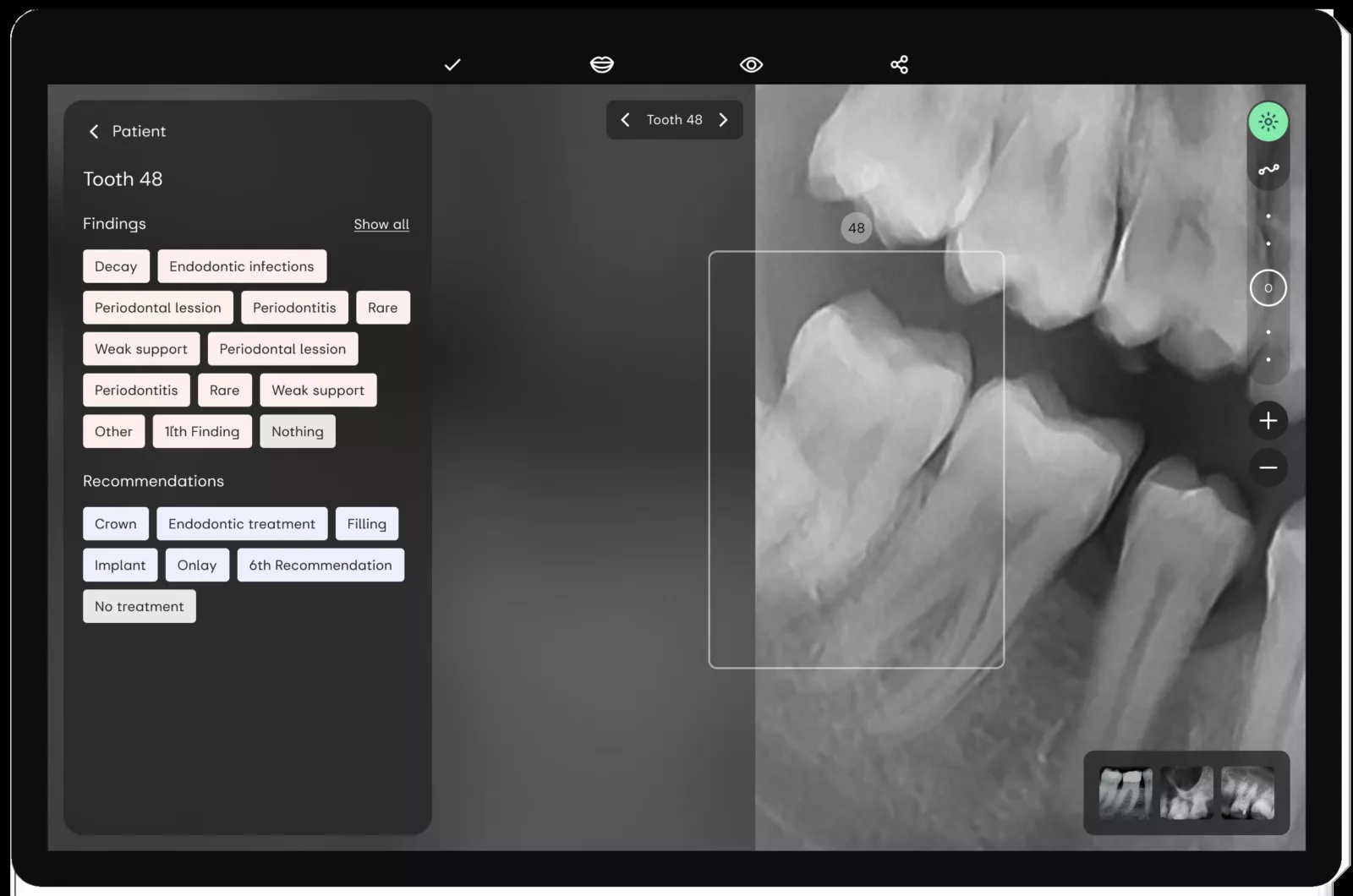
AI Dental (AI:D) develops AI for dentistry and has two products on the market. EDU AI:D is a learning platform on which dental students train their diagnostic skills using thousands of 2D X-ray images; according to CEO Olga Shebanova, the platform is already running at 16 universities worldwide. The second is ClinicalAID, software that analyzes patient images and shows doctors the probability of findings. The product has just received CE marking as a medical device and serves dentists as a second opinion.
Shebanova gives three reasons for the move to Vienna. First, half the team already lives in Vienna and used to commute to Bratislava, and AI Dental has already recruited specialists in Austria. Second, the political situation in Slovakia, which she says has affected financing:
“International investors who put capital into an already risky startup at least want the certainty that the government and the laws won’t change constantly. Austria is stable, has consistent laws and gives stronger support to R&D companies and startups.”
Third, research: AI Dental has been working with the Medical University of Vienna for almost three years, with pilot projects and joint development. Through the ABA, Shebanova learned that funding from FFG and aws is available for such collaborations. The startup has since applied to the FFG for support for a research project on rare diseases in dentistry, together with MedUni Vienna. The application has not yet been decided, but for Shebanova the process itself was a signal:
“What matters most to me is the feeling that the system cares about innovation and small companies. Even if I fail with the first application, I’ll find other ways and contacts because the ecosystem works. That was a big green flag for me.”
Access to public funding is crucial in medical technology in particular, the CEO says, because venture capital investors often don’t want to finance research phases, and without research there is no product.
Since autumn, AI Dental has had its office at the AI Factory Austria AI:AT in Vienna’s St. Marx district, following a selection process under the EU initiative. Shebanova had mainly expected a free desk:
“I was very positively surprised because it really works in practice. The team is proactive and actively looks for ways to support startups. That’s not a given with initiatives like this.”
AI Dental is keeping its Bratislava location, where half the team continues to work. Growth and scaling, however, are to run through Vienna. In terms of content, the company wants to go beyond dentistry: many systemic diseases can be detected during a visit to the dentist, which is why the AI is to establish links to oncology, cardiology and neurology in future. Shebanova also sees Vienna as a better base for a later expansion into Germany or France, though not before 2028.
Ingenskin from France is working on an autologous, pigmented skin substitute for chronic wounds, burns and complex wounds. From a small skin biopsy taken from the patient, the three cell types of the skin (keratinocytes, fibroblasts and melanocytes) are grown in the lab and combined with a collagen matrix into new skin with a dermis and epidermis. This is meant to close the wound permanently and also restore pigmentation. “We produce the patient’s own skin in the lab,” summarizes CEO and co-founder Patrick Alexandre Manu.
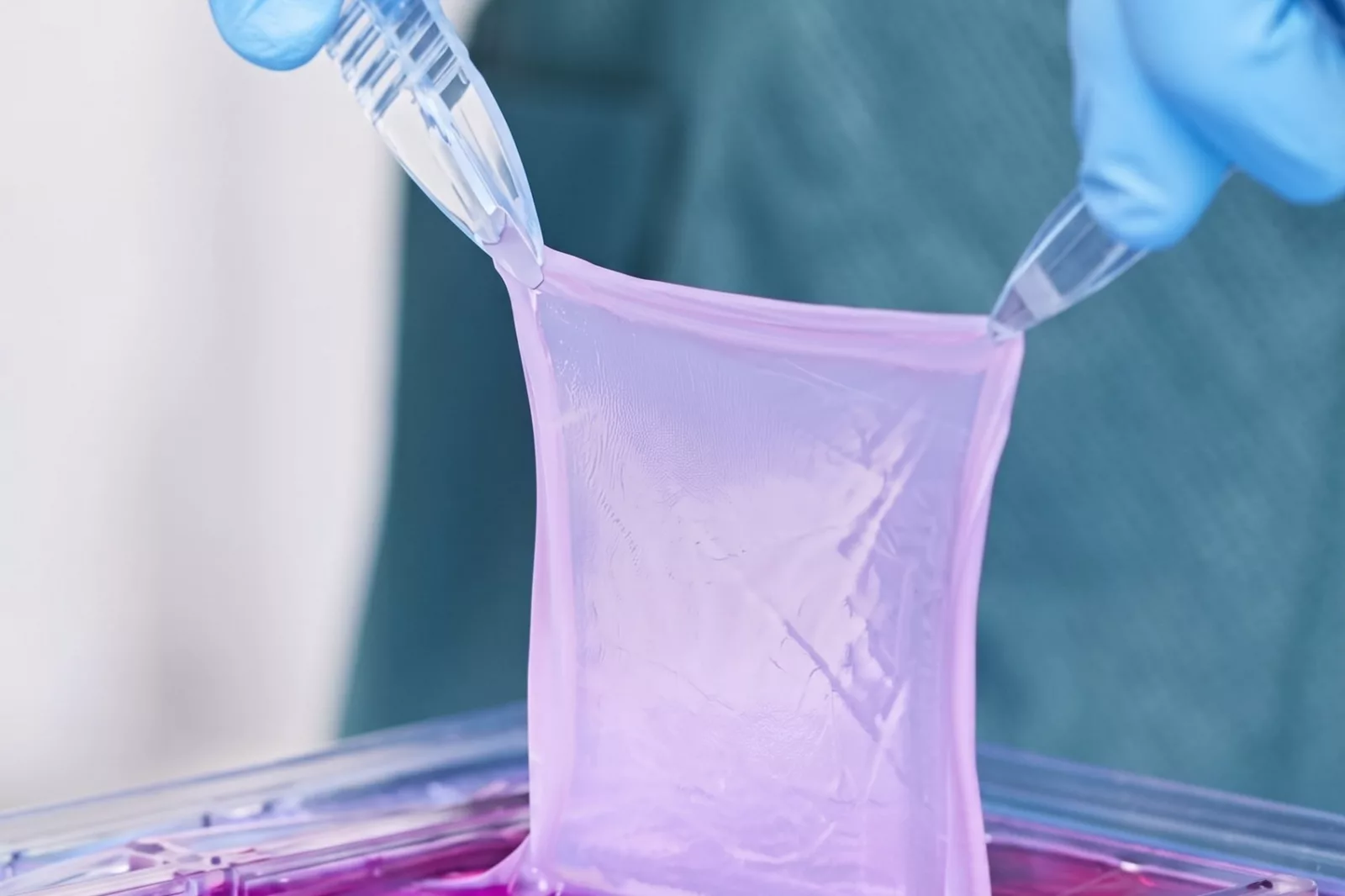
The company is in the preclinical phase; no patient has yet been treated with the product. The first clinical trial in Austria is the declared goal, and the collaboration with the Medical University of Graz is currently being structured. To that end, Ingenskin recently founded a subsidiary in Graz.
Manu came to Austria through his search for leading experts in burn medicine. He came across Lars-Peter Kamolz, professor at MedUni Graz, and got in touch. A visit to Graz revealed what had been hard to find in France:
“In Graz we can do two things at once: the clinical development and the scientific lab with GMP certification. You don’t see that often. Normally you have to go to an external contract manufacturer for that, who thinks more about revenue than about development.”
Before deciding on Europe, Ingenskin had also held talks in Saudi Arabia, the United Arab Emirates and Qatar, where a lot of money is flowing into biotech. In the end, the decisive factors were the wish to gain a foothold in Europe first and the speed with which doors opened in Austria:
“The ABA was great and connected us directly with the right people, who in turn connected us further in no time at all. Even though we come from another country, we were welcomed very warmly and quickly became part of the Austrian ecosystem. That’s quite unusual.”
Almost all of Ingenskin’s external partners are already based in Austria: a Viennese law firm, advisors in Graz and Vienna, and regulatory and non-clinical experts from Vienna. An office at the Graz Center for Knowledge and Technology Transfer in Medicine (ZWT) is currently being finalized, and in the long term a dedicated lab in Graz is conceivable. Manu himself still commutes but wants to relocate to Graz. He describes the local working style like this:
“In Austria, people want to get things done. If something makes sense and comes through the right people, it gets done without wasting time. That’s exactly the energy we have at Ingenskin too.”
It is a long road to market with several clinical phases; Manu expects the mid-2030s. In the long run, Graz could become the headquarters from which Ingenskin operates across Europe and beyond.
A dense ecosystem is growing around the two newcomers. According to Life Science Austria, Austria’s life sciences sector counts:
The funding landscape is particularly relevant for startups. The FFG’s Austrian Life Sciences Programme awards up to three million euros per project from a budget of 45 million euros, and the Clinical Trials Austria platform is meant to simplify clinical trials and speed up patient recruitment.
A flagship is taking shape in Vienna’s Neu Marx district: the Life Science Center Vienna, costing around 170 million euros, is to bring biomedicine and AI together on 14,000 square meters by 2029. Its first major tenant will be the AITHYRA institute of the Austrian Academy of Sciences, financed by the Boehringer Ingelheim Foundation with 150 million euros, the largest private research grant Austria has ever seen.
Further examples in which the ABA provided advice show that international companies are making use of the location:
International companies and founders considering setting up or expanding a subsidiary in Austria can get free advice from INVEST in AUSTRIA at the ABA. Employers looking for skilled workers from abroad will find support at WORK in AUSTRIA. The Austrian Business Update keeps you up to date.

Free and low-cost educational events are scheduled across the country this week.
The annual Science Week is back, and this year’s focus is water, life’s essential building block.
Marine enthusiasts, climate savants and all those interested in learning more about protecting our oceans can attend events scheduled across the country this week, including organised walks to explore Ireland’s waterways, panels and other creative activities.
Researchers across Ireland continue to contribute to our understanding of the water bodies that surround us, from creating Ireland’s first climate exposure map to testing out ways to revitalise coral reefs.
We love talking about science and the environment at SiliconRepublic.com, and in honour of the theme of this year’s Science Week, here are some of Ireland’s top experts in the marine environment and sustainability.
Dr O’Hagan is a senior research fellow in the MaREI Centre for energy, climate and marine at University College Cork (UCC), and an expert across legal and policy related issues surrounding our oceans.
She is currently a principal investor on a Marine Institute-funded project on ocean law and marine governance. She has also worked on numerous cross-border multidisciplinary projects focused on aquaculture and maritime spatial planning.
O’Hagan is also the honorary secretary of the all-Ireland Marine Renewables Industry Association.
Dr Cusack leads the Irish Marine Institute’s work in oceanography and ocean climate research, and helps develop downstream services, such as algal bloom alerts and extreme marine events warning systems.
She is also involved in European research projects focused on improving ocean observing and forecasting tools.
Cusack has led several of Marine Institute’s annual ocean climate research surveys on the RV Celtic Explorer.
Dr Regan is a professor of chemistry at Dublin City University (DCU) and the director of the DCU Water Institute. Among her areas of interest, Regan focuses on developing advanced tools for environmental monitoring.
She is currently working on a water contamination detection tool as part of a National Challenge Fund-supported project called ‘Restart’.
Current methods to detect water contamination take between 18 to 72 hours. Restart hopes to develop an in-situ sensor for monitoring water quality that will provide an early warning in case of bacterial pollution.
Regan has a PhD in analytical chemistry. She has previously held a lecturing position at Limerick Institute of Technology, before taking up a position in DCU in 2002.
Nolan leads the Marine Institute as its director of marine environment and food, having worked at the Institute for more than two decades.
In his time at the Institute, Nolan has helped secure funding for significant marine research and development projects instrumental in enhancing Ireland’s ocean observation and forecasting capabilities.
Nolan leads teams that work to monitor and improve fish health, marine chemistry, shellfish safety and marine spatial planning.
A graduate in oceanography from the University of Galway, Nolan has also previously held teaching positions at ATU and the University of Malta.
Dr Allcock is a renowned marine scientist, currently based in the University of Galway as a professor in zoology.
She has chaired numerous expert-level meetings around marine habitat protection, was the former president of the Cephalopod International Advisory Council and has led numerous research cruises as chief scientist.
Allcock has a PhD from Liverpool University, and worked at museums in Scotland as a curator for molluscs before taking up an academic post first at Queen’s University Belfast (QUB), and subsequently at the University of Galway.
She leads the Jean Monnet Centre of Excellence for Ocean Futures, Science and Diplomacy at the University of Galway alongside Dr Stefan Fritz.
Dr White, an observation-based oceanographer, has worked in the University of Galway since 1993, arriving as a postdoctoral researcher before becoming a lecturer in the then newly established Earth and ocean sciences course. He also works with the university’s Ryan Institute.
White’s research focuses on hydrography and the dynamics of deep and shelf seas, as well as land-ocean interactions and water quality in coastal seas.
He was part of an Irish Government Marine Protected Areas Advisory Group led by another one of the list’s features, which supports the Government’s decision-making on the expansion of protected marine regions.
Dr Maloney is a principal investigator at the Atlantic Technological University (ATU) Galway’s Marine and Freshwater Research Centre.
He has a background in physics, with a PhD in the field from Trinity College Dublin (TCD). Maloney is currently a lecturer in physics and instrumentation at ATU.
Maloney leads the NanoSA research team, a collaborative initiative between ATU Galway, DCU, and sustainable seafood producer Mowi, that focuses on rapid detection of bacterial and viral pathogens impacting the salmon aquaculture industry.
Dr McDonough is the director of policy, information and research services at the Marine Institute. He originally trained as a marine biologist with a bachelor’s in zoology from TCD and a PhD from QUB.
As the head of policy at the institute, McDonough’s work plays a key role in supporting and promoting marine research and innovation at national and international level.
He coordinates the implementation of Ocean Knowledge 2030, Ireland’s national strategy for marine research and innovation, and chairs the national Marine Research Funders’ Forum. He also manages the Marine Institute’s roughly €12m-a-year external research funding programme.
University College Dublin’s (UCD) vice-president for sustainability, Dr Crowe, previously chaired the Marine Protected Areas Advisory Group. In 2021, he was named chair of the National Biodiversity Forum, an independent expert group that monitors Ireland’s approach to biodiversity protection.
Crowe joined the UCD staff in 2001 and has since held served as the director of the UCD Earth Institute and co-director of the UCD bachelor’s programme in sustainability.
He has published more than 110 research papers and book chapters and has received more than €4.25m in research funding from national and international funding agencies.


BioUK Ltd., the not-for-profit membership organization focused on catalyzing success in UK life sciences, today announced that it has acquired certain key assets of SEHTA (Science and Engineering Health Technologies Alliance) through an asset purchase agreement.
Established thirty years ago, BioUK provides practical help and support to the life science ecosystem, with a core focus on R&D SMEs. The organization aims to create connections, save its members time and money, and help secure investment through a portfolio of tailored events and services. The acquisition of selected assets from SEHTA aligns with BioUK’s mission and creates the opportunity to expand the organization’s membership base as well as broadening BioUK’s support offerings in the areas of market access and non-dilutive investment support.
Formed in 2005, SEHTA represents a global network of more than 1,200 members working to drive innovation in healthcare. The organization has built a reputation for supporting MedTech and HealthTech companies in their journey from concept to commercialization through expert business support services. SEHTA’s close relationships with the NHS and expertise in health economics enable companies to better navigate the pathway into the service through strategic economic and market access advice, alongside grant writing support.
Neil Roberts (SEHTA’s Managing Director) and Clare Ansett (Operations Manager) will become part of BioUK’s transition team to support those SEHTA members who would benefit from transferring over to BioUK membership and in supporting the relationships with the previous SEHTA expert associate network. The SEHTA brand will be wholly absorbed and will operate under the BioUK brand.
“The integration of some of SEHTA’s key assets is an important strategic move for BioUK, and we’re delighted to welcome its members to the BioUK community. Bringing those assets under the BioUK brand is an opportunity to expand beyond our biotech and therapeutics roots, widening our SME ecosystem and, through incorporating SEHTA’s expertise, allowing us to better fulfil our mission to catalyze success across the entire life science sector. We will be hosting a series of new membership onboarding events during November, providing an opportunity for the SEHTA community to meet us as a team and explore how we can support their growth journey.”
Stuart Rose, CEO, BioUK
Neil Roberts, MD of SEHTA said: “For twenty years, SEHTA has helped MedTech and HealthTech SMEs successfully navigate the path from concept to commercialization, and I\’m proud of the community we\’ve built. This asset transfer to BioUK is a real step forward for our members. They gain access to a broader nationwide network, industry leading events, more investor connections, and significant savings through BioUK’s purchasing consortium, while the market access and grant-funding expertise they value carries on. Our MedTech and HealthTech knowledge will now be included to make BioUK the prominent membership organization within the life science sector. We look forward to supporting our members through the transition and helping them make the most of the wider benefits BioUK offers.”
https://biouk.com/ itemtype=\” href=”https://biouk.com/ itemtype=\” http:=”” schema.skype.com=”” hyperlink\”=””>