Poland’s political rivals join ‘March of Silence’ for shooting victims | Politics News

President Karol Nawrocki and Prime Minister Donald Tusk joined thousands in Krakow’s ‘March of Silence’ to honour six people killed in a mass shooting. Their joint appearance comes amid deep political tensions over government reforms and presidential powers.
Published On 10 Nov 2026
[ad_2]

BPI, Financial Services Trades Comment on FCC Robocall Mitigation Database Proposal
The American Bankers Association (ABA), ACA International,[1] American Financial
Services Association, America’s Credit Unions, Bank Policy Institute (BPI), Consumer Bankers Association, Defense Credit Union Council, Electronic Transactions Association, Financial Technology Association, Mortgage Bankers Association, and Payments Leadership Council (collectively, the Associations)[2] appreciate the opportunity to comment on the Federal Communications Commission’s proposal (Proposal) to strengthen the Robocall Mitigation Database.[3]
The Associations strongly support the Commission’s continued efforts to use every
available tool to protect consumers from illegally spoofed calls, including the current Proposal to strengthen the Robocall Mitigation Database. Fraudsters routinely use illegally spoofed calls to impersonate banks, credit unions, nondepository financial institutions, payment providers, government agencies, law enforcement, and other trusted organizations, causing substantial financial harm to consumers. A recent survey of banks indicates that these scams are on the rise.[4] Illegally spoofed calls and texts can facilitate the theft of log-in credentials and takeover of a consumer’s or business’ account, and lead to fraudulent transfers and other substantial losses.[5]
We commend the Commission for its recent proposals to require all voice service providers in a call’s pathway to take meaningful steps to prevent illegally spoofed calls from reaching consumers[6] and to propose a “Robocall Mitigation Scorecard” to rate voice service providers’ effectiveness in combating illegal calls.[7] Recent polling shows that strong majorities of Americans support the Commission’s proposals: 82% of consumers said they support regulatory action that requires providers that originate calls to do more to authenticate the identity of a caller to prevent illegally spoofed caller IDs.[8] Additionally, 81% of consumers support regulatory action that requires intermediate providers – i.e., providers that receive calls from “upstream” providers and transit the calls to a provider that is farther “downstream” – to do more to stop illegally spoofed calls that pass through their network, rather than delivering the illegal calls to recipients or to another provider.[9] We urge the Commission to finalize its proposals as soon as feasible.
To read the full comment letter, please click here, or click on the download button below.
[1] ACA International is also filing separate reply comments on the proposed definition of a voice
service provider.
[2] A description of each Association is provided in the Appendix.
[3] In the Matter of Improving the Effectiveness of the Robocall Mitigation Database, Call
Authentication Trust Anchor, Advanced Methods to Target and Eliminate Unlawful Robocalls,
WC Docket Nos. 24-213 & 17-97, CG Docket No. 17-59, Further Notice of Proposed
Rulemaking, FCC 26-49 (July 23, 2026) [hereinafter, Proposal].
[4] See Tara Payne, Drew Ruben & Madison Stulga, Bank Policy Institute, Hijacking Trust: How
Scammers Exploit the Banking System’s Most Valuable Asset (July 20, 2026),
https://bpi.com/wp-content/uploads/2026/07/Hijacking-Trust-How-Scammers-Exploit-the
Banking-Systems-Most-Valuable-Asset.pdf. The survey of 14 BPI member banks found that the
average number of identified bank-impersonation scams originated by a phone call or text
message increased 124 percent from 2024 to 2025. Id. at 2. Two surveyed banks reported that 40
percent of calls appearing to originate from bank-owned numbers had been spoofed. Id.
[5] See Protecting Seniors from AI Fraud: Hearing Before the S. Spec. Comm. on Aging, 119th
Cong. (2026) (testimony of Paul Benda, Exec. Vice Pres. for Risk, Fraud & Cybersecurity, Am.
Bankers Ass’n) (describing specific harms to consumers that often result from illegally spoofed
calls), https://www.aba.com/advocacy/policy-analysis/testimony-of-paul-benda-on-protecting
seniors-from-ai-fraud; In the Matter of Advanced Methods to Target and Eliminate Unlawful
Robocalls, Rules and Regulations Implementing the Telephone Consumer Protection Act of
1991, CG Docket Nos. 17-59 & 02-278, Reply Comments of the Am. Bankers Ass’n to the
Further Notice of Proposed Rulemaking (filed July 27, 2026),
https://www.fcc.gov/ecfs/document/26110059138/1 (summarizing comments submitted by
bankers that described how fraudsters spoof the telephone number of the bank’s fraud
department or customer service line, pose convincingly as trusted bank employees, and persuade
customers to disclose sensitive account information that the fraudster uses to initiate funds
transfers).
[6] See in the Matter of Advanced Methods to Target and Eliminate Unlawful Robocalls, Rules and
Regulations Implementing the Telephone Consumer Protection Act of 1991, CG Docket Nos. 17
59 & 02-278, FCC 26-27, Further Notice of Proposed Rulemaking (rel. May 1, 2026) (proposing
to require originating providers to “know their customer”—i.e., to collect specific information
about a prospective customer—before that customer may originate calls on the provider’s
network); In the Matter of Call Authentication Trust Anchor, Advanced Methods to Target and
Eliminate Unlawful Robocalls, WC Docket No. 17-97, CG Docket No. 17-59, FCC 26-32,
Further Notice of Proposed Rulemaking (rel. May 21, 2026) (proposing to strengthen the
“STIR/SHAKEN” call authentication framework and impose “know your upstream provider”
requirements on “downstream” providers).
[7] Public Notice, In the Matter of Empowering Consumers through Robocall Scorecard,
Consumer and Governmental Affairs Bureau Seeks Comment on Robocall Scorecard, CG
Docket No. 26-239 (rel. Sept. 2, 2026).
[8] Press Release, Am. Bankers Ass’n, National Survey: U.S. Consumers Trust Banks Most for
Fraud Protection (Oct. 26, 2026), https://www.aba.com/about-us/press-room/press-releases/oct
2026-morning-consult-survey-us-consumers-trust-banks-most-for-fraud-protection. The poll was
conducted by Morning Consult on behalf of ABA from October 9-12, 2026, among a national
sample of 4,402 adults split into two representative groups for specific question sets. Results
from the full survey have a margin of error of plus or minus 1 percentage point.
[9] Id.
[ad_2]
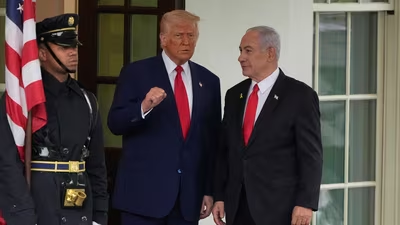
Netanyahu calling Trump ‘every day’ to resume Iran war as US president mulls end: Report
As Donald Trump mulls bringing an end to the ongoing war with Iran, Israeli prime minister Benjamin Netanyahu reportedly has been calling the US president 'every day', urging him to resume strikes on Tehran.

According to a report by the Financial Times, Netanyahu has been calling on Trump to resume strikes on Iran.
“Netanyahu calls him every day [to urge him to resume the war]. Those who don’t want a war within the White House and outside have been trying to combat that,” a person briefed on the discussions told FT. Track LIVE updates on US-Iran war here
According to the report, Netanyahu's call also comes as Arab leaders are urging the US president to resort to diplomacy and end the war.
The phone calls to Trump come as the US continues to launch occasional strikes against Iran. The Islamic Republic's Qeshm Island was struck by US missiles on November 6 and November 3.
While Trump did not explicitly refer to the November 6 strikes on Qeshm Island, the US president did confirm that Washington carried out a fresh attack.
“We do minor strikes, but they knock out. They built a little bit of an anti-aircraft device, and we knocked it out in about 15 minutes, maybe five," Trump told reporters in West Palm Beach, Florida.
Netanyahu's call to resume the strikes on Iran also came after the war emerged as one of the key reasons why Trump's GOP lost its stronghold in the US Congress. Furthermore, Netanyahu also remains in a sticky situation after the elections in Israel ended in a stalemate following the Likud leader's failure to secure a majority.
Additionally, Netanyahu and Trump also had a call last week regarding their course of action on Iran, which US officials speaking to Axios, described as "frank."
White House officials told Axios that Netanyahu called on Trump to strike Iran immediately after the midterm election result came in, but Trump decided to let negotiations play out.
Trump says strikes on Iran ‘unlikely’
Days after the major setback for Republicans in the midterm elections and US' strikes on Qeshm Island, Donald Trump has stated that any fresh strikes against Iran would be “unlikely.”
“Iran militarily is effectively over,” Trump told reporters at a White House briefing Monday. “We’re just keeping it the status quo.”
Trump's remarks came after a closed-door meeting with Qatar's PM Sheikh Mohammed regarding the current draft proposal to end the war.
Under this proposal, Iran has said it will allow free movement of shipping through the Strait of Hormuz if the US lifts its blockade on Iranian ports. Iran also called for the release of its frozen assets held overseas and restarting negotiations for a final deal, which would also address the nuclear question.
As per FT, Qatar's leader was among the Arab heads of state who called on Trump to remain on the path for talks and not launch any new strikes against Iran.
Along with Qatar, Saudi Crown Prince Mohammed bin Salman, UAE President Sheikh Mohamed bin Zayed al-Nahyan, and Turkey’s President Recep Tayyip Erdoğan.
[ad_2]

The End of Everything Captures Booker Prize

[ad_2]

Business Briefly

[ad_2]
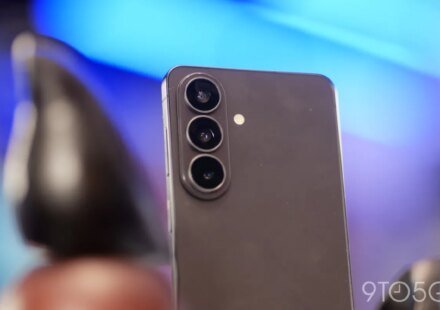
Galaxy S27 series camera specs leak, and they’re disappointing

New leaks reveal the camera specs for Samsung’s upcoming Galaxy S27 series which includes three lenses across the lineup, but not the upgrades you want, nor what Ultra owners might expect.
SammyGuru reports that Samsung is “evaluating” camera setups for the Galaxy S27, S27+, S27 Pro, and S27 Ultra, and it looks like a mixed bag across the board.
The base Galaxy S27 and S27+ are looking very familiar, with identical main camera sensors to last year, and the same ultrawide sensor that’s been in use since the Galaxy S23 series. The telephoto and selfie sensors are looking at new hardware, but without any major spec upgrades.
Galaxy S27 Pro and Ultra, meanwhile, have a new 200MP main camera on deck, a 50MP ultrawide shooter, and a mere 12MP telephoto. The Ultra might get 5x compared to the Pro’s 3x optical zoom, but with a secondary telephoto lens going missing, existing users of the lineup are sure to be disappointed.
| Galaxy S27 | Galaxy S27+ | Galaxy S27 Pro | Galaxy S27 Ultra | |
| Main | 50MP: Sony IMX955 or Samsung S5KGNG | 50MP: Sony IMX955 or Samsung S5KGNG | 200MP: Samsung S5KHP6 | 200MP: Samsung S5KHP6 |
| Ultrawide | 12MP: Sony IMX564 | 12MP: Sony IMX564 | 50MP: Samsung S5KJN3 or Sony IMX855 | 50MP: Samsung S5KJN3 or Sony IMX855 |
| Telephoto | 12MP, 3x: Samsung S5K3K1 | 12MP, 3x: Samsung S5K3K1 | 50MP, 3x: Samsung S5KJN3 or the Sony IMX855 | 50MP, 5x: Samsung S5KJN3 or the Sony IMX855 |
| Selfie | 12MP: Samsung S5K3LU or Sony IMX874 | 12MP: Samsung S5K3LU or Sony IMX874 | 16MP: Samsung S5K2P5 | 16MP: Samsung S5K2P5 |
Notably, SammyGuru’s article mentions the Pro as using “the Galaxy S26 Ultra’s 3x sensor,” but shows the 12MP Samsung S5K3LD in that place instead. We’re assuming that’s a typo seeing as the post mentions the Pro as using the Samsung S5KJN3 or the Sony IMX855 earlier on, but regardless, the Pro only gets 3x optical zoom to the Ultra’s 5x.
Some of these specs have been mentioned by other sources such as GalaxyClub and leaker Ice Universe, but this is the most complete picture of the S27’s camera plans we’ve seen to date.
Personally, I’m very “whelmed” on this one. As RAMageddon rages on and Samsung hunts for new ways to balance specs vs price, cameras are a place that’s obviously going to be cut, but competitors are already running laps around Samsung on the hardware front. Cutting lenses and skimping out on upgrades (again) doesn’t help matters.
Thoughts?
Best Samsung Accessories:
Follow Ben: Twitter/X, Threads, Bluesky, and Instagram


FTC: We use income earning auto affiliate links. More.
[ad_2]
Bring the heat: K/DA burning walls between gaming and pop culture
MANILA, Philippines – For the third time since its debut back at the 2018 Worlds in Incheon, South Korea, and the ALL OUT release back in 2020, Riot Games’ virtual K-pop group K/DA returned once again with another banger titled ‘FIRESTARTER’.
Within two weeks since its release, the whole EP hit #1 on the worldwide iTunes Album Chart, enter the YouTube global weekly chart at #9, and peak at #87 on the global Top 200 list chart for Billboard. It also became the highest-charting song from Riot Games on the global Spotify chart.

Feeling the heat
The K/DA craze didn’t just reflect on numerous music charts. From people vibing to the beats to the jaw-dropping dance covers, the reception for K/DA has been lit all over the internet, especially for Akali and Ahri’s artists, Jeon Soyeon and Cho Miyeon of the K-pop group i-dle. Even fans of the P-pop group SB19 are awaiting the group’s official cover of FIRESTARTER on November 10.
The beloved group captured hearts and ears from all over the world, including people who haven’t played League of Legends and casual music listeners.
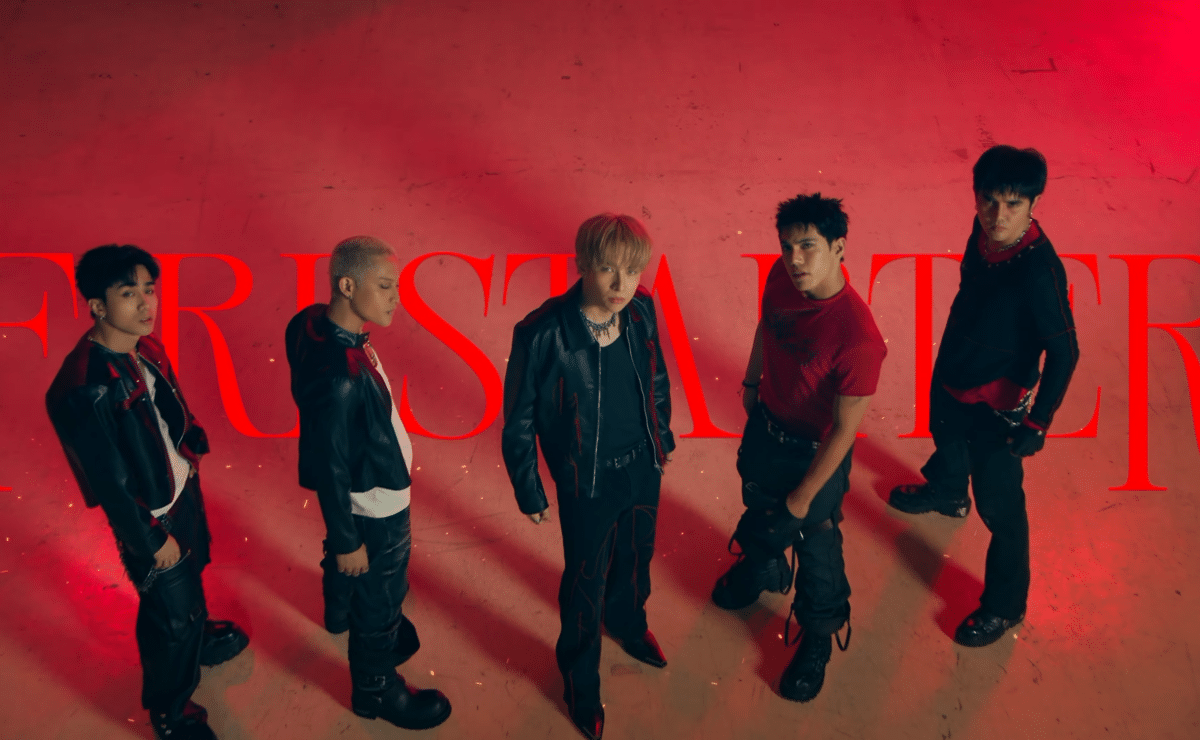
Riot Games and League of Legends: Wild Rift recently celebrated this latest K/DA release with the “FIRE IT UP: The K/DA Comeback Party.”
People across different games and ages enjoyed vibing to the music of the Riot Games music universe, as most of the attendees dressed up to their favorite characters.
Some of the attendees were also lucky to participate in a live game of AAA ARAM, featuring its newest augments inspired by HEARTSTEEL, Pentakill, and TRUE DAMAGE.
RELATED STORY: Overwatch launches Midseason 5 update with new events, skins
Additional details for the exclusive, K/DA-inspired skinline for Wild Rift called HEATBRINGER were also showcased at the listening party. It will feature WR-locked game cosmetics for Ahri, Akali, Evelynn, and Kai’ Sa, as well as the grand and highly sought-after Prestige K/DA HEATBRINGER Evelynn.
For Coleen Ramos, APAC Publishing Manager for League of Legends: Wild Rift, celebrations like the listening party can be like embers—a glowing reminder of how music and gaming culture burn brightly over time.
“I think Riot does really well in terms of going beyond and exploring music and also TV series, right? Like Arcane.”
“As I mentioned, as a player, I would like to see not the usual kind of events where people just talk about the game. When we’re planning this, it’s really more about engagement. And because it doesn’t happen often, it does have that effect that people want to go to it as soon as possible,” Ramos shared.
Considering that there were requests for another listening party sent to them, Ramos assured, “If there’s going to be another big music moment, then we already know we need a bigger venue than this.”
RELATED STORY: Boom Esports wins PKL Fall 2026, captures back-to-back titles
[ad_2]
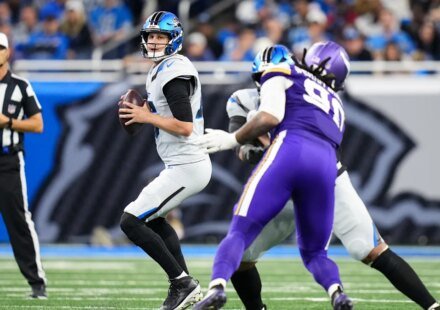
Lions move up in NGC playoff picture following Vikings loss
The Detroit Lions got some help in their playoff quest on Monday night from the Buffalo Bills. The Minnesota Vikings lost, falling from second in the NFC to sixth and the Lions move up to fifth from sixth because of it.
Detroit is now a half-game behind the Chicago Bears for first place in the NFC North and second place in the NFC. The Bears won on Sunday night to hold onto that slight edge. The Green Bay Packers also won and are nipping at the heels for the division. All four NFC North teams are in the playoffs as of right now.
Advertisement
NFC playoff standings after the Vikings' loss on MNF
1. San Francisco 49ers (7-1)
2. Chicago Bears (7-2)
3. New York Giants (5-2-1)
4. Carolina Panthers (3-5, 1-1 NFCS)
5. Detroit Lions (6-2, win over MIN)
6. Minnesota Vikings (6-2, loss to DET)
7. Green Bay Packers (6-3)
8. Seattle Seahawks (5-4, 2-1 NFCW)
9. Los Angeles Rams (5-4, 0-2 NFCW)
10. Dallas Cowboys (4-5)
11. New Orleans Saints (3-5, 0-1 NFCS)
12. Tampa Bay Buccaneers (3-6, win over ATL, 3-3 NFC)
13. Atlanta Falcons (3-6, loss to TB, 3-3 NFC)
14. Arizona Cardinals (3-6, 2-5 NFC)
15. Washington Commanders (2-5-1)
16. Philadelphia Eagles (2-7)
[ad_2]

Xi Jinping’s plan for a China-centric world order
When Donald Trump, Vladimir Putin and nearly 20 other national leaders gather in Shenzhen next week, they will be treated by Xi Jinping to displays of China’s marvels. Drones will swarm and sparkle overhead, fleets of humanoids will usher delegates through conference halls and ultrafast-charging electric vehicles will shuttle them between venues. The message to the annual summit of the Asia-Pacific Economic Co-operation forum—that China’s technology is cutting-edge—will be clear to all.

But there will also be a subtler message, signalling Mr Xi’s idea of how the world should look. The summit’s theme, “building an Asia-Pacific community to prosper together”, is a deliberate echo of his main foreign-policy doctrine: “building a community with a shared future for mankind”. Ma Zhaoxu, a vice foreign minister, has made the link explicit, tracing the theme back to Mr Xi’s calls since 2013 for an “Asia-Pacific community with a shared future”.
To many observers, this language may seem obscure. It is certainly a mouthful. Even China hawks face a challenge in explaining to the public why a “shared future” is threatening (the literal translation, “common destiny”, has a more chilling, deterministic edge, which is presumably why a switch was made to softer wording in English). Yet this is not just a casual slogan. It has been written into China’s constitution and tied to every big diplomatic initiative that Mr Xi has launched for more than a decade. So it is worth asking what, exactly, he means by it.
A natural place to start is the Chinese government’s white paper, published in 2023, that tried to explain Mr Xi’s doctrine. Running to nearly 13,000 words, it might seem to cover a lot of ground. Alas, the content is overwhelmingly vague. Among its exhortations: countries ought to “work together in harmony and unity” and should “strengthen dialogue” while promoting “peace and development”. Hard as it is to disagree, it comes across more like a general wish list than a specific, operable plan. Chaguan found only four forward-looking commitments. China will not seek hegemony, China will cut carbon emissions, China will modernise its economy, China will work with other countries. All are restatements of existing policy and, again, not much to go on.
Chinese scholars have tried to put meat on the bones. Yang Jiemian of the Shanghai Institute for International Studies made a notable attempt this year when he declared that the doctrine deserves to be seen as a full scientific system. It offers specific goals (eg, lasting peace), has a road map defined by Mr Xi’s four global initiatives (on development, security, civilisation and governance), and is delivered concretely via Mr Xi’s Belt and Road Initiative for global infrastructure-building.
The trouble with such elaborations is that they peel back abstraction to reveal yet more abstraction. In the parlance of our times, it is turtles all the way down. What is Mr Xi’s “shared future”? Why, it is the embodiment of his global initiatives. And what are those? They are vehicles for principles like sovereignty, multilateralism and dialogue—which, in turn, bring us back to the definition of “shared future”. At least belt-and-road projects are tangible, such as railways in South-East Asia and roads in Africa. But they do not amount to grand strategy; they are overseas investments, some productive, some not. You must feel a twinge of sympathy for diplomats in Beijing when they are asked by their home governments for concise notes on Mr Xi’s “shared future”.
A recent book by Steve Tsang and Olivia Cheung of, respectively, the School of Oriental and African Studies and King’s College London, cuts through the ambiguity. They argue that the shared-future talk is a formal expression of Mr Xi’s true aspiration: the creation of a Sino-centric world order. But they also see an essential truth in Mr Xi’s repeated assertions that China is not seeking hegemony: Mr Xi, they say, does not want to be burdened by global policing. He just wants recognition of China’s pre-eminence and other countries to defer to it, even when China’s behaviour impinges on their interests. His ideal world is one where sovereign leaders can do as they please within their borders—a world safe for autocrats and free of high-minded Western pontificators about rights and wrongs in other lands.
Common destiny’s children
Students of Chinese history may feel they have seen this “shared future” before. It sounds a lot like the professed principle of mutual non-intervention that has been the much-touted lodestar of China’s foreign policy since the 1950s. The usual criticisms apply to both concepts. China has a history of meddling, such as backing African rebel movements in the Mao era or grabbing disputed territory—look at recent encroachments on waters close to the Philippines and across the unsettled border with India. Chinese officials do little when their closest partners mess with others. They have, in effect, enabled Russia’s invasion of Ukraine.
What has changed since the 1950s is the context. China’s economic and military power is orders of magnitude greater. It can put real muscle behind its demand for non-interference in its own politics. That is worrying—especially if it ultimately gives China cover to do whatever it wants with Taiwan. But for now, governments and businesses around the world are more consumed by fallout from America’s war against Iran and from Mr Trump’s tariffs. The immediate uncertainty is not what Mr Xi might say in Shenzhen but how Mr Trump will behave as a gravely wounded president after the Democrats’ triumph in the midterms.
Set against that, talk of a shared future is less threatening precisely because it is not a bold new vision for the world. Rather, it is a rebranding of a long-standing strategy: deeply conservative, occasionally hypocritical and focused on China’s own betterment. Other countries may not love it. But they know it.
[ad_2]