

How Jensen Huang’s Affair Spiraled Into a National Security Nightmare

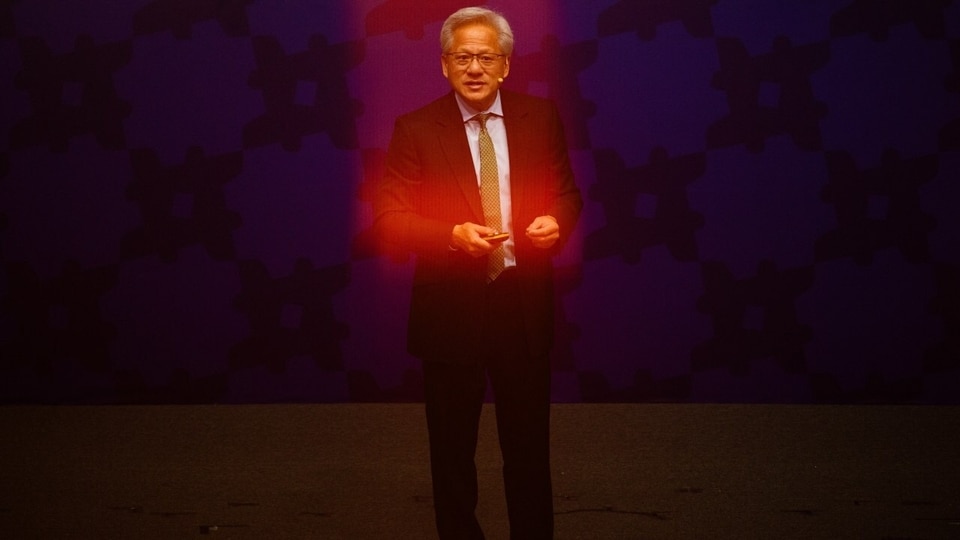
In June 2024, Nvidia Chief Executive Jensen Huang was in Taipei for an annual computer-industry trade show.
Late one night, a group of technology executives gathered at a bar. Among them was Alice Huang, then a top leader at a Singapore-based data center company.
Huang said she could likely persuade the Nvidia chief to join them. “Jensen’s a great friend of mine,” she said to the group, according to a tech executive who was present. She sent a text, and a few minutes later, Jensen Huang arrived and ordered a whiskey. He held forth briefly to the gathered executives, then left alone, saying he was tired, the person said.
Deep Dive
A photo from the evening posted on social media shows Jensen and Alice sitting side by side on a red banquette, he wearing his trademark leather jacket, she in a sleeveless top and pearl necklace.
Within months, the U.S. government would be investigating whether Alice Huang’s company, Megaspeed, was illegally diverting AI chips made by Nvidia for use in China, and authorities in Taiwan and Singapore would be probing what they suspected were her ties to China and its intelligence services.
It was the beginning of a reckoning that now threatens Huang’s leadership of his company and the AI industry that depends on its technology and financial help.
On Sunday, Nvidia’s board said it had launched an independent investigation into whether Huang had been the target of a foreign intelligence effort. The disclosure followed reports by The Wall Street Journal, the New York Times and other outlets that the U.S. government had concluded Alice Huang was likely sending information to Chinese intelligence while having a close relationship with Jensen Huang. The board said it had “no reason to believe that either national security or Nvidia secrets were compromised” and that it had “confidence in Jensen and his leadership team.”
Huang apologized for infidelity to his family and Nvidia colleagues in a staff memo. “I love our country and our company,” the CEO wrote.
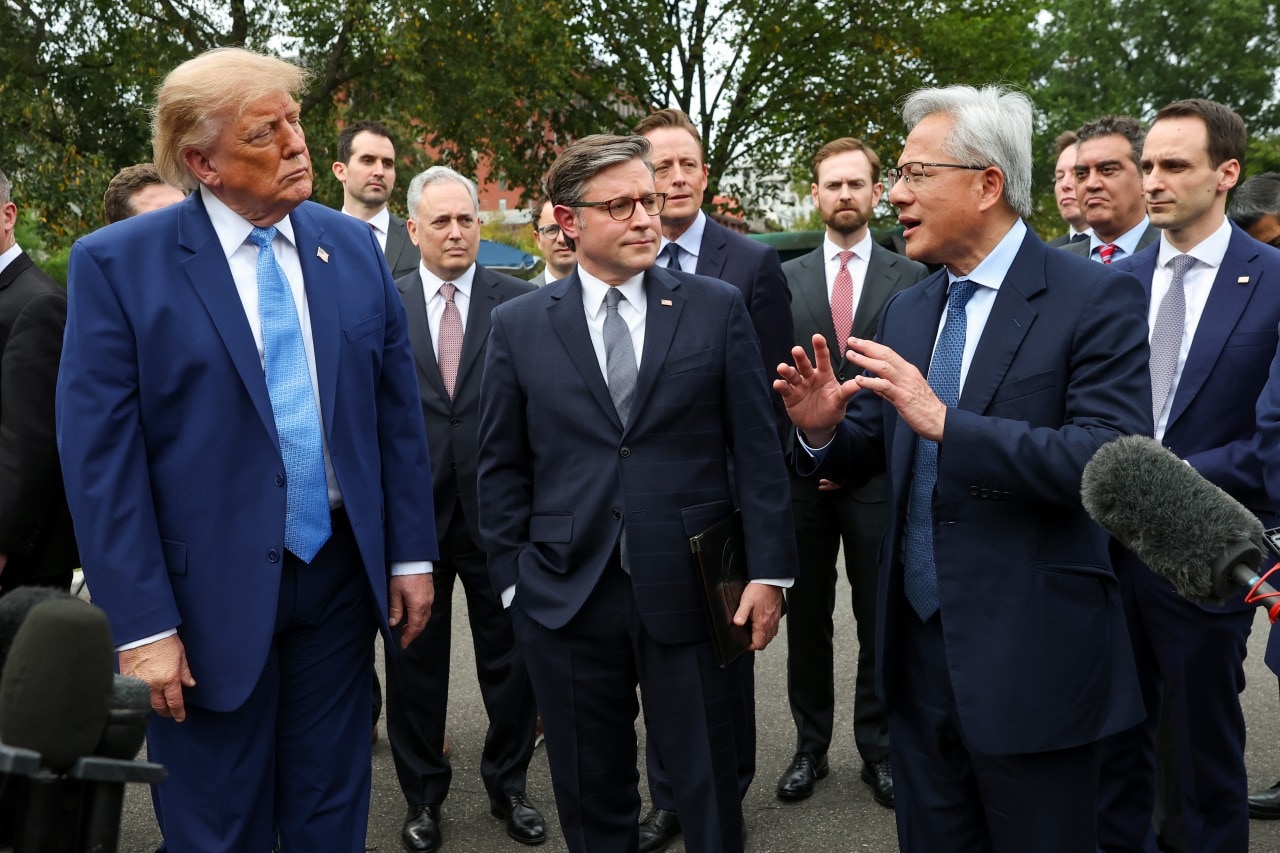
The revelations come against a tense backdrop in Washington, where different factions of the Trump administration have spent two years battling over AI policy and its role in the U.S.-China rivalry. They have raised sharp new questions about how Nvidia wielded its influence, aggressively lobbying for the ability to sell advanced AI chips to China, despite policies designed to preserve an American edge in the technology race.
On Monday, President Trump said Huang had told him that “he had absolutely no idea that the person in question was a spy.” Trump also said he didn’t remember receiving classified information—included in a spring memo prepared under the supervision of Secretary of State Marco Rubio, according to people familiar with the matter—warning that Huang had a relationship with a suspected Chinese spy.
The Commerce Department’s Bureau of Industry and Security on Monday responded to a report by the New York Times that it walked away from an investigation into Megaspeed’s suspected chip diversion after an outreach by an Nvidia executive. “BIS conducts all enforcement strictly by the book,” a spokesman said.
An Nvidia spokesman said the company prohibited all sales and shipments to Megaspeed in June 2025, and that ban is still in place. Nvidia got permission from the Commerce Department unit overseeing export controls for parts and replacement components sent to the company since then, he said.
U.S. intelligence officials never gave Huang a warning that he might be a target of foreign intelligence efforts, often referred to as a defensive briefing, the spokesman said.
The saga came up during an intelligence briefing focused on Iran for top lawmakers Monday. Several from both parties said they hope to pass aggressive chip-export restrictions as part of a proposed defense-spending package. “Clearly in this environment with all the cyber threats and all the world of superintelligence, these types of things take on an added significance,” Senate Majority Leader John Thune (R., S.D.) said.
An Nvidia partner
A former television reporter for Chinese state media, Alice Huang joined Megaspeed in 2023 after a stint in the financial sector, and she was listed on a registration in Singapore as a company director from March to November 2023. The company, a spinoff of Chinese company 7Road Holdings, advertised itself as a cloud provider of Nvidia hardware for the Asia-Pacific region.
Alice Huang met Jensen Huang at an Nvidia event in California in March 2024, the Journal has reported. Soon after, they would meet up again at the cocktail bar in Taipei. The New York Times earlier reported on the gathering.

By later that year, authorities in several countries had grown concerned about Megaspeed’s ties to China. The company has previously stated that it is a legitimate and compliant company that didn’t engage in illegal activities.
The Commerce and Justice Departments opened an investigation into whether the company was smuggling chips into China, according to people familiar with the matter. Authorities in Singapore and Taiwan focused on Alice Huang, putting physical surveillance teams on her, The Journal has reported. Officials involved in those investigations suspected she was recruited by Chinese intelligence services after they learned of what they saw as a close relationship between her and the Nvidia chief.
Singapore’s Ministry of Home Affairs has denied that Singaporean authorities have investigated Alice Huang for alleged ties to China.
In November 2024, Donald Trump was elected again, ushering out the administration of President Joe Biden, which had treated access to AI chips as a national security priority and imposed strict export controls. Jensen Huang met with Trump shortly after he was inaugurated, discussing AI policy with Elon Musk. A few months later, Huang and his wife, Lori Huang, flew to Trump’s Mar-a-Lago club for a $1 million-a-head fundraiser.
Huang quickly emerged as one of President Trump’s top advisers on artificial intelligence, feeding the president talking points about the importance of maintaining America’s lead over China and praising his leadership on AI.
Some Trump advisers echoed Huang’s argument that encouraging China to buy American AI chips would slow the development of the country’s homegrown chip industry. Trump included Huang in a May 2025 trip to the Middle East, where he agreed to export Nvidia chips to Gulf nations.
That month, Huang returned to Taipei, where he was again photographed with Alice Huang, this time at a dinner where they could be seen kissing on the cheek and sharing touches on the arm. Efforts to reach Alice Huang were unsuccessful.

Seeking export licenses
Weeks later, Huang and his top lobbyists traveled to Washington, where they met with Deputy Secretary of State Christopher Landau. The Nvidia contingent argued that the government should approve export licenses for the H20, a chip Nvidia had designed for the Chinese market, people familiar with the meeting said. A few days later, after Huang met with Trump, the administration approved the sale of the H20, in return for 15% of China sales going to the U.S. Treasury.
Around the same time, Nvidia executives learned of the U.S. government investigations into Megaspeed. Tim Teter, Nvidia’s general counsel, reached out to BIS head Jeffrey Kessler, a little-known government official who wields influence over a broad portfolio of trade relationships, according to people familiar with the matter. The Times earlier reported on the outreach.
“When we have requests from customers for new shipments, service, or support, we have an obligation to resolve any potential ‘red flags’ before proceeding. That process can include asking [government agencies] whether they require any further information from us,” the Nvidia spokesman said.
Shortly after Teter’s outreach, officials from the Justice Department took control of the Megaspeed probe, giving their counterparts at the Commerce Department less of a role, according to people familiar with the matter.
One of the reasons: Justice Department officials worried that Kessler’s contact with Nvidia on a sensitive government matter that could affect their business had tainted the investigation, some of the people said.
In October 2025, Trump, preparing for a meeting with Chinese leader Xi Jinping in South Korea, told advisers he was considering allowing Nvidia to sell a new generation of AI chips in China as a trade-talks concession. A group of advisers including Secretary of State Marco Rubio and Commerce Secretary Howard Lutnick persuaded him it would harm national security.
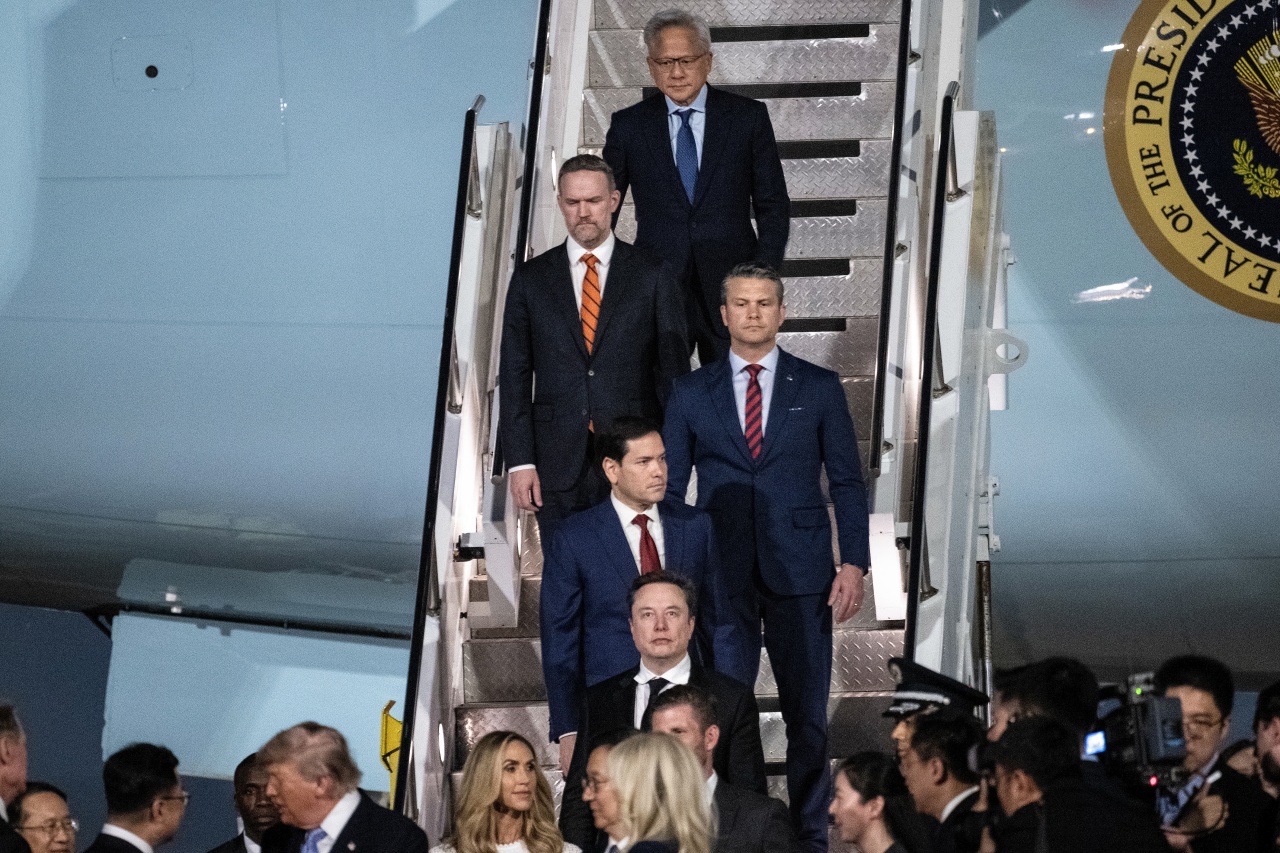
Before Trump’s trip to China to meet with Xi in May of this year, Rubio supervised the drafting of a classified memo warning that the Nvidia CEO had a personal relationship with a suspected Chinese spy and circulated it to top administration officials, people familiar with the matter said. Huang was initially left off the trip, then boarded Air Force One in Alaska.
Asked about the memo on Monday, Trump said it was possible his intelligence people had shown it to him, but he didn’t recall seeing it. “Certainly, it didn’t make much of an impact on me,” he said.
Write to Robbie Whelan at robbie.whelan@wsj.com and Amrith Ramkumar at amrith.ramkumar@wsj.com
[ad_2]

Moscow summit tests Russia’s waning grip on former Soviet allies | Politics News
The Kremlin’s tense relationship with Armenia will be under the spotlight at a security summit in Moscow.
President Vladimir Putin will chair a session of the Collective Security Council of the Collective Security Treaty Organization (CSTO), the Russia-dominated post-Soviet military bloc, on Wednesday.
Recommended Stories
list of 4 itemsend of listBut since February 2024, Armenia’s participation in the bloc has been frozen.
While the membership technically exists, Armenia does not participate in the bloc’s activities, having effectively boycotted it after it lost a war against Azerbaijan. Yerevan blamed the group for failing to offer meaningful support during the conflict.
Armenia “de facto doesn’t participate in the CSTO’s operations,” Kremlin spokesman Dmitry Peskov said last week. “What happens next will depend on the nature of the discussions within the organisation.”
Armenian Prime Minister Nikol Pashinyan said on November 5 that “our interest in the CSTO has run its course”.
During the 2020 war with Azerbaijan over Nagorno-Karabakh, a region once dominated by ethnic Armenians, the CSTO failed to live up to its core principle.

Neither Russia nor other member states – Belarus and three Central Asian nations of Kazakhstan, Kyrgyzstan and Tajikistan – deployed troops to aid Armenia, though the CSTO’s charter envisages such aid.
Moscow also maintains two military bases in Armenia with thousands of servicemen and border guards.
Azerbaijan, which withdrew from the CSTO in 1999, used new weaponry procured from Russia for billions of dollars.
Baku’s military triumph also relied on Turkish and Israeli-made drones and a revised war playbook that reflected recent breakthroughs in warfare and military technology.
Pashinyan’s anti-Kremlin stance has been a thorn in Moscow’s side since he came to power in 2018 after massive protests against Russia-backed Armenian leaders. Yerevan is also seeking membership in the European Union.
Armenia’s ‘useful timing’
Moves to strip Armenia of its voting rights in the CSTO amount to “a demonstrative whipping”, Galiya Ibragimova, a Moldova-based expert on Central Asia, told Al Jazeera.
“Considering that the other CSTO nations are more dependent on Russia economically or stick to the, ‘Don’t poke the tiger’ logic, they’ll keep mum or watch how a bad student is being whipped in class,” she said.
The political gauntlet that Armenia – a nation of 3 million coping with the arrival of more than 100,000 people from Nagorno-Karabakh – threw at Moscow reflects a paradigm shift in the former Soviet Union.
“Yerevan’s timing for these steps is very useful as Russia is too busy with its war in Ukraine and is to a large extent weakened by [Western] sanctions and Ukraine’s military strikes on Russian economic infrastructure, as well as a looming recession,” Alisher Ilkhamov, head of the London-based Central Asia Due Diligence think tank, told Al Jazeera.
Russia’s full-scale invasion of Ukraine in 2022 became another pivotal moment that appeared to show how ineffective the CSTO was, as none of the member states backed Moscow militarily.
Shortly before the Ukraine war erupted, the CSTO flexed its muscles in January 2022, when Russia sent thousands of peacekeepers to several Kazakh cities following massive street protests.
But Moscow’s reported failures in the Ukraine war turned Russia’s political and military might “into a myth even Russian officials and military believe in – not to mention CSTO member states,” Ibragimova believes.
She said that the Russian weapons CSTO member states can procure are sold as both “discounted” and yet “advanced”, but in reality, “are very old weapons Russia didn’t need”.
Meanwhile, the ex-Soviet nations of Central Asia and the South Caucasus find new formats of military interaction.
One of them is the Turkiye-led Organization of Turkic States, which includes Azerbaijan and three Central Asian nations.
In late September, thousands of elite servicemen from Uzbekistan, Azerbaijan and Turkiye trained in Nagorno-Karabakh and on the Caspian shore to seize ships, land paratroopers and use drones to attack and supply ammunition.
They also try regional cooperation.
In October 2025, Azerbaijan, Uzbekistan, Kazakhstan, Kyrgyzstan and Tajikistan held joint drills.
Moscow also failed to convince Uzbekistan, Central Asia’s economic powerhouse with a population of 37 million, to rejoin the CSTO.
Uzbekistan left the bloc in 1999, rejoined in 2006 and suspended its membership in 2012, preferring the role of an “observer state”.
“And even though Moscow expresses its vexation with the signs of disloyalty from Eurasian nations such as Azerbaijan and Uzbekistan, it is so far only limited by expressing its dissatisfaction verbally,” Ilkhamov said.
“In the near future, Moscow [will be] unable to take decisive steps to bridle the region’s somewhat disloyal nations.”
Uzbek President Shavkat Mirziyoyev tries to “compensate for his steps towards the West with demonstration of loyalty towards Moscow,” Ilkhamov said.
Mirziyoyev has attended the most important date of Moscow’s political calendar – the annual May 9 “Victory Parade” that commemorates the Soviet Union’s decisive role in defeating Nazi Germany.
He also sends Uzbek troops to joint drills with Russia – but also welcomes Western dignitaries such as US Secretary of State Marco Rubio, who visited Uzbekistan in mid-October.
“No matter how Russian officials hint to Uzbekistan that it would be good to return, it never did,” Ibragimova said.
The only “real” item on the Moscow summit’s agenda is the security situation in Afghanistan, which borders Central Asia, Ruslan Suleymanov, an associate fellow at the New Eurasian Strategies Centre, a US-British think tank, told Al Jazeera.
Russian officials have warned this year that up to 23,000 fighters from more than 20 armed groups operate in Afghanistan.
Especially dangerous is ISIL in Khorasan Province (ISKP), which operates in several Afghan provinces.
The group “actively recruits youngsters from Central Asia, especially Tajikistan,” Suleymanov said.
The group’s operations reach far beyond Afghanistan – it claimed responsibility for the 2024 attack on a Moscow concert hall that killed more than 140 people, including five children, and wounded more than 550.
This year, the CSTO states boosted security on the Afghan-Tajik border that spans 1,344km (835 miles).
“That’s why Russia and Central Asian nations take what’s happening in Afghanistan seriously,” Suleymanov said.
[ad_2]

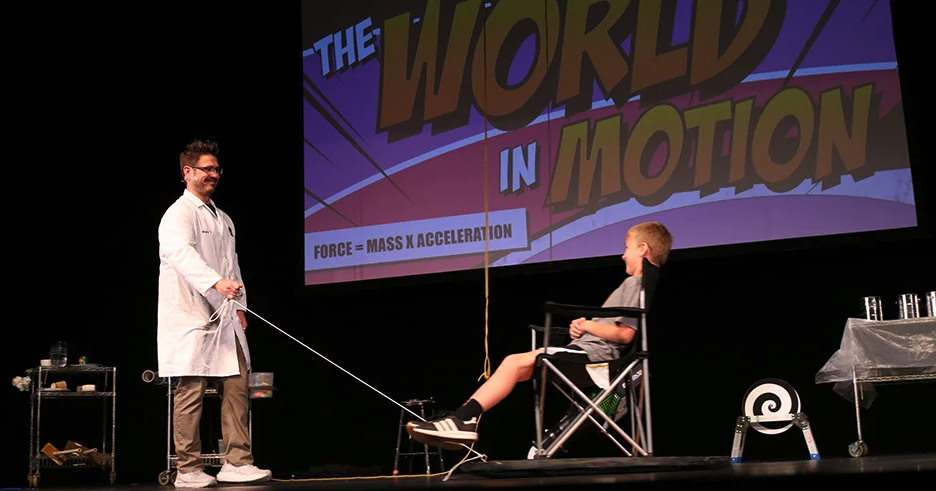
Science Takes Center Stage At The Niswonger With Mr. C's The World In Motion
[ad_2]

Democrats demand answers on Trump’s AI policy amid row over Nvidia CEO’s affair with alleged Chinese spy
Democratic members of the House Foreign Affairs Committee, specifically Gabe Amo of Rhode Island, Gregory W. Meeks of New York and Sydney Kamlager-Dove of California, have demanded that US Commerce Secretary Howard Lutnick address inquiries regarding the Trump administration’s export policies concerning advanced artificial intelligence computer chips, amid mounting concerns over operations by Beijing's intelligence apparatus, as reported by The New York Times.
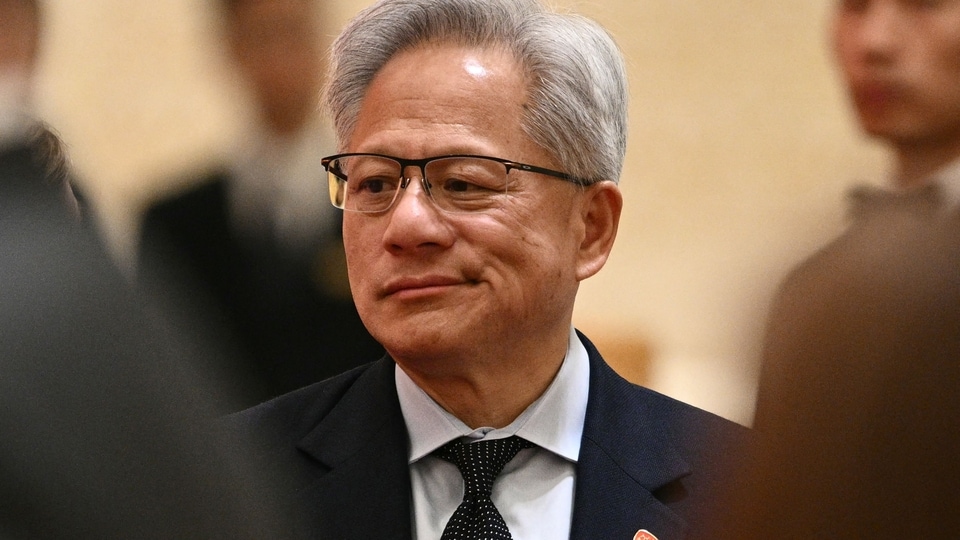
The correspondence emerged as congressional leadership prepared for a scheduled intelligence briefing concerning Iran, though legislators from both parties intended to question CIA director John Ratcliffe and Director of National Intelligence Jay Clayton regarding an operative for China’s Ministry of State Security who maintained a personal relationship with Nvidia chief executive Jensen Huang.
In their communication, the lawmakers challenged the Commerce Department regarding authorisations permitting advanced processor shipments overseas.
“You cannot claim to be protecting American leadership in artificial intelligence while allowing our most advanced technology to reach a strategic competitor,” the lawmakers wrote. “National security must come before corporate sales targets.”
As noted in recent coverage by The NYT, Alice Huang, a former executive at the Singapore-headquartered data centre firm Megaspeed, was engaged by Chinese intelligence.
Megaspeed procured Nvidia hardware and established data facilities across Southeast Asia that served mainland Chinese enterprises, including Alibaba.
Additional reporting published by The NYT highlighted that the Commerce Department cleared licensing approvals for dispatching sophisticated AI hardware to Beijing-affiliated entities, military contractors and blacklisted firms.
“Allowing China to obtain advanced US AI chips puts our national security at risk,” the lawmakers wrote. “These chips power the computing capabilities that will shape the future of artificial intelligence, military modernisation and economic competition.”
Also Read: Trump says FBI probing Nvidia CEO Jensen Huang as China controversy deepens
Nvidia's board announced an inquiry into the connection between Alice Huang and the company's chief executive.
Jensen Huang released a video address admitting to the affair while confirming that he would remain at the helm during the ongoing probe.
Parallel legislative scrutiny is intensifying as Republicans across three congressional panels summoned Jensen Huang for a closed-door deposition to examine potential proprietary leaks and his associations with Alice Huang, a development further detailed in reports by The NYT.
Individuals briefed on intelligence matters indicated that Alice Huang operated on behalf of China’s Ministry of State Security with instructions to gather intelligence regarding Nvidia’s cutting-edge AI architecture and facilitate technology acquisition for Beijing.
The US government has prohibited shipments of Nvidia's most powerful hardware to China, a restriction Jensen Huang has openly contested, as tracked through ongoing investigations cited by The NYT.
[ad_2]

Q3 earnings recap: Citigroup (NYSE:C) tops diversified banks stocks

Wrapping up Q3 earnings, we look at the numbers and key takeaways for the diversified banks stocks, including Citigroup (NYSE:C) and its peers.
At their core, diversified banks take in deposits and engage in various forms of lending, which means revenue is generated through interest rate spreads (difference between loan and deposit rates) and fees. Other revenue comes from adjacent services such as wealth management, card and account fees, and products such as annuities. These institutions benefit from rising interest rates that improve NIMs (net interest margins), digital transformation reducing operational costs, and expanding wealth management services as populations age. However, they face headwinds including fintech competition disrupting traditional models (how disruptive is crypto?), stringent regulatory requirements increasing compliance costs, and cybersecurity threats requiring substantial technology investments. Economic downturns also pose risks through potential loan defaults and compressed margins during accommodative monetary policy periods.
The 7 diversified banks stocks we track reported a slower Q3. As a group, revenues missed analysts' consensus estimates by 0.7%.
In light of this news, share prices of the companies have held steady. On average, they are relatively unchanged since the latest earnings results.
Best Q3: Citigroup (NYSE:C)
With operations in nearly 160 countries and a history dating back to 1812, Citigroup (NYSE:C) is a global financial services company that provides banking, investment, wealth management, and payment solutions to consumers, corporations, and governments.
Citigroup reported revenues of $23.87 billion, up 7.9% year on year. This print exceeded analysts' expectations by 0.6%. Overall, it was a strong quarter for the company with a solid beat of analysts' net interest income estimates and a beat of analysts' EPS estimates.

Citigroup scored the biggest analyst estimate beat in the group. Investor expectations, however, were likely higher than Wall Street's published projections, leaving some wishing for even better results (analysts' consensus estimates are those published by big banks and advisory firms, not the investors who make buy and sell decisions). The stock is down 10% since reporting and currently trades at $118.68.
Is now the time to buy Citigroup? Access our full analysis of the earnings results here, it's free.
PNC Financial Services Group (NYSE:PNC)
Tracing its roots back to 1852 when Pittsburgh's industrial boom demanded stronger financial institutions, PNC (NYSE:PNC) is a diversified financial institution that provides retail banking, corporate banking, and asset management services through a coast-to-coast branch network.

[ad_2]

Texas A&M president addresses BCS business leaders, announces new industry engagement office
COLLEGE STATION, Texas (KBTX) - For the first time since taking office, Texas A&M University President Susan Ballabina addressed Bryan-College Station business leaders at the Bryan-College Station Chamber of Commerce banquet Monday night.
Addressing more than 600 people, Ballabina announced plans to create an Office for Industry Engagement. She said the office will give local businesses a direct starting point for working with Texas A&M.
That could include partnerships involving research, community outreach and events on campus.
“We will be setting up an office for industry engagement,” Ballabina said. “Texas A&M is large. It’s complex. Sometimes it’s hard to navigate. We are setting up this office for you to have a first point of entry into our enterprise.”
Ballabina also said Texas A&M plans to hold regular community surveys and listening sessions to better understand what local industries need. The university plans to expand continuing education and workforce programs to help workers build new skills.
“We’re living in a world that requires constant upskilling,” Ballabina said. “We want to up our game in what we provide to industry and businesses related to continuing education.”
Ballabina said Texas A&M supported more than 47,000 jobs in the Brazos Valley during the last fiscal year. She said future university growth must take the needs of the surrounding community into account.
“We want to meet the needs of the state, but we have to do it in a way that makes us good partners as well with all of you,” Ballabina added.
Tuesday’s rare public appearance came as the Texas A&M University System Board of Regents prepared to meet Wednesday and Thursday in College Station.
Copyright 2026 KBTX. All rights reserved.
[ad_2]

Here’s What Apple Fixed in iOS 27.2.1 and macOS 27.2.1
The iOS 27.2.1, iPadOS 27.2.1, and macOS 27.2.1 updates Apple released today fix a handful of security vulnerabilities. With the security fixes implemented, it's a good idea to update as soon as you can.

A bug with iMessage could let a remote attacker join a group chat to receive its messages, and another could let users see messages sent before they joined a group chat.
Most of the vulnerabilities involved AirPlay and Bluetooth. A malicious Bluetooth device could pair without user interaction, and another bug could let a nearby attacker corrupt process memory. Several bugs could allow an attacker to bypass the rate limit on AirPlay pairing code attempts.
Apple credits itself on four of the vulnerabilities, so they were found internally.
With the macOS update, Apple also addressed the eMudhra certificate vulnerability, adding protections for command-line tools.
Apple did not say that the flaws have been exploited in the wild, but with the details on each vulnerability now public, devices that are not running the new software could be more vulnerable to attack.
Popular Stories
iOS 27.2 Features: Everything New in iOS 27.2
Apple released iOS 27.2, uniting the iPhone Duo and other iPhone models on the same version of iOS. iOS 27.2 is the first major iOS 27 update, and it adds several useful new features. Siri AI Improvements Siri AI can recall past conversations you had with it, so you can ask Siri about something it told you before, like a restaurant it previously recommended. It's also able to draw on more...
Apple Releases iOS 27.2 Release Candidate
Apple today seeded the release candidate of an upcoming iOS 27.2 update to developers for testing purposes, with the update coming a week after Apple released the fourth iOS 27.2 beta. Apple also seeded the iPadOS 27.2 RC. Registered developers can download the beta updates by opting in under Settings > General > Software Update and selecting the iOS 27 developer beta. The beta was used...
Apple Releases iOS 27.2 With New Siri AI Languages
Apple today released iOS 27.2 and iPadOS 27.2, the first major updates to the iOS 27 and iPadOS 27 operating systems that came out in September. iOS 27.2 is available for all iPhones able to run iOS 27, including the iPhone Duo, while iPadOS 27.2 is available for all iPads able to run iPadOS 27, including the newly announced OLED iPad mini. The iOS 27.2 update expands Siri AI to new...
[ad_2]

HoYoverse Expands Korean Market With Two New Games < IT·Gaming < 기사본문
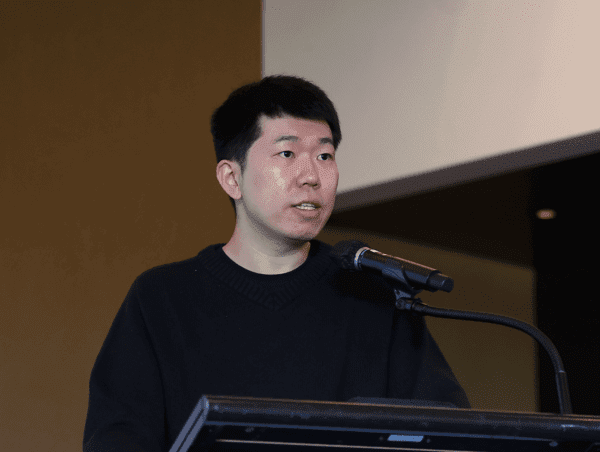


Chinese game developer HoYoverse is expanding its presence in the South Korean market with two new titles targeting different genres: life simulation and creature collection and development.
HoYoverse Korea held a media briefing last week to introduce the key gameplay systems and release plans for its upcoming titles, Petit Planet and Honkai: Nexus Anima.
Seven, HoYoverse’s global business CEO, expressed expectations for the new titles, while Ran Huang, head of HoYoverse Korea, outlined their main features and service plans for Korean players.
HoYoverse will also showcase both games at G-STAR 2026, which will be held at BEXCO in Busan. The company is returning to the event for the first time in four years, with an exhibition space spanning 100 booths.
Asked about the company’s decision to participate in G-STAR this year, Huang said, “HoYoLAND is an event for our existing fans. We are participating in G-STAR to introduce differentiated new titles to Korean players first.” She added, “Rather than focusing on the number of G-STAR visitors or booth visitors, we are concentrating on allowing Korean players to experience the games firsthand and provide feedback.”
One of the new titles, Petit Planet, is scheduled for release on Dec. 4. It is HoYoverse’s first life-simulation game. A version for Nintendo Switch 2 is also planned for next year.
Players can create their own planets and engage in farming, building structures, and crafting furniture and clothing. The game also offers social features, including interactions with other players and space exploration. Players can obtain more than 1,000 types of clothing and furniture for free through gameplay.
The company has incorporated artificial intelligence (AI) technology into the game. Using its proprietary AI model and memory system, HoYoverse has developed non-player characters (NPCs) that remember players’ actions and provide personalized responses. Players can also engage in AI-powered conversations with selected characters, including Nalo, a cafe manager.
HoYoverse said NPC interactions received the most positive feedback during recent testing. Players responded particularly well to the feature that allows NPCs to remember their actions. The company is adjusting how frequently NPCs initiate interactions to accommodate players who may find frequent engagement burdensome, while also working to strengthen each character’s individuality.
HoYoverse planner Murphy said, “The game can be played in its entirety without spending money. Interactions with NPCs and neighboring characters are also available for free.” He added that the game includes social feature restrictions to protect minors, as well as settings that allow players to turn AI features on or off.
The other new title, Honkai: Nexus Anima, is a collection-and-development adventure strategy game based on the existing Honkai intellectual property (IP). Players explore the world while collecting and raising creatures known as Anima.
Anima can be obtained through battles, missions and exploration. They evolve into new forms as they grow. Key gameplay features include strategic combat combining the individual characteristics of different Anima and branching storylines that change according to players’ choices.
HoYoverse will begin the game’s final test on Nov. 25. The company plans to release the title in spring 2027.
HoYoverse is the global gaming brand of miHoYo, a company founded in Shanghai, China, in 2011. It established its Korean subsidiary in 2020. Its major titles include Genshin Impact, Honkai: Star Rail and Zenless Zone Zero, primarily targeting the subculture gaming market.
According to market research firm Sensor Tower, Genshin Impact generated 52 billion won in mobile revenue in South Korea during its first three months after launch. Honkai: Star Rail, released in April 2023, generated approximately 44 billion won in the Korean market during its first three months.
The two new titles differ from HoYoverse’s established core genres. Petit Planet centers on player creativity and interaction with other users, while Honkai: Nexus Anima combines creature collection, strategic combat and life-simulation elements. Unlike the existing Honkai series, which focuses on action role-playing games (RPGs), the new title aims to offer a different gameplay experience.
Industry observers view HoYoverse’s latest strategy as an effort to retain its existing subculture gaming audience in South Korea while attracting additional players interested in life simulation and casual games.
[ad_2]

Vikings head coach addresses quarterback conundrum after Week 9 loss
The Minnesota Vikings have an incredible defense. They have a strong cast of supporting characters on offense. They just don't have the quarterback to tie everything together.
Fewer than 24 hours before the 2026 NFL trade deadline, the Vikings lost their grip on first place in the NFC North with a "Monday Night Football" loss defined by Minnesota's inconsistent quarterback play. After the game, head coach Kevin O'Connell blamed himself for being unable to get quarterback Carson Wentz into a rhythm against the Buffalo Bills.
Advertisement
He also declined to provide any insight into his team's attempts to address its quarterback situation at the trade deadline.
"I'll defer to (general manager) Nolan (Teasley) on that," O'Connell said when asked whether the Vikings were pursuing a quarterback ahead of the deadline. "We've had dialogue about a lot of different positions. Tight turnaround obviously, playing the Monday night game before that. We'll get right to work on any potential moves that can be there. Really just focused on the game tonight, which was not good enough in any way, shape or form."
OPINION: Vikings are dead in the water unless they solve QB problem in next 24 hours
While filling in for the injured Kyler Murray, Wentz mustered a passer rating of just 8.9 in Week 9, going 8-of-25 with two interceptions and a lost fumble against the Bills. Obligatory reminder that a quarterback would have a passer rating of 39.6 if he spiked the ball on every play.
Advertisement
Minnesota turned to second-year Max Brosmer in garbage time. The former undrafted free agent finished 6-of-7 for 58 yards and a passer rating of 101.2, though the Bills' defense was not playing as tightly as it had been for most of the night.
With Murray sidelined with his hamstring injury, Wentz and Brosmer are the only two quarterbacks on the Vikings' active roster.


The NFL trade deadline is Tuesday, Nov. 10 at 4 p.m. ET. As of midnight ET on Nov. 10, the Vikings have yet to bring in a player via trade. Somewhat ironically, Minnesota's lone midseason trade so far this year was one that moved a quarterback off of its roster – when it sent quarterback J.J. McCarthy to the New York Giants in late September.
Minnesota's next game is against the Green Bay Packers on Sunday, Nov. 15 at 1 p.m. ET. The Vikings beat the Packers 39-22 in Week 1, but Green Bay may be getting star edge rusher Micah Parsons back in Week 10. The three-time All-Pro has been working his way back from the ACL tear he sustained in 2025.
This article originally appeared on USA TODAY: Vikings head coach addresses quarterback conundrum after Week 9 loss
[ad_2]

Nvidia Gets a Chinese Honeypot Lesson
Nvidia’s friends in Washington are shrugging off CEO Jensen Huang’s affair with a suspected Chinese spy. Regrettable, they say, but men will be men. Well, not so fast. The imbroglio is a stark warning of how the Chinese are seeking to infiltrate the top levels of American business to dominate artificial intelligence.
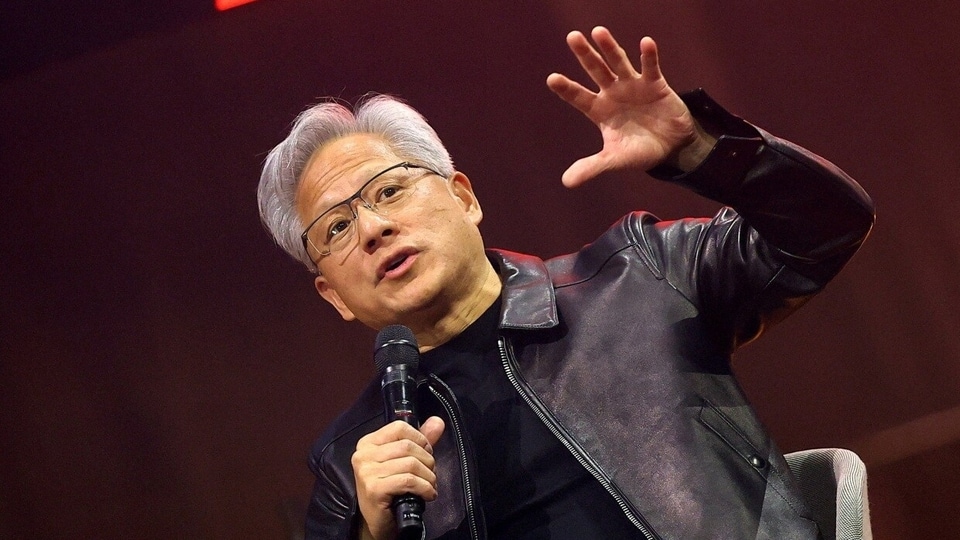
Nvidia shares fell 4.3% Monday after Mr. Huang on Sunday admitted to and apologized for his affair. Investors may worry that the affair, besides being a distracting embarrassment, could invite a government response that limits its chip sales. House Republicans have requested that the CEO appear for a closed-door briefing this month.
The company’s board has begun an independent investigation in light of reports that Mr. Huang was the target of a Chinese intelligence campaign. As well it should, but this isn’t a substitute for a government investigation. The national-security stakes are larger than one man or company.
Press reports going back to last fall documented the celebrity CEO’s unusually close relationship with Chinese citizen Alice Huang, who founded the Singapore-based cloud company Megaspeed. U.S. security officials reportedly circulated a memo raising red flags about their relationship.
Ms. Huang previously worked at a Chinese state-run media company and founded Megaspeed in 2023. Megaspeed was spun off by Chinese video game maker, 7Road Holdings, soon after the Biden team imposed restrictions on AI chip sales to China. Coincidence, comrade? Megaspeed was then sold to a Singapore-based shell company in November 2023.
Soon afterward, Nvidia designated Megaspeed a “Cloud Partner,” which gave it priority access to advanced chips. Press reports say Megaspeed has bought billions of dollars of Nvidia chips, which are hosted in data centers in the Asia-Pacific outside of China.
Megaspeed has rented out computing capacity to Chinese companies, including Alibaba. That means Chinese AI companies are able to access Nvidia’s high-powered chips despite export controls. The U.S. government has investigated Megaspeed over concerns it may also have been involved in smuggling chips into China, according to Bloomberg News. Megaspeed has denied wrongdoing and says it abides by U.S. laws and is surprised by the allegations against Ms. Huang.
Chip smuggling and export-control evasion are one reason Chinese open-weight AI models have made rapid progress. U.S. prosecutors this year charged employees and a contractor at Super Micro, a U.S. company, with conspiring to illegally route billions of dollars of AI servers containing restricted Nvidia chips to China.
Taiwan prosecutors in August charged nine people, including a Nvidia employee and two at Super Micro, with violating export controls. At the very least Nvidia’s internal anti-smuggling controls need to be tightened.
Nvidia’s team has lobbied the Trump Administration with some success to ease export controls, though restrictions remain on its most advanced chips. Nvidia says allowing more chip exports will encourage Chinese AI developers to depend on U.S. technology. Possibly, but this overlooks that the Chinese aren’t using AI merely for commercial purposes.
They use AI to advance Beijing’s military and anti-American goals, which Nvidia’s high-end chips would abet. There’s little evidence that Mr. Huang is anything but a patriot, but he has taken the naive view shared by some in the Trump orbit that China is an economic rival rather than a geopolitical adversary.
Nvidia officials downplay the risk that the Chinese would use its chips for nefarious purposes. Mr. Huang last year derided the label “China hawk” as a “badge of shame.” In his view, the U.S. should learn to make bonhomie with Beijing. That’s hard to do when Beijing aids America’s enemies, threatens U.S. friends, and steals U.S. military and economic secrets.
Chinese “police stations” target Chinese dissidents in the U.S. The former mayor of Arcadia, Calif., with a population of 55,000, this spring pleaded guilty to acting as an illegal Chinese agent. Beijing’s Ministry of State Security, for which Ms. Huang allegedly worked, employs hundreds of thousands of spies.
***
All of this is another reason for Mr. Trump to be skeptical of commitments by Chinese President Xi Jinping when they meet next week. Easing export controls on Nvidia’s Rubin and Blackwell chips is a top Beijing priority. Giving away Nvidia chips for a promise to buy more soybeans would be a mega-blunder.
The Huang affair highlights China’s designs on U.S. chips and holes in U.S. export controls. Closing the holes may be a rare but useful area for bipartisan cooperation.
[ad_2]