

Nvidia’s friends in Washington are shrugging off CEO Jensen Huang’s affair with a suspected Chinese spy. Regrettable, they say, but men will be men. Well, not so fast. The imbroglio is a stark warning of how the Chinese are seeking to infiltrate the top levels of American business to dominate artificial intelligence.
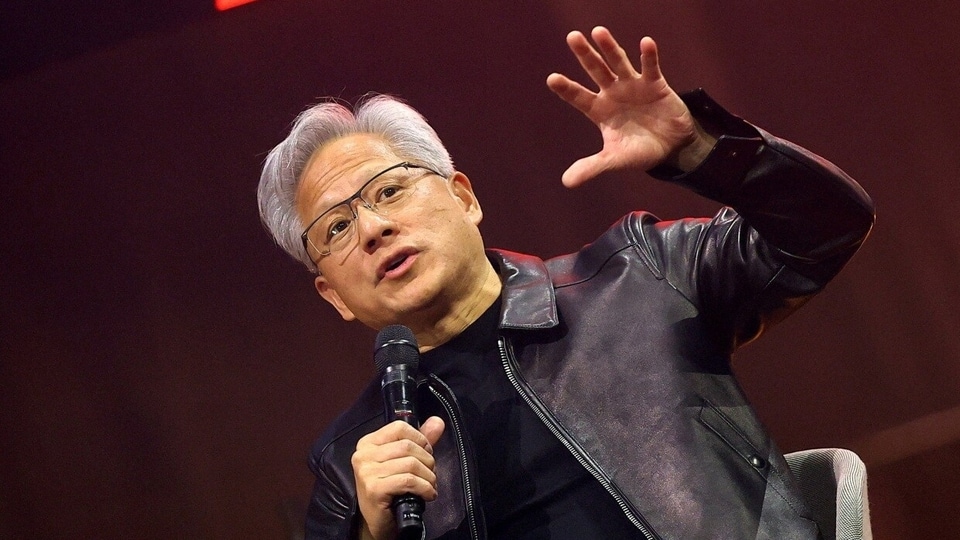
Nvidia shares fell 4.3% Monday after Mr. Huang on Sunday admitted to and apologized for his affair. Investors may worry that the affair, besides being a distracting embarrassment, could invite a government response that limits its chip sales. House Republicans have requested that the CEO appear for a closed-door briefing this month.
The company’s board has begun an independent investigation in light of reports that Mr. Huang was the target of a Chinese intelligence campaign. As well it should, but this isn’t a substitute for a government investigation. The national-security stakes are larger than one man or company.
Press reports going back to last fall documented the celebrity CEO’s unusually close relationship with Chinese citizen Alice Huang, who founded the Singapore-based cloud company Megaspeed. U.S. security officials reportedly circulated a memo raising red flags about their relationship.
Ms. Huang previously worked at a Chinese state-run media company and founded Megaspeed in 2023. Megaspeed was spun off by Chinese video game maker, 7Road Holdings, soon after the Biden team imposed restrictions on AI chip sales to China. Coincidence, comrade? Megaspeed was then sold to a Singapore-based shell company in November 2023.
Soon afterward, Nvidia designated Megaspeed a “Cloud Partner,” which gave it priority access to advanced chips. Press reports say Megaspeed has bought billions of dollars of Nvidia chips, which are hosted in data centers in the Asia-Pacific outside of China.
Megaspeed has rented out computing capacity to Chinese companies, including Alibaba. That means Chinese AI companies are able to access Nvidia’s high-powered chips despite export controls. The U.S. government has investigated Megaspeed over concerns it may also have been involved in smuggling chips into China, according to Bloomberg News. Megaspeed has denied wrongdoing and says it abides by U.S. laws and is surprised by the allegations against Ms. Huang.
Chip smuggling and export-control evasion are one reason Chinese open-weight AI models have made rapid progress. U.S. prosecutors this year charged employees and a contractor at Super Micro, a U.S. company, with conspiring to illegally route billions of dollars of AI servers containing restricted Nvidia chips to China.
Taiwan prosecutors in August charged nine people, including a Nvidia employee and two at Super Micro, with violating export controls. At the very least Nvidia’s internal anti-smuggling controls need to be tightened.
Nvidia’s team has lobbied the Trump Administration with some success to ease export controls, though restrictions remain on its most advanced chips. Nvidia says allowing more chip exports will encourage Chinese AI developers to depend on U.S. technology. Possibly, but this overlooks that the Chinese aren’t using AI merely for commercial purposes.
They use AI to advance Beijing’s military and anti-American goals, which Nvidia’s high-end chips would abet. There’s little evidence that Mr. Huang is anything but a patriot, but he has taken the naive view shared by some in the Trump orbit that China is an economic rival rather than a geopolitical adversary.
Nvidia officials downplay the risk that the Chinese would use its chips for nefarious purposes. Mr. Huang last year derided the label “China hawk” as a “badge of shame.” In his view, the U.S. should learn to make bonhomie with Beijing. That’s hard to do when Beijing aids America’s enemies, threatens U.S. friends, and steals U.S. military and economic secrets.
Chinese “police stations” target Chinese dissidents in the U.S. The former mayor of Arcadia, Calif., with a population of 55,000, this spring pleaded guilty to acting as an illegal Chinese agent. Beijing’s Ministry of State Security, for which Ms. Huang allegedly worked, employs hundreds of thousands of spies.
***
All of this is another reason for Mr. Trump to be skeptical of commitments by Chinese President Xi Jinping when they meet next week. Easing export controls on Nvidia’s Rubin and Blackwell chips is a top Beijing priority. Giving away Nvidia chips for a promise to buy more soybeans would be a mega-blunder.
The Huang affair highlights China’s designs on U.S. chips and holes in U.S. export controls. Closing the holes may be a rare but useful area for bipartisan cooperation.


