A new Angus Reid poll says Canadians are warming to improved relations with China and India as the country looks to reduce U.S. dependency in the wake of President Donald Trump’s tariffs.
The new data says developing stronger relationships with China (69%), India (61%), Japan (87%), and South Korea (76%) is important.
Meanwhile, three-in-five Canadians (58%) say they’ve become more supportive of trade with the Northeast Asian economies of Japan, South Korea and Taiwan in response to U.S.-Canada trade tensions, while half (49%) say the same of Southeast Asia.
The support for increasing trade with China (41% are more supportive) and India (36% are more supportive) is less pronounced, but it is increasing.
In November 2024, 15% of Canadians said they had a favourable view of China but after two years of Trump, that figure has more than doubled to 38%.
Canadians are warming to China, but still more than half (53%) say they view the country unfavourably.
Views of India have also become more positive in the past two years, with 36% saying they have a favourable view of the world’s most populous country, an increase of 10 points from 2024.
In terms of other Indo-Pacific economies, there is much more positivity, with almost nine-in-ten Canadians (88%) saying they view Japan favourably and three-quarters (76%) and seven-in-ten (71%) have positive views of South Korea and Southeast Asia, respectively.
Still, only 10% believe Southeast Asia is an area where Canada should be developing closer trade ties compared to other global regions, while only 14% say the same of China and only 5% of India.
They are still far behind the European Union (58%) as the preferred region for a closer trading relationship, and trail Mexico (24%), the United Kingdom (22%), and the U.S. (20%).
In 2021, in the wake of a diplomatic break between Canada and China over the Meng Wanzhou-Michael Kovrig-Michael Spavor saga, Canadians by a three-to-one margin said “human rights and the rule of law” should be Canada’s focus when dealing with China (77%) rather than trade (23%).
Now, a majority (57%) believe economics should be prioritized over those former concerns.
More support for improved relations with India
There has been similar movement when it comes to India, after allegations levelled by Justin Trudeau of India’s involvement in the killing of a Canadian Sikh leader.
In 2024, 38% believe trade and investment should be more important in Canada’s relationship with India, while three-in-five (62%) believed it should be “human rights and the rule of law”.
Now a majority (56%) of Canadians believe trade and investment with India should be prioritized over the latter.
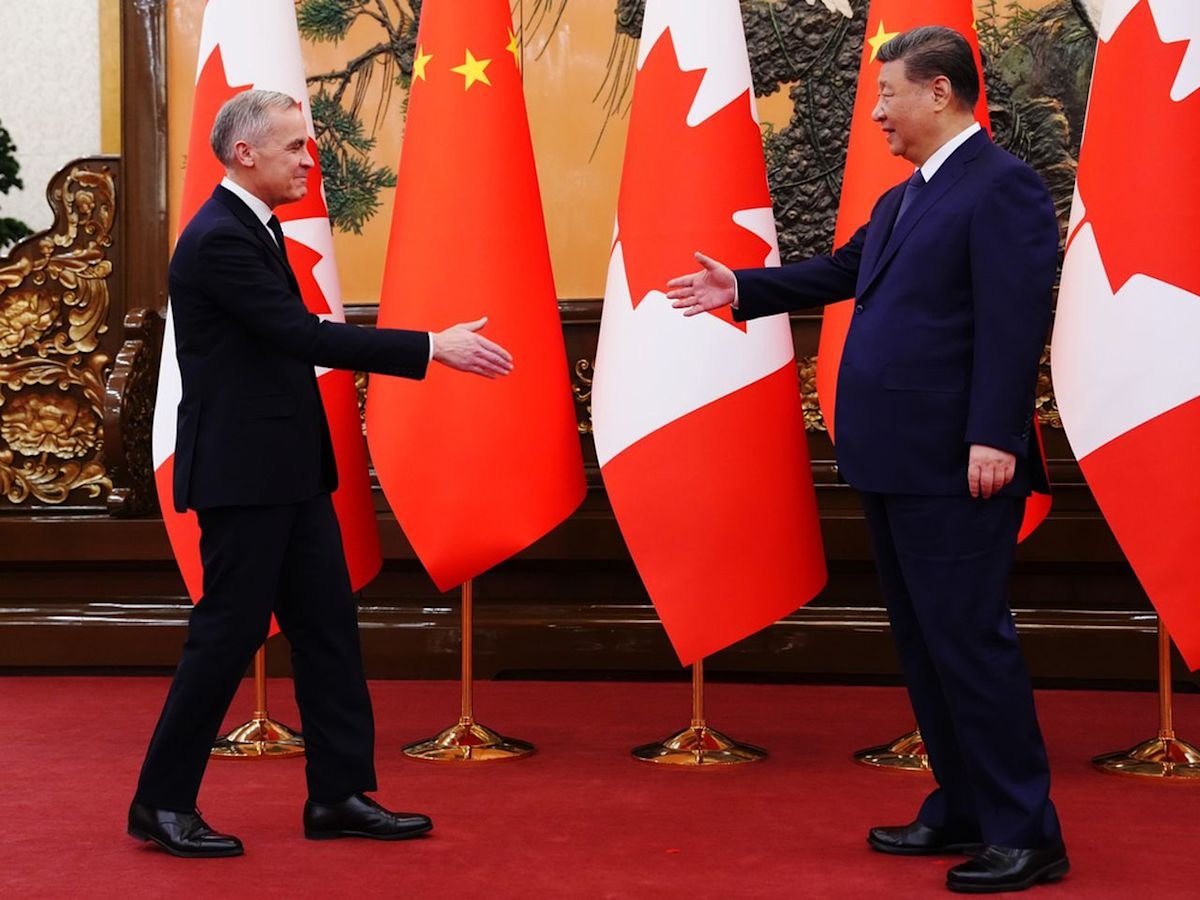
Canadian Prime Minister Mark Carney begins a global trip this week to continue efforts to diversify Canada’s trade beyond the United States and will conclude with his second visit to China in 2026 as he attends the Asia-Pacific Economic Cooperation (APEC) Economic Leaders’ Meeting in Shenzhen.
Prior to Carney’s January visit earlier this year, it had been more than eight years since a Canadian prime minister visited China.
The data from Angus Reid, done in conjunction with the Asia Pacific Foundation of Canada, was provided by an online survey from Oct. 29- Nov. 4, 2026, among 1,609 Canadian adults and, for comparison purposes only, a probability sample of this size would carry a margin of error of +/- 2 percentage points, 19 times out of 20.
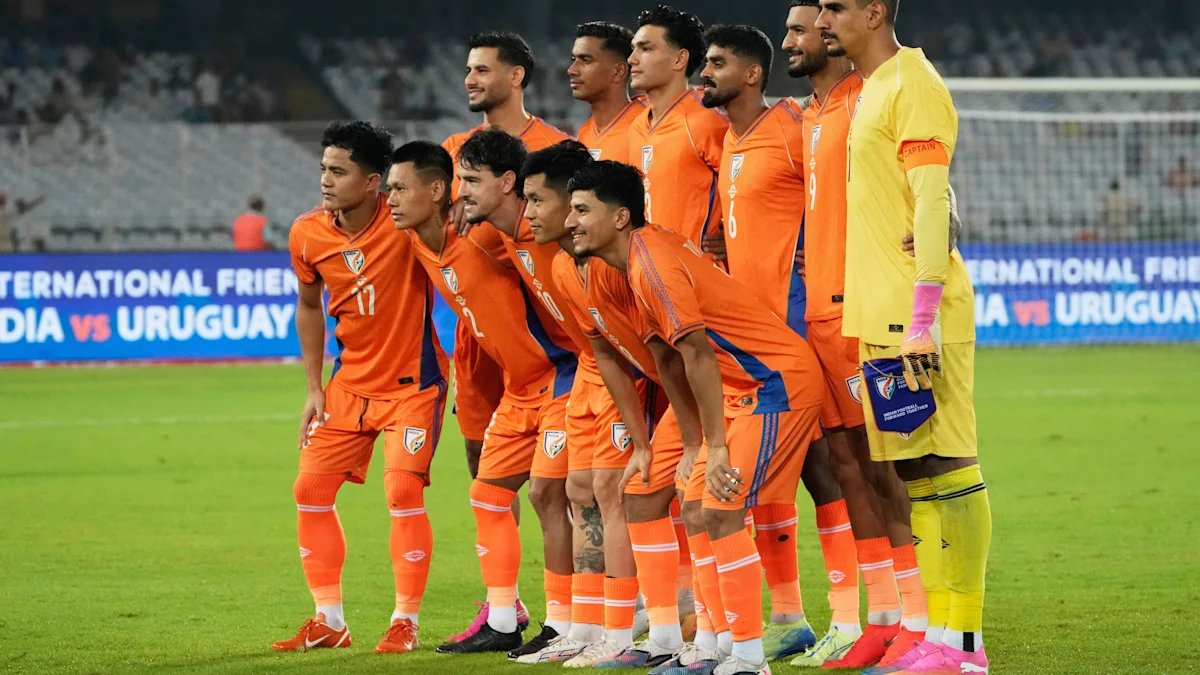
There’ll be extra attention on the pre- and post-game moments when archrivals India and Pakistan meet in the opening game of the South Asian Football Federation Cup.
Many tuning in Thursday will be wondering if the players will shake hands at the outset of the six-nation tournament being hosted in Bangladesh.
Advertisement
Soccer takes a backseat to cricket in this part of the world. And unlike cricket, the national football teams of India and Pakistan aren’t superpowers in the global game.
Tension has been higher than usual in recent cricket encounters between the countries, with players not exchanging customary handshakes before or after international games. The soccer contest could be different.
“I think they will shake hands. This is football protocol that will be followed irrespective of the country,” Shaji Prabhakaran, former general secretary of the All India Football Federation, told The Associated Press. “That rivalry has not yet come into football.”
One reason is the lopsided nature of the soccer relationship, with India ranked No. 138 by FIFA and Pakistan at 197th.
Advertisement
“India has dominated but there is potential if Pakistan improves,” Prabhakaran said. “The local rivalry can come, it would be good and exciting.”
Pakistan has been calling up overseas-born talent such as Danish-born captain Abdullah Iqbal, who plays for Mjällby AIF in Sweden, and is aiming to reach the final of the regional tournament for the first time.
Pakistan coach Nolberto Solano is drawing on his experience of intense rivalries from his time as a Peru international and a decade in the Premier League.
“The rivalry between Peru and Chile is similar to that between Pakistan and India,” the former Newcastle United and Aston Villa winger said ahead of the game in Dhaka. “It carries the same intensity. I understand very well how important these matches are for the fans. We want to make people happy because we know what these games mean to them.”
Advertisement
The tournament is split into two groups of three, and the top two from each advance to the semifinals.
India and Pakistan are grouped with Maldives.
Bangladesh, coached by ex-U. S. international Thomas Dooley, is hoping to win a second title, especially as it has home advantage and has been grouped with Bhutan and Sri Lanka.
India, with three of the last four regional titles, would welcome more regional competition.
“There are some sentiments from fans that India should play at a higher level but showing your domination sends a message,” Prabhakaran said. “Other (SAFF) nations all fancy beating India and they all want India to be more active in the region.”
Advertisement
None of the South Asian teams qualified for the 24-team Asian Cup, which was this week pushed back from January to December next year because of the conflict in the Middle East.
Prabhakaran believes there is potential for soccer in South Asia to improve enough to match cricket for its following and passion among fans.
“Cricket shows the sporting passion in the region but football is the No. 1 sport in Maldives, Nepal and Bhutan,” he said. “Local football has to grow and India will benefit and can attract players from the region and send its players to other leagues if those leagues improve. It is in the interests of everyone and India has to take the lead.”
The coming weeks are a chance for India to show its strength.
Advertisement
“The South Asian Championship is like the Asian Cup for South Asian countries,” Prabhakaran said, “this is the one competition that they are able to engage to the maximum.”
A report from Washington on 10 November illustrates the difficulty. According to Reuters, Microsoft has pressed American officials to abandon or narrow a proposed ban on new Chinese-made optical transceivers, the components that carry information through fibre links in AI data centres. Supporters of restrictions point to security concerns; technology companies warn that alternative manufacturers may not be ready to replace the current supply. The proposal remains under consideration. Its significance lies in the tension between protecting a system and keeping that system available.
Europe knows this tension well. The European Commission’s June 2026 technological sovereignty package focuses on semiconductors, cloud computing, AI and open-source technology. These are serious initiatives because a digital economy needs more than declarations of independence. It needs technical capacity, market opportunities and trusted infrastructure. Yet the American debate shows how rapidly a restriction can expose the practical limits of even a wealthy technology market.
Spain and its Mediterranean neighbours have particular reasons to pay attention. Their ports, transport networks, tourism services, industrial plants and public institutions depend on communications that cross national boundaries. A data centre may be physically located in one country while depending on chips, optical equipment, software support and cloud customers located elsewhere. A purely national view of that infrastructure will miss the vulnerabilities that matter during disruption.
I would start with a different question from the one normally asked. Rather than asking which supplier a country wants to exclude, officials should ask which public functions must continue if a particular supplier becomes unavailable. That turns an abstract debate into a practical one. Hospitals need access to records. Transport authorities need reliable communications. Emergency teams need information at the moment it is most difficult to obtain. The choice of components should be tested against those requirements.
Independent testing, transparent procurement and realistic continuity exercises can reduce exposure without assuming that every imported product presents the same level of risk. An assessment should consider where equipment is deployed, the consequences of compromise, the visibility of its software and firmware, and the ability to replace it. Sensitive government networks may justify safeguards different from those applied to ordinary commercial installations. A careful policy can recognise that distinction.
Spain’s relationship with the wider Mediterranean also makes cooperation essential. Digital infrastructure connects European institutions to North African markets, logistics corridors and service providers. Rules developed without consultation can transfer delays and costs across those connections. Technical exchanges, compatible security requirements and better incident reporting could give both shores more predictable digital services.
The UAE provides another relevant perspective as a country investing heavily in digital infrastructure while working with partners across multiple markets. Its experience underlines a reality shared with Europe: international partnerships will remain necessary, even as governments work to improve control over critical systems. The aim should be to manage those relationships with better information and stronger operational safeguards.
Europe’s digital independence will be credible when it can choose, inspect, repair and operate the technologies on which daily life depends. That is a more demanding goal than simply replacing one foreign dependency with another. It also offers a constructive path for Spain and its neighbours: building durable capability while preserving the openness that has made the Mediterranean a crossroads of exchange.
Abdulla Saeed Alhebsi, MIoL. Member of the Institute of Leadership (UK). Independent Emirati Writer and Researcher in Security, Risk Management, Operational Resilience, Leadership and Control Room Operations
Home » Home » Brevard Veterans Memorial Center on Merritt Island to Honor America’s Heroes During Veterans’s Day Celebration
commemorative ceremony is scheduled for 9:30 a.m. to 10:30 a.m. at the plaza in front of the museum, event is open to the public and admission is free
Veterans, military families and community members will gather Wednesday, November 11, at the Brevard Veterans Memorial Center on Merritt Island for a special Veterans Day celebration honoring the men and women who have served in the United States Armed Forces.
Annual Veterans Day Celebration Set for Wednesday Morning Featuring Patriotic Ceremony, National Anthem by Harbor City Harmonizers and Complimentary Breakfast Courtesy of SpaceX
BREVARD COUNTY • MERRITT ISLAND, FLORIDA – Veterans, military families and community members will gather Wednesday, November 11, at the Brevard Veterans Memorial Center on Merritt Island for a special Veterans Day celebration honoring the men and women who have served in the United States Armed Forces.
The commemorative ceremony is scheduled for 9:30 a.m. to 10:30 a.m. at the plaza in front of the museum at the Brevard Veterans Memorial Center, located at 400 S. Sykes Creek Parkway.
The free community event will give residents a chance to come together in recognition of the sacrifices, dedication, and service of America’s veterans, whose commitment to protecting the nation’s freedoms has helped shape the country’s history.
A highlight of the morning will be a performance of the national anthem by the Harbor City Harmonizers, adding a patriotic musical tribute to the gathering.
After the ceremony, attendees will also be invited to enjoy a complimentary breakfast courtesy of SpaceX, whose support will help make the Veterans Day observance accessible to community members.
HONORING THOSE WHO SERVED
Veterans Day, observed annually on November 11, recognizes all Americans who have served honorably in the U.S. military, including those who served during wartime and peacetime.
Unlike Memorial Day, which honors military personnel who died while serving their country, Veterans Day recognizes the living and deceased men and women who wore the uniform and answered the nation’s call to duty.
The annual observance provides an opportunity to recognize the courage, commitment, and sacrifices of generations of service members, as well as the families who supported them throughout their military careers.
For Brevard County, a community with deep ties to the nation’s military, aerospace and defense industries, Veterans Day carries particular significance.
The Space Coast is home to generations of military veterans, active-duty personnel, military families and civilian professionals whose contributions have helped support America’s defense capabilities and space exploration programs.
The Brevard Veterans Memorial Center serves as a gathering place to remember military history, educate visitors about America’s armed forces, and honor those who have served.
COMMUNITY INVITED TO ATTEND
Wednesday’s celebration is open to the public, and admission is free.
Residents, veterans, active-duty military personnel, families and visitors are encouraged to attend the morning ceremony and join fellow community members in expressing appreciation to those who have served the United States.
The event will take place at:
Brevard Veterans Memorial Center 400 S. Sykes Creek Parkway Merritt Island, Florida
Special Features: Patriotic ceremony, national anthem performed by the Harbor City Harmonizers, and complimentary breakfast courtesy of SpaceX.
As the nation pauses to recognize Veterans Day, the gathering on Merritt Island will offer Brevard County residents an opportunity to reflect on the meaning of service, remember the sacrifices made in defense of freedom, and personally thank the veterans who have helped preserve America’s liberties.
Their service deserves recognition not just on November 11, but throughout the year.
Linking the market drivers from overnight in the US and across Asia into the region’s trading day, with deep dive analysis of the top business, energy and geopolitical stories
Bloomberg Horizons Middle East & Africa airs on Bloomberg HD at 5:00 AM, Friday 13 November.
Fifty years since its introduction, the Fukuda Doctrine remains vital to Japan-ASEAN relations. Its principles of peace, mutual trust and equality may be more important than ever as cooperation expands, notes Japanese academic Shin Kawashima.
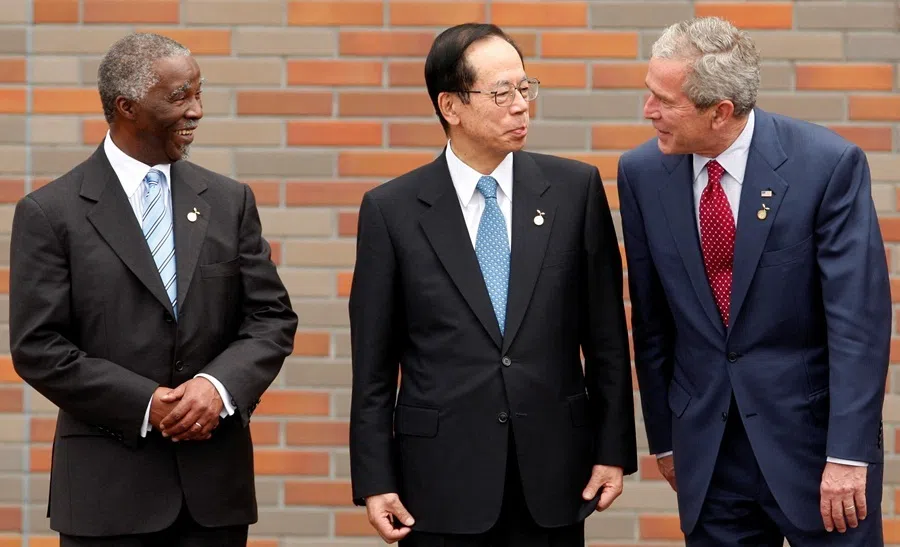
US President George W. Bush (right) shares a laugh with Japanese Prime Minister Yasuo Fukuda (centre) and South Africa President Thabo Mbeki at the Group of Eight (G8) Hokkaido Toyako Summit in northern Japan on 9 July 2008.(Jim Young/Reuters)
In October 2026, former Japanese Prime Minister Yasuo Fukuda passed away. During his tenure as prime minister from 2007 to 2008, Fukuda was known for his efforts to balance Japan’s relations with the US and China. He also championed the establishment of a mutually beneficial relationship based on common strategic interests between Japan and China, culminating in the signing of a joint statement on promoting a “mutually beneficial relationship based on common strategic interests” in 2008. The statement remains one of the four foundational political documents underpinning Japan-China relations.
The Fukuda family is one of Japan’s prominent political dynasties, with Gunma prefecture serving as its political stronghold. Yasuo Fukuda’s father, Takeo Fukuda, also served as prime minister from 1976 to 1978. The year 2027 marks the 50th anniversary of the Fukuda Doctrine, introduced by Takeo Fukuda in 1977.
What, then, is the Fukuda Doctrine? It takes its name from a speech delivered by Takeo Fukuda in Manila, the Philippines, in August 1977, which laid out the guiding principles of Japan’s diplomatic policy towards the Association of Southeast Asian Nations (ASEAN).
Takeo Fukuda (left) with Jimmy Carter at the White House in Washington, DC, 21 March 1977.(Wikimedia)
The doctrine rests on three key principles. First, that Japan is committed to peace, rejects the role of a military power, and is resolved to contribute to the peace and prosperity of Southeast Asia, and of the world community. Second, Japan, as a true friend of Southeast Asia, will consolidate mutual confidence and trust based on “heart-to-heart” understanding, in wide-ranging fields from politics and economics to social and cultural areas. Third, Japan will be an equal partner of ASEAN and its member countries, and work with them to strengthen their solidarity and resilience, together with other nations of the like mind outside the region, while aiming at fostering a relationship based on mutual understanding with the nations of Indochina, and contribute to the building of peace and prosperity throughout Southeast Asia.
Yet, Japan-ASEAN relations have changed considerably over the past five decades, as reflected in documents issued in 2023 to commemorate 50 years of Japan-ASEAN cooperation. The documents placed greater emphasis not only on the two-way nature of cooperation, but also on closer security ties. Does this mean that the Fukuda Doctrine of 1977 has outlived its relevance?
I would argue that the Fukuda Doctrine remains the bedrock of Japan’s relations with Southeast Asia, particularly ASEAN. To be sure, Japan’s ties with ASEAN member states have changed profoundly over the past 50 years. Economic relations, for one, have evolved significantly, making more balanced, two-way cooperation increasingly necessary. Both sides are also actively exploring new areas of collaboration, including security and emerging technologies. In this context, Japan-ASEAN relations must continue to evolve and deepen, building on the foundations of the Fukuda Doctrine while adapting to the demands of a new era.
In October 2026, the Japan Centre at the East Asian Institute of the National University of Singapore was officially established. During its launch, a senior official from Singapore’s Ministry of Foreign Affairs reflected on the past, present and future of Japan’s relations with ASEAN and Singapore, against the backdrop of the 60th anniversary of diplomatic relations between Japan and Singapore and the approaching 50th anniversary of the Fukuda Doctrine in 2027. One of the key themes of the official’s remarks was “evolution”.
During World War II, Japan’s aggression brought immense suffering to Singapore and other Southeast Asian countries. Following its defeat, Japan gradually forged cooperative ties with Singapore and the rest of Southeast Asia. As these relationships developed, neither side forgot this painful history. Instead, they continued to reassess what they needed from each other and how best to work together, adjusting their approach to the changing circumstances and needs of each era.
Sim Ann (centre), Singapore’s Second Minister for Foreign Affairs and Second Minister for Home Affairs, at the launch of the Japan Centre at the East Asian Institute, 27 October 2026.(SPH Media)
The Fukuda Doctrine’s pledge that Japan would never become a military power, but would instead contribute to global peace and prosperity, reflects a deep awareness of this history. Equally, its emphasis on building mutual trust between Japan and ASEAN countries as genuine friends and equal partners across a broad range of political, economic and cultural fields reflects a shared commitment to understanding each other’s needs and considering what each side can bring to the relationship.
The world is now at a major turning point. Southeast Asian economies are growing rapidly, and the nature of Japan-ASEAN relations has changed substantially. Against this backdrop, it is more important than ever for both sides to deepen their heart-to-heart understanding and forge a partnership built on equality and reciprocity.
In recent years, Japan has been actively strengthening security cooperation with countries such as the Philippines. As Japan and ASEAN venture into new areas of cooperation and deepen their ties where necessary, the Fukuda Doctrine’s principle that Japan should never become a military power remains as relevant as ever.
Indeed, the very need for Japan-ASEAN relations to evolve and deepen makes the Fukuda Doctrine — the founding vision and guiding philosophy of their partnership — all the more important today.
Alice Huang, the Chinese woman accused of spying for China during an affair with Nvidia chief Jensen Huang, used a Hong Kong passport to enter Taiwan, the Taiwanese immigration agency said on Wednesday as authorities continue to investigate the incident.
Jensen Huang has admitted to having an extramarital affair with Alice Huang, a Chinese businesswoman suspected by US intelligence agencies of working for Beijing. (REUTERS)
“Our government’s relevant agencies are fully informed of the relevant records and information,” Taiwan’s National Immigration Agency Director-General Lin Horng-en told reporters, confirming that Alice Huang had used a Hong Kong passport to enter the country, AFP reported.
“We were aware of all her relevant entry and exit records,” she added.
Jensen Huang has admitted to having an extramarital affair with Alice Huang, a Chinese businesswoman suspected by US intelligence agencies of working for Beijing.
Both Nvidia and Megaspeed, the Singapore-based company she was associated with, are under investigation amid allegations of a Chinese espionage operation targeting the chipmaker.
Easier to enter Taiwan
Due to long-standing geopolitical tensions between China and Taiwan, it is easier for a person holding a Hong Kong passport to enter Taiwan than for someone with a Mainland Chinese passport, who must apply for a special travel permit to cross the border, according to AFP.
Beijing claims Taiwan as its own and vows to bring the island under its control, while Taiwan views itself as a distinct liberal democracy.
“Alice Huang did indeed enter the country, but she is currently overseas. If we had known she was a spy, we certainly would not have let her enter Taiwan,” Taiwan’s Interior Minister Liu Shyh-fang told lawmakers in parliament.
“We will review our procedures, specifically our pre-screening, interim spot checks and interviews, and post-visit measures,” she said. “As far as we understand, this Ms Huang has had her permit revoked, meaning it is impossible for her to enter Taiwan again.”
On Tuesday, Liu said Taiwan’s national security units were actively investigating the matter.
Nvidia’s board open investigation
US intelligence officials believe that Chinese businesswoman Alice Huang, a former top executive at Singapore-based data centre firm Megaspeed, was a suspected spy for Beijing, according to a report by The New York Times. Beijing has rejected the spying allegations.
Jensen Huang admitted to having an affair with Alice Huang, also known as Huang Le, and wrote an apology note for a press release, apologising to his wife, children and employees. Nvidia’s board announced on Sunday that it had opened an investigation into the Taiwanese CEO and co-founder of the company.
Alice Huang’s professional background also includes reported stints in television, banking and investment management. She previously worked as a television reporter with Hunan TV and China Central Television (CCTV), China’s state broadcaster, according to a profile attributed to her in a Chinese private-fund database, cited by the NYT and the New York Post.
The circumstances surrounding her first meeting with Nvidia CEO Jensen Huang remain unknown. However, photographs show the two together at a technology event in Taipei in 2024, according to a report published by The New York Times.
A British man who was charged with spying for China has told the BBC he was a “convenient fall guy” for UK police and security services who wanted to put espionage threats by foreign states “on the map”.
Chris Cash, a former parliamentary researcher, has shared more than 6,000 messages with us revealing how a Chinese official sought information about sensitive political matters in the UK – including the 2022 Tory leadership battle to decide the next prime minister.
The messages show how Cash’s friend in China, Chris Berry – with whom he had been sharing information – dramatically described a “secret” meeting between Berry and a high-ranking Chinese official.
Berry said he had been told that China was concerned about how a British MP it had sanctioned might be promoted to a cabinet role.
The messages also reveal how Cash used his friend as a reference during vetting for a parliamentary pass – which was approved.
In his first interview since his acquittal, which sparked a political row over the government’s failure to designate China as a “threat”, Cash says he would “never do anything” to harm UK national security.
But he admits he was “unprofessional and naive” to send “gossiping” texts to his friend, whom he met in 2018 when they both taught English in a school in China.
Although the trove of messages shows him discussing sensitive topics, there is no evidence in them that Cash was paid by, or sympathetic to, the Chinese Communist Party.
Chris Cash, left, and Chris Berry met in 2018 when they were teaching in China [Chris Cash]
With the government having previously said that Chinese spies were targeting UK officials across the political, defence and business sectors with increasingly sophisticated espionage operations, Cash believes his case was pursued as a warning to others.
Berry declined to comment on this story, but at the time of his acquittal said he denied any wrongdoing and that he had been “unfairly subjected to a trial by media”.
He said he had provided reports to a Chinese company, which he believed had clients seeking to develop trading links with the UK, and those reports contained no classified information and relied on public sources.
Cash returned to the UK in 2019, saying in his resignation message for his job in China that he felt “guilty sitting back and participating in a system that I am uncomfortable with”.
He later became the director of a small policy group run by China-sceptic Conservative MPs in Westminster.
Meanwhile, Berry stayed in China writing reports for a large consultancy which, like many Chinese companies, has links to the government.
UK security services alleged that information from the men’s messages, sent on the encrypted messaging app Signal between January 2022 and March 2023, had been passed to people linked to the Chinese state.
Both men were charged with espionage but consistently maintained their innocence.
England and Wales’ top prosecutor said the case had collapsed last autumn because government officials could not say China had been classed as an “enemy” at the time.
This prompted accusations of UK political interference to placate the Chinese government.
China has previously called the allegations of spying “pure fabrication and malicious slander”.
‘A psychological game of chess’
The most striking section of the messages handed to the BBC concerns Berry’s account of his meeting in summer 2022 with a senior Chinese official who wanted to have “a more detailed co-operation”.
In voice notes Berry describes how, beforehand, work colleagues had told him the official’s interest had been piqued by reports Berry had written, which included details of the UK’s foreign policy approach to China.
In the voice notes, Berry says he was initially aghast, but then decided: “I thought it would be interesting to go anyway… not really intending to do anything.”
Berry tells Cash he was driven to a government-owned villa in a grand compound.
The experience “felt like a psychological game of chess” and “like a test”, Berry says.
He kept his hands under the table as tea was served: “I didn’t want it to be obvious if I was nervous. I tested to see if my hands were shaking first, then drank the tea.”
Berry describes the senior Chinese official asking via an interpreter “about the situation in the UK at the moment, about the Tory leadership thing”.
At that time, Boris Johnson had just resigned as the UK’s prime minister, and a Conservative leadership battle was taking place, which Liz Truss would go on to win.
Berry says he jokingly tried to ask his host which candidate China wanted, but the interpreter did not translate his question.
“And then the main guy just shakes my hand like it’s time to go,” Berry tells Cash.
After receiving the voice notes, Cash replies via text the next day: “You, my friend, have just been elite captured” before adding: “You’re in spy territory now”.
In many media reports these particular messages, previously released in a government witness statement, have been presented as a smoking gun – evidence that Cash knew his friend was passing on information to the Chinese state.
But Cash insists it was a “tongue-in-cheek joke” because he knew his friend to be “a staunch critic of the Chinese Communist Party”.
The next morning, he made a joke about Berry spying for the UK and getting in trouble with the Chinese authorities, he says. Cash texted: “Keep him sweet… We may have a use for you yet”.
“I didn’t believe he was knowingly spying on the UK through me,” says Cash. “I trusted my friend… I wish I had seen the danger earlier, spotted it and cut off all contact.”
‘Bigger deal than I thought’
So who was the mystery official Berry had met?
“I found out who this guy is,” Berry text-messaged Cash a few hours later. “Bigger deal than I thought.”
Berry posted a link to the Wikipedia page of Cai Qi, who at the time was one of China’s most influential politicians and is now, in effect, President Xi Jinping’s chief of staff.
Berry identified Cai Qi (left) as the man he had met – a trusted aide of Chinese President Xi Jinping [AFP via Getty Images]
Whether Berry correctly identified his host remains unclear. He has since disputed the suggestion that he met someone as senior as Cai Qi.
What is beyond dispute is that he believed he may have met someone highly placed within the Chinese political system.
For Chris Cash, this unusual encounter did not prompt alarm bells. Asked why not, Cash tells the BBC: “Because I didn’t think anything of the meeting, really.”
We ask Cash why his friend might have been asked to such a meeting. “Strange things happen in China… you know we would often brush shoulders with sort of quite senior members of the Chinese communist party,” he tells us.
Challenged about whether he had read the Wikipedia link at the time, Cash says he had “skimmed it”, adding that it described him as a judge and a provincial-level official. “I just thought it was a weird meeting with a guy who’d taken an interest,” he says.
Six months later, Berry said in text messages that “off the record” he had it “on pretty good authority” that China was considering dropping sanctions against Tom Tugendhat, one of the Conservative MPs in the China Research Group, where Cash worked.
Berry wrote that this would happen as long as the West “continued to show signals that they are willing to work together”.
The Chinese believed it would be “extremely embarrassing” if Tugendhat became prime minister or foreign secretary while under Chinese sanctions, Berry said.
At the time of the meeting in summer 2022, China-sceptic Tugendhat was seen as a possible contender to succeed Boris Johnson, or become UK foreign secretary.
He was actually appointed as security minister by Liz Truss, and Beijing lifted sanctions on him in January 2026.
Was Cash concerned that Berry appeared to be passing information to him about Chinese foreign policy?
Cash says he assumed Berry had heard this “through the grapevine at his company” which was doing business with the UK.
He says he never doubted his friend’s trustworthiness, to the extent he even named Berry as a reference on his application for a security pass for the Palace of Westminster.
The pass was granted and, a fortnight before their arrests in early 2023, Cash invited Berry to Parliament for lunch.
It was to be their final face-to-face conversation.
‘Complete shock’
Cash was in bed at quarter to six on a March morning when he was woken by car doors being shut, he says. Within seconds, four UK counter-terrorism officers had barged into his bedroom at his parents’ home in Edinburgh.
“They told me to sit up and not touch anything and then said I was under arrest for breaching the Official Secrets Act,” Cash says.
“I was in complete shock… quivering… My mum was hysterical.”
Cash says the officers dressed him in dirty clothes he had worn that weekend, handcuffed him and marched him down to an unmarked police car. He was later driven to London.
Chris Berry was also arrested the same day.
It remains unclear how, when and why British security services became interested in the exchanges between the two friends.
But they are likely to have found out far more about their relationship when Berry was stopped and questioned by counter-terror officers at Heathrow Airport.
His laptop and phone were taken – this may have enabled his Signal chats to be downloaded.
Berry later messaged Cash about it.
Cash says he had not been alarmed by this: “I thought it was just standard… for a guy who’d been in China.”
As the investigation progressed, it became clear the authorities believed Cash and Berry had been involved in an informal, but dangerous, exchange of information that was “prejudicial to the safety and interests of the UK”.
The allegations were based on 6,273 messages between the pair – the same ones Cash has now shared with the BBC. Cash’s solicitor has told the BBC they are genuine.
They cover a period when Cash had joined the China Research Group (CRG), founded by Tugendhat and fellow Tory MP Alicia Kearns, and when Berry was working for a Chinese company called Strong, where part of his work involved writing political and economic reports for clients.
According to court documents, Berry was said to have compiled 34 reports for a man linked to the Chinese state spy agency, relaying information passed on to him by Cash. Strong did not respond to the BBC’s request for comment.
The CRG’s office was across the Thames from Westminster, but Cash regularly had meetings in Parliament. Cash did not have government security clearance and there is no evidence he had access to classified documents.
Despite being thousands of miles apart, the two friends remained in close contact, often messaging daily.
The messages reviewed by the BBC show them discussing topics including sanctions on China, the tech company Huawei, human rights, Hong Kong, Taiwan and British foreign policy.
Cash says he used the Signal app for almost all his contacts with people in China – “more for their protection” – as he says discussing the government “could land someone… in trouble”. He and Berry did not use the app’s “disappearing messages” function.
Much of the information they discussed was publicly available, says Cash – who has given the BBC a detailed spreadsheet with links and references in an attempt to prove it.
But sometimes he did share with Berry his impressions from meetings and private discussions in Westminster. On 12 occasions in the messages, he labelled information “off the record” or “very off the record” before passing it on.
Cash says this was “just me excitedly sharing things that I was doing with him at work”.
One message recounted views allegedly expressed in private by Britain’s then-ambassador to China, Dame Caroline Wilson, during a discussion with the CRG about its work on China’s influence on UK universities.
Cash also messaged Berry sharing unverified rumours about the sex lives of two UK cabinet ministers. There is no evidence Berry passed this to his Chinese colleagues.
Cash says he regarded such exchanges as routine political discussion. “We weren’t working with classified information,” he says.
Acquitted and ‘traduced’
Cash was told by his solicitor the police investigation would blow over after six months and he would soon be able to return to normal life.
But in September 2023 – six months after the arrests – the case became public when the Sunday Times broke the story of an unnamed “spy” who had been arrested in Parliament.
Cash recalls travelling on a train while, around him, fellow passengers read the newspaper’s front page story: “Commons ‘Chinese spy’ arrested”. He says: “I wanted the world to eat me up.”
Within 24 hours he was named and pictured in the press, and both men were later charged with espionage.
In September the following year, just weeks before their trial was due to begin, Cash received an unexpected call from his solicitor.
“Are you sitting down?” he asked Cash. “They’ve dropped all the charges.”
His lawyers requested a court hearing for the prosecution to formally acknowledge that they would offer no evidence, but at the Old Bailey the newly-innocent Cash struggled to find anyone interested in his story.
Cash’s life has changed almost beyond recognition, he says, but he is positive about the future [BBC]
At every previous court appearance he had been mobbed, but the press had not been informed about this hearing.
Eventually his team found a lone BBC journalist. “I said my piece outside the Old Bailey. And that was a real high point. I felt that I could start to move on with my life.”
It wouldn’t be that simple.
Across the city, House of Commons Speaker Lindsay Hoyle was seething. “It is this Parliament that has been spied on,” he declared. “It is MPs’ offices that have been infiltrated.”
There would be days of political debate and a raucous prime minister’s questions where Tory leader Kemi Badenoch would claim: “This all stinks of a cover-up.”
“I’d been acquitted by law, but then I was traduced in Parliament,” Cash says. “It was almost like I was convicted in the court of public opinion again, by people who I had worked with and trusted and that felt horrible.”
Today Cash’s life is almost unrecognisable. He has lost his dream job, his relationship, and his closest friend from university.
“We talked about being each other’s best men,” Cash says. Instead, when the friend got married last year, Cash was not even invited.
He is also no longer in contact with Berry.
“I’ve been applying for basic admin jobs and having trouble recently,” Cash says.
“I’m angry and upset with how everything played out, and I do feel let down.”
But when asked, Cash stops short of saying he feels Berry betrayed him. Does he think his friend was spying for the Chinese government?
“He would have to have his time in court to defend himself,” Cash answers. “I think it’d be wrong of me to speculate and hypocritical given the speculation that I’ve been subject to. But we’re no longer friends.”
Berry declined to comment on this story, but at the time of his acquittal said his reports “concerned economic and commercial issues widely discussed in the UK at the time and drew on information freely in the public domain”.
Like his former friend, Chris Cash is innocent in the eyes of the law, but his reputation has undoubtedly been trashed.
Many in Parliament still think they were spies. And with more of the messages between these former friends now revealed, the debate over their actions could be reignited.
“It was a gruelling ordeal,” Cash says. “But I’m a fundamentally positive person… I’m positive about what the future holds.”
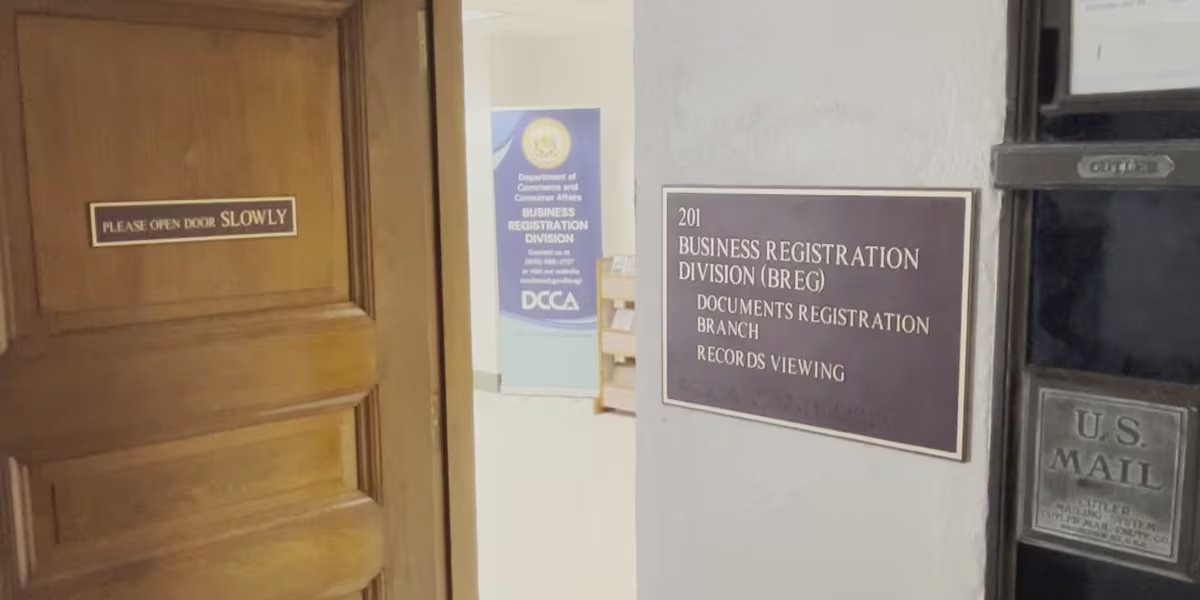
HONOLULU (HawaiiNewsNow) – State lawmakers demanded answers Tuesday about the collapse of the state’s business registration system, which is affecting thousands of people and costing local businesses millions of dollars.
The House Consumer Protection and Commerce Committee was told the Department of Commerce and Consumer Affairs is four months and 40,000 filings behind. The delays are affecting real estate deals, nonprofit grants and business startups.
Backlog affects businesses
Hawaii’s business community depends on updated documents from the department for thousands of transactions. Those transactions have been backed up for months after a failure to update the department’s computer system.
Ty Nohara, the state securities commissioner, said upgrading the system went through multiple failed tests, fixes and failures that frustrated staff and customers who couldn’t predict when it would work properly.
“It was working, and then it stopped working,” Nohara said.
Jonathan Kim, a new business owner, runs a pet import company still waiting for needed documentation four months after trying to register.
“I really, really wanted to be based in Hawaii, but the difficulty in doing that has been insurmountable, kind of ridiculous to be honest,” Kim said.
Department flooded with calls
People waiting on their transactions are calling the department in large numbers.
“To put it in perspective, we are getting 7,000 calls a month since July,” Nohara said.
Honolulu attorney Matthew Cohen said clients ask him to contact people he knows at the department.
“It creates a weird situation for me where, ‘Oh, you know somebody at DCCA. Can you call them?’ I can’t be overloading my contacts at the DCCA with those requests. No, there is no standardized process. There’s no standardized procedure,” Cohen said.
Contract and subcontractors
Lawmakers were told the state hired Pacxa, a local computer company, in 2021 on a $2 million contract. Pacxa is part of the Tradewind Group, which is chaired by local business leader Colbert Matsumoto.
Pacxa was not experienced with the Salesforce business platform the state wanted, so it hired subcontractors. Two of the subcontractors left the project.
Committee chair Scott Matayoshi questioned the state’s process.
“It doesn’t make a lot of sense about why we did this, and it seems like it led to a bunch of problems. This company that did not know Salesforce hired sub after sub and kept failing and failing,” Matayoshi said.
State notified in 2023
The state was notified of multiple issues in an oversight report in 2023 but continued working with Pacxa despite multiple false starts.
Matayoshi said the state’s information technology leadership failed to step in.
“There were these small things going wrong that led to this huge system collapse, and at some point someone needed to step in to make that call to say this is too far, this is too bad, we need to change course right now,” Matayoshi said.
Salesforce sends team
Salesforce, a national business software company, has sent a team to Hawaii to repair the system free of charge.
Nohara said at least 20 people from various locations are on the team.
“I call them the wizards because I feel like they are the ultimate people who know Salesforce, and they have brought at least 20 people from all over,” Nohara said.
The Salesforce experts said it will take 11 weeks to get the system running again.
Copyright 2026 Hawaii News Now. All rights reserved.