
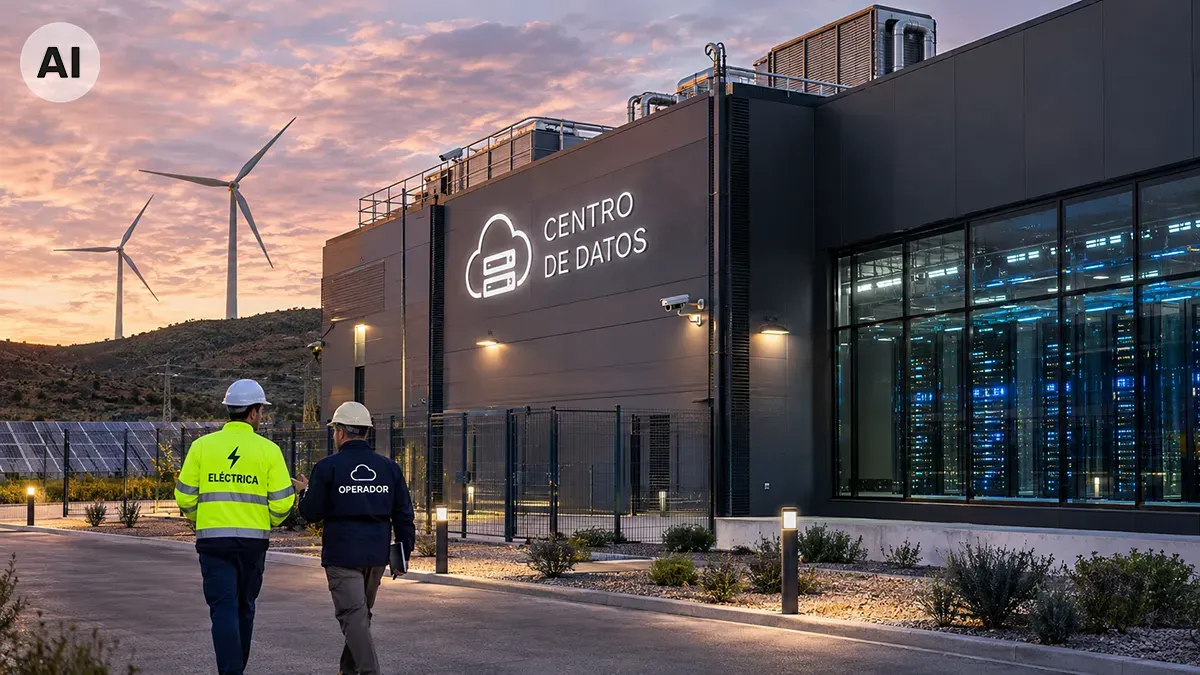
A report from Washington on 10 November illustrates the difficulty. According to Reuters, Microsoft has pressed American officials to abandon or narrow a proposed ban on new Chinese-made optical transceivers, the components that carry information through fibre links in AI data centres. Supporters of restrictions point to security concerns; technology companies warn that alternative manufacturers may not be ready to replace the current supply. The proposal remains under consideration. Its significance lies in the tension between protecting a system and keeping that system available.
Europe knows this tension well. The European Commission’s June 2026 technological sovereignty package focuses on semiconductors, cloud computing, AI and open-source technology. These are serious initiatives because a digital economy needs more than declarations of independence. It needs technical capacity, market opportunities and trusted infrastructure. Yet the American debate shows how rapidly a restriction can expose the practical limits of even a wealthy technology market.
Spain and its Mediterranean neighbours have particular reasons to pay attention. Their ports, transport networks, tourism services, industrial plants and public institutions depend on communications that cross national boundaries. A data centre may be physically located in one country while depending on chips, optical equipment, software support and cloud customers located elsewhere. A purely national view of that infrastructure will miss the vulnerabilities that matter during disruption.
I would start with a different question from the one normally asked. Rather than asking which supplier a country wants to exclude, officials should ask which public functions must continue if a particular supplier becomes unavailable. That turns an abstract debate into a practical one. Hospitals need access to records. Transport authorities need reliable communications. Emergency teams need information at the moment it is most difficult to obtain. The choice of components should be tested against those requirements.
Independent testing, transparent procurement and realistic continuity exercises can reduce exposure without assuming that every imported product presents the same level of risk. An assessment should consider where equipment is deployed, the consequences of compromise, the visibility of its software and firmware, and the ability to replace it. Sensitive government networks may justify safeguards different from those applied to ordinary commercial installations. A careful policy can recognise that distinction.
Spain’s relationship with the wider Mediterranean also makes cooperation essential. Digital infrastructure connects European institutions to North African markets, logistics corridors and service providers. Rules developed without consultation can transfer delays and costs across those connections. Technical exchanges, compatible security requirements and better incident reporting could give both shores more predictable digital services.
The UAE provides another relevant perspective as a country investing heavily in digital infrastructure while working with partners across multiple markets. Its experience underlines a reality shared with Europe: international partnerships will remain necessary, even as governments work to improve control over critical systems. The aim should be to manage those relationships with better information and stronger operational safeguards.
Europe’s digital independence will be credible when it can choose, inspect, repair and operate the technologies on which daily life depends. That is a more demanding goal than simply replacing one foreign dependency with another. It also offers a constructive path for Spain and its neighbours: building durable capability while preserving the openness that has made the Mediterranean a crossroads of exchange.
Abdulla Saeed Alhebsi, MIoL. Member of the Institute of Leadership (UK). Independent Emirati Writer and Researcher in Security, Risk Management, Operational Resilience, Leadership and Control Room Operations









Leave a Reply