








अंतर्राष्ट्रीय

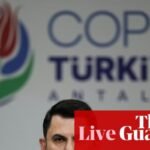
Passersby walk through the grounds of the COP31 World Climate Conference in Antalya, Turkey. Photo: Martina Herzog/dpa
Keystone
Can the international community still agree on steps that, despite all opposition, will move the fight against the climate crisis forward a little?

 Today at 05:41
This question is likely to be decided this weekend in Antalya, Turkey. The climate conference, which has been taking place there for two weeks, is actually scheduled to end on Friday evening (6:00 p.m. local time)—but given the tough negotiations, it appears it will be extended.
What It’s All About and Where the Problem Lies
This time, the negotiations have centered on the question of whether a global electrification target can be agreed upon. The aim is to have more cars and heating systems, for example, run on electricity in the interest of the climate. The Turkish presidency has proposed significantly increasing the share of electricity in global final energy consumption, from the current 23 percent to 35 percent. This refers to the energy actually used by households, industry, transportation users, service providers, data centers, and farmers.
This would lead to significant efficiency gains and help combat climate change—especially if the electricity comes from renewable sources such as solar, hydro, or wind. There is therefore also a debate over whether the text should specify that the electricity must come from clean energy sources. In a draft text published on Thursday, this reference to clean energy sources was missing—contrary to what Germany and the EU had initially demanded.
Many industrialized countries are already shifting toward greater reliance on electricity. For other, less developed countries, the process is more difficult, which is why they are calling for support in this transition. In addition, there is significant resistance from countries that still earn a great deal of money from the sale of coal, oil, and gas—such as Saudi Arabia and Russia. It therefore remains unclear whether, in the end, all signatory states will actually be able to rally behind the goal. The U.S. has withdrawn from the Paris Climate Agreement and is therefore no longer participating in the negotiations.
Reaching decisions by consensus is difficult
But even without the U.S., it is becoming clear that the countries will not explicitly identify the core problem of the climate crisis in their summit resolution: the burning of oil, gas, and coal, which accounts for the vast majority of greenhouse gas emissions. The phased phase-out of these fossil fuels, agreed upon three years ago in Dubai, is mentioned only in passing in the latest draft—and no longer explicitly. According to observers, oil-producing countries in the Gulf and Russia had pushed for this. They have the power to block decisions because resolutions at UN climate conferences must be adopted by consensus.
Because this is becoming increasingly difficult, voluntary alliances are gaining importance: More and more groups of countries are forming that want to move forward rather than wait until even the last holdout is on board.
Federal Environment Minister Carsten Schneider hailed the climate summit as a success even before it concluded, citing voluntary alliances as the reason. “Without the COP process and global climate policy, we wouldn’t have the solutions we have today,” said the SPD politician. Schneider noted that an increasing number of countries are presenting plans to phase out fossil fuels. He also cited a voluntary commitment by Germany and other countries to replace SF6, a potent greenhouse gas used to secure power grids.
As is so often the case at climate conferences, money is also a point of contention in Antalya: Poorer countries are demanding more money from industrialized nations to help them adapt to the effects of climate change and manage the energy transition. However, given their tight budgets, Germany and the EU have no intention of pledging new funds in Antalya. Recently, though, the amounts paid by Germany and others have declined.