








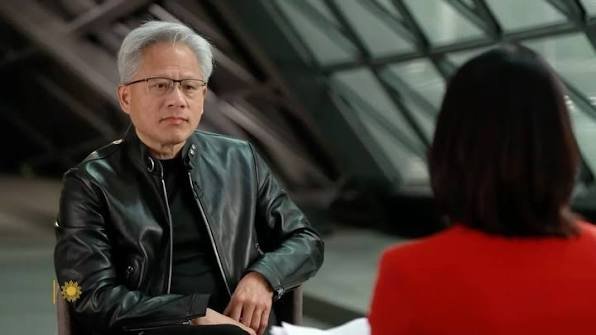
Jensen Huang has agreed to a December 1 transcribed interview with three House committees, their Republican chairmen announced November 17, setting a date for questioning of Nvidia’s former chief executive about national-security concerns. Nvidia General Counsel Tim Teter has separately agreed to appear before the same committees on December 2.
The joint announcement from the House Foreign Affairs Committee said both men had voluntarily agreed to appear. The participating panels are Foreign Affairs, the Select Committee on the Chinese Communist Party and the Permanent Select Committee on Intelligence. The announcement confirms agreements to interviews, rather than completed testimony or investigative findings.
Reuters independently reported the agreement on November 17. The dates follow requests made by the committees the preceding week, when the chairmen warned they could compel appearances. The scheduled questioning comes after Huang’s departure from Nvidia’s leadership and amid congressional scrutiny of access to advanced U.S. computing technology.
Brian Mast, John Moolenaar and Rick Crawford, the three committee chairmen, said they wanted answers about a potential breach of national security. That characterization remains the lawmakers’ description of the issues under investigation. Their November 17 statement did not announce a criminal charge or identify a completed adjudication of those concerns.
From a briefing request to a transcribed interview
The original November 4 letter asked Huang to attend a joint, closed-door briefing on November 18. It described the proposed subjects as Nvidia’s security protocols against foreign espionage and reported interactions with a person the chairmen associated with Chinese intelligence. The document framed those matters as reasons for seeking information from the company’s then-chief executive.
The chairmen said access to sensitive American technology and information was central to their investigative work. They requested acceptance of the proposed date, or an alternative date during a congressional session day, by November 11. The letter established the committees’ request and their stated concerns; it did not supply an independently tested factual resolution of the underlying allegations.
A second letter, dated November 12, requested a closed-door, transcribed interview on December 1. Addressed to Huang through his lawyer, it referred to a conversation with Nvidia staff the preceding day and described the revised request as an accommodation reflecting recent events. The format and date differed from the original briefing invitation.
That letter sought written confirmation by 8 p.m. Eastern time on November 13. It warned that failure to cooperate would result in a Foreign Affairs Committee subpoena and said other committees reserved the ability to issue separate subpoenas. The later announcement described voluntary agreements; it did not say that a subpoena had been issued.
A separate request to Nvidia’s lawyer
The November 12 letter to Teter sought a closed-door, transcribed interview on December 2 and used the same November 13 deadline for written acceptance. The chairmen identified AI-chip smuggling, adversary military use of Nvidia products and reports concerning export-control policy and investigations as subjects they wanted to examine.
The letter specifically included investigations involving Megaspeed. Those references describe the scope of the committees’ questions, rather than a determination that the company or either scheduled interviewee committed an offense. CBS News has reported that Megaspeed denied allegations of smuggling restricted chips into China.
The chairmen’s November 12 announcement also requested an appearance by Commerce Under Secretary Jeffrey Kessler. It linked their inquiry to proposed legislation on advanced computing and export controls. The November 17 agreement announcement, however, named Huang and Teter; it did not announce an interview agreement or date for Kessler.
The measures the chairmen urged Congress to pass were the AI OVERWATCH Act, Chip Security Act, MATCH Act and Remote Access Security Act. Their statement advocated including them in the National Defense Authorization Act. It was a legislative demand, not confirmation that those proposals had become law or that the requested provisions had been enacted.
Nvidia’s leadership changed before the agreement
Nvidia’s November 12 securities filing records that its board accepted Huang’s resignation on November 11 as president, chief executive and a director, effective immediately. The filing separately records the appointment of Colette Kress as interim chief executive while the board searches for a successor.
Kress retained her positions as executive vice president and chief financial officer while taking on the interim chief executive role. She has been Nvidia’s finance chief since 2013. The board also appointed Harvey Jones as chairman on November 11, according to the filing, which identifies his service as a director dating to 1993.
In its November 12 public announcement, Nvidia said its permanent-chief-executive search would consider internal and external candidates. The company expressed confidence in Kress and the existing leadership team. Jones said the board expected operations, customer commitments and the product roadmap to continue without interruption, an expectation stated by the company.
Kress said the company would continue serving customers, partners, developers and shareholders while advancing its computing and AI work. Nvidia also kept its previously scheduled November 17 fiscal third-quarter reporting timetable in that announcement. It listed results for approximately 1:20 p.m. Pacific time and an earnings call for 2 p.m.
Democrats also sought answers about export decisions
The congressional pressure has also included Democrats questioning the administration’s role. Representative Gabe Amo of Rhode Island said on November 12 that Congress still needed to know what officials knew, when they knew it and who approved advanced-chip exports. He called on the Commerce Department to investigate and enforce export restrictions.
Amo’s statement described an earlier letter with Representatives Gregory Meeks and Sydney Kamlager-Dove demanding answers from Commerce Secretary Howard Lutnick. Their concerns focused on export approvals and reported links to China. The statement was a demand for oversight and stricter enforcement, rather than an agency finding resolving the matters it raised.
A parallel move to regulate remote computing
Separately, the Bureau of Industry and Security announced an interim final rule addressing remote access to advanced computing chips and servers. Its November 16 release said the purpose was to prevent restrictions on American technology from being bypassed through computing arrangements involving data centers in third countries.
The agency said advances in cloud infrastructure made access to computing power possible without physically moving the chips to the user’s country. It described the new controls as an effort to align protection of remote computing with restrictions on physical shipments. The policy announcement describes the government’s regulatory response, not proof of a violation by an individual company.
The public-inspection text of the rule was scheduled for Federal Register publication on November 19, with effectiveness tied to publication. It sets out controls concerning overseas data centers supplying substantial computing capacity to specified foreign entities and calls for customer due diligence by data centers, foundries and exporters.
The text also specifies additional licensing requirements for advanced semiconductors destined for Indonesia, Malaysia, Singapore, Thailand and Brazil, with a qualification for certain U.S.-headquartered recipients meeting reporting requirements. It excludes commercial recommendation systems from the new remote-access licensing provision. Those provisions have defined coverage and exceptions, rather than imposing an identical restriction on every overseas computing transaction.
The rule text calls for comments within 60 days of publication and identifies a federal rulemaking docket for submissions. That timetable concerns the regulatory process, separately from the committees’ December interviews and the company’s search for a permanent chief executive.
FAQ
Are Huang and Teter appearing on the same day?
No. The chairmen’s announcement lists Huang for December 1 and Teter for December 2. Both agreed to transcribed interviews with the three participating committees.
Is this a public hearing?
The November 12 invitations requested closed-door interviews. The November 17 announcement describes transcribed interviews and does not announce a public hearing or a livestream.