

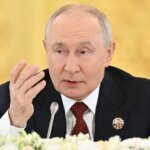






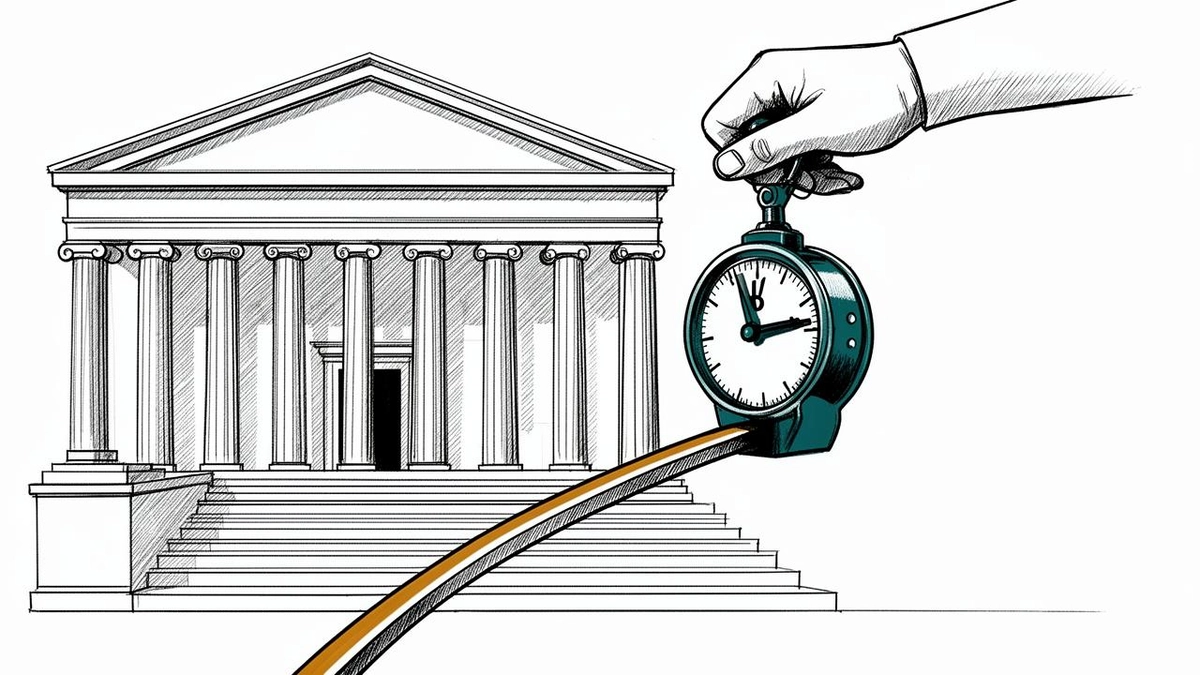
Federal Reserve Chair Kevin Warsh is confronting the thorniest policy dilemma of his tenure. On one side are three consecutive months of above-forecast inflation data and rapidly mounting bets on a rate hike; on the other is the Trump administration once again publicly calling for an avoidance of monetary tightening. With just three weeks to go before the Dec. 8-9 policy meeting, the expectations of the market and the White House have diverged completely.
Warsh took the helm of the Federal Reserve on May 22, succeeding Jerome Powell. Since then, U.S. economic data have generally leaned toward a tighter stance: the October unemployment rate was just 4.1%, third-quarter gross domestic product grew at a 3.4% annualized pace, and an artificial-intelligence investment boom has driven corporate earnings and share prices to repeated records. Yet Warsh has so far raised rates only once, by 25 basis points in September.
Inflation has yet to show any meaningful cooling. Pushed higher by energy prices amid the Iran war, U.S. inflation has exceeded market expectations for a third straight month, and energy costs are feeding through into core goods and services prices. According to Caijing, former Fed Vice Chair Donald Kohn noted that the year-over-year U.S. personal consumption expenditures (PCE) inflation rate has stayed above the 2% policy target for 67 consecutive months.
Market pricing of the policy path has swung sharply hawkish. Interest-rate futures have begun to price in the possibility of a one-time 50-basis-point hike next month and expect an additional 45 basis points of tightening by the end of 2027. The bond market has reacted in tandem: the benchmark 10-year U.S. Treasury yield has climbed back above 5%, and the 2-year Treasury yield jumped 35 basis points last week—one of the largest weekly increases in decades.
| Key Indicator | Latest Reading |
|---|---|
| Federal funds target range | 3.75%–4.00% (after the 25bp September hike) |
| October unemployment rate | 4.1% |
| Q3 annualized GDP growth | 3.4% |
| 10-year Treasury yield | Back above 5% |
| Weekly rise in 2-year Treasury yield | 35 basis points |
| Market bets on December hike size | 25bp to 50bp |
Note: The rate range reflects the level after the September hike; Treasury yield data reflect the latest market pricing of tightening expectations.
The White House’s position is on a collision course with the market. Treasury Secretary Bessent said explicitly in a CNBC interview last Friday that the Fed should not hike aggressively in response to energy-shock-driven inflation, arguing that energy prices have already begun to fall. “You know, the Fed should be looking forward, not always staring in the rearview mirror,” he said. Oil prices have fallen about 20% over the past month, but the inflation picture has not eased noticeably as a result.
President Trump has consistently advocated lower rates and has repeatedly called on Warsh publicly to pursue easing. In a May interview with Fortune magazine, he gave Warsh some room to maneuver, provided the Iran war was still ongoing. “Until the war is over, you really can’t judge based on these data,” Trump said at the time. Now, with the conflict unresolved and Bessent once again speaking publicly on rates, the market reads it as a sign that the White House’s patience is wearing thin.
Warsh’s own communication style is adding to market doubts. At the news conference after the July policy meeting, he appeared to suggest that the 2% inflation target was open to discussion; asked last month why he had not raised rates further, his explanation was widely seen as muddled. Investors have therefore begun to question whether the Fed genuinely intends to bring inflation back to target.
The question of central bank independence has thus come to the fore. Trump has repeatedly and forcefully demanded easier policy, his administration has opened an investigation into Fed Governor Lisa Cook, and Powell was previously subjected to a criminal probe. Since Warsh took office, U.S. Treasury yields, bond-market volatility and risk premiums have all risen in tandem, reflecting uncertainty over the direction of policy.
In the interview, Kohn stressed that the economic cost of not hiking would be far higher than that of hiking. He argued that if the Fed maintains a gradual, cautious pace of tightening and the supply shocks driving inflation gradually fade, U.S. inflation could return to 2% without triggering a recession. At the same time, he warned that once monetary policy is captured by executive power, it tends to breed high inflation, and the Fed must withstand external pressure.
It is worth noting that the Fed’s decision to hold rates steady in October is coming under renewed scrutiny—it came just days before the midterm elections. Warsh denies that political factors influenced the policy decision, but investors remain confused about the central bank’s reaction function: is it prioritizing the suppression of inflation, or heeding the White House’s concerns about growth and financing costs?
The signals ahead of the meeting have been dense. Fed officials spoke publicly at least 20 times last week, and 19 public events are scheduled this week—Governor Michael Barr alone has three—with meeting minutes also due for release. This stands in sharp contrast to Warsh’s earlier approach of advocating fewer public remarks and scaled-back forward guidance.
For investors, the outcome of the December meeting will test two things at once: the Fed’s determination to fight inflation and its ability to defend its independence under political pressure. If a hike lands and exceeds 25 basis points, the Treasury yield curve and risk assets could face a new round of repricing; if the Fed again stands pat, the risk of inflation expectations becoming unanchored will be repriced by the market.