NC State’s depth chart keeps getting uglier


I’ve changed my mind on this whole releasing-a-depth-chart-like-a-normal-team thing—I no longer care for it. I do not need my irrational hopes dashed this early in the week; it’s best instead for that to come on Wednesday or Thursday, as Dave Doeren made tradition.

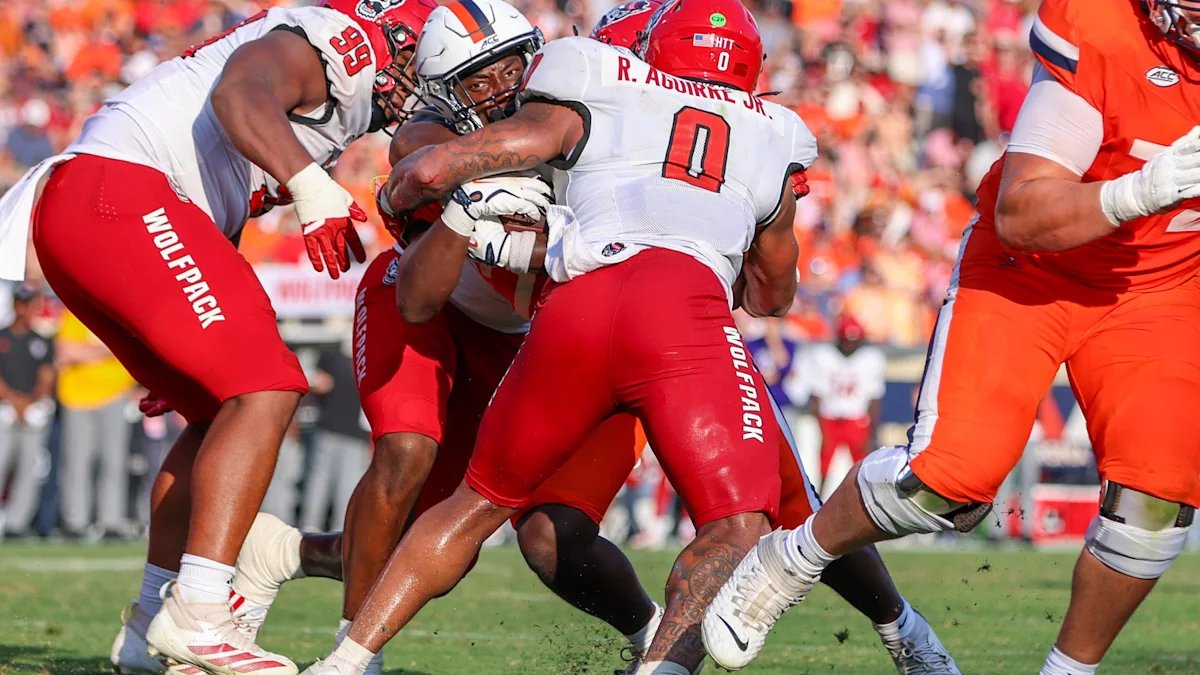
Anyway, neither Popo Aguirre nor Ronnie Royal are listed on the defensive side this week after sustaining injuries against Duke, which will leave NC State without two of its top three tacklers against Syracuse. There haven’t been many bright spots on defense this season, but Aguirre has been one.

Advertisement

The defense is just gonna have to luck its way into some turnovers on Saturday and hope for the best.

Teague Andersen and Kamen Smith are on the depth chart for the offense, and it looks like Duke Scott will suit up again, but the Pack is going to be without Keenan Jackson at receiver, which is a slight problem. Eh, I’m sure it’ll be fine.

Science Museum Gets $2.5M For Rural STEM Centers


ST. PAUL (WJON News) — The Science Museum of Minnesota has received $2.5 million in federal funding to establish a statewide network of Regional STEM Educator Resource Centers.

AM 1240 WJON logo

The funding will allow the Museum to partner with regional organizations to open five new Resource Centers in greater Minnesota, bringing the Museum’s total network to six sites statewide.

How the Regional STEM centers work

The new centers are expected to put STEM teaching materials, equipment, and professional development within reach of more than 87 additional rural school districts.  The Science Museum’s existing Educator Resource Center in St. Paul has served metro-area teachers for years with consultations, professional development, and a lending library valued at more than $500,000.  The library includes stream tables, curriculum kits, skulls, and fossils.  Because teachers typically visit the library outside school hours, its reach has been effectively limited to about a one-hour drive from the Museum.

The initial phase is already underway in partnership with Headwaters Science Center in Bemidji.  Specific sites and collaborations are being finalized for the remaining sites.

LOOK: The Most Iconic Magazine Covers of the ’80s and ’90s

From Demi Moore’s groundbreaking pregnancy portrait to Janet Jackson’s provocative Rolling Stone cover — and even “Bat Boy” makes an appearance — these unforgettable ’80s and ’90s magazine moments defined pop culture and captured an era before the internet took over.

Gallery Credit: Stephen Lenz


Overnight strikes in Yemen kill at least 1 person and injure 9, and other Mideast news


Overnight strikes hit a gas station and an oil facility in Yemen, killing at least one person and injuring nine people, residents and the Iran-backed Houthi rebels said on Tuesday.

In Iran, a top security official claimed that the Iran war had already “wrecked” the United States, and called on Washington to accept seven demands that Tehran has made for an end to the conflict.

Here is the latest news from the Middle East on Tuesday. Read our full coverage here.

Overnight strikes in Yemen injure 6, damage homes

Houthi-run health ministry spokesperson Anees al-Asbahi said in a statement on X on Tuesday that a strike hit a gas station in a district of Yemen’s capital, Sanaa, killing one person and injuring three others.

He said another airstrike targeted an oil company, injuring at least six people, causing “extensive damage” to nearby homes and shops and panicking residents.

Al-Asbahi blamed Saudi Arabia for both strikes. The Associated Press couldn’t independently verify his claims.

The strikes come amid renewed fighting between the Houthis and Saudi-backed government forces, which escalated this summer. The rebels continue to target Saudi energy facilities and airports as part of a campaign they say is meant to push Saudi Arabia into lifting its blockade on Yemen.

Sanaa resident Khaled al-Khawlani told the AP on Tuesday that he was horrified by the explosions that targeted the oil facility near residential areas of Sanaa at around 4 a.m.

Another resident said the explosions shattered his windows and reverberated across the city while people slept. The resident spoke on condition of anonymity for security reasons.

The spokesperson for the Saudi-led coalition fighting the Houthis, Maj. Gen. Turki al-Malki, said on X in the early hours of Tuesday that a drone was intercepted and destroyed in the Eastern Region of Saudi Arabia. The Associated Press couldn’t independently verify that claim.

— By Fatma Khaled in Cairo

Iranian security official calls on Washington to accept Iran’s terms for ending the war

A top Iranian security official claimed that the war had already “wrecked” the United States. The comments by Secretary of the Supreme National Security Council Mohsen Rezaei in a social media post came as U.S. President Donald Trump said the conflict was “militarily effectively over.”

Rezaei said on X late Monday that it was time for the U.S. to “surrender” to the seven conditions Iran has repeatedly proposed in an effort to end the conflict.

“The war on Iran has already wrecked the US government. But Washington flails like a desperate gambler. FOLD YOUR HAND. STOP manufacturing FAKE NEWS about imaginary talks. Stop denying the West Asian NEW ORDER,” he wrote.

Trump told reporters in Washington on Monday that he believes the war in Iran “militarily is effectively over,” suggesting that, for now, he is not prepared to resume airstrikes.

“Iran militarily is effectively over,” Trump said after meeting earlier in the day with Qatar’s prime minister, Sheikh Mohammed bin Abdulrahman bin Jassim Al Thani. “We’re just keeping it the status quo.”

Tehran continues to demand U.S. concessions before resuming talks, such as the lifting of sanctions and of the blockade on its ports, the unfreezing of its assets, compensation for war damage and ending regional hostilities, including Israeli operations in Lebanon.

___

This report will be updated throughout the day as new developments emerge.

Copyright 2026 The Associated Press. All rights reserved. This material may not be published, broadcast, rewritten or redistributed without permission.

‘Habibi PAC’ for El-Sayed’s habibis


Senator-elect Abdul El-Sayed launched a new leadership political action committee (PAC) named Habibi PAC. Habibi translates to “my friend” or “my beloved” in Arabic.

PACs take in contributions and pool the money to support or oppose political campaigns. A leadership PAC is similar, but it’s run by a politician specifically to raise money for other candidates, allowing them to fund their political allies.

Political commentators view the immediate launch of Habibi PAC as a classic strategic move to help El-Sayed build influence within the Democratic Party and position himself as a key player ahead of the 2028 presidential election cycle.

However, campaign finance watchdogs are keeping a close eye on the new committee.

Neil Thanedar, executive director of the Michigan Campaign Finance Network (MCFN) , noted that because the PAC was launched less than a week ago, there is currently no Federal Election Commission (FEC) reporting available to show who is donating or how the money is being spent.

Thanedar pointed out that El-Sayed’s use of a PAC is notable given his stance against accepting certain PAC money during his Senate campaign.

“It will be interesting to see who the donors are for this PAC and where the money goes, because Abdul El-Sayed has talked numerous times about not wanting to accept corporate PAC money and other special interest funding,” Thanedar said.

The Federal Election Commission (FEC) strictly prohibits candidates from using their official campaign committee funds for personal use. However, because a leadership PAC is legally considered a separate political committee, not the candidate’s campaign committee, it has historically been used as a loophole regarding the “personal use” ban.

“So campaign accounts can strictly not be used for personal things,” Thanedar said. “But the leadership PAC has this loophole where, in some cases, senators are paying for international trips, donating money to candidates in other countries… there is a lot of places where that money can go that is for the candidate’s personal use, not for politics.”

He added that these committees can sometimes become a “honeypot for bad behavior,” allowing donors to directly influence politicians who spend the PAC funds on luxury vacations or personal items.

“I think a key factor of keeping politicians honest is seeing where is the money coming in from and where is the money going out.”

Because Habibi PAC is new, it is currently subject to a smaller donation limit that will increase once the PAC has been active for six months, received at least 51 donations, and contributed to five different candidates.

Until those milestones are met, political observers and watchdogs will be waiting for the first FEC reports to see exactly who is funding the new senator’s committee and where that money is going.


No Career Map, No Problem: Diane Vieira Leading Through Reinvention


Portrait of Diane Vieira against a city skyline.
Diane Vieira, Managing Director and Head of Marketing & Communications at Leerink Partners.

Diane Vieira: The Specialist Premium

In healthcare investment banking, clients pay for depth. They want an advisor who understands the science, the regulators and the investors, not just the deal mechanics. In a sector where innovation is constant and mistakes are expensive, depth beats breadth. Call it the Specialist Premium. That premium is rising. Leerink Partners‘ own research counted $65 billion of biopharma M&A in 2025 by early October, nearly double 2024’s full-year total of $37 billion, with deal count running above its 15-year average. Consolidation is back, capital is selective and AI is changing how financial advice is produced.

But a premium only exists if the market can see it. Depth that clients cannot recognise is a cost, not an advantage. Making it visible is the job of Diane Vieira, Senior Managing Director and Head of Marketing & Communications at Leerink, a healthcare-focused investment bank.

A Career Without A Road Map

Vieira did not start in marketing. She began as a fund accountant, then moved through client service, portfolio analysis and product management. Each step showed her a different side of how financial services firms work, and how expertise becomes valuable only when it is understood and trusted.

That range is now a source of credibility. Having worked in accounting, portfolio analysis and product management, she can talk to bankers and analysts about the business on its own terms, rather than as a marketer asking for a quote.

The habit of building without a template came from home. Vieira is a first-generation American; her parents arrived in the United States from the Azores as teenagers. She grew up understanding that opportunity is earned, not expected, and that progress comes from consistency, preparation and the willingness to keep moving forward.

My parents did not have a built-in network or an established path. They worked incredibly hard and made sacrifices to create opportunities for their children. That has always stayed with me.”

Making Depth Visible

At Leerink, her job is to help clients, employees, investors and the media understand what the firm knows and why it matters. That means working inside the business rather than beside it as a support function: positioning the firm’s research and banking expertise, and raising the profile of its executives and analysts.

In financial services, reputation is built over years but can be tested in hours. So she measures the work against the business, not against output. She tracks whether the firm’s expertise is reaching the right audiences, and whether its senior professionals are visible in the markets they serve. “You cannot measure success simply by how much content you produce,” she says. “You have to understand whether the content is reaching the right people, whether it is changing perceptions and whether it is helping the business build stronger relationships.”

Shop at Alabama’s small businesses for the holidays


Some people are easy to shop for. Others can leave you wandering the aisles or scrolling online, hoping you’ll find something to put under the tree.

But here’s a tip: Shop small. If you shop at a local business, you might find something you hadn’t thought of, and you’ll definitely help the community.

That’s why it’s important to support local shops and restaurants on Small Business Saturday.

Small Business Saturday is November 28, the Saturday after Thanksgiving. It’s a chance to see what Alabama’s local shops and restaurants have to offer and support the people who serve our communities throughout the year.

A neighborhood store might carry pottery made nearby, handmade jewelry or treats from a family recipe. A local restaurant can offer gift cards or help with a holiday meal.

Those choices can make a gift feel more personal. So can the help you get along the way.

When you have questions about a product, it helps to talk with someone who knows it well. At a small business, that person may well be the owner, the person who chose every item on the shelf and has a personal stake in making sure you’re happy with your purchase. They can explain your options, help you find the right size or suggest something you might have missed.

As Alabama state director of the National Federation of Independent Business, I hear from owners who work hard to earn that trust. They have put their savings, time and energy into their businesses. They know customers have choices, and they want to give you a reason to come back.

Their business also helps people beyond the customers at the counter.

Small businesses hire our neighbors. The wages they pay help families buy groceries, cover rent and pay other bills. Owners also pay numerous taxes that help support schools, roads and public services.

And local businesses often depend on one another.

A florist may turn to a nearby auto shop to keep a delivery van running. That shop may hire a local bookkeeper and buy logo shirts from a small printing business. Your purchase can help support a whole circle of people working close to home.

We see those ties in other ways, too. Small businesses sponsor ball teams, donate items for school fundraisers and help local causes. Their stores and restaurants give neighbors places to meet and make downtowns feel like home.

That’s why shopping small matters beyond the holiday season.

A busy Saturday can give an owner a welcome boost, but one busy weekend isn’t enough to keep a small business going. For a neighborhood shop or restaurant, every sale helps cover the cost of keeping the doors open.

Congress can give small businesses one less thing to worry about. A federal rule now exempts businesses formed in the U.S. from beneficial ownership information reporting, which requires certain companies to tell the government who owns or controls them. The law behind that requirement, the Corporate Transparency Act, is still on the books. My organization, the National Federation of Independent Business, is asking Congress to repeal it so the filing requirement can’t return for U.S. businesses under that law.

Here at home, one of the best things we can do is keep coming back. Steady sales help local owners plan ahead, keep people working and serve their customers year-round.

A shop you discover in November could become your first stop for a birthday gift in March or an anniversary present in June. A restaurant you try during the holidays could become a regular place to meet friends. Keep local florists, bakeries and repair services in mind when you need them, too.

Shopping locally can also fit a busy schedule. Before you assume you can’t make it to a store, check its website or call. It may offer online ordering, delivery or pickup.

And you don’t have to spend more to help a business you like. Tell a friend, leave an honest review or share a social media post. Your recommendation could bring someone through the door for the first time.

This Small Business Saturday, let a local owner help you make progress on your gift list. Visit a store you haven’t tried, return to a favorite or take a break for lunch at an independent restaurant.

Then give those businesses a place in your plans after the holidays. When we find good value and good service close to home, coming back benefits our families and our communities.

GTA 6 Is Now Available For Preload If You Have A Spare 212GB


Beat the rush so you’ll be ready to play when the game unlocks on November 19.

We may receive a commission on purchases made from links.

With its release just nine days away, Grand Theft Auto VI is now available for preloading on Xbox Series X|S and PlayStation 5 in most regions around the world. This means that once you pre-order the game, you’ll be able to fully install it to your console’s drive ahead of the November 19th release. Given GTA 6‘s huge 212GB file size and reported pre-release sales already around 8 million copies, pre-loading would certainly help you avoid any rush. 

Publisher Rockstar Games staggered the game’s digital preloading schedule, starting yesterday at 7 PM EST for Xbox Series X and S owners. If you have a PS5 or PS5 Pro console, preloading opened at midnight today local time (November 10) across all regions. For those with a physical copy of GTA 6, it will start shipping and arrive at retail stores on November 12th. A box in the code will allow you to preload the game as soon as it arrives. 

GTA 6‘s reported 212GB file size could pose an issue for many users. Even if you own a 2TB PS5 Pro, it’s going to use a lot of your space. And if you have a standard 512GB Xbox Series S console, the game will take up more than half of the approximately 362GB of usable storage. Preloading will thus allow users to make sure their storage is organized and ready for the download, something that will be doubly important if there’s a day-one patch. 

If you’re on Xbox and pre-ordered GTA 6, you can start preloading by going to the Microsoft Store, searching for Gran Theft Auto VI and selecting install. You can also pre-download by enabling “Keep My Games & Apps Up to Date” in the Settings > System > Updates section. On PS5, find and select the preload option on the PlayStation Store’s GTA 6 page. You can set it to automatically download the game by going to your Game Library, selecting the GTA 6 pre-order and toggling the Auto-Download setting on. 

Give yourself plenty of time, as a 212GB could take hours to load depending on your connection speed. To get started, you’ll first need to order the game: Grand Theft Auto VI costs $80 for the Standard Edition and $100 for the Ultimate Edition, on the Xbox or PlayStation stores, along with retailers including Amazon and Walmart. 

AISLPC on Bringing Motion Gaming Back to the Living Room with PLAYMOVO


From the Nintendo Wii to Xbox Kinect, motion-controlled gaming once transformed living rooms into playgrounds, bringing families and friends together through a new way to play. PLAYMOVO aims to recapture that magic with a controller-free gaming system that uses AI-powered motion tracking to translate physical movements into on-screen actions.

Cubed3 caught up with the AISLPC team ahead of the console’s 11th November launch to discuss the challenges of developing accessible motion controls and the importance of creating shared gaming experiences.

Image for AISLPC on Bringing Motion Gaming Back to the Living Room with PLAYMOVO Feature Screenshots and Art

Adam Riley, Director at Cubed3: PLAYMOVO is entering a space that Kinect and Wii made famous, then largely abandoned. What did you learn from why those systems faded, and what is PLAYMOVO doing differently to avoid the same fate?

Felix, Social Media Operations & Business Development, AISLPC: Our main takeaway is that motion gaming is most memorable when it creates simple, shared moments, but it can lose momentum when it feels difficult to return to or when the content stops evolving.

PLAYMOVO is designed to be something families can come back to regularly: connect it to the TV, choose a game, move into the play area, and start playing. The five included beginner games and the planned addition of new content are intended to make it an expanding platform rather than a one-time novelty.

Our product philosophy is simple: Your body joins the game, and your living room becomes the playground.

Image for AISLPC on Bringing Motion Gaming Back to the Living Room with PLAYMOVO Feature Screenshots and Art

Adam Riley: The pitch is “active play for the whole family” rather than “fitness” or a “party game.” Why was that distinction important to you from the start, and how did it shape the games you chose to build first?

Felix, AISLPC: Movement is important, but it isn’t the only purpose of PLAYMOVO.

We wanted the focus to remain on family interaction, shared entertainment, friendly competition, and getting people involved in the same activity. It isn’t intended to be professional fitness equipment or a product that promises specific health results. That approach shaped the content from the beginning, with games across sports, action, casual play, family activities, puzzles, music, and dance.

We are not asking people to move away from screens. We are trying to turn screen time into an opportunity to stand up, move, and play together.

Image for AISLPC on Bringing Motion Gaming Back to the Living Room with PLAYMOVO Feature Screenshots and Art

Adam Riley: You’re using a 12-megapixel camera with AI-powered motion recognition and no controller in hand. What was the hardest movement to get right – tracking one player cleanly, or tracking up to four players at once in a messy living room?

Felix, AISLPC: The real challenge is not necessarily one specific movement. It is making the experience feel natural and understandable for different players, including people of different ages, heights, movement speeds, and play styles.

Players should be thinking about the game, not worrying about whether they are performing a gesture in an overly precise way. Multiplayer also adds another layer because several people may be moving within the same physical space.

For that reason, each game is designed around its own supported movements and on-screen guidance.

Image for AISLPC on Bringing Motion Gaming Back to the Living Room with PLAYMOVO Feature Screenshots and Art

Adam Riley: The recommended play distance is 150–300 cm, with an ideal play area of roughly 250 × 300 cm. How much did real living rooms – small flats, kids, pets, coffee tables in the way – force you to compromise on that ideal?

Felix, AISLPC: The recommended play area is an ideal reference, not an assumption that every family has a perfectly empty room.

Real homes have sofas, tables, children, pets, different lighting conditions, and different room sizes. That is why we provide clear recommendations about distance, lighting, camera visibility, and keeping the play area free from obstacles.

We would rather be honest about the space needed for a comfortable and safe experience than pretend every room is the same.

Image for AISLPC on Bringing Motion Gaming Back to the Living Room with PLAYMOVO Feature Screenshots and Art

Adam Riley: In your imagery, we see skeletal tracking overlays on kids playing. How literal is that to how PLAYMOVO “sees” a player, and what happens when it loses someone mid-game?

Felix, AISLPC: The skeletal overlays in promotional imagery are intended to visually explain the idea of motion recognition. They should not be interpreted as a promise that users will always see that exact overlay during gameplay.

PLAYMOVO recognises supported movements according to each game’s design. If tracking is interrupted, the player should return to the recommended tracking area and make sure the camera is unobstructed, the room is adequately lit, and there is no strong backlighting or highly reflective background.

Image for AISLPC on Bringing Motion Gaming Back to the Living Room with PLAYMOVO Feature Screenshots and Art

Adam Riley: A camera in the living room is an instant deal-breaker for a lot of families. You’ve included a physical cover and say images and motion data aren’t stored locally or uploaded to the cloud. Was that a technical decision, a trust decision, or both – and how do you convince a sceptical parent?

Felix, AISLPC: It was both. From a technical perspective, camera images and motion data used for motion-based gameplay are not stored locally on the device and are not uploaded to the cloud.

From a trust perspective, we felt that families should also have a simple, visible way to control the camera. The physical camera cover means users do not have to rely only on a written privacy statement, they can physically cover the lens whenever motion tracking is not needed.

Our approach is: Play when you want. Privacy when you don’t.

Image for AISLPC on Bringing Motion Gaming Back to the Living Room with PLAYMOVO Feature Screenshots and Art

Adam Riley: You launch with five free beginner games, with the rest behind the Play Pass and a promise of new games each month. How do you balance making those first five feel like a complete experience while still making the Pass feel worth paying for?

Felix, AISLPC: The five free beginner games are intended to let families set up the system, understand how the motion-based experience works, and begin playing without immediately purchasing a subscription.

The Play Pass is for users who want access to the wider game library and new content planned for release over time.

The goal is not to make the included experience feel incomplete. It should be useful from the first day, while still giving families the option to expand it later.

Image for AISLPC on Bringing Motion Gaming Back to the Living Room with PLAYMOVO Feature Screenshots and Art

Adam Riley: The images show very different modes – a single-player whack-a-mole style game, a competitive mode, a balloon-popping game, and basketball. Are you designing games around specific movements first, or around specific social moments first?

Felix, AISLPC: We think the social experience should come first.

A movement is only meaningful when it creates a clear and enjoyable relationship between the player and what happens on screen. We first consider what kind of moment the game should create—competition, cooperation, concentration, laughter, or shared activity—and then choose movements that support that experience.

The product is built around the idea of MOVE. PLAY. TOGETHER. The technology matters, but the shared moment is the reason for using it.

Image for AISLPC on Bringing Motion Gaming Back to the Living Room with PLAYMOVO Feature Screenshots and Art

Adam Riley: Multiplayer is 1–4 players depending on the game. What does a great four-player PLAYMOVO session actually look like in testing, and what breaks when you add that third and fourth person?

Felix, AISLPC: A good four-player session should be easy to understand, quick to start, and enjoyable even for someone watching from the side.

Adding more players also adds practical challenges, including space, camera visibility, players blocking one another, and ensuring that everyone feels involved. This is why player support depends on the individual game rather than every title automatically supporting four players.

The ideal result is not simply four people standing in front of a screen. It is four people reacting to one another, competing, cooperating, and sharing the same moment.

Image for AISLPC on Bringing Motion Gaming Back to the Living Room with PLAYMOVO Feature Screenshots and Art

Adam Riley: The console itself is striking; an orange and dark grey cube with the central lens. What was the design brief? It looks like it’s meant to sit on a TV stand and not be hidden away like most consoles.

Felix, AISLPC: The design is intended to feel like part of the living room experience rather than a device that needs to be hidden away.

The central camera makes the purpose of the product immediately understandable, while the orange color gives it a more playful and approachable identity than a traditional black electronics box.

Because PLAYMOVO is normally positioned near the television, we wanted it to feel connected to the activity taking place in the room.

Image for AISLPC on Bringing Motion Gaming Back to the Living Room with PLAYMOVO Feature Screenshots and Art

Adam Riley: At $399.99 plus a Play Pass at $39.99 for 3 months / $79.99 for 12 months, you’re asking families to invest in both hardware and a subscription. Why did you land on that model instead of a higher upfront price with everything included?

Felix, AISLPC: We see the hardware and the content library as two related but separate parts of the experience.

The console provides the long-term foundation, while the Play Pass supports access to a wider library and planned new content. The five included beginner games mean that the console can still be used without immediately purchasing a subscription.

Families who want more variety can then choose either a three-month or twelve-month plan, depending on how they prefer to use the system.

Image for AISLPC on Bringing Motion Gaming Back to the Living Room with PLAYMOVO Feature Screenshots and Art

Adam Riley: Launching November 11, 2026 with a free 3-month Pass through December 2, what does success look like for you in that first month? Is it sales, retention after the free Pass ends, or something you’re seeing in playtesting that numbers won’t capture?

Felix, AISLPC: Sales are important, but they are not the only measure.

We would also consider the launch successful if families understand the concept, use PLAYMOVO together, return to it after the first session, and give us meaningful feedback about the experience.

Some of the most important results may not appear in a sales chart – for example, a child inviting a parent to play, friends laughing together during a multiplayer game, or a family turning ordinary screen time into a shared activity.

PLAYMOVO is ultimately about changing not only what people play, but how families and friends play together.
Canada reimposes sanctions on 11 Iranian entities over nuclear proliferation, missile programme


Canada reimposed sanctions on 11 Iranian entities on Tuesday for their contribution to Iran‘s nuclear activities and ballistic missile program, Foreign Minister Anita Anand said.

A general view of Iran's Bushehr nuclear power plant (File Photo/Reuters)
A general view of Iran’s Bushehr nuclear power plant (File Photo/Reuters)

Anand announced the measures at a meeting of Group of Seven foreign ministers in Paris, saying they were intended to restrict Iran’s access to funding and sensitive technology linked to its nuclear and missile programs.

“Canada’s position is unequivocal: Iran must never be allowed to obtain a nuclear weapon,” a foreign ministry statement quoted Anand as saying.

The measures were imposed on 11 entities that contributed to “the Iranian regime’s proliferation-sensitive nuclear activities and ballistic missile program or to the financing of its malign activities,” the statement said.

ALSO READ: Trump says US war in Iran is ‘militarily effectively over’, suggests ‘status quo’ to continue

Canada de-listed the entities in 2016 after a 2015 nuclear deal between Iran and world powers. But Ottawa said Tehran had repeatedly failed to cooperate with the International Atomic Energy Agency, the UN nuclear watchdog, over its nuclear activities and had not complied with the provisions of earlier UN Security Council resolutions.

The United States, its European allies and Israel accuse Tehran of using its nuclear program to conceal efforts to try to develop the capability to produce weapons. Iran says its nuclear program is for peaceful purposes only.

The US has been at war with Iran since joint US-Israeli airstrikes against the Islamic Republic on February 28.

ALSO READ: Marco Rubio says peace talks with Iran ‘not very productive,’ calls Tehran’s demands ‘outrageous’

An Iranian official told Reuters last week that Tehran had submitted a proposal on nuclear issues to the US via Qatar, but that discussions would depend on Washington first meeting a set of Iranian demands.

The demands include sanctions relief, access to frozen assets and war reparations, the official said. Washington says nuclear issues must feature in initial talks.

The 11 entities targeted by Canada include Iran’s Nuclear Fuel Production and Procurement Company, the Nuclear Reactors Fuel Company, the National Iranian Oil Company and the National Iranian Tanker Company.

The other sanctioned entities include Kala Naft, the Naftiran Intertrade Company, Bank Mellat, Bank Melli, the Iran Bank of Industry and Mine, the Export Development Bank of Iran and the Iran Insurance Company.

Iran’s security chief, Mohsen Rezaei, said in October that Tehran was debating whether to lift its longstanding ban on nuclear weapons if hostilities resume, although he said no such decision had been taken yet.

Lyon turns to Vicens as coach after Fonseca’s sudden exit


LYON, France (AP) — Carlos Vicens is the new coach at Ligue 1 club Lyon after the sudden departure of Paulo Fonseca.

The seven-time French champion said late Monday that the 43-year-old Spanish coach signed an 18-month contract to June 30, 2028.

Advertisement

Fonseca left abruptly to join Sporting Lisbon last week.

Vicens previously worked at Manchester City, initially coaching in the academy where he notably managed the under-18s. He later joined Pep Guardiola’s coaching staff in 2021 and spent four seasons with the first team.

Lyon said Vicens’ playing philosophy, high standards and emphasis on player development aligned with the club aims.

After eight years at Man City, Vicens took charge of Portugal’s SC Braga in the summer of 2025 for his first experience as a head coach in a top league. In his first season he guided the club to fourth place in the Liga Portugal and the Europa League semifinals.

After a 2-0 loss at Brest last weekend, Lyon stood fifth in the Ligue 1 standings, six points behind leader Paris Saint=Germain.

___

AP soccer: https://apnews.com/hub/soccer