






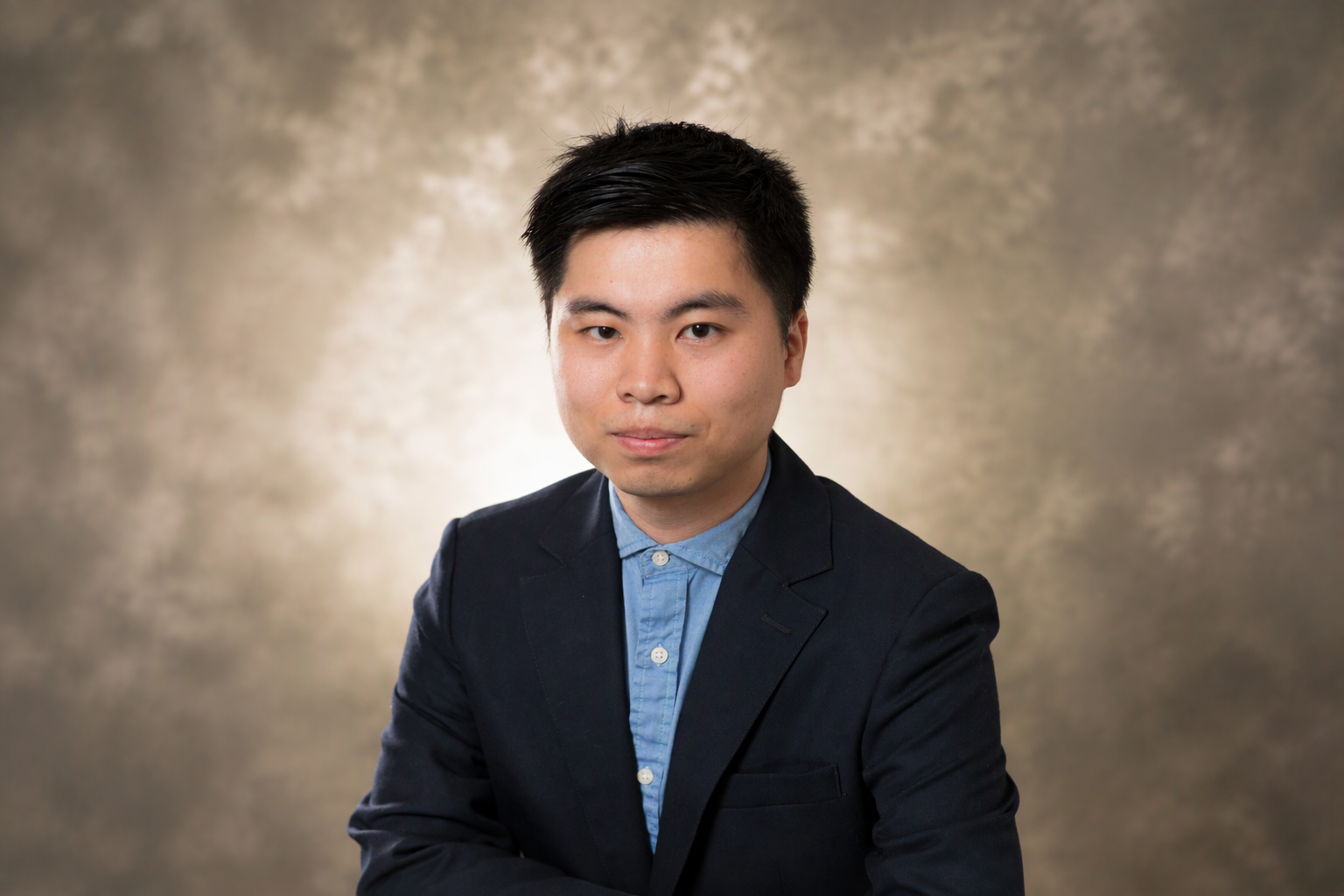
Dr Zhonghua Zheng has received two international honours from leading European and Asia Oceania geosciences societies in recognition of his interdisciplinary contributions to Artificial Intelligence (AI), atmospheric and environmental sciences.
Zheng has been named a recipient of a 2027 Division Outstanding Early Career Scientist Award by The European Geosciences Union (EGU) – the leading organisation for Earth, planetary and space science research in Europe with 23,500 global members.
Alongside, he has also been selected by the Asia Oceania Geosciences Society’s (AOGS) Atmospheric Sciences Section for its Kamide Lecture Award, which recognises scientific excellence among outstanding early-career researchers.
The two awards celebrate his contributions to urban climate, air quality, Earth system modelling and open scientific computing, and follow his recent selection for MIT Technology Review’s 2026 35 Innovators Under 35 global list.
Combining AI and environmental science to address global challenges
The awards are a response to Dr Zheng’s research exploring how urban environments respond to climate change. Through his work he has helped advance the representation of cities in Earth system models, helping scientists better understand urban climate risks and assess adaptation strategies. His group has also helped advance atmospheric chemistry and air quality modelling, investigating pollutants such as fine particulate matter and ozone and the impacts of wildfires on air quality.
More recently, his group has developed physics-guided AI approaches to accelerate urban climate modelling. Their research, published at NeurIPS 2025, one of the world’s leading AI conferences, demonstrated how advanced machine learning can incorporate physical knowledge to improve the simulation of urban climate processes.
Beyond these scientific advances, Dr Zheng has championed open science through cloud-based modelling platforms and open-source software, including pyclmuapp, making complex environmental simulations more accessible to researchers and students worldwide.