








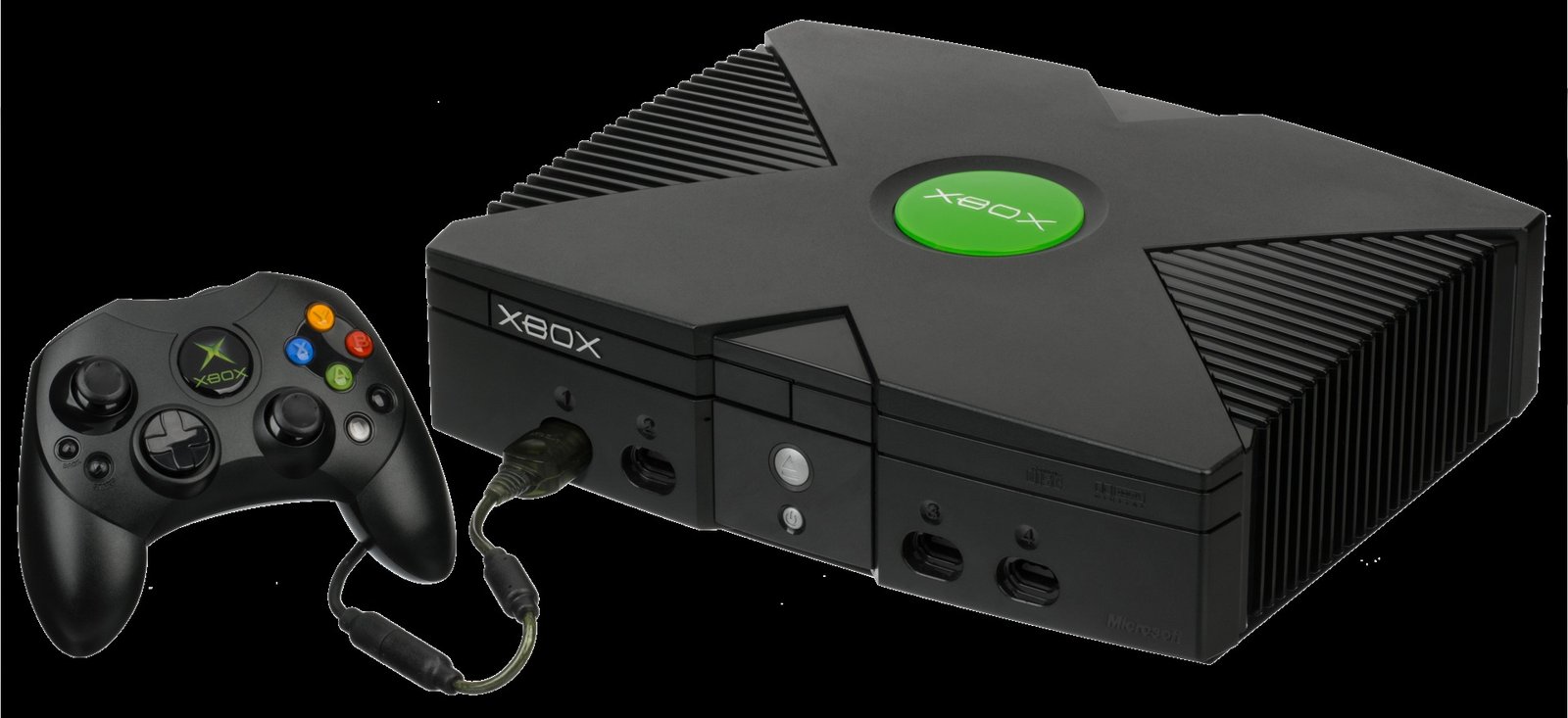
Microsoft marked the anniversary on November 12 with a letter to Team Xbox — three days before the original console turns 25 on November 15.
An Anniversary Letter That Starts in 1979
On November 12, Xbox Wire published “25 Years of Xbox,” a message sent to Team Xbox employees globally and signed by Asha. Rather than opening in 2001, the letter opens at the beginning of Microsoft itself, arguing that gaming has been part of the company’s story since its earliest days.
In 1979, Microsoft released Microsoft Adventure, a text-based game adapted by Gordon Letwin, one of the company’s first 13 employees and later an architect on OS/2, in which players explored a digital world, collected treasure, solved puzzles and encountered mythical creatures. A few years later, Bruce Artwick brought Microsoft Flight Simulator to the 16-bit IBM PC. Over the following decade Microsoft published titles including Minesweeper and Age of Empires and four more Flight Simulators, while Windows helped usher in 3D gaming with partners such as id Software — a studio that would join Xbox some 24 years later.
The point of the history lesson is positioning: Xbox, in Microsoft’s telling, was not a software company wandering into an unfamiliar business in 2001. It was the moment two decades of PC gaming experience were finally pointed at the living room.
Project Midway and the Console That Could Not Be Missed
In the mid-1990s, the letter recounts, a small team working on DirectX — the technology that helped developers make games for Windows — had a bigger idea: use PC architecture to power the first American video game console in decades. Work began on the secret project codenamed “Project Midway.”
The original Xbox launched in North America on November 15, 2001, at $299.99. “When the original Xbox launched in 2001, it was impossible to miss,” the letter says. “It was 2-3x larger than rival consoles, with a giant X molded into a black enclosure and a bright alien green jewel at the center.” Underneath the styling were decisions that look obvious now and were aggressive then: it shipped with a built-in hard drive when competitors asked players to buy standalone memory cards, and an Ethernet jack when nine in ten households still used dial-up. Microsoft says it boasted more than twice the processing power of the PlayStation and GameCube, and it pioneered dual analog controllers.
Nineteen games were available in North America during launch week, but one defined the machine. Halo: Combat Evolved, Bungie’s science-fiction shooter, proved that a first-person shooter could work convincingly on a controller, sold six million copies to become the original console’s second-best-selling game, and became so inseparable from the platform that Xbox and Halo now share a birthday. The letter quotes the console’s first advertising campaign as a claim the launch title proved true: “Games Will Never Be The Same.”
A year after launch, Xbox Live extended the gamble, revolutionizing online console play with persistent friend lists and matchmaking and a common service for developers to build connected experiences — infrastructure players now treat as a basic expectation of any platform.
Four Generations, a Fifth on the Way, a Billion Players a Year
“Twenty-five years later, Xbox has grown into one of the world’s largest gaming businesses,” the letter states. “We’ve built four generations of Xbox consoles, with a fifth on the way. Today, our games reach more than a billion players every year” across franchises the company lists as Call of Duty, Candy Crush, Diablo, Doom, Fable, Fallout, Forza, Gears of War, Halo, Minecraft, Overwatch, Sea of Thieves, The Elder Scrolls, StarCraft, Warcraft and Wolfenstein, among many more.
That franchise list is itself a map of how the business changed. The 2001 bet was a box under a television. The 2026 business is a catalog spanning console, PC and mobile, built substantially through acquisition — including id Software’s parent and, as other anniversary coverage has noted, Activision Blizzard — and distributed through subscriptions and services as much as through hardware. The hard drive and Ethernet port in the first console were early tells: Microsoft was always building toward a connected, service-backed platform, even when most homes were still on dial-up.
The anniversary program around the letter has matched that scale in anniversary coverage through the year: an Xbox25 campaign spanning special hardware, including a limited-edition anniversary console reported by Pure Xbox and other outlets around the November 13 release window, Gear apparel collections drawing on 2001 and on Halo’s Blood Gulch map, digital profile badges and themes, Game Pass programming and a FanFest tour, with a 25 Years of Xbox Bundle offering 25 PC games to United States buyers of eligible new Windows 11 PCs between November 2 and December 31. In the letter itself, the human marker is precise: 111 people across Xbox and its studios have been there for 25 years or more, and each will receive a special engraved console to commemorate what they helped build. “We’ve been celebrating this anniversary with fans around the world and special launches,” Asha wrote. “Today, we are bringing the celebration home to Seattle.”
The Next 25: Smaller Teams, Bigger Worlds
The letter’s forward look is built on a contrast. The first Microsoft Flight Simulator was 160 KB, with 2D graphics, 16 colors and 20 airports. The 2024 version draws on more than 2.5 petabytes of data — more than 15 billion times the size of the original — recreating a 200-million-square-mile map with trillions of individually rendered trees and real-world weather reproduced in near real time.
“While modern games demonstrate the heights of human craft in ways unimaginable just decades ago, the cost, resources, and risk required to create them have grown just as dramatically,” the letter argues. “As a result, too many ideas never become games, and too many games fall short of what their creators imagined. For decades, this has been the unavoidable tradeoff of ambition. We must change this.”
Its thesis is that the relationship between team size and creative scale is beginning to break — that a single person will soon wield capabilities that once required entire nations, a small team will build worlds that today demand hundreds of developers and hundreds of millions of dollars, and the largest studios will pursue ambitions as far beyond today’s games as Flight Simulator 2024 is from its 1982 entry. “I believe the future of gaming will look more like its beginning,” Asha wrote, “when a small team with a big idea could change how the world plays. Our responsibility is to deliver great games, unmistakable hardware, and give more people the chance to make something the world has never seen.”
It is a notable choice of closing argument for a hardware anniversary: the company that entered gaming by building the biggest, most powerful box in the room is celebrating 25 years by arguing that the next era belongs to smaller teams with bigger tools. Whether that future arrives on the promised terms, the anniversary framing is now on the record, alongside the gratitude the letter returns to twice — to the employees and partners who built Xbox, and to the fans it credits with challenging, cheering and holding the platform accountable.
“Happy Birthday Xbox,” the letter ends. On November 15, the console that started it all — oversized, green-jeweled and defiantly PC at heart — officially turns 25.
Source: Reporting based on Xbox Wire, “25 Years of Xbox,” published November 12, 2026, and Pure Xbox anniversary coverage, November 2026.