





Diyar Guldogan
17 November 2026•Update: 17 November 2026
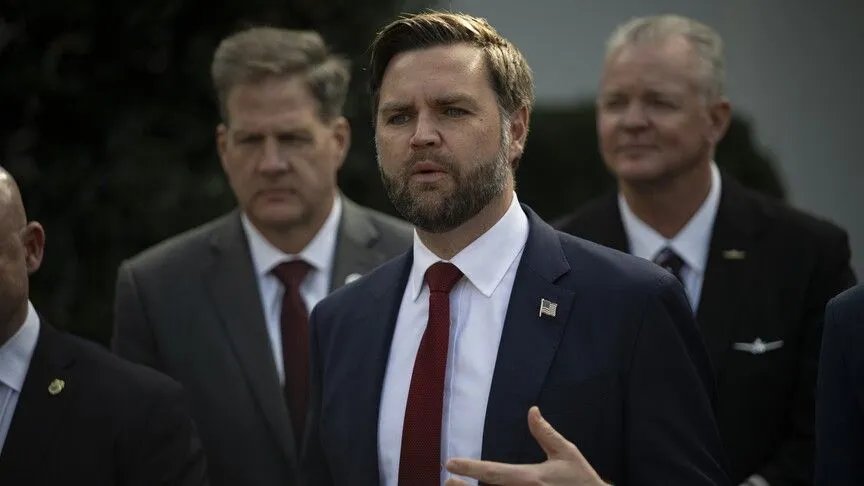
US Vice President JD Vance on Monday defended President Donald Trump’s approach to China, arguing that rebuilding America’s industrial base and protecting critical technologies are more effective ways to counter Beijing’s influence than military confrontation.
In an interview with Fox News, Vance said the US should focus on strengthening domestic manufacturing and reducing its dependence on Chinese-controlled supply chains rather than engaging in unnecessary military escalation.
“The way to be tough on China is not to saber rattle and start a war with the country, it’s to reindustrialize the United States of America,” he said.
He argued that decades of US economic and industrial policies had allowed China to gain significant leverage over American supply chains, including food, medicine and technology.
“When another country controls your food, your medicine, your technology industry, that is how they control the United States of America,” he said.
Vance said Trump’s strategy combines diplomatic engagement with efforts to expand domestic production and strengthen America’s economic independence.
He also defended Trump’s relationship with Chinese President Xi Jinping, arguing that Xi respects the US president because he sees him as “somebody who’s actually tough and smart.”
“What Donald Trump’s tough on China policy has been is make Americans control more of our own stuff,” Vance said, describing the approach as successful.
The vice president also addressed concerns about the possible transfer of advanced American semiconductor technology to China through third countries, particularly in connection with Nvidia and its former CEO Jensen Huang.
Asked about businesswoman Alice Huang, whom some reports have described as a possible Chinese intelligence asset, Vance said he or Trump did not know whether she was a spy.
“I don’t know, and he doesn’t know whether this woman was a spy or not. But that actually is not the main issue. The main issue is we need to reindustrialize the country and protect our critical technology and our critical infrastructure,” he said.
The discussion also focused on concerns that advanced Nvidia chips could reach China through intermediary countries, potentially circumventing US export restrictions.
Asked whether he was concerned that third countries could obtain American technology and subsequently transfer it to Beijing, Vance acknowledged the risk.
“Certainly I’m concerned about it. It’s our job to be concerned about this stuff,” he said.
He explained that some companies establish operations through third countries in an effort to circumvent American export controls and conceal their business relationships with China.
“So we have these export controls, and then there are all kinds of companies that are set up to try to run around those export controls to try to hide from the fact that they’re actually working with the PRC (People’s Republic of China). So that’s just something we have to stay on top of,” Vance said.